Property Surveys in Le Marche: An Engineer on the Buyer’s Side
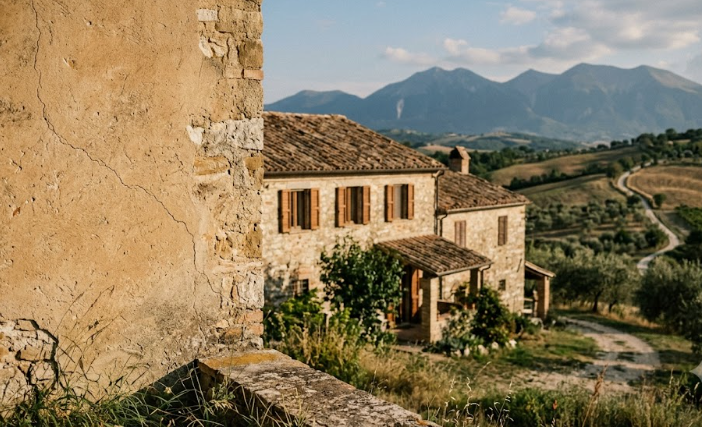
There is a crack running down the east wall of the farmhouse you are about to buy. The agent will tell you it is nothing — settling, the way old stone breathes. Sometimes that is true. Sometimes it is the first line of a bill that runs into the tens of thousands. The difference between the two is not something you can read from a listing photo, and it is not the notary’s job to tell you. It is mine.
I am Mirco Vitellozzi, a licensed civil engineer based in Macerata, in Le Marche, with roughly thirty years of practice across central Italy. I have stood inside hundreds of these houses — not on a viewing, but for work: assessing structure, energy performance, and what a renovation would actually take. This service exists to put that reading on your side of the table before you sign anything.
What a property survey in Le Marche actually gives you
A property survey in Le Marche is an independent, buyer-side technical assessment of a house before you commit to it. I inspect the building’s structural condition, review its planning and cadastral compliance, evaluate the systems and energy performance, flag seismic exposure, and give you a realistic figure for what renovation will cost. You receive a written report in plain American English and a call to walk through it. I work for you and only you — I do not sell houses, I do not take a commission on the purchase, and I have no interest in whether you buy.
That independence is the whole point. In the United States, no one closes on a house without a home inspection. In Italy, that figure barely exists, and the professionals involved in a sale are structurally unable to fill the gap.
Why the notary and the agent are not enough
Foreign buyers often assume the notaio (notary) protects them the way an inspector would. He does not, and he is not meant to. The notary is legally impartial: he verifies title, ensures the deed is valid, and collects the taxes. He does not climb into the attic, and he does not tell you the roof is failing.
The estate agent, meanwhile, is paid on the sale — in Italy typically a commission from both sides — so however pleasant and professional, he is not your independent set of eyes. And the geometra who handles the paperwork is checking that the property matches its filed plans, not stress-testing the foundations or costing the rebuild.
That leaves a gap exactly where the money is. Hidden structural movement, a roof at the end of its life, an unregistered extension that will haunt you when you try to get utilities or resell, systems that need ripping out — these are the things that turn a €150,000 dream into a €400,000 project. A survey is how you find out before the compromesso (preliminary contract) makes it your problem.
What I check
Each survey is built around the specific property, but the core of the work covers:
- Structure — foundations, walls, roof, load-bearing elements, and the story behind any cracks, damp, or movement.
- Planning and cadastral conformity — whether the house as it stands matches the plans filed with the comune and the Catasto, and where the discrepancies are.
- Seismic exposure — Le Marche sits in an active zone, and the 2016 earthquakes rewrote how buyers here should think about risk. I tell you what the building’s real seismic condition is, not what the brochure implies.
- Systems and energy — electrical, plumbing, heating, and the energy performance certificate, with an eye on what will need replacing and what it will cost to run.
- A realistic renovation budget — a grounded figure for your property, not an agent’s optimistic guess.
The service, and what it costs
Prices below are starting points and are quoted plus 22% Italian VAT. A firm quote follows the orientation call, once I know the property’s size, age, and location.
Orientation Call — €150
A 60-minute video call before you spend anything larger. You bring the listings you are considering; I give you an honest first read on which are worth pursuing, what the red flags are, and how the process works. If you go on to commission a full survey within 60 days, this fee is credited against it.
Single Property Survey — from €900
The core service, for one property. It includes a remote review of the available documents, one on-site inspection, a written report in English covering everything above, and a debrief call to talk it through. This is the report you want in hand before you sign a preliminary contract.
On-Site Viewing Day — €600 per day, plus travel
For buyers on a scouting trip. I accompany you to two to four properties in a single day and give you a technical read on the spot — the crack that matters versus the one that does not, the roof to worry about, the layout that hides an unpermitted change. This is spoken guidance in real time, not a written report; it is how you avoid falling for the wrong house on day one.
Full Purchase Companion — from €2,900
For buyers who want an engineer beside them from shortlist to signature. It combines orientation, technical assessment of the properties you are serious about, on-site accompaniment, and a technical presence through to the notary’s deed. One fixed fee, no surprises, and no percentage of your purchase price.
Can this be done from the United States?
Partly, and I am candid about which parts. Document review, planning checks, and the renovation-cost framing can all be handled remotely, and for those I work entirely at a distance. But the inspection itself has to happen on the ground — the most expensive problems in an old casale announce themselves in person and stay invisible in a photo set. For remote buyers I run a hybrid: I do the on-site work, then walk you through the findings by video with photographs and, where useful, short videos, so you see the house through an engineer’s eyes without crossing the Atlantic.
Where I work
My defensible ground is Le Marche — the region I live in, work in, and know the way you can only know a place you have never left. I cover the province of Macerata and the surrounding Marche countryside directly, and I take on selected work across central Italy, in Umbria and Abruzzo, where the buildings, the seismic picture, and the bureaucracy follow rules I understand from the inside.
FAQ
Do I really need a survey if there’s a notary?
Yes, because they do different jobs. The notary is legally impartial and handles the legal side — title, the deed, the taxes. He does not assess the building’s physical condition, and by design he represents neither buyer nor seller. A survey is the one step in the process that looks at the house itself, on your behalf alone.
Can you do the survey remotely?
The document and planning review can be done entirely remotely. The physical inspection cannot — the costly problems in an old stone house only surface in person. For overseas buyers I do the on-site work myself and then present everything to you by video call, with photos and video, so you get a full picture without traveling.
What does it cost to renovate a house in Le Marche?
It depends heavily on the building’s condition, but 2026 market data puts a full restoration of a Marche farmhouse in the range of roughly €1,000 to €2,500 per square meter, with ruins that need a complete rebuild often costing around €1,500 per square meter. A contingency of 15 to 20 percent is wise, and seismic compliance in central Italy can push the figure higher. My report replaces these general ranges with a number grounded in your specific property.
Are you a real estate agent?
No, and deliberately so. I am a licensed engineer, not a registered estate agent, so I cannot and do not take a commission on your purchase. That is exactly what keeps me independent: I have nothing to gain from you buying, which is why you can trust what I tell you about the house.
When should I bring you in?
Early. The most useful moment is before you sign the proposta d’acquisto or compromesso, while you still have room to walk away or renegotiate. Once a preliminary contract is signed, your options narrow fast.
What areas do you cover?
Le Marche is my core, particularly the province of Macerata and the surrounding countryside. I also take on selected work in Umbria and Abruzzo across central Italy.
The takeaway
Buying an old house in Italy is not the reckless act people fear — but doing it without an independent technical read is. The purchase price is usually the smallest number in the whole project; the ones that matter are hidden in the structure, the permits, and the renovation nobody has honestly costed yet. That is the reading I give you, from someone who has been inside these walls for thirty years and answers to no one but you.
To start, book an orientation call and bring the listings you are weighing.
Book a call with me here: Book a call
Independent technical advice for buyers. I am a licensed engineer, not a real estate agent or a lawyer, and I work in the buyer’s interest only.
Tastes & Wonders of Italy — https://tasteandwondersofitaly.com/