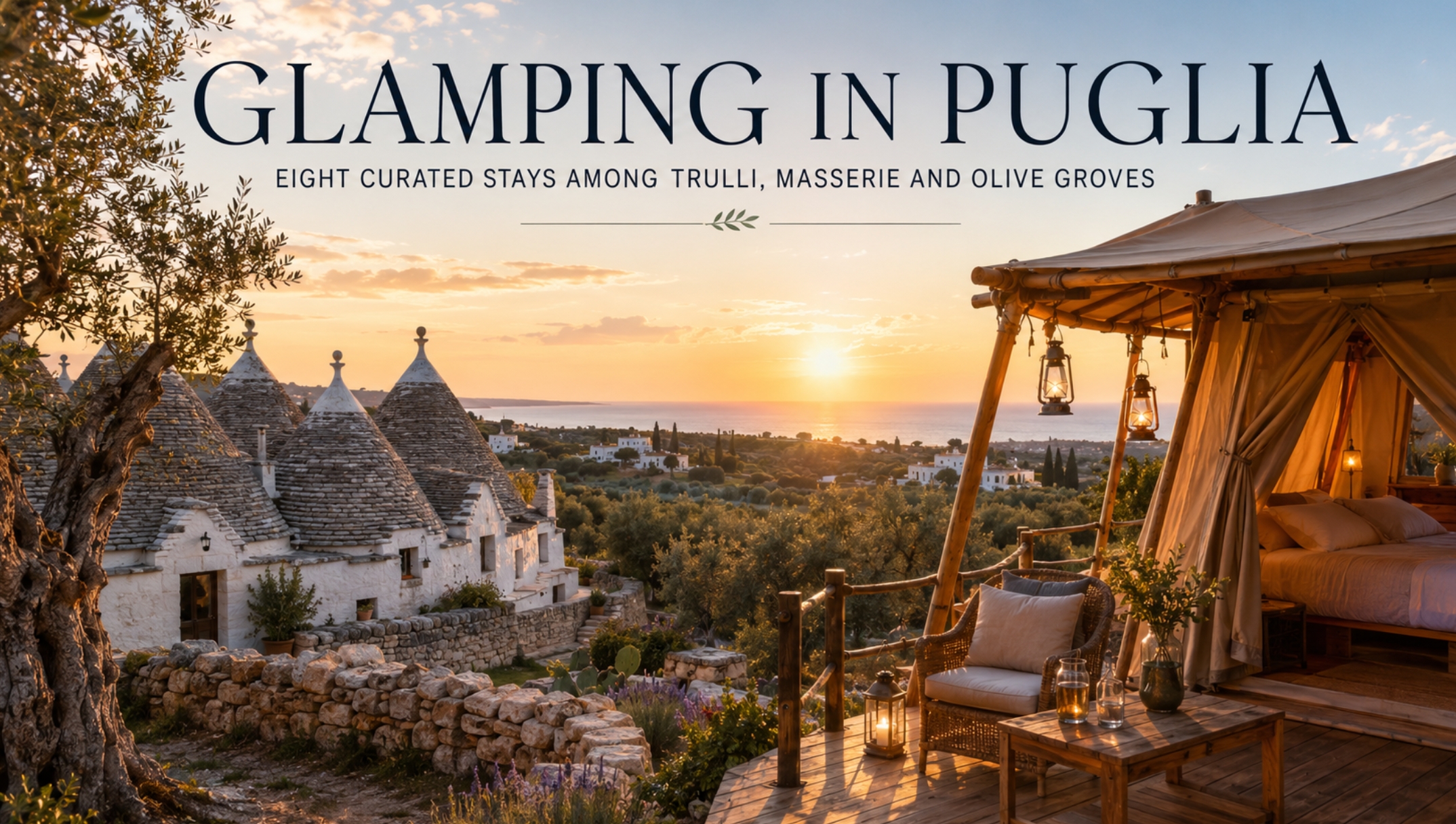
Glamping in Puglia: Eight Curated Stays Among Trulli, Masserie and Olive Groves
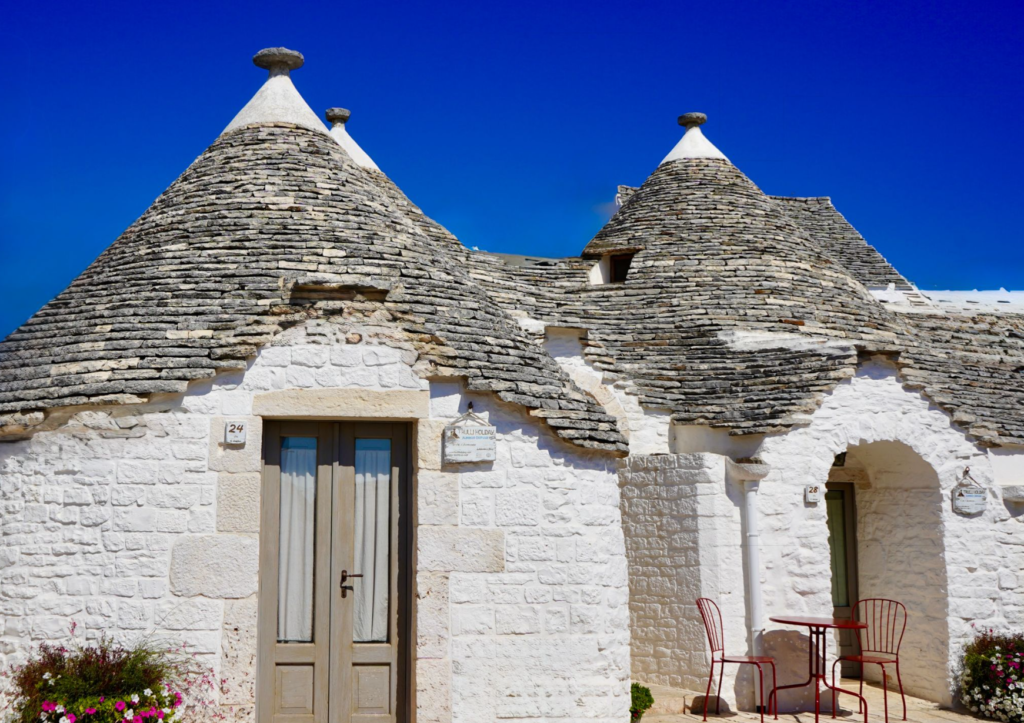
In September 1996, the United Nations Educational, Scientific and Cultural Organization inscribed the trulli of Alberobello on the World Heritage List, citing their “outstanding universal value” as prehistoric building techniques that had survived unchanged into the late 20th century. The conical limestone roofs, assembled without mortar in a technique that dates to at least the 14th century — possibly earlier, given the presence of Bronze Age nuraghi with analogous structural logic in Sardinia — are not decoration. They are engineering: the corbelled dry-stone vault distributes load without a keystone, allows rapid disassembly when a tax inspector arrived in the Spanish colonial period (the story is more complicated than the legend, but the disassembly mechanism is real), and creates a passive thermal mass effect that keeps the interior 8 to 12 degrees cooler than the outside air in high summer. I say this as a civil engineer who has spent decades studying vernacular construction across the central Apennines: there is nothing like a trullo in the engineering literature of pre-industrial Europe.
Which is to say that arriving in Puglia for the first time as a traveler is not simply a matter of beauty, though the beauty is constant and specific — the white calcareous light, the horizontal olive plains extending to a blue Adriatic horizon, the baroque extravagance of Lecce’s churches carved in a golden local limestone that polishes almost like marble. Puglia is a region whose landscape is the product of long-term agricultural engineering, legal history, and geological accident in equal proportion. The trulli exist because of a specific fiscal arrangement under the Kingdom of Naples. The ancient olive trees — some dating to the 3rd and 4th centuries AD, protected individually under Legge Regionale n.14 of 2007 — exist because the calcareous soil of the Murgia plateau is uniquely suited to Olea europaea and because the Byzantine, Norman, and Hohenstaufen landowners who organized the territory had the foresight to leave them where they found them. The masserie — the fortified farmhouses that appear every few kilometers across the Itria Valley and the Murgia plain — exist because the open, unforested landscape of southern Puglia offered no natural protection from the coastal raids of the 15th and 16th centuries, and so the farm became the fortress.
I have been to Puglia repeatedly in the course of my work as an engineer consulting across southern Italy, and I have made the mistake that many northern Italian professionals make: arriving in Bari by car from the A14 motorway, doing what needed to be done, and leaving without stopping long enough to understand where I was. This guide is my correction of that mistake. The eight stays that follow are selected because each one puts you in direct relationship with the specific geology, cuisine, and construction history of the region — not as a themed resort but as a working farm, a converted fortress, or a tent in an olive grove where the trees around you are older than the city of Rome as currently administered.
Puglia as a Slow Traveler’s Landscape
The standard American itinerary for Puglia — Alberobello on day one, Polignano a Mare on day two, Lecce on day three, beach on day four — is coherent as a highlights reel. It misses what Puglia is actually about, which is the horizontal quality of its interior. This is not a mountainous region; the Murgia plateau reaches barely 400 meters above sea level, and the landscape rolls rather than rises. The drama is in the light, the scale of the olive groves, the white walls against a sky that is more consistently blue than anywhere else in Italy, and the slow revelation of the trulli as you drive the provincial roads between Locorotondo and Cisternino: first one or two on a farm in the distance, then a cluster, then an entire village cone-topped against the sky.
The slow traveler has a structural advantage here because the distances are manageable. Bari to Alberobello is 55 kilometers. Alberobello to Ostuni is 45 kilometers. Ostuni to Lecce is 70 kilometers. Lecce to Otranto is 47 kilometers. The entire region from the Valle d’Itria to the tip of the Salento peninsula at Santa Maria di Leuca is less than 200 kilometers. You can base yourself in one property for five or six nights and cover all the major sites by car in half-day excursions, leaving the afternoon hours — when the midday heat makes archaeology inadvisable — for a nap in a trullo cone or a swim in a masseria pool. The geography rewards staying rather than moving.
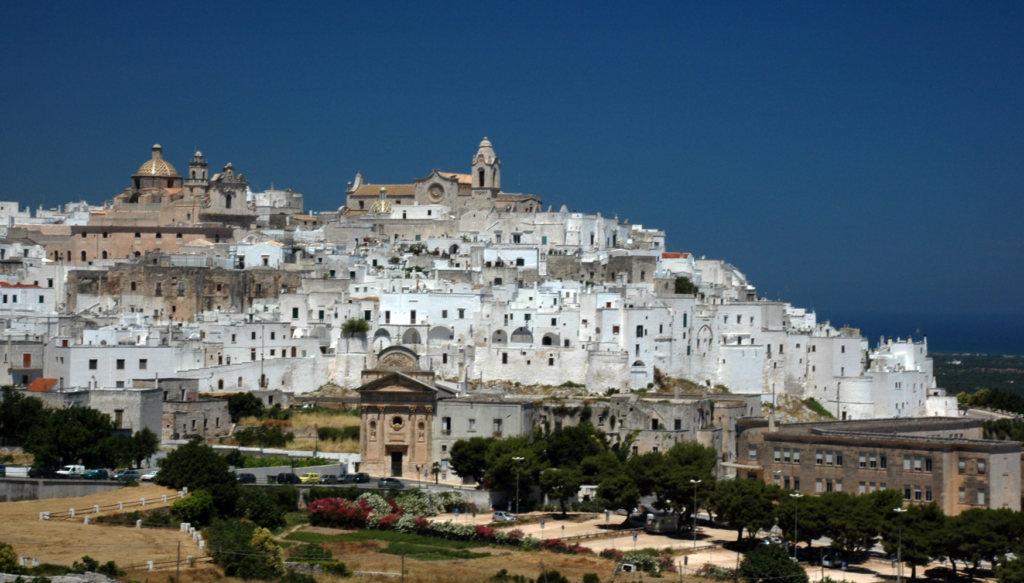
The eight properties in this guide cover four distinct Puglian subregions: the Valle d’Itria (Itria Valley, the heartland of trulli and masserie, between Alberobello, Martina Franca, and Ostuni); the Alto Salento (the northern reaches of the Salento peninsula, including the coast from Torre Canne to Brindisi); the deep Salento (the province of Lecce and the Otranto coast, where Byzantine Greek survived as a spoken language until the 18th century); and the Gargano promontory (the limestone spur that protrudes into the Adriatic in the far north of the region, a National Park since 1991, containing Italy’s largest coastal pine forest, the Foresta Umbra).
What “Glamping” Means in Puglia
The Puglian version of glamping is architecturally specific in a way that distinguishes it from the bell-tent-in-a-field format of northern Europe. Here it typically takes one of three forms: a trullo converted with contemporary interiors while maintaining the original conical vault and stone walls; a masseria-adjacent safari tent positioned within a centuries-old olive grove and sharing access to the estate’s pool, restaurant, and farm products; or a lodge tent in a coastal position within a natural reserve, where the “glamping” distinction from standard camping is primarily one of construction quality and service rather than landscape exceptionalism. The best properties — the eight selected here — use the landscape as a participant rather than a backdrop. The ancient olive tree outside your tent is not décor; it is a living entity that may have been producing oil since the early medieval period, and the masseria’s olive oil sommelière will ask you to compare that oil to a younger grove’s production while explaining why the oxidative stress of a 1,600-year-old tree produces a different phenolic profile.
Eight Curated Stays
1. Le Alcove — Living in a UNESCO Trullo, Alberobello
The most direct engagement with the trullo as architectural artifact is to sleep inside one, and the most considered version of that experience in Alberobello is Le Alcove, the first hotel to install contemporary comfort within the authentic stone structures of the UNESCO-protected Rione Monti district. The six suites are each housed in individual trulli, with cone ceilings of exposed limestone corbelling above king-size beds, heated terracotta floors (the thermal mass of the stone walls produces a noticeable coolness in summer, making the underfloor heating relevant only in spring and autumn), minibar, satellite television, and bath products by Neapolitan perfumer Gabriella Chieffo. Some units include spa baths.
The engineering specifics of the trullo construction deserve a brief explanation for travelers who will inevitably stare upward. The corbelled vault works by layering flat stones in progressively smaller rings, each layer slightly overhanging the one below, until the aperture closes at the apex. No keystone is required because the structural logic is compression rather than tension: each stone is held in place by the weight of the stones above it. The capstone is typically carved with an esoteric symbol — a cross, a sphere, a spiral — whose meaning is debated between art historians but which functions optically as a punctuation mark that closes the visual sequence of the spiral. The thick walls, typically 60 to 90 centimeters, maintain an interior temperature of roughly 18 to 22 degrees Celsius regardless of exterior conditions. Air conditioning exists in each trullo; the owners note that it is rarely used.
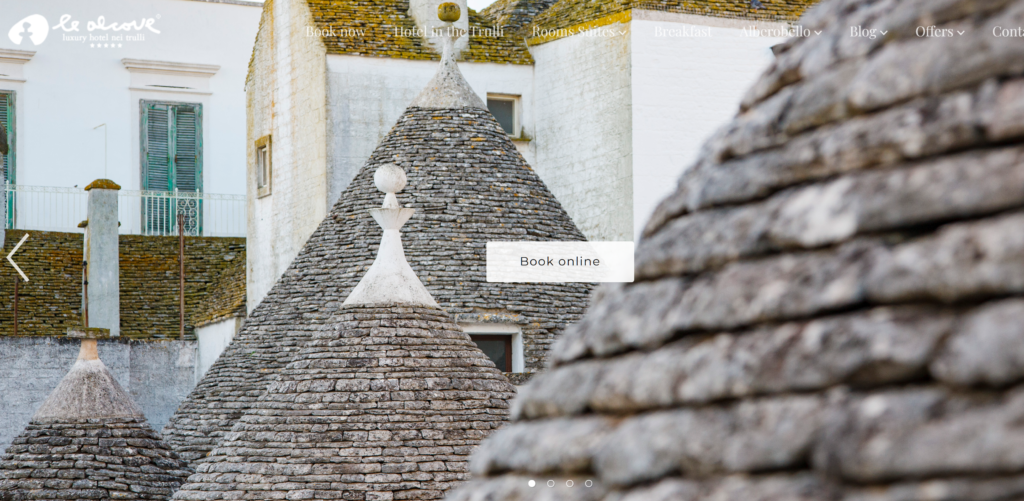
Le Alcove is five minutes’ walk from the railway station and eight minutes from the main trulli district of Rione Monti. Children under nine are not accepted, which in practice means the atmosphere is quiet enough to register the limestone’s silence.
Book and information: lealcove.it/en Location: Via Monte San Michele, 70011 Alberobello (BA) Getting there: 55 km from Bari airport (BRI). Direct train Bari–Alberobello (FSE line, ~1h 20min). Car not required for in-town exploration.
2. Masseria Marzalossa — Glamping Under the Olive Trees, Fasano
The Guarini family has owned Masseria Marzalossa since it was constructed in the 17th century, and they continue to manage it directly — a circumstance that is more relevant to the quality of the stay than it might appear on a hotel listing. A masseria run by an owning family of two centuries’ tenure is not following a hospitality manual; it is hosting guests on land it has cultivated since the Baroque period. The courtyard plantings, the olive oil varieties, the recipe for the fig jam at breakfast — these have accumulated generational knowledge that a management company cannot replicate in a single season.
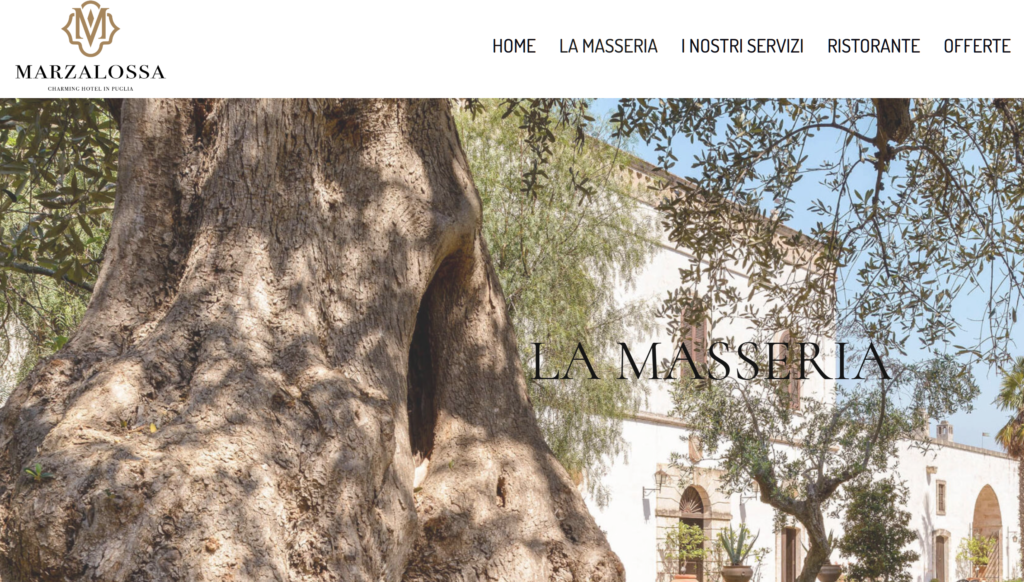
The property introduced glamping tents as a deliberate extension of the masseria’s hospitality philosophy: same linen, same olive oil, same zero-kilometer kitchen garden, but under canvas among the ancient trees rather than within the stone walls. The tents are fully equipped with proper beds, private bathroom access, air conditioning, and wooden-decked terraces. The positioning within the olive grove means that the visual distance between your tent and the next is measured in decades of tree growth rather than in meters of aluminum pole. The swimming pool is set within an ancient limonaia — a lemon grove — and the estate still produces olive oil from trees that were productive during the Napoleonic administration of the Kingdom of Naples.
The property scores 9.3 on Booking.com, with guests consistently noting the quality of the evening meal (zero-kilometer Puglian cuisine, candles, courtyard setting) as the experience that elevates the stay beyond its accommodation category.
Book and information: masseriamarzalossa.it Location: Contrada Pezze Vicine 69, 72015 Fasano (BR) Getting there: 50 km from Brindisi airport (BDS). 55 km from Bari airport (BRI). Car essential.
3. Masseria Montenapoleone — Farm Life on a Cliff with Sea Views, Fasano
Masseria Montenapoleone occupies a rocky outcrop in the contrada di Pezze di Greco, a small hamlet that takes its name from the Greco family who colonized this coastal agricultural strip in the early 19th century — historically, one of the last extensions of the great Puglian land-clearing effort that had begun under the Bourbons. The masseria sits at the edge of one of the “lame” — the dry limestone gorges characteristic of the Murgia coastal edge — and the pool, cantilevered toward the horizon, has a direct view of the Adriatic that makes the distance between inland olive grove and coastal sea less abstract than the regional geography usually suggests.
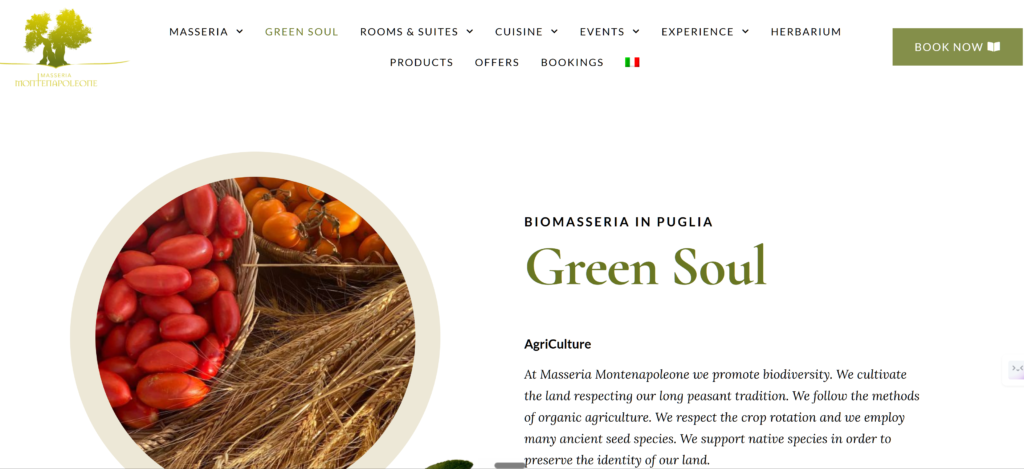
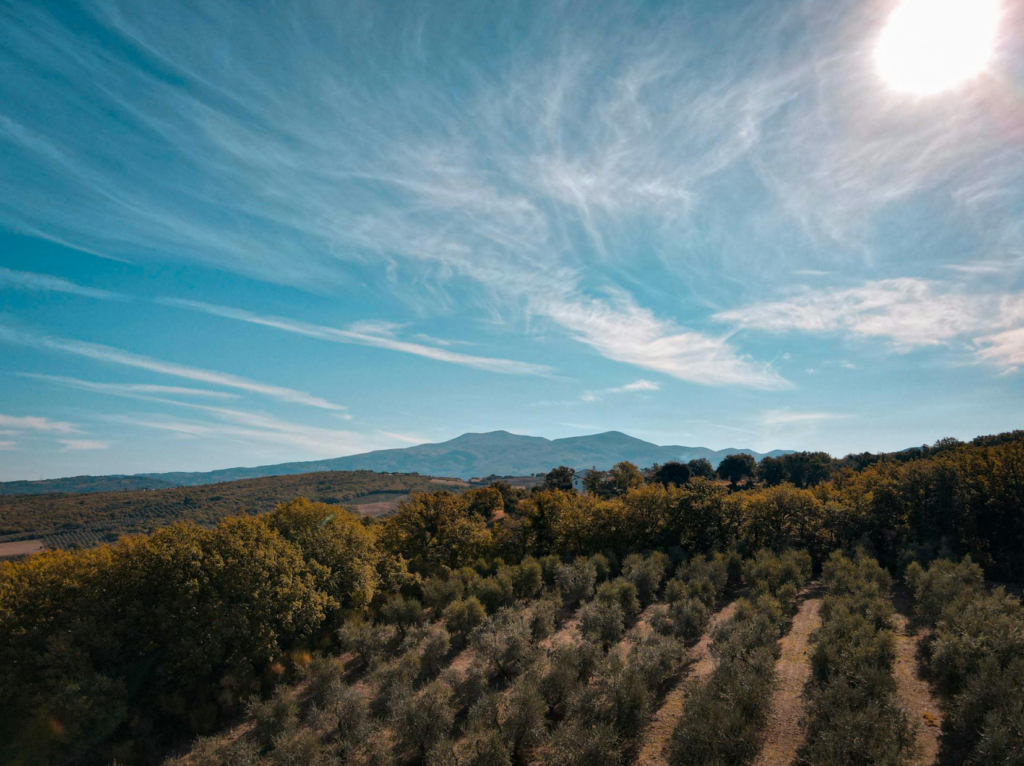
The property extends across 35 hectares certified organic since conversion, producing olive oil, wine, and vegetables that reach the kitchen daily. Guest activities are structured around this production cycle in a way that makes them genuinely educational: the olive harvest experience in November includes the cold-press milling process in the estate’s own frantoi (oil mill), and the result is the unfiltered oil nuovo that appears on the breakfast table the following morning — a flavor so different from commercially stabilized olive oil that first-time tasters consistently describe it as a separate product. Cooking classes using the kitchen garden’s ingredients, Vespa tours of the Itria Valley, archery, and horseback riding across the lame complete the activity offer. The pool with Adriatic views is the reason most guests do not leave the property on their second day.
Book and information: masseriamontenapoleone.it Location: Contrada Bicocca, Pezze di Greco, 72015 Fasano (BR) Getting there: 3 km from the beaches of Torre Canne. 50 km from Bari and Brindisi airports.
4. Masseria Il Frantoio — An Organic DOP Olive Oil Estate, Ostuni
The name means “the oil press,” and the 15th-century millstone that gives Masseria Il Frantoio its identity is still in the underground chamber where it has been since the Spanish colonial period, still producing olive oil from the 72 hectares (178 acres) of groves that surround it. The estate was converted to organic certification in 2004 and produces four distinct extra virgin olive oils under DOP classification: varieties include Ogliarola Barese, Coratina (the variety that gives Puglian oils their characteristic intensity of bitterness and pepper in the finish — the phenolic compound responsible is oleocanthal, the same compound that produces the ibuprofen-like anti-inflammatory effect in quality EVOO), and Cellina di Nardò from the more southerly grove sections.
Puglia produces roughly 40% of Italy’s total olive oil output. The Coratina variety alone accounts for more than a third of Puglian production, and a vertical tasting of the estate’s four oils — guided by olive oil sommelière Lucia Leone in a session that takes approximately 60 minutes — demonstrates a range of flavor profiles that contradicts the generic notion of “Italian olive oil” as a monolithic category. This tasting is available both to hotel guests and to day visitors, and is one of the legitimate educational experiences available in Puglia that requires zero driving time once you are at the property.
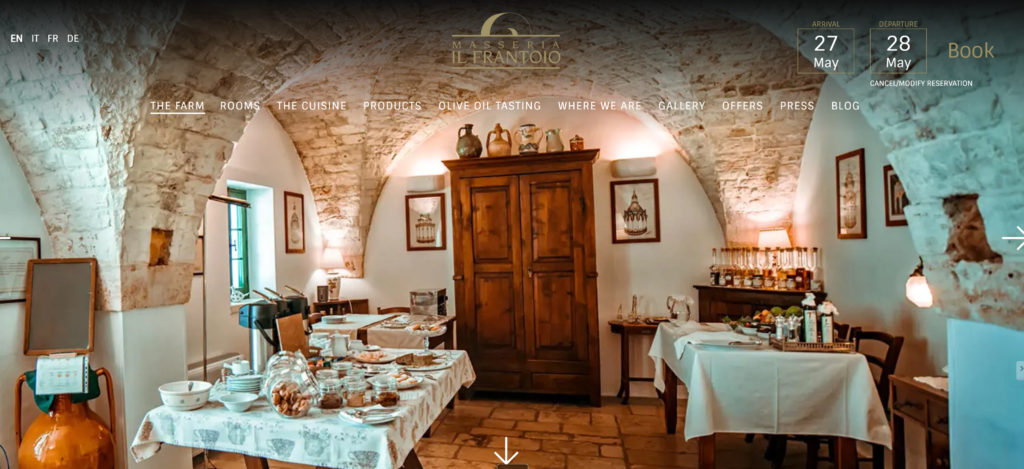
The 16 rooms are in the 16th- and 19th-century farm buildings, with terracotta floors, vaulted limestone ceilings, and antique furnishings collected by the owner over several decades. The 10-course dinner served in the inner courtyard by candlelight — prepared exclusively from estate and zero-kilometer ingredients by chef Rosalba Ciannamea — is described by repeat guests as the meal that recalibrates their understanding of what Puglian cuisine actually is, as opposed to what Puglian cuisine restaurants in major cities serve. A minimum two-night stay is required.
Book and information: masseriailfrantoio.it Location: S.S. 16 km 874, 72017 Ostuni (BR) Getting there: 35 km from Brindisi airport. 10 min by car from Ostuni.
5. Tenuta Centoporte — Deep Salento by the Megalithic Garden, Otranto
The Salento is not Puglia in the sense that the Valle d’Itria is Puglia. Geologically, linguistically, and gastronomically, the peninsula south of Brindisi and Taranto is a distinct entity: the soil turns red (the terra rossa, a residue of bauxitic iron oxides from Cretaceous limestone dissolution), the architecture shifts from Baroque to a flatter, more Greek-influenced white vernacular, and the food becomes simpler and more reliant on the specific products of the Adriatic and Ionian shores that bound the territory on both sides. The griko — the Byzantine Greek dialect that survived in nine villages of the Salento Griko area until its last fluent speakers died in the late 20th century — is the linguistic trace of a colonial occupation that lasted from the 7th to the 11th century and left visible marks in the church architecture, the religious calendar, and the seafood preparation techniques.
Tenuta Centoporte sits on the ancient road between Otranto and Giurdignano, five minutes from Otranto’s Adriatic coast and within walking distance of the Giardino dei Megaliti — the “Megalithic Garden,” a concentration of dolmens and menhirs left by the Bronze Age populations who preceded both Greeks and Romans in this territory. The property takes its name from the nearby Abbazia delle Centoporte, a 6th-century Italo-Greek monastery and one of the richest libraries in medieval Europe, long since in ruins. The resort’s white stone walls and local limestone construction physically quote this architectural tradition.
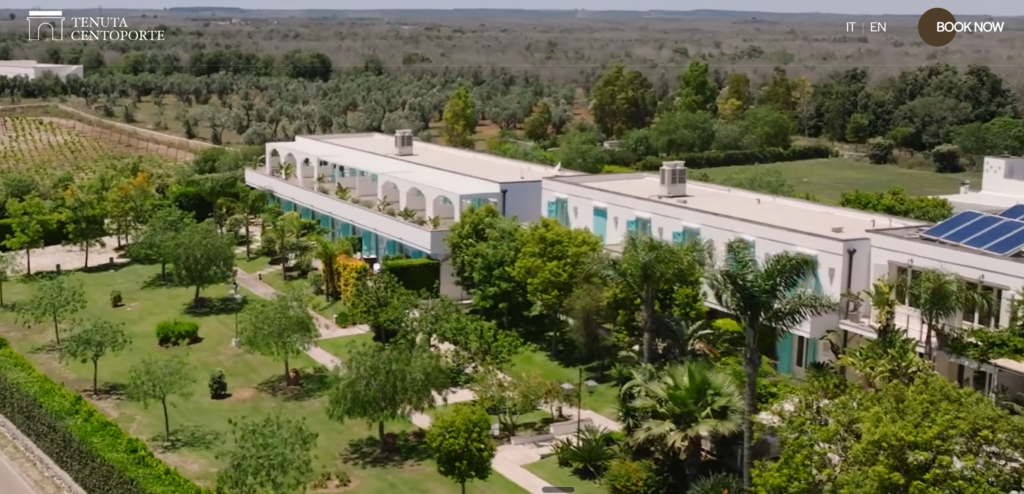
The surrounding olive groves are the primary landscape experience: the Salento’s production of Ogliarola Salentina and Cellina di Nardò extra virgin olive oil is distinct from the Valle d’Itria’s Coratina in texture and intensity — softer, with a longer mid-palate and less aggressive bitterness — and the estate’s restaurant serves Salento’s specific cuisine: frisella (the twice-baked barley bread softened with seawater, topped with tomato and olive oil), orecchiette with braised turnip greens, ricci di mare (sea urchins from the Adriatic, eaten raw with a squeeze of lemon directly from the spiny shell), and the Primitivo and Negroamaro wines of the Salice Salentino DOC zone.
Book and information: tenutacentoporte.it Location: Via Vecchia Otranto Giurdignano, Loc. Montibianchi, 73020 Giurdignano (LE) Getting there: 45 km from Brindisi airport. 5 min from Otranto. Lecce 40 min.
6. Loggia Petrarolo — A Safari Tent with a Private Pool and Sea Views, Fasano
On 50 hectares of private grounds near Fasano, in the zone where the Murgia plateau begins its gradual descent toward the Adriatic coast and the Savelletri beaches, the Loggia Petrarolo property offers a single fully-equipped safari tent with its own swimming pool, walled garden, and direct view of the sea — a configuration that, in the European glamping market, occupies the highest-ticket tier: exclusive use, private pool, no shared facilities, no other guests in the same visual field.
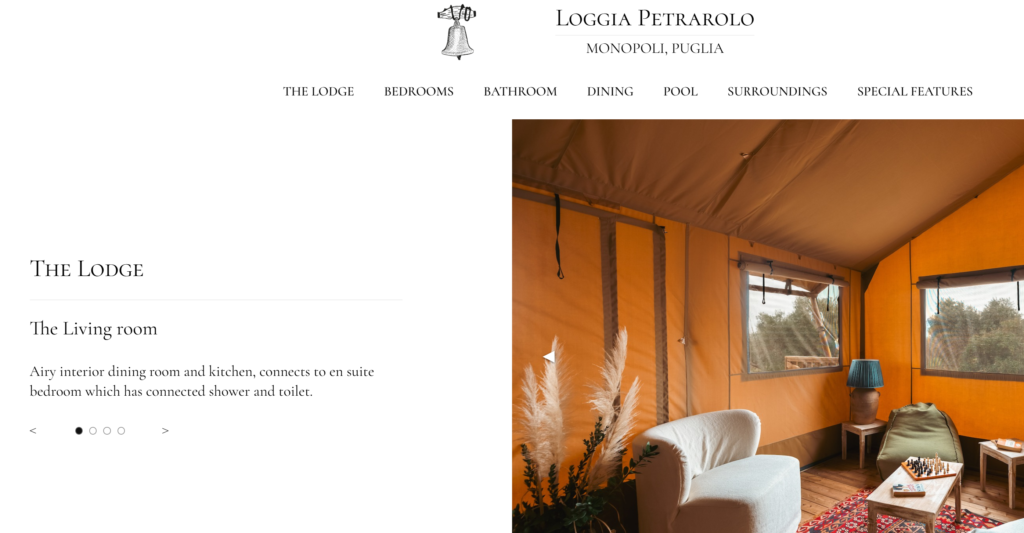
The tent itself is built on a wooden platform with proper double beds, a full kitchen, outdoor dining, and access to 50 hectares of estate grounds to walk or cycle. The sister property Masseria Petrarolo — a 9-bedroom estate on the same grounds — provides the hospitality infrastructure: the team that manages the masseria handles the tent’s laundry, provisioning, and maintenance. This is the format that produces the highest traveler satisfaction scores in the glamping category: private, fully serviced, within a real agricultural estate, with a landscape that changes character across the day as the Adriatic light shifts from the white mornings to the amber late afternoons typical of this coast between June and October.
The beaches of Savelletri — white sand, shallow entry, Posidonia oceanica meadows visible at low tide — are five minutes by car. Polignano a Mare, the cliffside town that produces more food photography per square meter than any other location in southern Italy, is 20 minutes north.
Book and information: loggiapetrarolo.com Location: Fasano (BR) — exact coordinates provided on booking Getting there: 50 km from Brindisi airport. 55 km from Bari.
7. Le Lenze Glamping — Lodge Tents in the Gargano National Park, Mattinata
The Gargano promontory is the geological anomaly of southern Italy: a limestone massif that belonged, until the Mesozoic period, to what is now the Dalmatian coast — the same karst landscape as Croatia’s Plitvice Lakes and Montenegro’s Bay of Kotor. When the Adriatic basin opened and the Italian peninsula separated from the eastern Balkans, the Gargano remained attached to the Italian side, becoming a peninsula projecting into the Adriatic and carrying its Dinaric geology with it. The result is a landscape of white limestone cliffs (the falesie bianche, up to 200 meters above the Adriatic in places), pine forests that have no ecological equivalent elsewhere in southern Italy, and the Foresta Umbra — the ancient beech-and-oak woodland at the interior’s highest point that has been a protected area since 1977 and a UNESCO Man and Biosphere Reserve since 1977.
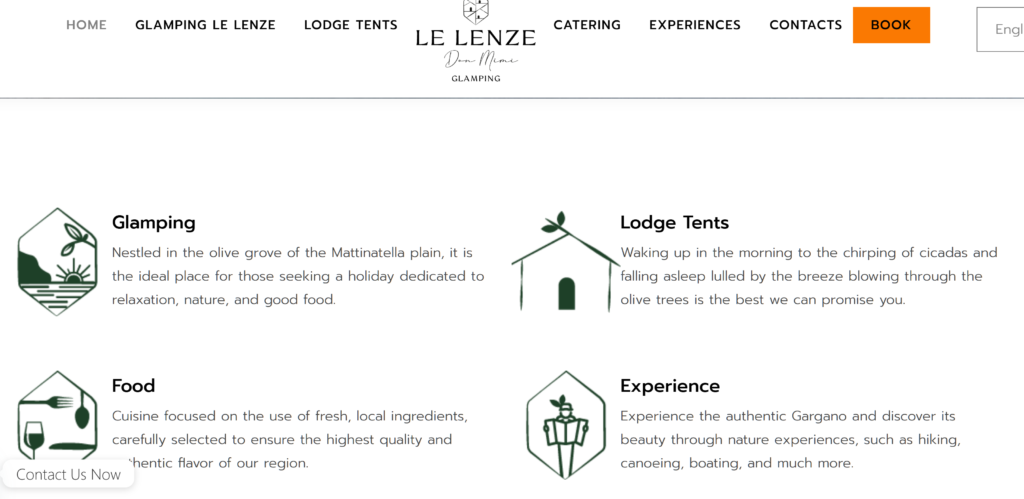
Le Lenze Glamping is positioned in the olive plains of Mattinatella, just inside the Gargano National Park boundary, with direct access to the park’s trail network and the white-cliff coastline of the Baia di Zagare and the Baia delle Zagare — limestone coves accessible by sea kayak or coastal path that appear on no standard tourist itinerary because they require a degree of physical commitment that day-tripping visitors to Vieste and Peschici typically do not make. The lodge tents at Le Lenze won the Tutto Hotel Awards 2024 — a recognition specifically for hospitality quality rather than accommodation category — and the property’s restaurant serves locally sourced Gargano cuisine: the ewe’s milk cheese of Manfredonia, the fish from the Adriatic fleet that operates out of Mattinata and Vieste, and the specific honey of the Gargano limestone plateau, where the endemic flora includes plant species found nowhere else in Italy.
The proximity to the Isole Tremiti — the archipelago 36 kilometers offshore accessible by ferry from Vieste and Manfredonia — extends the property’s geographic orbit to include what are arguably the clearest waters in the Italian Adriatic.
Book and information: lelenzeglamping.it Location: Mattinatella, Mattinata (FG) — Gargano National Park Getting there: 90 km from Bari airport. Car essential in the Gargano interior.
8. Baia di Manaccora — Safari Tents at the Sea, Peschici
If the previous seven stays have been oriented toward olive groves, inland landscapes, and slow agricultural time, the Baia di Manaccora represents the other dimension of Puglian glamping: the coastal one. Peschici is a small town (roughly 3,500 permanent residents) on the northern Gargano coast, built on a limestone promontory above a series of bays — the Baia di Manaccora, the Baia di Ponente, the Baia di San Nicola — where the Adriatic water achieves a transparency that the Sicilian coasts to the south and the Venetian lagoon to the north cannot match, due to the absence of river-carried sediment and the depth of the Adriatic shelf at this latitude.
The glamping tents at Baia di Manaccora are positioned within meters of the beach, designed in the African safari format — wooden-framed canvas walls, private verandas, double beds — and oriented toward the Adriatic rather than the interior. This is glamping as a solution to the specific problem of Italian coastal accommodation in high season: the combination of crowded beach hotels and overpriced camping pitches that makes July and August on the Gargano coast an exercise in logistical frustration. The Sunshine glamping tent series at Baia di Manaccora provides air-conditioned canvas rooms with private verandas at a price point that positions them between the village’s one-star pension and its boutique hotel — a gap that the glamping format is particularly well-suited to fill.
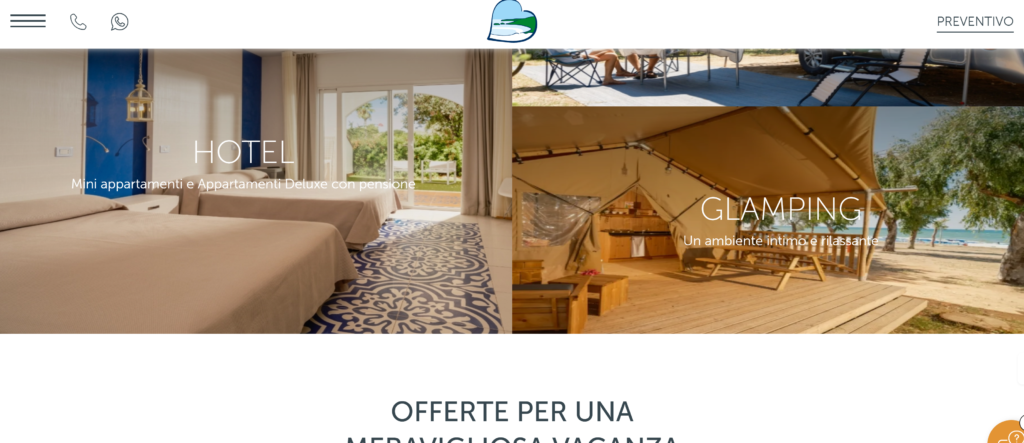
The property’s beach access and the proximity of the Peschici Marine Protected Area — where boat excursions to the sea caves and underwater stacks of the northern Gargano coast can be arranged — make it the most directly coastal stay on this list. For travelers whose primary motivation is water rather than territory, Peschici in May or early June (before the July–August crowd) or in September (after it) offers sea conditions that are exceptional by any Mediterranean standard.
Book and information: baiadimanaccora.it/glamping Location: Baia di Manaccora, 71010 Peschici (FG) Getting there: 130 km from Bari airport. Ferry from Foggia train station (seasonal).
Practical Information
When to visit. May, June, and early October are the optimal months for glamping in Puglia. May offers the landscape at its most verdant — the wildflowers of the Murgia plateau, the wisteria on the masseria walls, the new growth on the olive canopies — at temperatures between 20 and 28 degrees Celsius. June offers the same conditions plus the first warm sea. Late September and October introduce the olive harvest season, when the pressing activity at estates like Masseria Il Frantoio and Masseria Montenapoleone opens a participatory dimension that no other time of year provides. July and August are intensely hot (daytime temperatures routinely reach 38 to 42 degrees Celsius in the Salento) and the coastal properties are crowded and expensive. A November visit, specifically for the olio nuovo season, is an underrated choice for travelers with flexibility: the interior is almost entirely free of tourism, the landscape has the golden-green quality of a region in productive agricultural work, and every working frantoi will offer you fresh-pressed oil on a piece of pane di Altamura (the Puglia-made sourdough with PGI certification since 2003) for a price that functions less like a purchase and more like an invitation.
Getting here. Puglia is served by two international airports: Bari Karol Wojtyła (BRI) for northern and central Puglia (Valle d’Itria, Gargano, Murgia), and Brindisi Casale (BDS) for central Puglia and the Salento. Both airports have car rental facilities from all major companies; advance booking of at least three to four weeks is essential for summer travel, as regional inventory depletes early. A car is non-negotiable for all eight properties on this list. The internal road network of the Valle d’Itria — the white provincial roads between Alberobello, Cisternino, Locorotondo, and Martina Franca — rewards slow driving: the trulli appear on private farms at intervals that you will miss entirely on the SS/16 state road. Allow substantially more time than GPS navigation suggests.
What to budget. Nightly rates for the properties on this list range from approximately 90 to 150 euros per person at Masseria Marzalossa’s glamping tents and Baia di Manaccora’s safari tents, to 250 to 350 euros per night per couple at Le Alcove’s trullo suites and Masseria Il Frantoio’s estate rooms. The Loggia Petrarolo safari tent with private pool is priced for exclusive use and should be confirmed directly with the property. Most masserie include breakfast; dinner availability and pricing vary and should be confirmed at booking. Trullo accommodations at Le Alcove start from approximately 310 euros per night. Olive oil tasting sessions at Masseria Il Frantoio are available to non-guests at approximately 35 euros per person.
Advance booking. For June and for the harvest season in October, four months’ advance booking is the practical target for the properties with the highest international reputation (Le Alcove, Masseria Il Frantoio, Masseria Marzalossa). Baia di Manaccora for Gargano coastal summer dates should be confirmed at least six weeks in advance; July and August are effectively sold out by April in a normal year. Tenuta Centoporte and Le Lenze Glamping have broader seasonal inventory and are more accessible with shorter notice outside of August.
Further reading. For the specific wine territory of the Salento — Primitivo di Manduria DOP, Negroamaro of the Salice Salentino DOC, and the emerging Susumaniello grape — see our forthcoming guide to Salento wine roads. For the UNESCO connection between Puglia and our region of Le Marche — both Adriatic coasts, different geological histories — see our comparison of Italian Adriatic slow travel destinations (forthcoming). For travelers extending south from Puglia toward the Sassi di Matera in Basilicata (1 hour 15 minutes by car from Masseria Montenapoleone), see our guide to the Matera cave dwellings (forthcoming). And for the full cultural context of the Notte della Taranta — the Salento pizzica festival held each August at Melpignano near Lecce, 60,000 spectators at the final concert, six weeks of smaller events across the Griko villages — see our forthcoming Pillar B article on Italian summer festivals that Americans consistently miss.
FAQ
What are trulli and why are they a UNESCO World Heritage Site?
Trulli are dry-stone dwellings with conical limestone roofs, built using a corbelling technique that requires no mortar and no keystone. The structure distributes load through compression rather than tension, allowing construction with the flat limestone slabs that occur naturally in the Murgia plateau. Alberobello’s Rione Monti and Rione Aia Piccola districts contain approximately 1,500 trulli and were inscribed on the UNESCO World Heritage List in 1996 for their “outstanding universal value” as a form of prehistoric building technology maintained in continuous use into the modern era. The legend that trulli were deliberately built to be disassembled to avoid a building tax under the Kingdom of Naples has a factual basis: the Spanish viceroy’s taxation of permanent dwellings created a fiscal incentive for temporary construction, and the trullo’s dry-stone structure does allow disassembly without destroying the materials. Whether this explains the form’s origin or simply explains its persistence is debated among architectural historians.
Do I need a car to travel around Puglia for glamping?
Yes, without exception for every property on this list. The Valle d’Itria’s masserie and glamping sites are typically 3 to 15 kilometers from the nearest town with a train station, accessible only by provincial or unpaved roads that no public bus service covers. The Gargano properties require a car even more emphatically: the coastal road between Mattinata and Peschici passes through a National Park with no bus service in either direction. Reserve a rental car at both Bari and Brindisi airports at least three to four weeks in advance for summer travel. International driving licenses are not required for EU citizens; non-EU visitors should verify their country’s specific requirements before departure.
When is the best season to visit Puglia for a glamping stay?
May and June are the optimal combination of comfortable temperatures, low tourist density, and landscape quality. September and October offer the olive harvest experience — unique to Puglia in its scale and accessibility to visitors — and post-August sea conditions that are still warm (24 to 26 degrees Celsius) with significantly fewer people on the beaches and roads. July and August are peak season: the Salento coast reaches 40 degrees Celsius and above regularly, the coastal properties are crowded, and prices are at their annual maximum. November visits for the olio nuovo (fresh-pressed olive oil) season are underrated and increasingly sought by food-oriented travelers. January through March the interior masserie are largely closed; the Gargano coast has mild weather but reduced services.
What does Puglian cuisine actually taste like, and what should I try?
Puglian cuisine is organized around three primary ingredients: durum wheat (Puglia produces more than 40% of Italy’s pasta wheat), olive oil (the region accounts for roughly 40% of national production), and vegetables from the specific coastal and inland soil types. The dishes most worth seeking in context rather than in restaurants far from origin include: orecchiette alle cime di rapa (ear-shaped pasta with braised bitter turnip greens, olive oil, and optionally anchovies — the bitterness is the point, not a flaw); frisella, the twice-baked barley bread that softened in seawater is the original Puglian fast food; burrata di Andria, the fresh cheese invented in Andria in the 1950s as a way to use cream that would otherwise spoil (it is not, as many Italian restaurants outside Puglia suggest, an ancient product); ricci di mare (sea urchins, eaten raw at the fishing ports of the Gargano and the Salento, intensely iodine and saline, not for the timid); and capocollo di Martina Franca DOP, a cured pork product from the Valle d’Itria with a 3 to 4 month aging period that produces a flavor profile distinct from the prosciutti of the northern regions.
Are glamping properties in Puglia suitable for families with children?
It varies significantly by property. Le Alcove does not accept children under nine. Masseria Il Frantoio requires a minimum two-night stay and has an atmosphere oriented toward adult guests. Masseria Montenapoleone specifically mentions a pool suitable for children and offers a communal kitchen and a range of family-friendly activities including horseback riding and cooking classes. Baia di Manaccora, as a coastal glamping village, is naturally family-oriented, with beach access, a play area, and a family-size tent configuration. Tenuta Centoporte accommodates small pets and families. For families with young children, the Gargano coastal properties and Masseria Montenapoleone are the most appropriate choices on this list.
What wines should I expect in Puglia, and are they worth seeking out?
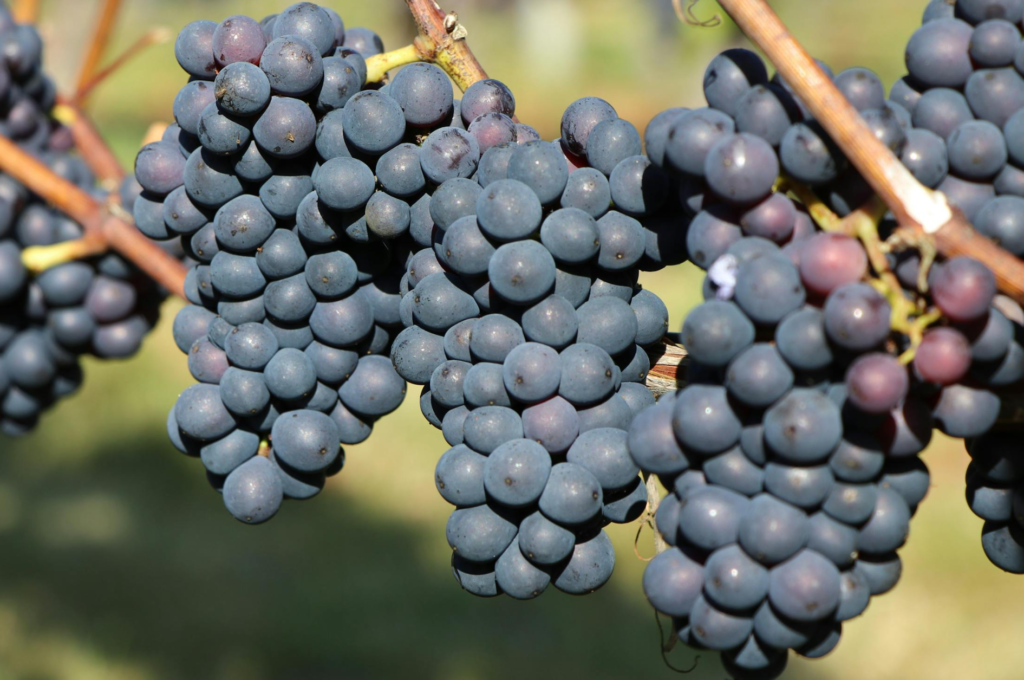
Puglia’s wines have historically been sold in bulk to northern Italian and French producers to add color and alcohol to less robust northern wines — a trade that continued into the 1990s and contributed to the region’s underrepresentation in international wine media. The change began when producers like Accademia dei Racemi, Leone de Castris, and Feudi di San Gregorio started bottling and marketing regional varietals under DOC and DOCG classifications. The key wines to seek are: Primitivo di Manduria DOP (full-bodied red from Zinfandel’s ancestral variety, grown on the sandy soils of the Ionian coast); Negroamaro of the Salice Salentino DOC (darker, more tannic, with a characteristic bitter-almond finish); Locorotondo DOC white (made from Verdeca and Bianco di Alessano, light and mineral, the natural pairing for Adriatic seafood); and the emerging Susumaniello, a variety nearly extinct by the 1990s, now producing structured, complex reds from a handful of producers in the Brindisi DOC zone. All eight properties on this list offer regional wine pairings with dinner; Masseria Montenapoleone and Masseria Il Frantoio produce their own.
How does Puglia compare to Tuscany for a glamping holiday?
The comparison is less useful than it might appear, because the two regions offer fundamentally different experiences rather than competing versions of the same experience. Tuscany’s glamping landscape is organized around hills, vineyards, thermal springs, and medieval hill towns; the density of UNESCO-listed heritage (Siena, Pienza, San Gimignano, Val d’Orcia) means that cultural itineraries from a single base are rich and compact. Puglia’s landscape is horizontal rather than vertical, organized around olive groves and limestone plateaus rather than vine terraces and hill profiles; the UNESCO heritage is more specific (Alberobello trulli, Matera Sassi just across the border in Basilicata, Castel del Monte in the north) and less concentrated. Puglia’s food tradition is arguably more distinctive for an international visitor — the specific products of the Salento and the Murgia have no equivalents elsewhere in Italy — while Tuscany’s is more immediately legible to an audience already familiar with Chianti and bistecca Fiorentina. Travelers who want emotional density in a compact area should start with Tuscany; travelers who want to understand an Italy that international tourism has barely touched should start with Puglia. Our guide to glamping in Tuscany offers a detailed comparison for those planning both.
Is Puglia appropriate for a first-time Italy visit, or is it better for return visitors?
Puglia rewards the traveler who arrives without fixed expectations, which argues slightly in favor of a return visit after Rome, Florence, and Cinque Terre have already provided the baseline Italian experience. That said, several first-time Italy visitors find that Puglia — precisely because it delivers none of the crowd-management challenges of the major tourism corridors — provides a more relaxed and ultimately more Italian experience than a first trip to the north. The decision point is what you are optimizing for: if landmark density (Colosseum, Uffizi, Duomo) is the priority, a first trip to Puglia will frustrate. If landscape quality, food authenticity, and a pace of daily life that resembles what Italian television dramas promise but major city tourism rarely delivers — Puglia is exactly that, and it is available in May without a queue.
And if you are planning a longer Italian itinerary that includes multiple regions — combining this guide with our glamping in Tuscany guide, or extending south to Basilicata and the Sassi di Matera — Dolce Glamping launches in 2026: a hand-curated directory of Italy’s finest outdoor stays, verified by Italian residents, with editorial reviews and no algorithm involved. Join the waiting list at dolceglamping.com to be among the first to access it.