What Italian Heritage Month Looks Like From Italy
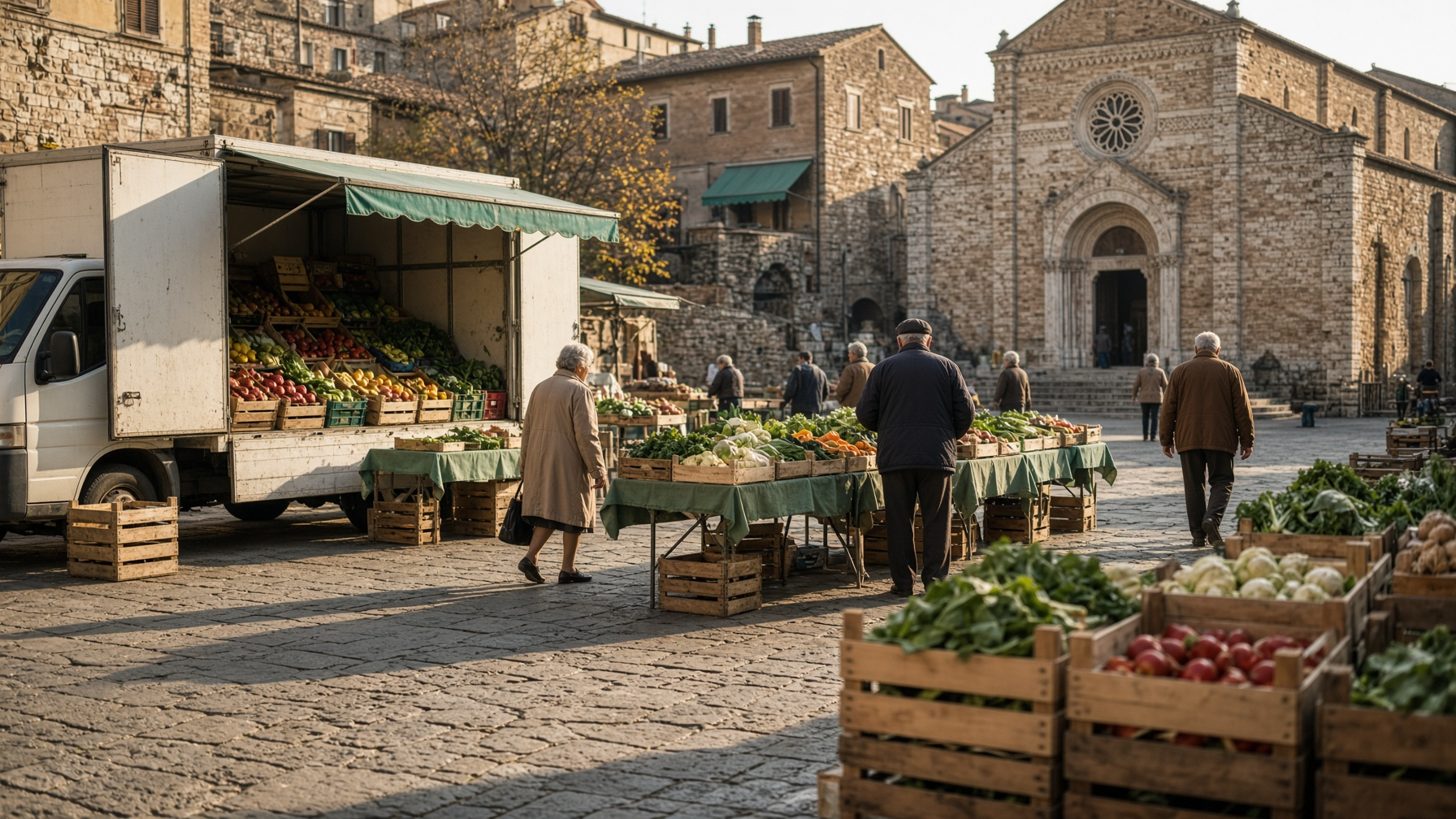
On the Monday that falls inside Italian Heritage Month in the United States, the market in my hill town opens exactly the way it opens every other Monday of the year. The fruit truck backs into the piazza before seven. The folding tables go up outside the alimentari. By eight the bar is three deep with men drinking espresso standing at the counter before work, the radio behind the register tuned to the regional traffic report. Somewhere a shutter rolls up with the particular metallic complaint every shutter in this province seems to share. Nobody hangs a flag. Nobody says the date out loud. October 12, 2026, a Monday this year, will pass through this square as an ordinary working day, indistinguishable from the Monday before it or the one after.
On the other side of the Atlantic, that same date sits near the center of a month that has its own congressional language, its own presidential proclamation, and its own name. Here, it sits near nothing at all.
That gap is not indifference, and it is not an oversight. It is the visible edge of something more interesting: two populations who share a bloodline and, for a while, a flag, carried by history in different directions for more than a century — and neither side quite noticed the moment the gap opened.
What October Means in the United States, and Nothing Here
A resolution, a proclamation, and a date chosen on purpose
The month exists because of one page of legislative language. In October 1989, the 101st Congress passed House Joint Resolution 392, designating that October as Italian-American Heritage and Culture Month. President George H. W. Bush signed the implementing Proclamation 6045 on October 12, 1989 — the same calendar date, as it happens, that opens this article three and a half decades later. Congress did not choose October at random. The month already carried Columbus Day, observed on October 12 itself before the holiday moved to the second Monday, and anchoring the new designation to an existing date gave it a ready-made place on the calendar.
The only Italian institutions that do mark it
If any part of the Italian state touches this month at all, it happens on American soil, not on Italian soil. Italy’s diplomatic missions in the United States — consulates in cities with sizable Italian-American communities — routinely take part in local Italian Heritage Month ceremonies organized by county governments, cultural foundations, and civic groups. The Italian consulate in Miami, for one example, has publicly thanked local county commissioners for proclaiming October Italian-American Heritage Month and has attended the resulting ceremonies. That is Italian diplomacy responding to an American institution, not an Italian one originating its own observance. No comparable gesture exists inside Italy’s own borders. The Ministry of Foreign Affairs has never issued a parallel domestic designation, and no regional or municipal government marks the date with so much as a press release.
The clause that reaches back to 1776
Buried in the resolution’s list of “whereas” clauses is a line most readers skim past. The phrase “all men are created equal,” from the Declaration of Independence, is credited there to Filippo Mazzei — the Italian physician, wine merchant, and correspondent of Thomas Jefferson who farmed a plot of land near Monticello in the 1770s. I have written elsewhere about how thoroughly the American republic borrowed its vocabulary and its architecture from Rome; Mazzei is the detail that makes the borrowing personal rather than purely classical. By Congress’s own account, an Italian immigrant’s phrasing sits inside the republic’s founding sentence, more than a century before the word “Italian-American” had any occasion to be used at all.
The Italy That Crossed the Ocean Isn’t Quite the Italy That Stayed
Two decades, four million departures
Between 1880 and 1920, roughly four million Italians arrived in the United States, according to the historical immigration statistics compiled by the U.S. government; nearly half of that total left in a single decade, 1900 to 1910. They sailed overwhelmingly from the south — Sicily, Campania, Calabria, Abruzzo, Basilicata — out of a countryside where land was scarce, taxes had risen sharply since unification, and a wage earned on a dock in New Jersey or in a Pennsylvania mine could rebuild a family’s fortunes faster than another generation of sharecropping at home.
Many of them never intended the move to be permanent. Government estimates from the period suggest that somewhere between 30 and 50 percent of this generation of arrivals eventually returned to Italy, where they became known locally as ritornati — the returned ones, who came back with savings, a handful of English phrases, and a changed relationship to the land they had left. It was roughly the other half, the ones who stayed, and the generations born after them, who became the community this month exists to honor. The ones who went home folded back into a country that kept changing without them, often met with as much suspicion as curiosity by neighbors who had never left at all.
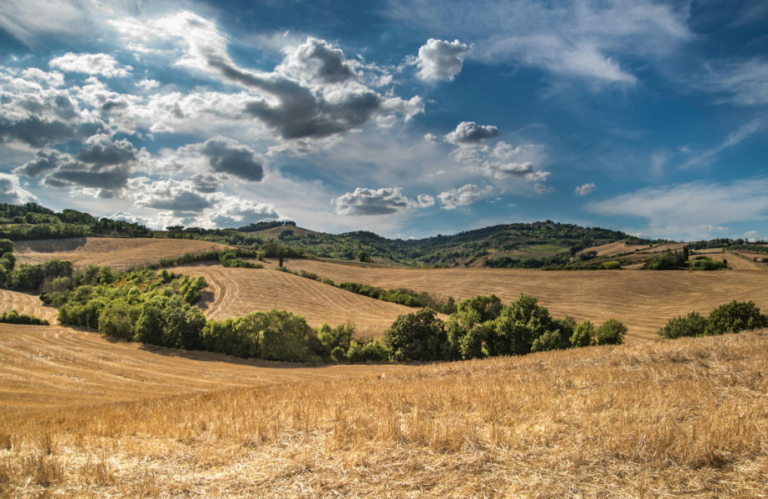
Le Marche, where I live and work, sent far fewer people across that particular ocean. The region’s own emigration in that period ran more often toward France, Switzerland, and South America, which is one reason this month passes through here with even less notice than it might in a town outside Palermo or Cosenza. But the underlying dynamic was national, not regional, and the century that followed treated the home country and the diaspora very differently indeed.
What survived the crossing better than it survived here
What those four million people carried with them was never a postcard Italy. It was a rural, overwhelmingly Catholic, largely dialect-speaking Italy of roughly 1890 to 1920 — the Italy of the parish feast day, the household of three generations under one roof, the Sunday table that ran three hours past the last course. Italy itself did not stand still after they left. It industrialized, urbanized, got a television in nearly every kitchen by the 1960s, and let go — gradually, then quickly — of habits that the emigrants, settling into unfamiliar cities, held onto precisely because holding on was what kept a transplanted community intact.
Language is the clearest place to watch it happen. According to ISTAT, Italy’s national statistics institute, the share of Italians who speak mostly or only dialect at home has collapsed from roughly one family in three in the late 1980s to under ten percent today, with the steepest drop concentrated in the last two decades. My own region’s dialect, marchigiano, has followed the identical curve as everyone else’s. There are words that would have drawn no attention at this same market two generations ago that nobody under 30 here would recognize today. In a meaningful number of Italian-American households in New Jersey or in Providence, the equivalent word — for an eggplant, a type of pasta, a particular kind of uncle — still gets used without anyone pausing to translate it, carried forward with more fidelity than the dialect it came from has managed in the town that produced it. That is not a quaint mispronunciation to smile at. It is, in the strict sense, a preservation that Italy itself failed to manage.
Columbus, Seen From Genoa Rather Than From Ellis Island
In Italian schoolrooms, Cristoforo Colombo is a Genoese navigator who sailed under the flag of Castile and died convinced he had reached the edge of Asia: a figure from a history chapter, assessed, footnoted, and set back down again. He carries no weight in daily identity here. There is no parade, no long weekend built around him, and October 12 is not a public holiday anywhere in Italy. Nothing on the national calendar marks the date at all.
The weight the date carries in the United States has a specific origin, and it has less to do with the navigator than it might seem. Italian immigrants arriving in the late nineteenth century met real, organized hostility: newspapers that ran open slurs, discrimination in housing and hiring that lasted generations, and on March 14, 1891, a mob in New Orleans that broke into the parish prison and killed 11 Italian immigrants and Italian-Americans — several of them already acquitted at trial — in what remains the largest single mass lynching in American history. Columbus, already a fixture of American civic memory well before large-scale Italian immigration began, became something Italian-American communities could point to as proof of an Italian contribution to the country that predated their own arrival by four centuries. The holiday’s American weight grew, in part, out of that specific need for standing. The figure being honored is Genoese; the need he came to answer was entirely American.
The memory of that history carries unevenly across the ocean today. In 2019, the mayor of New Orleans issued a formal, on-record apology to the descendants of the 11 men killed in 1891, at a ceremony held in the city’s own Italian cultural center. The event made national news in the United States. It barely registered here. Ask most Italians about a lynching of Italian immigrants in Louisiana and you will get a blank look — not because the history is hidden, but because it was never woven into Italy’s national memory the way, say, the sheltering of escaped Allied prisoners by Italian families during the German occupation of 1943–1944 has been woven into specific regional memories across central Italy, including these hills. One history stayed close to the people who lived it, on the ground where it happened. The other crossed an ocean and stayed close to the people who left.
What I See From Here
Thirty years of assessing old buildings across these hills teaches a person to read what a structure has lost as carefully as what it has kept — a beam replaced with the wrong wood, a crack re-plastered over instead of repaired around. I apply the same habit, probably without entirely meaning to, outside my own profession.
Property surveys across these hills turn up a specific kind of file often enough that it counts as a pattern rather than a coincidence: a house that has sat closed for decades, still legally owned by the descendants of a family that left for Pittsburgh, Scranton, or Buenos Aires a century ago and never formally settled the inheritance. Nobody alive in the family today has necessarily ever seen the house in person. The deed sits in a drawer somewhere abroad, or in an Italian land registry nobody there knows how to read, while the roof keeps failing by increments that no one is present to notice.
What strikes me about Italian-American heritage, watched from this side of the water, is not that it preserved an Italy frozen at the exact moment of departure, like a photograph nobody has touched since. It kept developing on its own terms — gained its own version of a holiday table, its own vocabulary, its own rhythm for a wedding — on a branch that split from the trunk roughly a century ago and grew in different soil, under a different sky, through decades Italy itself spent changing into something its own emigrants would barely recognize. It is not a faded copy that needs correcting against some original. It is a separate, continuing branch of the same tree, still growing, on the other side of the ocean.
What an Italian-American Can Do This October — and After
The most useful thing this month can produce is not a flag or a dinner, though either is reason enough on its own. It can be a starting point for the kind of research that turns a family story into a documented place.
- Ask the oldest living relative for the name of the comune, not only the region. “Sicily” or “Calabria” will not open a record book; “Mistretta” or “Cosenza” will.
- Italian civil records — births, marriages, deaths — are held at each comune’s anagrafe office and, for most regions before roughly the early twentieth century, increasingly digitized through the State Archives’ Antenati portal, with coverage that varies by town and record type.
- A town’s Pro Loco, the volunteer association present in nearly every Italian comune, is often the fastest route to a parish register, a cemetery record, or a neighbor who still remembers the family name.
- If a visit becomes possible, consider going outside peak season. A paese in the Marche, Abruzzo, or inland Sicily in late October or November shows an ordinary Tuesday instead of a performance staged for tourists, and an ordinary Tuesday is the closer version of the place an ancestor once lived in.
- Treat any dialect words that survived in the family as data rather than as something to correct. They often point to a sub-region more precisely than a surname does.
- If the family history includes a house still standing somewhere in Italy, even one nobody living has ever visited, a basic structural and legal check before any decision about it is worth more than sentiment alone. Properties left unattended for decades accumulate problems quietly, and the paperwork alone can take longer to untangle than the travel.
None of that requires a plane ticket to begin. It requires a name, a free evening, and the Antenati website.
FAQ — Italian Heritage Month Questions Answered
What is Italian Heritage Month? Italian Heritage Month, formally Italian-American Heritage and Culture Month, is a U.S. observance held every October that honors the history and contributions of Italian immigrants and their descendants. Congress established it in 1989, and Italy itself has no equivalent national observance.
When is Italian Heritage Month, and why October? It runs for the full month of October. Congress chose October in 1989 because the month already contained Columbus Day, which gave the new designation a ready-made anchor on the American calendar.
Is October 12 a public holiday in Italy? No. October 12 is an ordinary working day across the whole of Italy, with no national ceremonies, school closures, or civic recognition tied to the date.
How is Columbus Day viewed in Italy compared with the United States? In Italy, Columbus is a historical figure from the school curriculum with no identity-political weight in daily life. In the United States, the holiday grew in importance partly because it gave Italian-American communities facing documented discrimination in the late nineteenth and early twentieth centuries a point of pride that predated their own arrival by centuries.
Why do some Italian-American traditions feel older than what you’d find in Italy today? Italian emigrants between 1880 and 1920 carried a rural, dialect-speaking, parish-centered culture that Italy itself moved away from over the following century, through urbanization, industrialization, and the spread of standard Italian. Communities abroad, settled together and somewhat isolated, often preserved specific words and practices with more fidelity than the hometowns that produced them.
How can I trace my family’s town of origin in Italy? Start with the exact comune name rather than just the region, then search civil records through that comune’s anagrafe office or through Antenati, the digital portal run by Italy’s State Archives, which covers much of the country for records before the early twentieth century, though coverage varies by location.
What is the best way to visit an ancestral hometown? Go outside the summer tourist season, contact the town’s Pro Loco association in advance, and expect an ordinary working town rather than a staged experience — that ordinariness is a closer match to the daily life an ancestor once knew.
The Takeaway
Italian Heritage Month will come and go here the way it comes and goes every year: unannounced, unflagged, unnoticed on the surface of an October that looks exactly like September did. That is not Italy dismissing what it exported a century ago. It is Italy having moved on, the way every country moves on, while the family that left kept hold of something worth keeping. Neither version is the authentic one measured against the other. Both are simply what happened to the same people after the early 1900s sent some of them in one direction and left the rest of us here.
If you want more dispatches written from inside these towns rather than about them, you can find more stories on Tastes & Wonders of Italy, or subscribe to The Engineer’s Italy newsletter for monthly notes from this side of the ocean.
Tastes & Wonders of Italy: https://tasteandwondersofitaly.com/