Tuscany vs Le Marche: Which Italian Region Should You Actually Visit?
In 1967, a well-known American art historian visited the Marche for the first time after spending years writing about Tuscany. He recorded his impressions in a letter to a colleague: “Everything I admired in the Florentine countryside I found here again — the hill towns, the fortified farmhouses, the Romanesque churches — but without the buses.” The letter has been quoted in Italian academic circles for decades. The observation holds today, with one update: the buses have arrived in Tuscany in numbers that man could not have imagined, while Le Marche remains, for most American travelers, essentially undiscovered.
That asymmetry is the starting point for this comparison. Tuscany is one of the most written-about regions on earth. Le Marche, its Adriatic neighbor to the east, is not. Both have claims on the idea of the Italian landscape: rolling hills, stone villages perched on ridges, olive groves and vineyards, Romanesque churches and Renaissance palaces. The question is not which region is better. The question is which one is right for you, in the specific way you want to experience Italy in the years you have to spend here.
I have lived in Le Marche for more than fifty years. I work here as a civil engineer — I have assessed the structural condition of buildings in Macerata, Ascoli Piceno, Urbino, and dozens of villages whose names do not appear in any American guidebook. I know Tuscany too, professionally and as a traveler. What follows is an honest comparison from someone who is not neutral, who will tell you so, and who believes that honesty about bias is more useful than false balance.
The Landscape: What You Are Actually Looking At
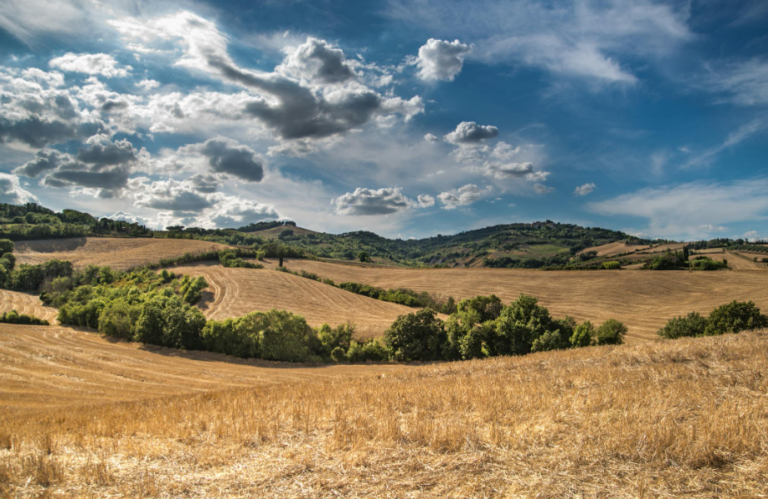
The visual archetype of Tuscany — the cypress-lined road, the hilltop farmhouse, the Val d’Orcia in golden light — is real. It exists. The photographs are not fabrications. What they omit is scale: in the most-visited parts of Tuscany, particularly the triangle between Florence, Siena, and Montepulciano, the landscape is shared at high density. In July and August, the Val d’Orcia is photographed by more people per square kilometer than almost anywhere in Europe. This does not make it less beautiful. It does change the experience of it.
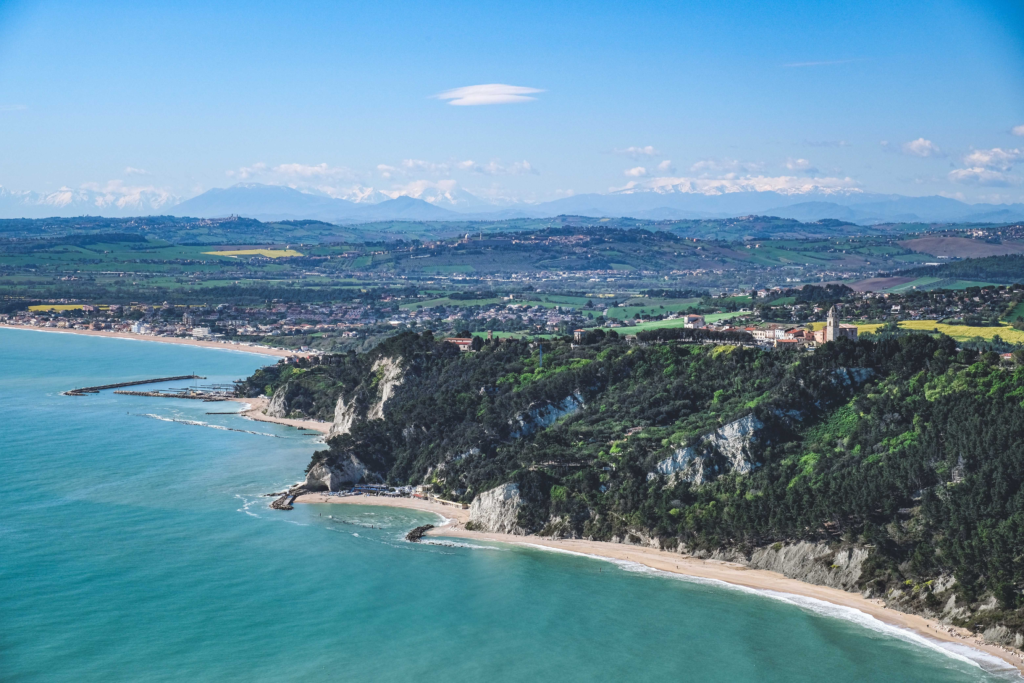
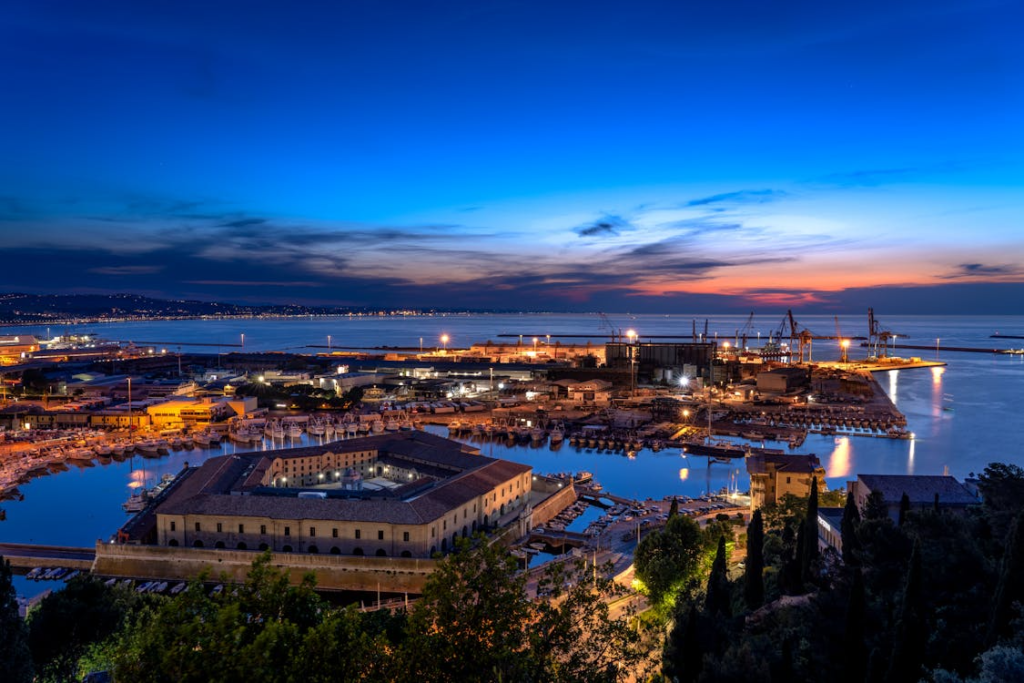
Le Marche runs the full length of central Italy from the Apennines to the Adriatic, a distance of roughly 130 kilometers east to west. The Apennine spine along its western edge includes the Sibillini Mountains, whose highest peaks exceed 2,400 meters. The coast, along the Conero promontory south of Ancona, is limestone cliff dropping directly into the Adriatic — a geological formation with no equivalent in Tuscany. Between the two, the region is braided with river valleys: the Esino, the Potenza, the Chienti, the Tenna, the Tronto. Each valley has its own hill towns, its own wines, its own dialect variations. In forty years of professional work in this territory, I have not covered all of it.
The practical implication is density of discovery per kilometer driven. In Tuscany, the major landmarks are well-mapped and well-staffed: Monteriggioni, Pienza, San Gimignano, Cortona. They reward the visit. They are also surrounded by other visitors. In Le Marche, the equivalent towns — Offida, Treia, Montappone, Morrovalle, Montefiore dell’Aso — have no lines, no audio guides, and sometimes no bar open on a Tuesday. That is not a complaint. It is a description of what you are choosing.
The Food: Same Latitude, Different Plate
Both regions belong to the central Italian culinary tradition, which means olive oil, cured meats, legumes, sheep’s milk cheeses, and pasta made without egg by older generations and with egg by everyone else. The overlap ends there.
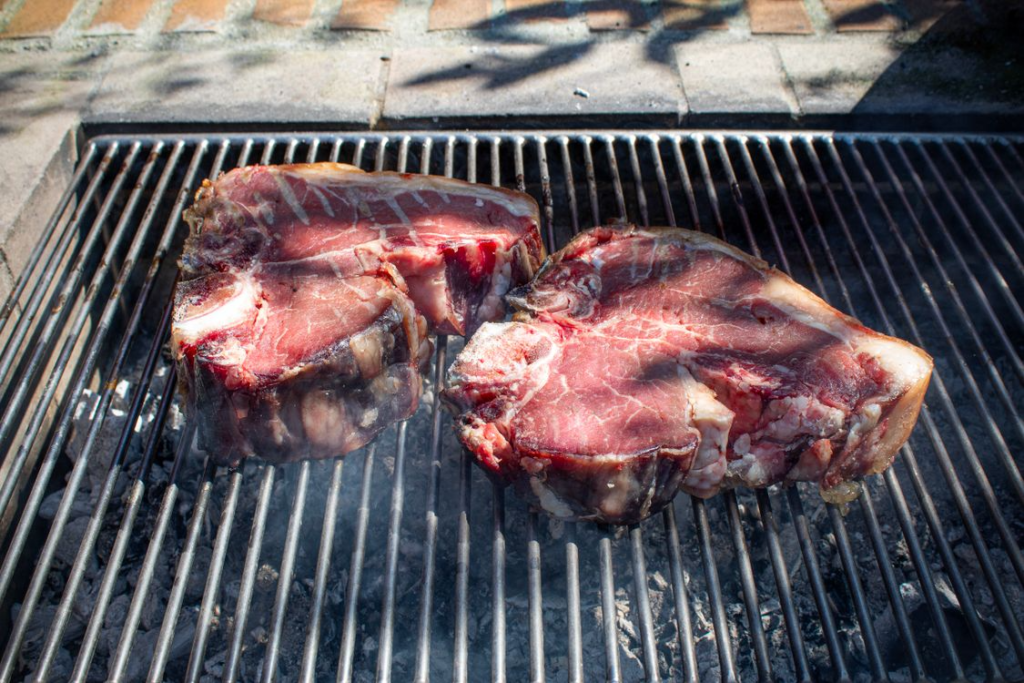
Tuscany built its culinary identity around the concept of cucina povera elevated: bread without salt, ribollita, bistecca alla Fiorentina. It is a cuisine of restraint and confidence. The Florentines are not apologetic about their food.
Le Marche has a more complicated culinary geography. The Adriatic coast means fish: the brodetto (fish stew) varies significantly from Ancona to San Benedetto del Tronto, and the argument about which version is correct is the kind of argument Marchigiani will have across a dinner table for three hours. Inland, the tradition shifts to pork, game, truffles, and a pasta culture that includes vincisgrassi — a baked pasta dish with ragù, offal, and béchamel that predates the Bolognese lasagna recipe most Americans know by at least two centuries.
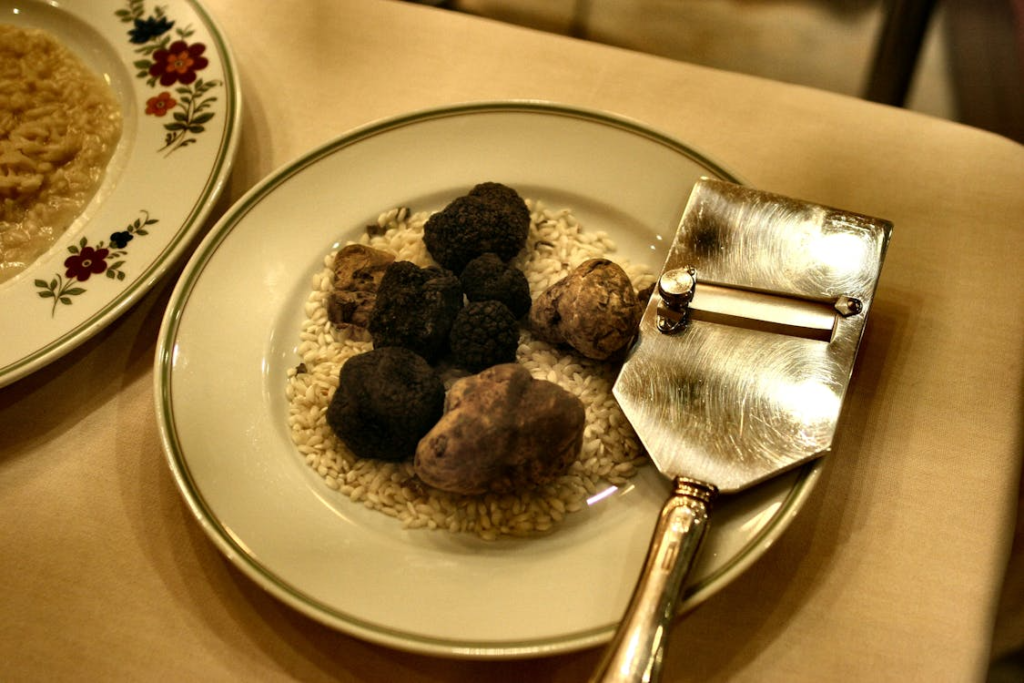
The truffle distinction matters particularly. Both regions have truffles, but the Marche contains Acqualagna, one of the three most significant truffle markets in Italy, alongside Alba in Piedmont. In November, when the white truffle season peaks, Acqualagna draws buyers from across Europe. Prices are lower than Alba because the crowds are smaller. The quality is identical — it is the same fungus from the same Apennine geology.
The wines are less internationally known in Le Marche, which is an advantage if you are buying them locally. Verdicchio dei Castelli di Jesi DOC is one of the finest Italian whites: mineral, structured, capable of aging for a decade in the best vintages. It sells at prices that would be unthinkable if the label said Vernaccia di San Gimignano. Rosso Conero DOC, based on the Montepulciano grape on the slopes of Monte Conero, has a density and character that competes easily with Tuscan reds at twice the price. Neither wine is difficult to find in the region. Both are nearly invisible in American restaurants.
The Art: Renaissance Geography
Here is a fact that American travelers consistently find surprising: the Renaissance was not a Florentine monopoly. Urbino, in the northern Marche, was one of the most intellectually significant courts in fifteenth-century Europe. Federico da Montefeltro, Duke of Urbino from 1444 to 1482, built a palace that the art historian Frederick Hartt described as “perhaps the most complete expression of humanist ideals in Italian architecture.” The Palazzo Ducale in Urbino contains the Studiolo — a room decorated entirely in trompe-l’oeil intarsia work of such technical sophistication that engineers today discuss it as a case study in optical geometry.
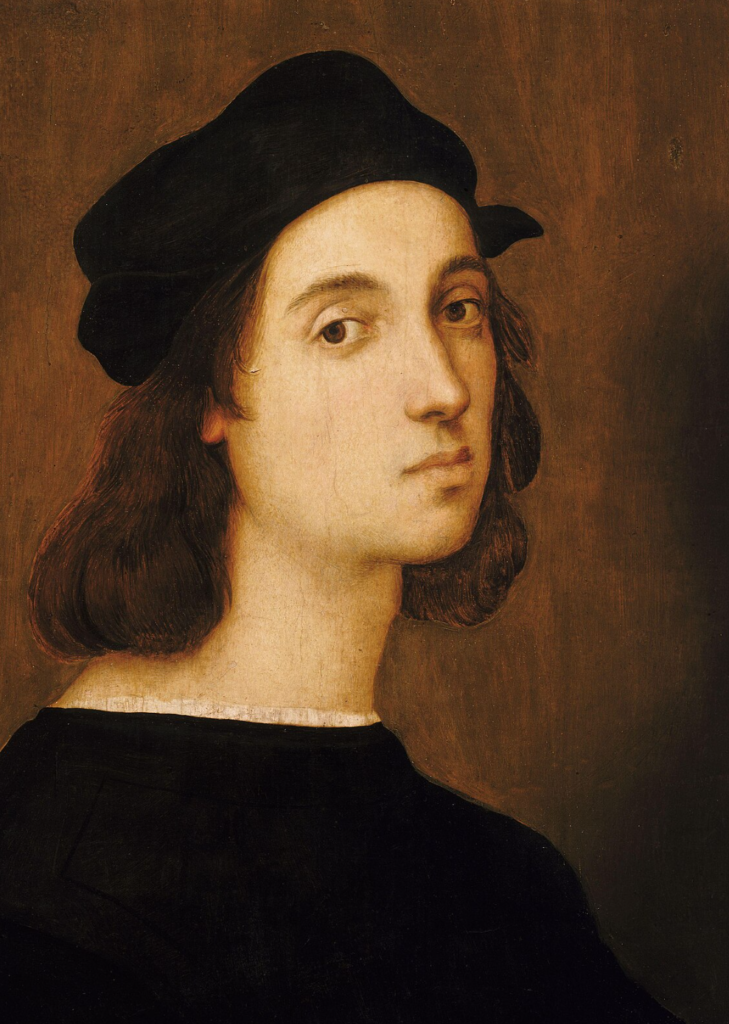
Raphael was born in Urbino in 1483. His birthplace, a few hundred meters from the Palazzo Ducale, is a museum. It receives a fraction of the visitors that flood the Uffizi to see his work. Both are legitimate itineraries. They are not the same experience.
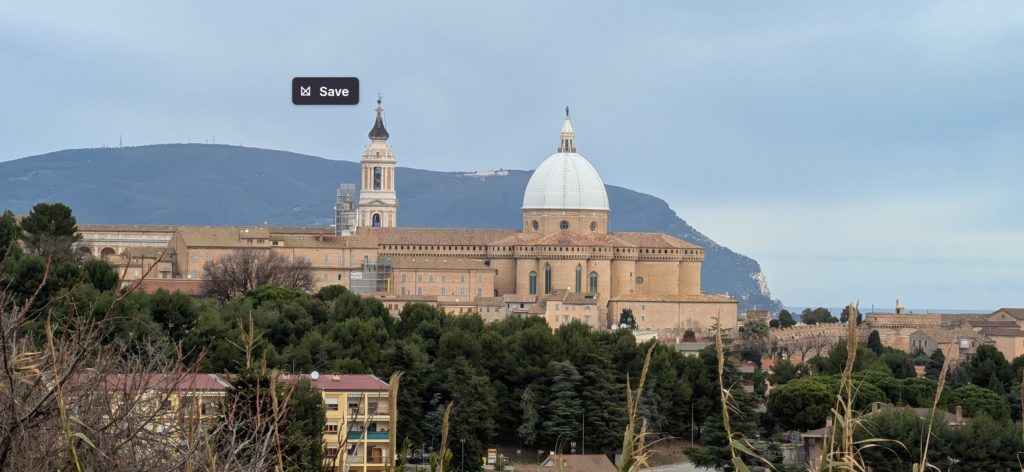
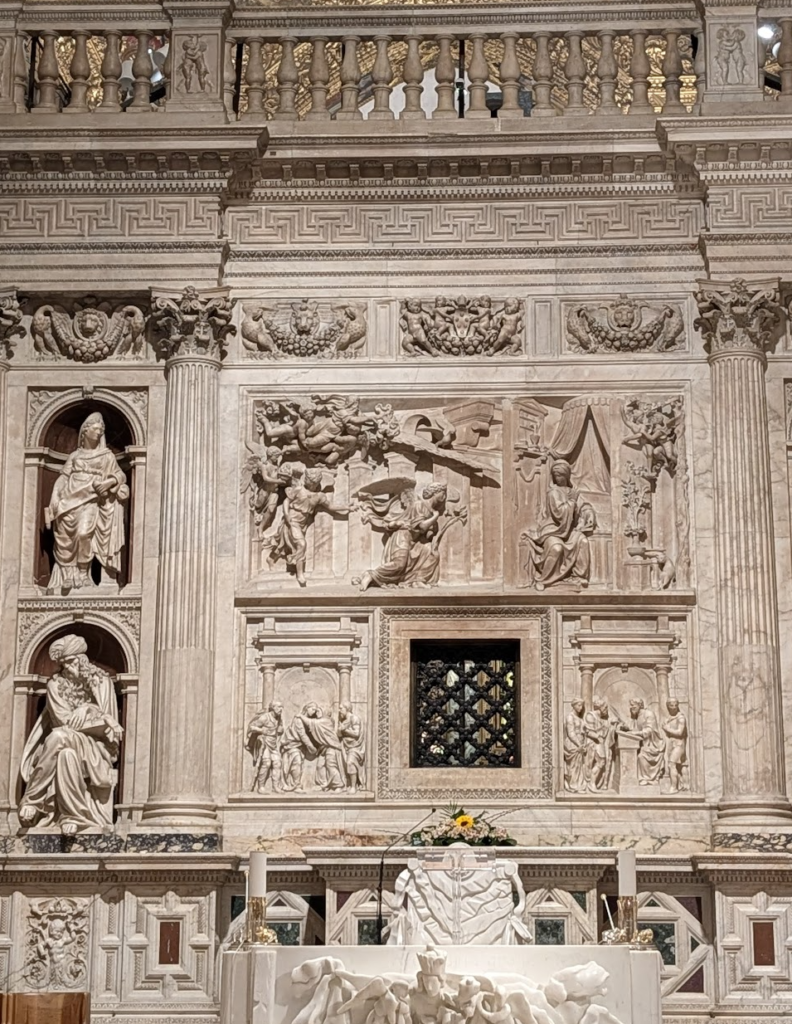
The Marche also contains Loreto, site of the Basilica della Santa Casa — one of the most significant Marian pilgrimage destinations in the Catholic world, with a history connected to the Crusades and to a theological debate about the physical transport of the house of the Virgin Mary from Nazareth to the Adriatic coast. For American travelers with Catholic heritage, Loreto is a destination with no equivalent in Tuscany.
The Sferisterio in Macerata, an open-air neoclassical arena completed in 1829 and designed originally for the sport of pallone col bracciale, now hosts the Macerata Opera Festival each summer. It seats approximately 6,000 people in an atmosphere that combines operatic performance with the specific quality of outdoor theater in a hill-town arena under Italian summer stars. The Rossini Opera Festival in Pesaro, on the Marche’s Adriatic coast, is the reference festival globally for Gioachino Rossini’s complete works. Rossini was born in Pesaro in 1792.
Tuscany’s artistic inheritance — Uffizi, Accademia, Piazza dei Miracoli, San Francesco in Arezzo — is of a different order of fame. That is a factual statement, not a judgment. If you want to stand in front of Botticelli’s Primavera in the building where it has hung for centuries, you go to Florence. No Marche equivalent exists. What exists is a different kind of encounter: Raphael’s actual bedroom, painted decorations in churches in towns no one has marketed to you, the Palazzo Ducale in Urbino where you can walk through rooms that have not changed their proportions since the fifteenth century and do so without scheduling your visit six weeks in advance.
The Practical Reality: Crowds, Cost, and Infrastructure
The data point that most concentrates minds: Florence received approximately 12 million visitors per year in the years before 2020. Ancona, the regional capital of Le Marche, receives approximately 500,000. The entire region of Le Marche receives roughly 4 million visitors annually, concentrated heavily on the coastal resorts in July and August. The interior — where the hill towns and the Sibillini and the truffle markets are — receives a fraction of that.
The practical implications are significant:
Accommodation: In peak season in Florence, Siena, or Montepulciano, a three-star hotel in a reasonable location costs between €180 and €280 per night. In comparable towns in Le Marche — Macerata, Ascoli Piceno, Urbino — the equivalent is €80 to €130. Agriturismi and relais with comparable quality and setting to Chianti or the Val d’Orcia run 30–40% cheaper.
Restaurants: The restaurant economics follow the same logic. In the Florentine tourist center, a dinner for two with wine in a credible trattoria rarely comes under €60–80 per person. In Macerata or Ascoli Piceno, the same quality of cooking — better, in my view, for the specific dishes of the region — costs €25–40 per person.
Driving: Tuscany has invested heavily in tourism infrastructure, which means good signage, parking areas, and tourist information in multiple languages. Le Marche is drivable and the roads are in reasonable condition, but navigating the interior requires comfort with minor roads and some tolerance for the kind of trip where the GPS suggests a direction and you decide, looking at the road ahead, to trust the GPS with a degree of Italian skepticism. The SS77 from Macerata toward the coast, the SP78 through the Sibillini foothills, the roads through the Esino and Sentino valleys — these are drives that reward the attentive traveler. They also require the attentive traveler.
Language: English is well-established in Florence, Siena, and the major Tuscan tourist circuits. In the interior of Le Marche, outside the university cities of Macerata and Urbino, the traveler who speaks no Italian will sometimes find service more limited. This is not unwelcoming: it is simply a region that has not yet developed the tourist infrastructure of a destination that has been receiving mass international travel for forty years. A phrase-book level of Italian and a willingness to communicate with some patience go a long way.
The Honest Comparison: Two Different Journeys
The traveler who should go to Tuscany is someone visiting Italy for the first time, with limited time — say, ten to fourteen days — who wants the highest density of world-class art, recognized landscapes, and smooth tourist infrastructure. Tuscany delivers this reliably. Florence, Siena, Chianti, Val d’Orcia, Cinque Terre (technically Liguria, but often packaged with Tuscany): this is a circuit that has been refined by decades of international tourism and functions at a high level. If you have one chance to see Italy and a short window, the Tuscan circuit is a defensible choice.
The traveler who should go to Le Marche is someone who has been to Italy before — or someone on their first visit who is specifically willing to trade some legibility for depth. They want to eat a dish that does not appear on any menu outside the province where it originated. They want to drive through a valley without meeting another rental car from their country. They want to walk into a Romanesque church and find the sacristan, not a ticket booth. They want to have a conversation about wine with the man who made it.
These are not competing values. They are different itineraries for different trips. What I can tell you, from fifty years of living here, is that the travelers who discover Le Marche tend to return. The region does not offer the efficient delivery of confirmed masterpieces. It offers something less predictable and, I would argue, more lasting: the experience of a place that is still itself.
Practical Information
Getting there: Tuscany is served by Florence Airport (FLR) and Pisa Airport (PSA), both with direct European connections and easy Ryanair links from London, though transatlantic flights typically connect through Rome or Milan. Le Marche is served by Ancona Falconara Airport (AOI) with limited direct connections (mainly seasonal European routes); the practical entry point for most American travelers is Rome Fiumicino (FCO), from which Ancona is approximately 3 hours by train or 3.5 hours by car via the A24/SS77 axis.
Best time to visit: Both regions are at their best in late spring (May–June) and autumn (September–October). July and August are hot and crowded in Tuscany; the Marche coast fills with Italian holiday-makers but the interior remains accessible. For truffle season in Le Marche, late October through November is the target.
How long you need: Tuscany rewards a minimum of a week for a meaningful itinerary. Le Marche can be meaningfully experienced in five days focused on the interior (Macerata, Urbino, Ascoli Piceno, Sibillini foothills) or seven to ten days for a coast-to-mountains combination.
Combining both: Rome–Le Marche–Tuscany or the reverse is a practical itinerary that can be driven in under three weeks. The Adriatic–Tyrrhenian axis through the Apennines (roughly: Ascoli Piceno → L’Aquila → Siena) is one of the more scenic cross-country drives in central Italy.
FAQ
Is Le Marche comparable to Tuscany in terms of art and history?
Le Marche contains Urbino, birthplace of Raphael and site of one of the most significant Renaissance courts in Italy; the Basilica della Santa Casa in Loreto; and a density of Romanesque architecture that rivals Tuscany’s. The difference is that Marche art history is less internationally marketed, not less historically significant.
Is it harder to travel in Le Marche than in Tuscany?
The tourist infrastructure in Le Marche is less developed than in Tuscany. English is less widely spoken in smaller towns, and some sites have irregular opening hours. For travelers comfortable with self-guided driving itineraries and basic Italian phrases, this is navigable without difficulty.
How do the food and wine compare?
The cuisines are distinct. Tuscany centers on cucina povera traditions and its famous wines (Chianti, Brunello, Vernaccia). Le Marche offers a broader range driven by both Adriatic fishing and Apennine farming traditions: brodetto, vincisgrassi, truffles from Acqualagna, Verdicchio, and Rosso Conero. Prices for equivalent quality are substantially lower in Le Marche.
Are there beaches in Le Marche?
Yes. The Conero Riviera south of Ancona — Monte Conero and the beaches of Sirolo, Numana, and Portonovo — is widely considered among the most scenic stretches of Adriatic coastline, with limestone cliffs and clear water. It is significantly less crowded than the Amalfi Coast or comparable Tyrrhenian beaches.
What is the best base for exploring Le Marche?
Macerata and Ascoli Piceno are the best bases for the southern interior; Urbino for the north. Ancona is convenient for the coast and for logistics. All three interior cities have accommodation, restaurants, and enough size to provide services without the tourist-center character that makes some historic towns feel like stage sets.
Which region is better for a first trip to Italy?
For a first visit with limited time (under two weeks), Tuscany paired with Rome remains the most efficient introduction to Italy’s art and landscape. For a first visit where the traveler specifically wants depth over efficiency — less famous masterpieces, more contact with regional culture — Le Marche is a serious alternative from day one.
Can I combine Tuscany and Le Marche in one trip?
Yes, and it is a natural combination. The two regions share the Apennine spine as a common border in some sections, and a 10–14 day itinerary can meaningfully incorporate Tuscany’s highlights and Le Marche’s interior with a drive through or across the Apennines. The contrast between the two reinforces the character of each.
What makes Le Marche different from other “lesser-known” Italian regions?
Most “lesser-known” Italian regions promoted to international travelers are unknown because they lack significant sites. Le Marche is different: it has Renaissance art at Urbino, major opera festivals, one of Italy’s most important truffle markets, DOP food products, DOC wines, and a coastline of geological distinction. It is unknown because it has been marketed less, not because it offers less.
Plan Your Visit to Le Marche
If this comparison has given you a direction, I offer online consultations for travelers planning itineraries in Le Marche, Umbria, and Abruzzo — the part of Italy I know from the inside. We can build an itinerary based on your interests, travel dates, and the kind of experience you are after, whether that means the truffle market at Acqualagna, a seat at the Sferisterio, or a drive through the Sibillini in October.
Book a consultation via TidyCal
And if you want to receive the articles and notes I publish on central Italy — before the crowds arrive, metaphorically speaking — the newsletter is the right place to start.
[Subscribe to the Tastes & Wonders newsletter]
Related reading on this blog:
– Cingoli: The Marche Hill Town Italy Voted Its Most Beautiful Village
– Le Marche: The Italian Region Where the Mediterranean Diet Was Born
– Italy’s Best Kept Beach Secret: Conero Riviera vs Amalfi Coast (forthcoming)