Conero Riviera vs. the Amalfi Coast: An Honest Comparison
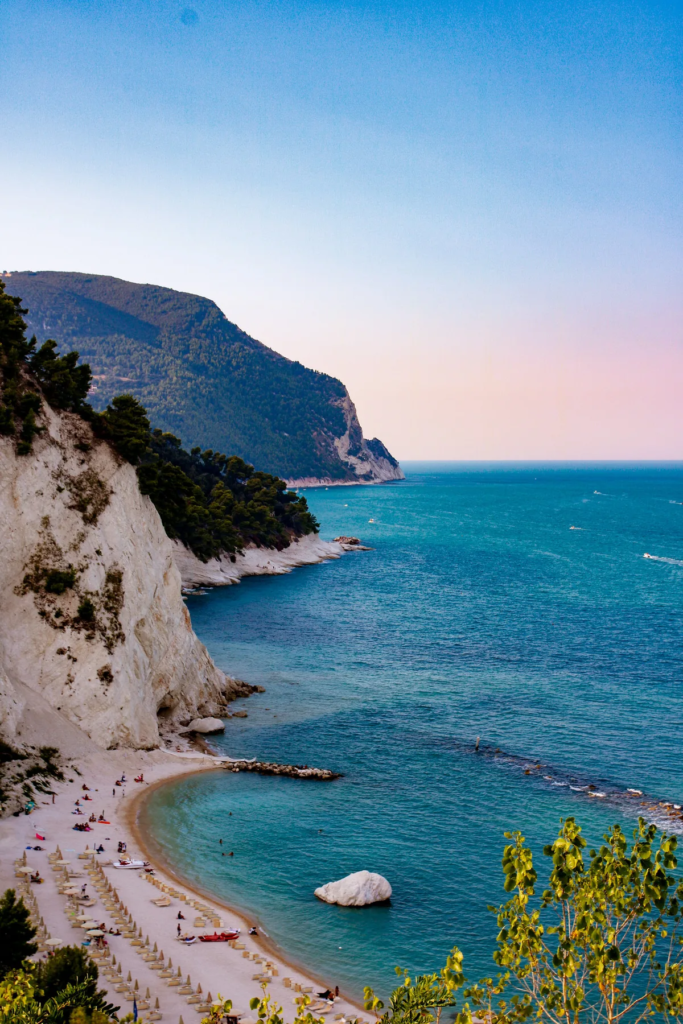
The Conero Riviera wakes up quietly. At six in the morning in July, the pebble beach below Numana is empty except for two fishermen loading crab pots into a wooden gozzo (a traditional flat-sterned Adriatic fishing boat), and the white face of Monte Conero — a 572-meter limestone wall that drops straight into the Adriatic — is still pink with the last of the sunrise. I have watched this view change almost nothing about itself in the years I have lived thirty minutes from this coastline. That absence of change is the whole story here. This article compares the Conero Riviera against the Amalfi Coast on the criteria that actually decide a vacation — cost, crowding, beach type, and how hard it is to get around — and tells you plainly which one fits the trip you are actually planning.
The short answer: choose the Conero Riviera if you want lower prices, real space on the sand, and white-cliff scenery you can enjoy without a boat reservation dictating your day. Choose the Amalfi Coast if the vertical drama of Positano and Ravello, the global name recognition, and a more built-out infrastructure of hotels and restaurants matter more to you than avoiding crowds. Families on a budget, repeat visitors to Italy, and travelers who dislike traffic tend to leave the Conero happier. First-time visitors chasing the postcard image of the Italian coastline, and travelers with a bigger budget and a higher tolerance for August congestion, tend to get more out of the Amalfi Coast.
The Conero Riviera: What It Actually Is
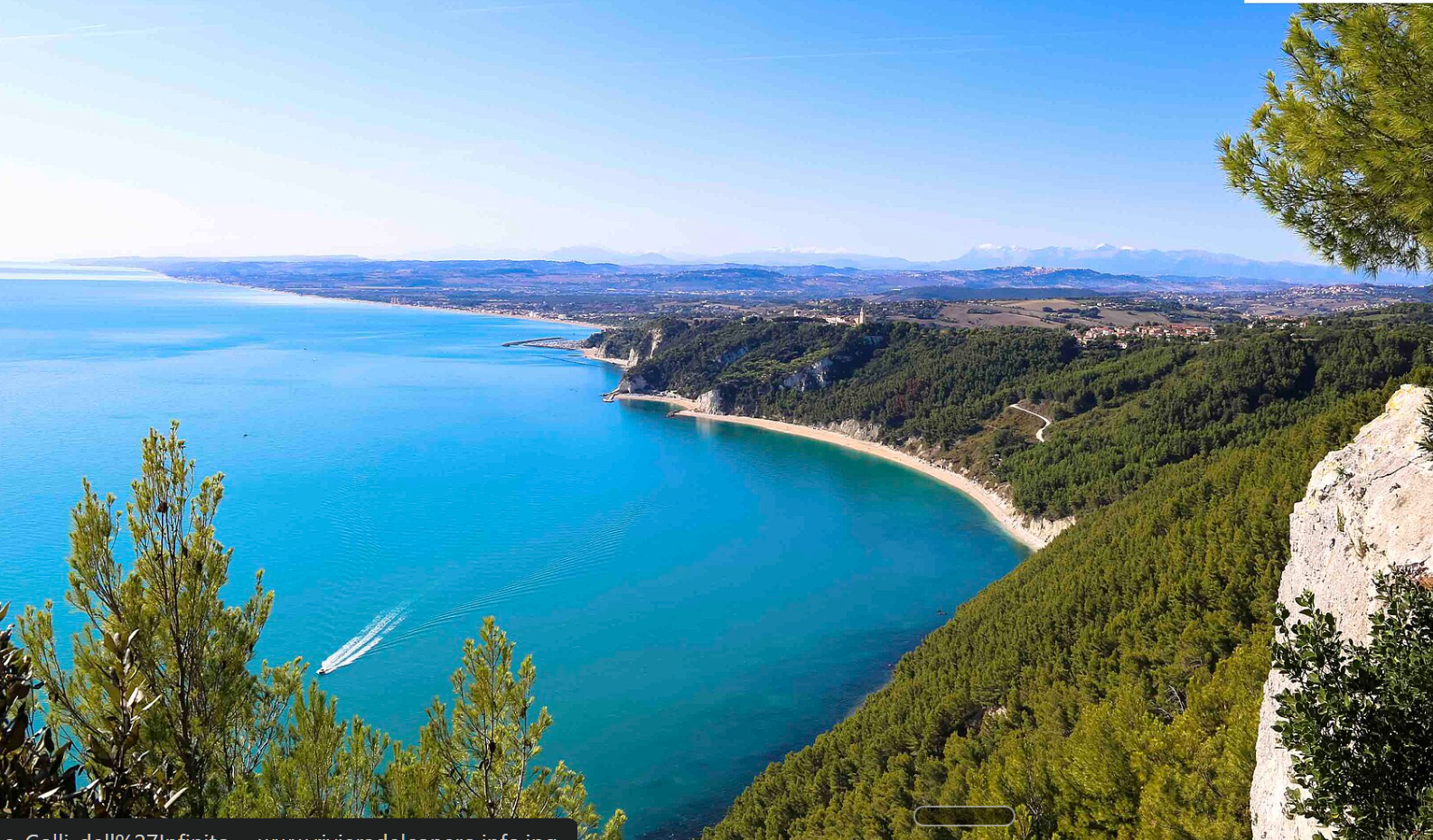
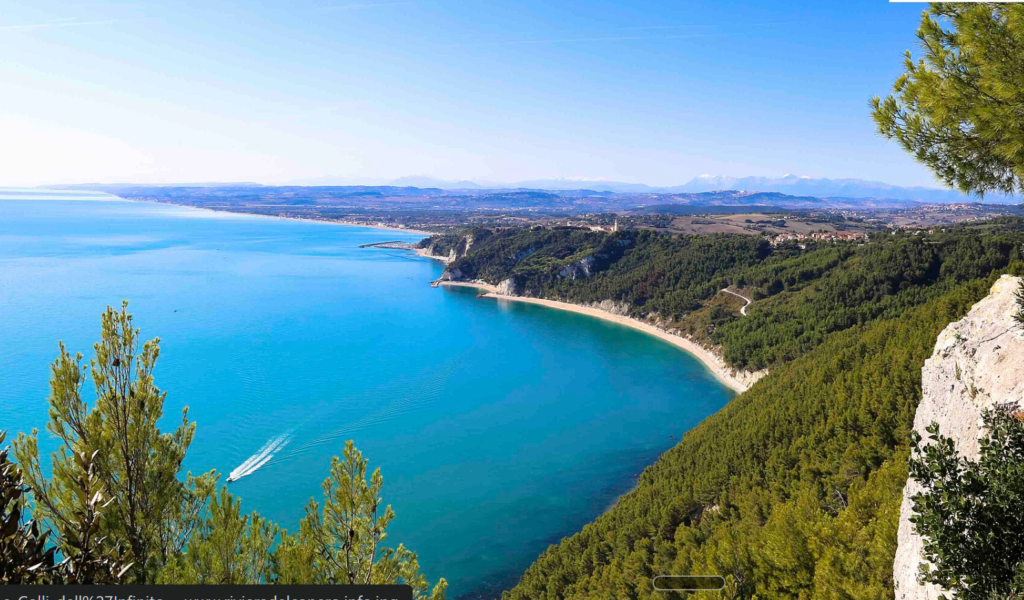
The Riviera del Conero runs for roughly twenty kilometers south of Ancona, built entirely around Monte Conero, a 572-meter promontory that is, notably, the only stretch of high coastline on the Adriatic Sea between Trieste and the Gargano peninsula in Puglia. The mountain and the water around it form the Parco del Conero, a regional park protecting close to 6,000 hectares of Mediterranean scrub, pine forest, and cliff. Because the park designation blocks large-scale development, there is no wall of hotels along this coast the way there is on so much of the Adriatic further north. What you get instead is a shoreline that alternates between small resort towns and stretches of coastline you can only reach on foot or by water.
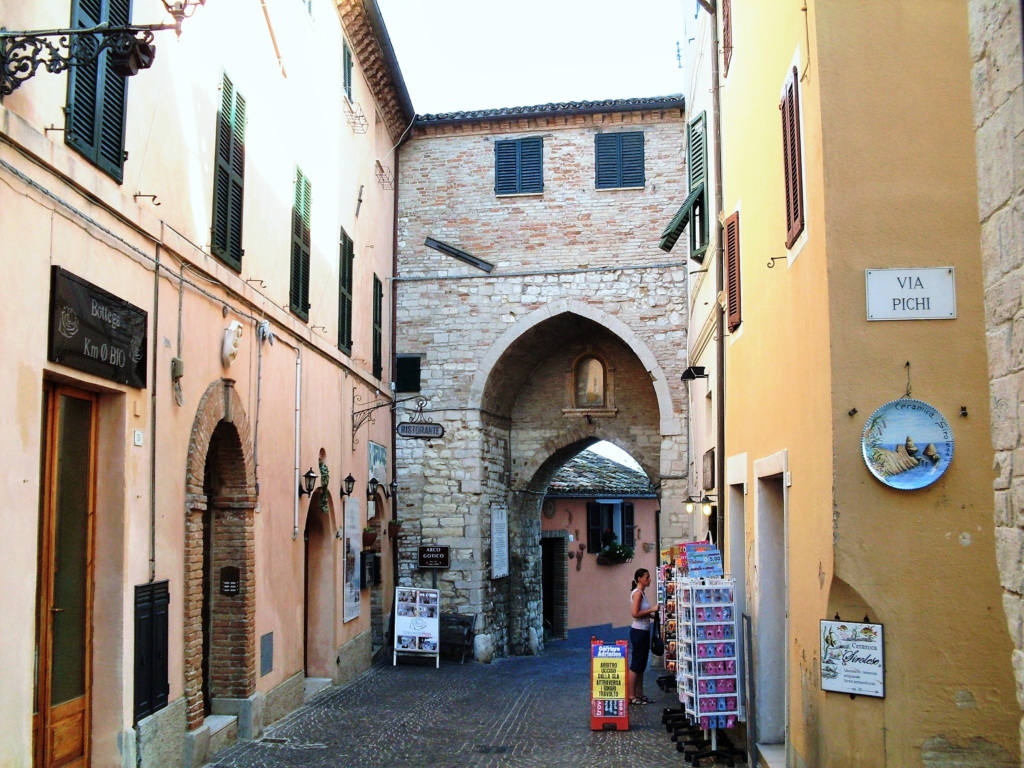
Sirolo is the town most people mean when they say “Conero.” It sits on a bluff above the sea, medieval in layout, with a small piazza that looks straight down onto the water — genuinely one of the more dramatic town squares on this coast, though nobody outside Italy seems to know it exists. Numana, just south, is more of a working beach town: a marina, a promenade, colorful bathing establishments, and long stretches of free public beach where you do not need to rent a lounger to spend the day. Portonovo, tucked into a bay on the northern side of the mountain, adds a Napoleonic-era fortress and an eleventh-century Romanesque church to the mix, both sitting almost at the waterline.
The beaches themselves are mostly white pebble and ghiaia (fine, pale gravel washed smooth by the surf), not sand — a detail worth knowing before you pack. The signature beach, Due Sorelle, takes its name from the two limestone sea stacks rising out of the water just offshore, and it is reachable only by boat: the old hiking trail down from the cliff has been closed for years because of landslide risk. Ferries run from the ports of Numana and Sirolo between June and September, with a round-trip ticket running around thirty euros per adult as of the 2026 season. Other beaches, like San Michele and Sassi Neri, are reachable by a mix of hiking and rock-scrambling; Portonovo’s beach is the only one of the well-known coves you can simply drive or bus to.
This coastline’s environmental credentials are not marketing copy. Sirolo has held the Blue Flag designation — the European award for water quality and beach management — for twenty-four consecutive years, and going into 2026 both Sirolo and Numana confirmed the recognition again, alongside Portonovo, according to the Ministry of Tourism’s official list. For a full rundown of where else in Italy carries this designation, I’ve put together a guide to the country’s Blue Flag beaches.
The Amalfi Coast: What You’re Really Getting
There is a reason the Amalfi Coast is the reference point for this whole comparison rather than the other way around. Positano’s stacked pastel houses, Amalfi’s cathedral steps, and Ravello’s gardens hanging above the sea are, genuinely, some of the most photographed real estate in Italy, and no honest comparison pretends the Conero matches that verticality or that degree of built architectural drama. The Amalfi Coast earns its fame.
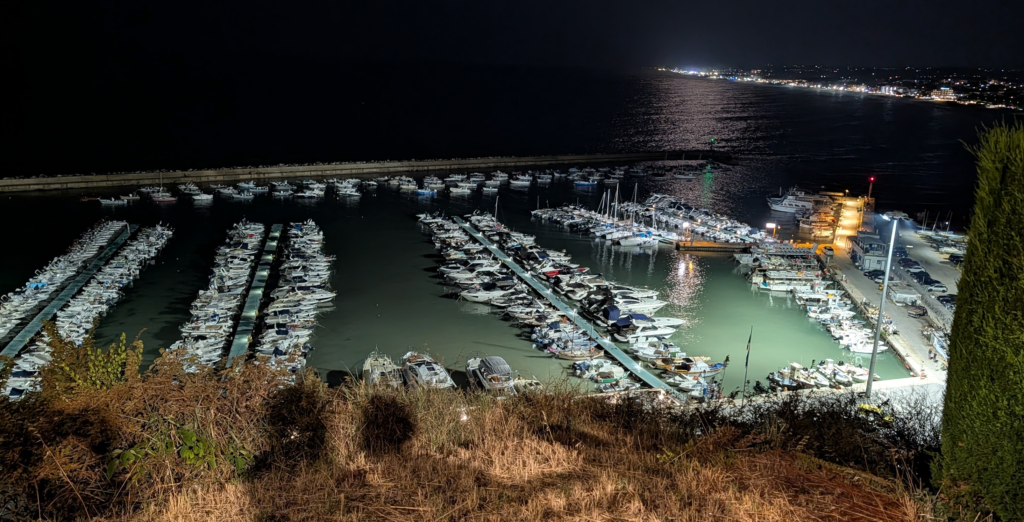
Numana
What it also earns, increasingly, is a reputation for being difficult to actually visit. The SS163 coastal road — the only route connecting Positano, Amalfi, Ravello, and the smaller towns strung along the cliffs — was not built for the volume of traffic it now carries, and several towns have responded with restricted traffic zones, or ZTL (Zona a Traffico Limitato, an area where private vehicles need a permit to enter). As of the 2026 season, Positano restricts private vehicle access from 6:30 a.m. to midnight during summer, Ravello runs a 24-hour restriction, and Amalfi enforces peak-hour closures around late morning and early evening. Several towns have also introduced an alternate-day license-plate system, allowing only odd- or even-numbered plates to circulate on a given day. Entering a restricted zone without authorization triggers an automatic camera-issued fine, with figures cited by local operators ranging from roughly eighty euros up toward one hundred fifty euros per detection, depending on the town and the ordinance. Frustration with the volume of traffic has pushed fourteen towns along the coast to formally request a coordinated, territory-wide ZTL, a proposal that had gathered more than ten thousand resident signatures as of this writing.
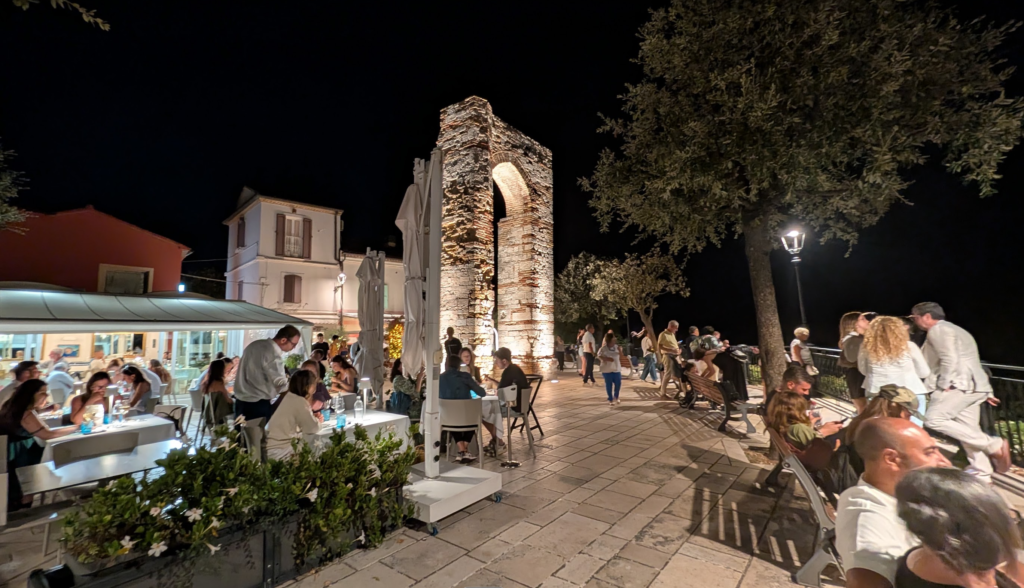
Sirolo
Accommodation reflects the coast’s status. Average hotel pricing in Positano runs around three hundred fifty-five dollars a night, climbing toward six hundred sixty dollars during peak season, while even in the coast’s less famous towns a mid-range three-star hotel averages around one hundred forty euros a night, with July and August commanding a thirty to forty percent premium over shoulder-season rates. None of this makes the Amalfi Coast a bad choice — it makes it a coast you pay a premium to see at its best, and pay again, in traffic time, for the privilege of moving between towns.
Head to Head
Cost. This is the least ambiguous category in the whole comparison. Budget and mid-range accommodation on the Conero routinely undercuts Amalfi Coast pricing by a wide margin, and the gap widens further once you factor in Amalfi’s summer rate premium, its town-imposed tourist taxes, and the near-mandatory restaurant coperto (a per-person cover charge standard in southern Italian dining). Meals, parking, and boat excursions follow the same pattern: the Conero is not free, but it is not priced for an international audience the way Amalfi now is.
Crowds and traffic. The Amalfi Coast in July and August is, by most current accounts, at or past its comfortable capacity — hence the ZTL expansion, the alternate-plate rules, and the resident petition mentioned above. The Conero has crowds too, particularly on the free beaches around Numana in mid-August, but the difference in scale is real: this is a region tourists still largely skip. Two independent travel guides describe Le Marche as among the least-visited regions in Italy by international travelers, despite sitting a few hours’ drive from Rome, Florence, and Bologna.
Beach type and water. Conero beaches are white pebble and gravel, backed by cliffs, with clear, cool Adriatic water that runs noticeably calmer than the open Tyrrhenian swell you get on the Amalfi side. Amalfi’s beaches are a mix of pebble and imported or reinforced sand, generally smaller, and often accessed via steep staircases or paid elevators rather than a level walk from a parking lot.
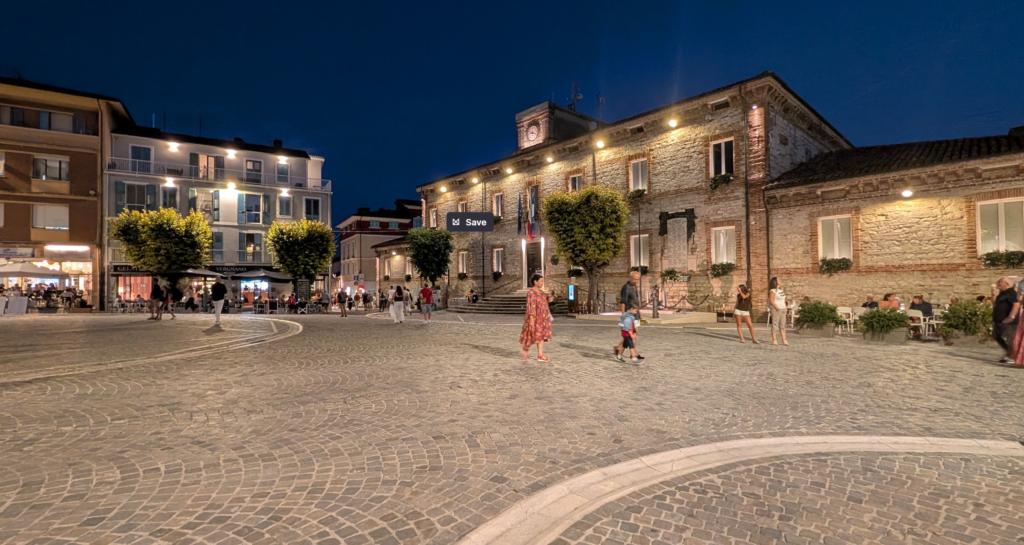
Numana
Accessibility. Neither coast is effortless, but the failure modes are different. On the Conero, the obstacle is usually a hike or a short ferry ride to reach the best coves; on Amalfi, it is the road itself, the ZTL patchwork, and parking that a 2026 guide to the coast describes as scarce and running five to ten euros an hour in the busiest towns. If you don’t want to drive at all, Amalfi’s SITA bus network and ferries are more developed than anything on the Conero, where a rental car remains close to essential.
Getting there from the US. This is a real logistical difference, not a footnote. Naples sits close to the Amalfi Coast — under an hour and a half by car or ferry to Positano — and its airport has grown into a legitimate international gateway with a widening set of seasonal long-haul connections. Ancona’s own airport, by contrast, is a small regional field with limited international service, so most American visitors to the Conero fly into Rome or Bologna and add a two-and-a-half to three-hour train or drive on top of the transatlantic leg. That extra transfer is part of the reason the Conero stays quiet: it costs you an afternoon most travelers would rather spend on a beach in Positano.
Atmosphere. Amalfi trades in glamour: rooftop bars, boutique hotels carved into the cliff, a see-and-be-seen energy that’s part of its appeal. The Conero trades in ordinariness, in the best sense — this is where families from Ancona, Macerata, and inland Marche have vacationed for generations, and that local rhythm is still intact rather than curated for an international audience.
Food and local life. Both coasts serve excellent seafood, but the Conero’s food culture runs closer to the source: Numana’s fishing fleet still supplies much of what lands on nearby tables, and the brodetto tradition of this stretch of Adriatic coast — a fish stew that varies from town to town along the Marche shoreline — is worth building a meal around; I’ve written separately about the different regional versions of brodetto if you want to go deeper before you travel.
Where to stay. On the Conero, look at Sirolo or Numana for walkable access to the water, or the quieter hill villages just inland for lower rates and a short drive to the coast — this is territory where a well-chosen agriturismo (a working farm offering guest accommodation) often beats a standard hotel on both price and character. On the Amalfi side, Positano and Amalfi town put you closest to the action at the highest prices, while Maiori and Cetara offer a calmer, less expensive base with a bus or ferry ride to the postcard towns.
| Criterion | Conero Riviera | Amalfi Coast | |—|—|—| | Typical August hotel rate | Generally well under Amalfi’s mid-range | ~€140/night mid-range; $355–$660+ in Positano | | Beach type | White pebble and gravel | Pebble, mixed with imported sand | | Getting around | Car or scooter; minimal restrictions | ZTL zones, alternate-plate days, camera fines | | Signature beach access | Boat only (Due Sorelle), ~€30, June–Sept | Mostly walkable, often via stairs or paid lifts | | International visibility | One of Italy’s least-visited regions | Global icon, near or past peak capacity in summer |
When to Go
July and August amplify every difference on this list. On the Amalfi Coast, that means the SS163 backs up for hours, restaurant tables require reservations days in advance, and the ZTL rules bite hardest exactly when you’d most want the freedom to drive yourself between towns. On the Conero, August still means fuller beaches and busier restaurants in Sirolo and Numana, but it rarely means gridlock, and a free stretch of pebble beach is still findable if you arrive before mid-morning.
Shoulder season — May and June, then September into early October — narrows the gap between the two coasts considerably. Ferry service to Due Sorelle runs only from June through September, so late-spring or October visits to the Conero mean admiring that beach from the clifftop trail near Sirolo’s cemetery rather than swimming there. On the Amalfi side, May, June, September, and October bring the same lemon-orchard scenery and dramatically thinner crowds, at a real cost saving over peak summer rates. If your schedule is flexible, shoulder season is where both coasts show their best side with the fewest downsides.
The Verdict
If price, breathing room, and a coastline that still feels lived-in rather than performed for tourists matter most to you, the Conero Riviera is the better choice, full stop — and it pairs naturally with inland Marche detours like Ascoli Piceno’s Piazza del Popolo or the Frasassi Caves, both within a couple of hours’ drive. If you are visiting Italy’s coastline for the first time and want the view you have already seen in a hundred photographs — Positano’s cliffside houses, Ravello’s gardens — the Amalfi Coast delivers that at a price and a pace you should plan for in advance, ZTL rules included.
For a similar honest trade-off between a famous name and a quieter regional alternative, I’ve made the same kind of case for Tuscany against Le Marche and for Lake Como against Lake Orta — the pattern repeats more often in Italy than most guidebooks admit. And if this comparison has you wondering whether Le Marche could be more than a one-week vacation — whether it’s worth a longer look as a place to actually spend time — I put together a broader introduction to the region with no single capital city that’s a good next stop.
Mirco Vitellozzi is a licensed engineer based in the Marche region, thirty minutes from the Conero Riviera, and writes Tastes & Wonders of Italy from an Italian’s-eye view of the country.
Planning a trip to Le Marche and want insider guidance building the itinerary? You can book a 30-minute consultation with me at TidyCal. And if you’re weighing whether this coastline could be more than a vacation — a second home, a longer stay, a real look at property in the area — that’s a conversation worth having too; ask me and I’ll point you to the right resource.
—
FAQ — Conero Riviera vs. Amalfi Coast
Where is the Riviera del Conero? The Conero Riviera sits on Italy’s Adriatic coast in the Marche region, just south of the city of Ancona, roughly three hours by car or train from Rome.
Is the Conero Riviera a real alternative to the Amalfi Coast? As a lower-cost, less crowded coastline with dramatic white cliffs and clear water, yes — though it does not replicate Amalfi’s iconic architecture or global name recognition, and it shouldn’t be marketed as if it does.
Which coast is cheaper? The Conero Riviera is consistently cheaper across accommodation, dining, and parking, and the gap widens in July and August, when Amalfi Coast rates climb thirty to forty percent above shoulder-season pricing.
Does the Conero have sandy or gravel beaches? Most Conero beaches are white pebble and fine gravel rather than sand, with occasional small sandy stretches near Numana and Marcelli.
Do you need a car on the Conero Riviera? A car or scooter is close to essential for reaching Portonovo and the hill towns, though Sirolo and Numana’s centers and main beaches are walkable once you’re based there.
How do you get to Due Sorelle beach? By boat only. Seasonal ferries run from the ports of Numana and Sirolo between June and September; the old cliffside hiking trail has been closed for years due to landslide risk.
What’s the best time to visit either coast? May–June and September–early October offer the best balance of warm weather and thin crowds on both coasts; July and August are when the gap between a relaxed Conero and a congested Amalfi Coast is widest.