What Is 50 Top Pizza? An Italian Explains the Ranking
You see the sticker before you see the menu. It sits on the glass of the door, round and small, next to the opening hours. It says 50 Top Pizza. In Italy that little disc has become a real signal. It is also the most misread mark in the country. However, most travelers assume it means the place ranks among the best in Italy. Usually it means something narrower, and something more useful. So here is what the guide measures, who pays for the visits, and how to use it on a trip without building your days around a list.
What 50 Top Pizza is
50 Top Pizza is a free online guide to pizzerias. It comes out once a year, and it ranks nothing else but pizza. Above all, it works as a tool rather than a trophy.
Who runs the guide
Three Italian food journalists run it: Barbara Guerra, Luciano Pignataro and Albert Sapere. They work under the LSDM publishing group. Sapere has said the idea came to them in 2014. The first edition took more than two years to build, because they had to recruit the inspectors first. It finally appeared in 2017.
There is no print edition and no paywall. Moreover, the pizzerias pay no fee. Readers, meanwhile, never vote.
That last point matters for American readers. In the United States, most “best pizza” lists are either reader polls or advertising. This is neither. It sits closer to the Michelin model, with one difference. Michelin has never taken pizza very seriously, while 50 Top Pizza takes nothing else seriously.
Why it ranks every style
The guide declares no favorite style. Neapolitan pizza gets no head start over Roman teglia, the tray-baked pizza sold by weight. Nor does it outrank a high-hydration contemporary dough or a New York slice.
Of course, that choice explains many of the arguments each summer. Because style stays neutral, a pizzeria in Sydney can beat one in Naples without any contradiction.
The network also publishes separate lists. There is one for Italy, one for Europe, one for the United States, one for Asia-Pacific, one for Latin America and one for the world. Extra lists cover takeaway and artisan chains, too. So when someone says a place is “in 50 Top Pizza”, ask the useful question first: in which list?
How 50 Top Pizza builds its ranking
The method runs in two stages. First comes a wide survey by geographic area, which produces the pool of candidates. Then come the visits.
The anonymous visits
Nearly a thousand inspectors work for the network worldwide. First, they sign confidentiality agreements. Then they book like anyone else, they eat, and they pay their own bill. Nobody in the kitchen knows they are there.
Each continent has its own editorial team. In the American guide, for example, every inspector lives in the United States. They come from different backgrounds on purpose. Otherwise the panel would simply measure how Neapolitan an American pizza tastes, which is a different question.
What the inspectors score
In practice, they score more than the pizza. The published method covers the pizza, the service, the room, the waiting times and the drinks list. In the Italian edition, the wine list and sustainability count as well. That last point surprises Americans, yet it reflects a real shift. Italian pizzerias now build serious cellars, and many pour craft beer brewed a few valleys away.
So a perfect dough guarantees nothing. Put that dough in a cold room with slow service and three industrial lagers on the menu. A slightly less brilliant kitchen with a real cellar will finish ahead of it.
What the method fixes, and what it does not
I read measurement protocols for a living, and this one gets two things right. The measurement repeats, and the observer stays blind.
For example, repetition absorbs the bad Tuesday. It absorbs the substitute pizzaiolo and the sack of flour that behaved strangely. Anonymity removes the largest distortion in restaurant criticism, which is a kitchen that knows who just sat down.
One problem remains, though. Inspectors are people, and palates differ. Small moves therefore mean very little. A place that slides from 34th to 27th has told you nothing. A place that enters the list and holds for three years has told you a great deal.
The world list is a playoff, not an open field
Here is the part that English-language coverage almost never explains. It changes how you read the headline every September.
The Golden Ticket
Inspectors do not roam the planet freely for the world list. Instead, pizzerias qualify for it.
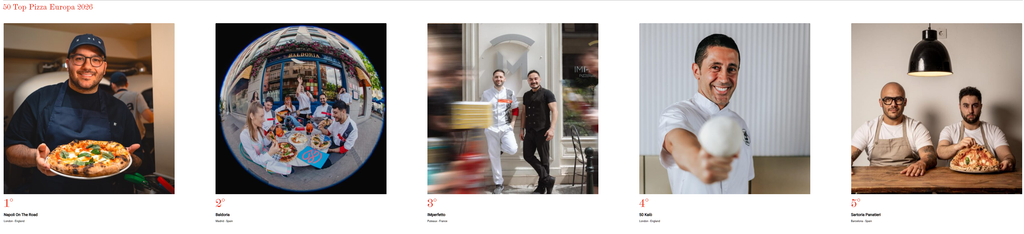
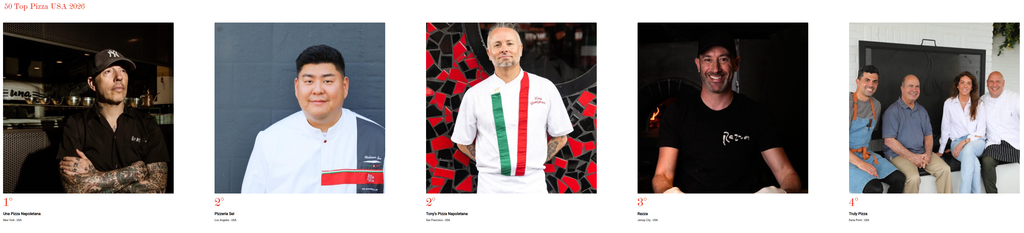
The top places in each continental guide earn what the organizers call a Golden Ticket. That ticket is the only way in. The Italian top 30 qualify. So do the American top 15, plus the top three of the American by-the-slice list. Latin America sends its top 15. Europe and Asia-Pacific work the same way.
Meanwhile, the continental lists come out through spring and summer. The world list comes last, in Naples, in September.
Why the country counts move
The consequence is structural, not mysterious. The shape of the world list depends on how many seats each continental guide gets. Furthermore, those quotas have widened as the guide has grown.
So when commentators say a country is “rising”, part of what they watch is arithmetic. In 2026 the world list covered 36 countries. Italy held 31 places and the United States held 22, up from 16 the year before.
None of this makes the ranking arbitrary. It makes it a tournament with published entry rules. That is a very different object from a survey of all the pizza on earth, and a much better one to argue about.
The three tiers people confuse
Nearly every misunderstanding I hear comes from mixing up three separate things.
The numbered ranking
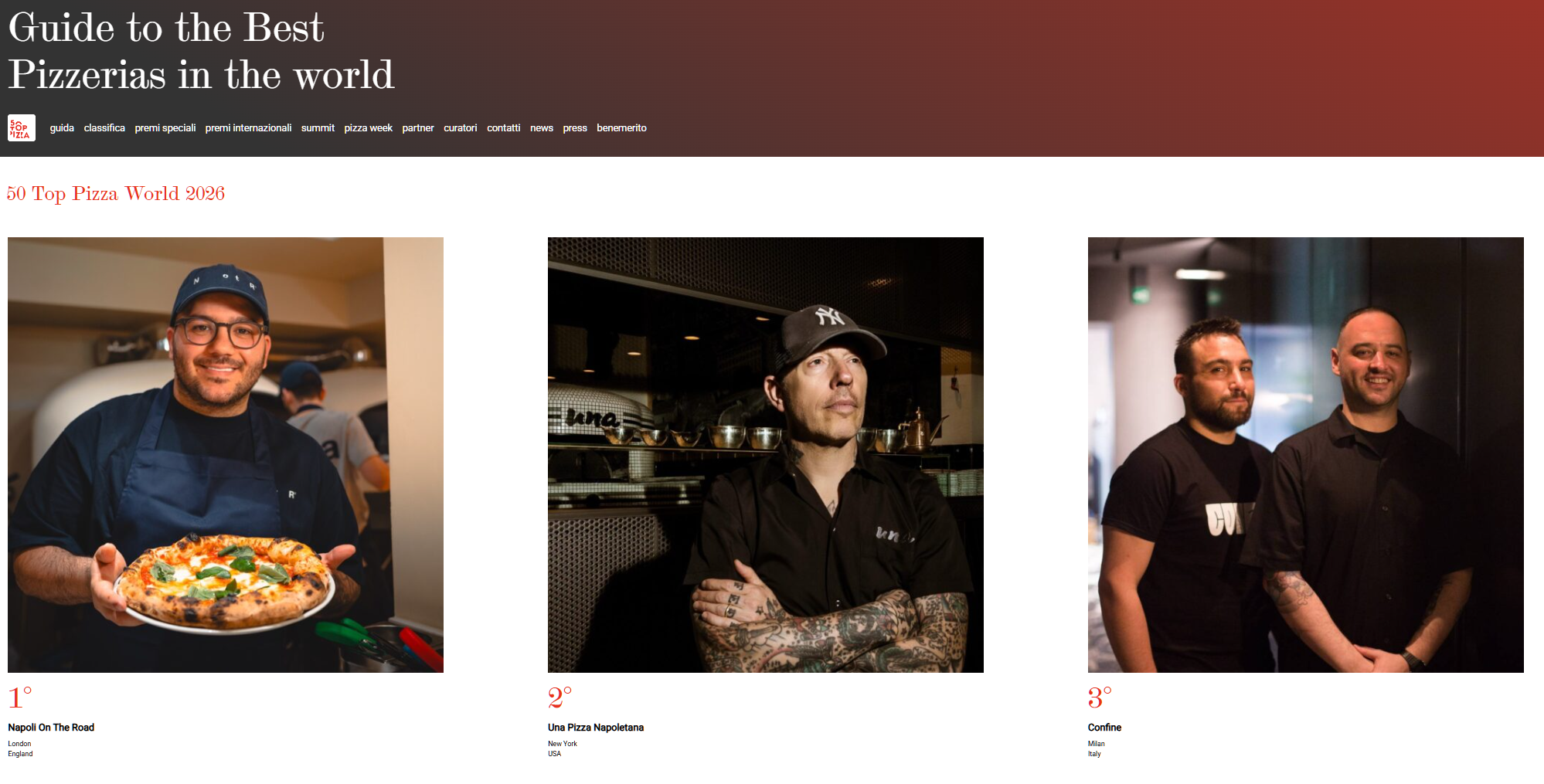
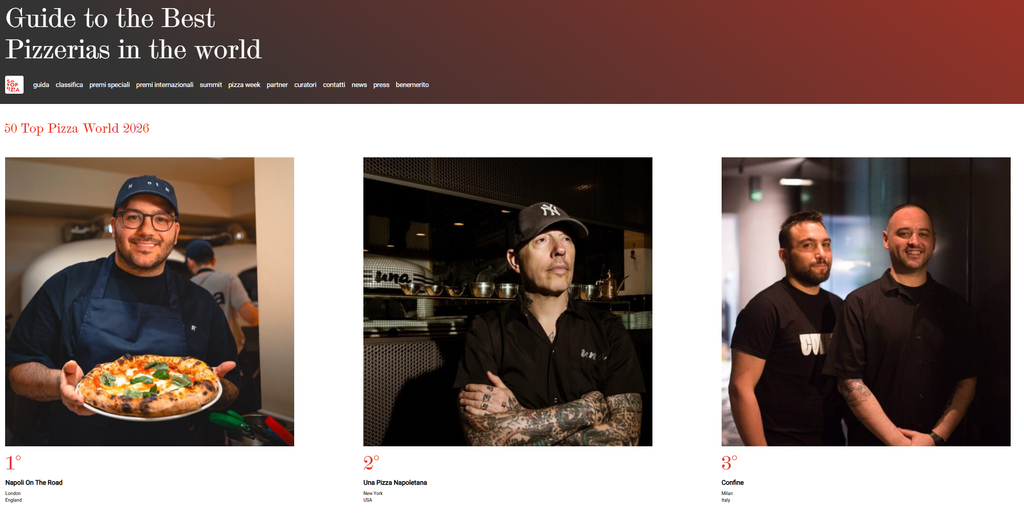
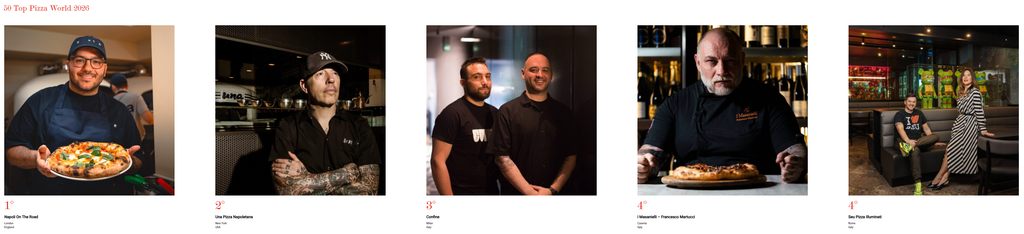
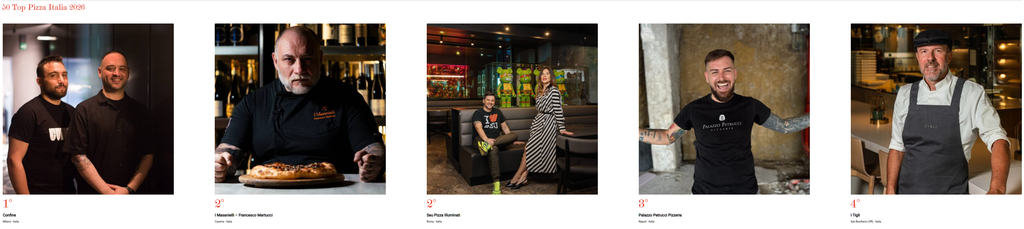
First comes the finite, ordered list: 100 positions in the world edition, and a numbered top 100 in Italy. Ties are common. In 2026, for instance, those 100 world positions actually held 108 pizzerias. Only here does the word “ranked” really apply.
The excellence certificate
Second, under the numbered positions sits the much larger guide. The 2026 Italian edition reviewed 472 pizzerias across the country. Those that clear the quality bar without entering the numbered list receive a certificate of excellence.
That is what the sticker in a small town almost always means. It is not a consolation prize. In fact it is the tier that helps you eat well, because it spreads across the map in a way the top 100 never can.
The numbers tell their own story. In 2026, Campania stayed the best represented region with 103 reviewed pizzerias, ahead of Lazio with 39 and Puglia with 38. Among cities, Naples led with 31, then Rome with 27 and Milan with 18. So the density of good pizza remains southern, even while the very highest scores drift north. Those are two separate facts, and headlines usually report only the second.
The special awards
Third, every ceremony hands out cross-cutting prizes. There is Pizza of the Year, Pizza Maker of the Year, One to Watch, Green Oven, Best Fried Food, Best Dessert List and more.
These often beat the rank for practical value, because they tell you what a place does unusually well. Suppose you care about fritti, the fried starters most Americans have never tasted properly. Then the fried food award is worth more to you than third position overall.
The other marks on Italian pizzeria doors
Two more names turn up on those doors. Neither is a rival ranking, and the difference will save you a disappointment.
The AVPN plaque
The Associazione Verace Pizza Napoletana was born in Naples in 1984. Seventeen historic pizzerias founded it and registered a set of international rules for what may be called Neapolitan pizza.
Indeed, those rules did well. The European Union used them as the basis for the Traditional Specialty Guaranteed label in 2010, which covers the Margherita and the Marinara. They also supported the 2017 UNESCO listing of the art of the Neapolitan pizzaiuolo. As a result, more than a thousand pizzerias in some sixty countries now carry the affiliation.
So the plaque certifies one thing: the pizzeria follows a written standard. Flour, water, salt, yeast, defined handling, defined baking. It is a compliance check.
It says nothing about whether the pizza tastes good. A building certified to a seismic code is not therefore a beautiful building. Certification asks whether a product matches a specification. A ranking expresses a preference. Reading the first as the second is the most common error I see, and it explains why a certified place on a busy tourist street can disappoint. That sticker never promised excellence.
Gambero Rosso, and the value of disagreement
Gambero Rosso, the Italian food publisher, runs its own pizzeria guide. Different panel, different scale, measured in spicchi, meaning slices. It disagrees with 50 Top Pizza regularly.
In fact, that disagreement helps you. Two independent instruments, pointed at the same object, returning different readings: this tells you the measurement carries real uncertainty. A pizzeria that scores near the top of both is a safer bet than one that tops only one.
What the guide cannot see
Every measuring system has a blind spot, and this one is wide enough to matter on your trip.
The pizzeria nobody inspects
In practice, the guide samples the top of a distribution. It cannot describe the middle, and in Italy the middle is the whole point.
Think of the pizzeria that opens at seven. It fills every Thursday with three generations of the same families. A Margherita costs seven euros. No inspector has ever walked in with a notebook. That place stays invisible to every guide ever printed, and it is where Italians actually eat pizza. I have eaten in a great many of them across central Italy over thirty years. Some were ordinary. Several were better than places I later found in print. In short, the link between “appears in a guide” and “worth your evening” is real but weak.
Formats that fall outside
Whole categories sit outside the frame, or land in side lists nobody reads. Roman pizza by the slice, bought standing at a counter. Neapolitan pizza fritta, fried pizza sold from a window and eaten in the street. In my own region, the crescia of the Marche hills, a flatbread cooked on a metal disc, which no guide will ever rank because it is not pizza and does not want to be.
There is a selection effect, too. Guides measure businesses that guides can see: a public identity, a booking system, a drinks program, a communications plan. Two brothers who never answer the phone are not being judged and found wanting. They are simply not being judged.
How to use 50 Top Pizza on your trip
Use it as a filter, not a route
The guide is free, it lives online, and it will show you the reviewed addresses nearest to you. That is its best use. You are already spending Thursday in Bologna or Lecce for other reasons. Now you know which pizzeria within walking distance has been checked twice by someone who paid.
Book early, and only once
Therefore, plan on one ranked meal per trip at most. Tables at the Italian top ten open weeks ahead, then tighten within days of a new list, because rankings move bookings very fast. So if a ranked place matters to you, book it the week the list lands. Italy publishes in July. The world list follows in September.
Read the special awards before the numbers, too. They match a place to what you actually want from the evening. Finally, consider lunch. Many ranked pizzerias serve at midday, the room is calmer, and the table costs you far less waiting.
Outside the big cities, read the certificate list
Take the region where I live. The 2026 Italian edition recognized ten pizzerias in the Marche. They run from Senigallia on the northern coast, down through Ancona and Civitanova, into the Fermo hills and on to the Ascoli area in the south.
Of course, none of them is a national top-ten address. Every one of them beats the seafront place with the laminated menu in four languages. Better still, none of them asks you for a detour.
One last rule. When the guide and the room disagree, trust the room. A half-empty dining room at nine on a Saturday night in an Italian town is data, whatever the door says.
FAQ: 50 Top Pizza, answered
What is 50 Top Pizza? It is a free annual online guide to pizzerias worldwide. Barbara Guerra, Luciano Pignataro and Albert Sapere founded it in 2017, and it appears under the LSDM group. It publishes separate rankings for Italy, Europe, the United States, Asia-Pacific, Latin America and the world.
Is 50 Top Pizza reliable, and who pays for it? Anonymous inspectors produce it. They visit as paying customers under confidentiality agreements, so there is no public vote and no fee from the pizzerias. The network counts nearly a thousand inspectors. Still, like any panel guide, it carries the taste of its panel. A cross-check against a second guide is worth the minute it takes.
When do the 50 Top Pizza rankings come out? Italy publishes in July. The world list follows in September, at a ceremony in Naples. The other continental lists, including the American one, arrive through spring and early summer.
Does a place in the 50 Top Pizza guide mean high prices? Rarely. A pizza at a ranked Italian pizzeria usually costs between ten and twenty euros, well under a restaurant meal. The hard part is the table, not the bill.
Do I need a reservation at a 50 Top Pizza pizzeria? For the Italian top twenty, yes, and usually weeks ahead. For a certified pizzeria in a smaller town, a phone call that same afternoon is normally enough.
What is the difference between 50 Top Pizza and an AVPN plaque? The plaque certifies that a pizzeria follows the written Neapolitan standard, which the European Union recognized in 2010 as a Traditional Specialty Guaranteed. It is a compliance mark. 50 Top Pizza instead ranks quality, and it favors no style.
Is the top-ranked pizzeria the best place to eat pizza in Italy? It is the best place to eat one ambitious, booking-driven kind of pizza. It is not where Italians eat on a normal week. A trip built around ranked addresses will show you less of the country than a trip that treats the guide as a filter.
The takeaway
Read 50 Top Pizza for what it is. It is a repeated, blind, openly governed measurement of the top of Italian and international pizza. It has published entry rules and a large, deliberate blind spot. That makes it genuinely useful, and never sufficient on its own.
So use the certificate list to eat well where you already are. Then use the numbered ranking once, and book it early. Then leave an evening for the pizzeria nobody has measured.
Curious about the 2026 result, announced in Naples this September? I have written about it separately in the best pizzeria in the world 2026.
If you are planning a trip through central Italy, the rest of Tastes & Wonders of Italy works on the same principle: an Italian’s read, not a list to tick off.