The Mediterranean Diet Decoded: What It Actually Is, According to an Italian Who Lives It
When the American physiologist Ancel Keys arrived in Italy in the early 1950s, he was not looking for a diet. He was looking for an explanation. The explanation for why the men he had been studying in Minnesota — well-fed, prosperous, sedentary — were dying of heart disease at rates that baffled cardiologists, while the farmers and fishermen he observed along the Italian coast seemed to live long, untroubled lives on what most Americans at the time would have considered poverty food. Bread. Legumes. Olive oil. Seasonal vegetables. A little fish when the sea was cooperative. Wine with dinner, because that was simply what you did.
The pattern he documented — what we now call the Mediterranean diet in Italy — had been the default organization of daily life along the Italian coast and in the central hill towns for at least four thousand years before he arrived.
Keys moved to Pioppi, a small town on the Cilento coast south of Salerno, and he stayed. He began the Seven Countries Study in 1958, following more than 12,000 men across Italy, Greece, Yugoslavia, Finland, the Netherlands, Japan, and the United States over more than three decades. By the time the study was published in 1980, he had become thoroughly convinced — not only intellectually, but personally. He adopted the diet himself, ate like a Cilento fisherman until he died in 2004 at the age of 100, and gave the world a name for something Italian families had been doing without naming it for at least four thousand years.
The term he chose — Mediterranean Diet — was convenient and largely wrong. Not scientifically wrong, but culturally imprecise in a way that has caused an enormous amount of confusion ever since, particularly in the United States, where the Mediterranean Diet has been repackaged, simplified, commercialized, and sold back to a culture that largely misunderstands what it represents. I have lived and worked in Le Marche for fifty years, and I have spent thirty of those years as a civil engineer traveling through every valley and hill town in this region. I have eaten at tables where no one had ever heard of Ancel Keys and no one had ever counted a macronutrient. What I observed there, repeated across thousands of meals in farmhouses and coastal trattorias and hill-town kitchens, is what I want to describe in this article.
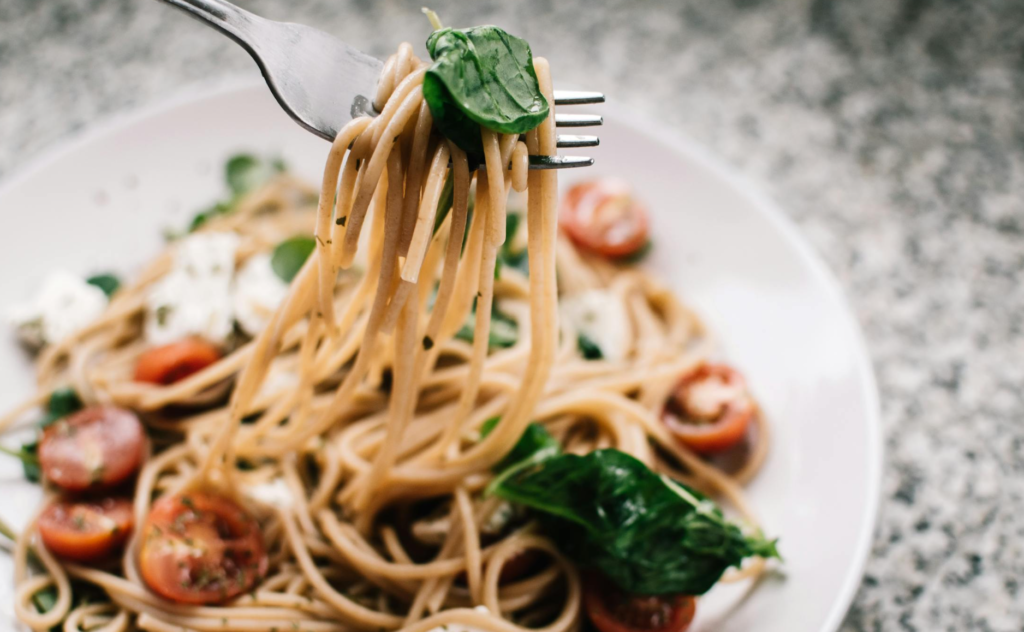
The Mediterranean Diet is not a list of ingredients. It is a way of organizing a relationship with land, season, community, and time. UNESCO understood this precisely, which is why, in 2010, it recognized the Mediterranean Diet as Intangible Cultural Heritage of Humanity — placing it alongside flamenco and the Neapolitan art of pizza-making — and not, notably, alongside clinical nutritional protocols. The distinction matters enormously for anyone who wants to understand what they are looking for when they travel to central Italy.
What the Mediterranean Diet Actually Is (The UNESCO Definition)
On November 16, 2010, at the UNESCO Intergovernmental Committee for the Safeguarding of Intangible Cultural Heritage meeting in Nairobi, the Mediterranean Diet was formally inscribed on the Representative List of Intangible Cultural Heritage of Humanity. The original nominating countries were Greece, Italy, Morocco, and Spain; in December 2013, in Baku, the inscription was expanded to include Cyprus, Croatia, and Portugal.
The UNESCO nomination file describes the Mediterranean Diet as “a set of skills, knowledge, rituals, symbols and traditions concerning crops, harvesting, fishing, animal husbandry, conservation, processing, cooking, and particularly the sharing and consumption of food.” The key word in that sentence is not “diet.” It is “sharing.” Eating together, the document specifies, “is the foundation of the cultural identity and continuity of communities throughout the Mediterranean basin.”
This is not how most Americans encounter the term. Most Americans encounter it as a food pyramid, a grocery list, or a supplement marketing strategy. The Mediterranean Diet, in American popular culture, means eating more olive oil and fewer cheeseburgers. This is approximately as accurate as saying that flamenco is a type of footwear.
What UNESCO recognized was something far more complex: a complete agricultural and social system, transmitted across generations primarily within families, organized around the rhythms of the agricultural calendar, the availability of local ingredients, and the fundamental cultural practice of sitting down together to eat. Women have historically been the primary transmitters of this knowledge. Local markets — the Tuesday market in a Macerata hill town, the Saturday fish market in Ancona — function as the central spaces where the diet is practiced and maintained, not just as places to buy groceries, but as sites of community exchange, seasonal orientation, and cultural continuity.
The Mediterranean Diet, in other words, is less about what is on the plate than about the entire system that puts it there.
The Geography of a Diet — Why Central Italy Is Its Living Core
The countries that signed the UNESCO nomination share one fundamental geographic reality: they are organized around the Mediterranean Sea, and that sea has shaped their agriculture, their fishing traditions, and their cooking in parallel ways for millennia. Olive trees grow where they grow. Grapes ripen where they ripen. The architecture of the meal — built around a base of grains and legumes, elevated by olive oil, accompanied by seasonal vegetables and periodic fish, concluded with a small piece of fruit or cheese — reflects the actual productive landscape of the Mediterranean rim.
Italy’s contribution to that inscription was anchored in Cilento. But the Mediterranean diet in Italy, as a living practice, extends far beyond Cilento, the southern Campanian peninsula where Keys had conducted his research. But the diet’s living geography in Italy extends far beyond Cilento, and in many ways its most intact expression today is found not in the well-known south but in the central regions that remain structurally invisible to most American tourists. Le Marche is one of them.
Le Marche occupies a narrow strip of eastern-central Italy between the Apennine spine and the Adriatic coast, approximately 250 kilometers from north to south and rarely more than 80 kilometers wide. What this geography produces is a food culture built on an unusually complete version of the Mediterranean template: fish from the Adriatic, grain from the river plains, legumes from the Apennine foothills, olive oil from the groves around Cartoceto and the coastal hills, wine from vineyards that have existed since at least Roman times, and a density of wild herbs — rosemary, wild fennel, thyme, savory — that grow along every road and cliff face in the region.
The Marche kitchen uses all of these without hierarchy. A meal in Senigallia and a meal in Camerino, ninety kilometers apart, will reflect entirely different micro-climates and traditions — brodetto di pesce on the coast, lentil soup with pancetta in the mountains — but both follow the same underlying logic: use what the land and sea produce in this season, do not add more than is necessary to reveal its flavor, and eat with other people.
This is the diet. Not the ingredients. The logic.
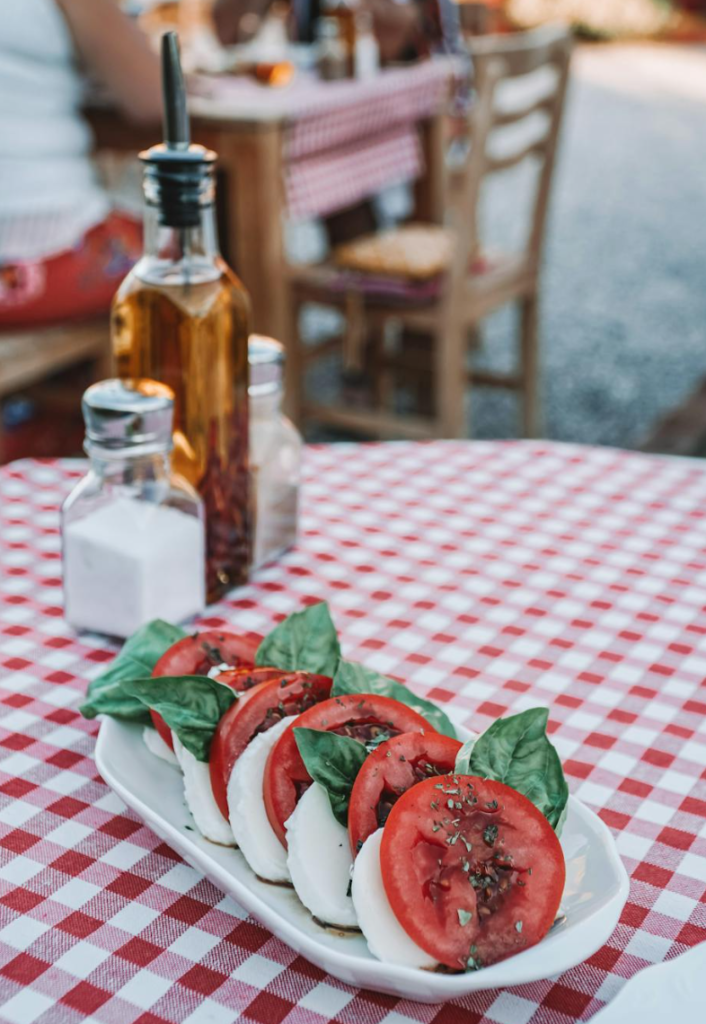
The Six Pillars from a Table in Le Marche
The Mediterranean Diet as lived in central Italy rests on six structural elements. Understanding each of them changes how you read a menu, what you buy at a market, and what you bring home.
Olive Oil as the Base, Not the Condiment
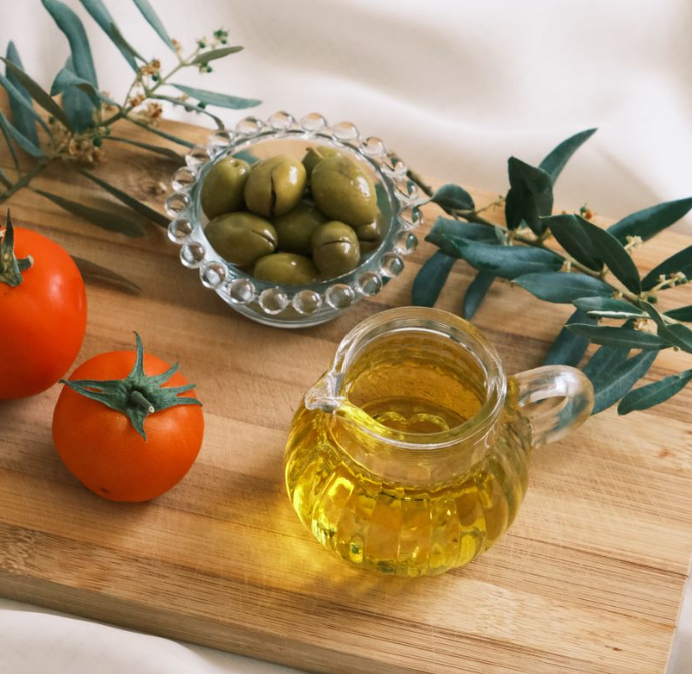
The first and most misunderstood element is olive oil. Americans have learned to use olive oil as a substitute for butter or vegetable oil — a drizzle here, a tablespoon there. In Le Marche, olive oil is not a condiment. It is the cooking medium, the preservative, the sauce, the dressing, and the element that ties every other flavor together. A meal might begin with bread dipped in new-season oil. The fish will have been cooked in it, the vegetables dressed with it, the legumes finished with a thread of it at the table.
The difference between this use of oil and the American version is not philosophical. It is mechanical. A local cook in the hills around Cartoceto — which produces one of the few DOP-certified olive oils in the Marche — will go through several liters of extra-virgin oil per month per household. The oil is not decorative. It provides the fat, the calories, the fat-soluble vitamins, and above all the flavor architecture of the entire diet. The minimum quality standard, understood intuitively by everyone who grew up with it, is that the oil tastes of something — green, grassy, bitter, peppery at the back of the throat — because these characteristics indicate freshness and polyphenol content. Oil that tastes of nothing is oil that has failed.
The monocultivar oils of central Italy — Coroncina and Raggiola in the Marche, Moraiolo and Frantoio in Umbria — represent the highest expression of this pillar. They are rarely exported in meaningful quantities, which means that most Americans who believe they are eating Mediterranean-style olive oil are eating something produced at a different scale, from a different olive culture, for a different market.
Legumes — The Protein the West Forgot
The second pillar is legumes, and it is the one that most clearly reveals how completely the American version of the Mediterranean Diet has been misunderstood. The Mediterranean Diet is not a high-protein diet. It is a diet in which plant proteins — lentils, chickpeas, beans, and their ancient relatives — provide the nutritional foundation that meat provides in northern European and American food cultures.
In the Marche and the surrounding Apennine regions, the catalogue of legumes goes well beyond what any American supermarket carries. The most important of these forgotten proteins is the cicerchia (Lathyrus sativus, known in English as the grass pea or chickling vetch), an ancient legume that was once as common as chickpeas across the central Italian countryside and then nearly disappeared in the second half of the twentieth century as the agricultural economy modernized and the market rewarded uniformity. Its cultivation had been attested in the region since at least 800 BC.
The cicerchia survived in Le Marche. In the area around Serra de’ Conti, in the province of Ancona, a small community of farmers maintained the crop through the years of commercial agriculture’s expansion, and the legume is now a Slow Food Presidio — a designation reserved for foods in danger of extinction that represent irreplaceable threads of cultural and culinary identity. The cicerchia has a flavor that sits between a chickpea and a fava bean, with a rougher texture and a more assertive earthiness. It is cooked slowly with rosemary, olive oil, and garlic, and served as a soup or a thick puree. It does not belong to any recipe in the American understanding of Italian food.
Alongside the cicerchia: roveja, a nearly-black pea from the Valnerina that has been grown in the Apennine border zone between Le Marche and Umbria for centuries; and the celebrated lenticchie di Castelluccio, grown on a high plateau in the Sibillini mountains at nearly 1,500 meters above sea level, among the finest lentils produced anywhere in Italy. Neither is available at the local grocery store in Indianapolis. Both are essential to understanding what the Mediterranean Diet looked like before it was commodified.
Adriatic Fish — The Sea as Seasonal Pantry
The third pillar is fish, and here Le Marche holds a particular advantage over most of the regions from which American travel writing about Italian food originates. The Adriatic coast of the Marche runs for approximately 180 kilometers, from Cattolica in the north to San Benedetto del Tronto in the south, and this coastline has produced a fish-eating culture of considerable depth.
The central expression of this culture is the brodetto, the fish stew that exists in at least five distinct versions along the Marche coastline — different in Ancona, different in Porto Recanati, different in Porto San Giorgio, different in San Benedetto — each one dictated by the specific fish that the local fleet has historically brought in. The Ancona version, the most famous, traditionally requires thirteen types of fish or seafood: a number that reflects both the abundance of the Adriatic and the resourcefulness of a coastal culture that did not discard small catches. The tomato-saffron version from further south uses no tomato at all, only white wine and vinegar, which produces a broth of remarkable austerity and intensity.
What is important here, from the perspective of the diet rather than the recipe, is the structural principle: fish consumed regularly, in modest portions, as a main protein source integrated with grain and vegetables and oil. Not a luxury item. Not a centerpiece. A component.
The Seasonal Vegetable Cycle
The fourth pillar is seasonal vegetables, and this is where the Mediterranean Diet most dramatically diverges from the supermarket reality that Americans navigate. The diet is seasonal by definition, because it was constructed in agricultural economies that had no alternative. Spring brings cicoria and wild fennel fronds and asparagus from the Apennine meadows. Summer brings zucchini flowers and tomatoes and eggplant. Autumn brings porcini from the oak forests above Sarnano and Camerino, and the first of the dried legumes. Winter brings cavolo nero and turnip tops and the preserved products — dried fish, salted anchovies, conserved olives — that the summer produced.
This is not nostalgia. It is chemistry. The polyphenol and antioxidant content of vegetables is closely tied to their ripeness and freshness. A tomato eaten in the Marche in August, harvested that morning from a garden thirty meters from the kitchen, is a different biological object from a tomato imported out of season and ripened under artificial light. The Mediterranean Diet draws much of its documented nutritional value precisely from this relationship with seasonal ripeness, and that relationship is difficult to replicate at a distance.
Wine at the Table — In Its Actual Proportion
The fifth pillar requires the most careful explanation, because it touches the subject where American misconceptions are most dangerous: wine. Wine is part of the Mediterranean Diet. It is not the reason for the Mediterranean Diet, and it is not a health food, and the quantities involved are modest. A glass of Verdicchio dei Castelli di Jesi with a fish dinner, a glass of Rosso Conero with a Sunday meat dish. Wine as part of a meal, in proportion to the meal, consumed with other people.
The Verdicchio deserves particular attention here, both as a product and as an illustration of why Le Marche holds a unique place in this conversation. Grown on the limestone and clay hills around Jesi and Matelica in the central Marche, Verdicchio is one of the great native white wines of Italy — a DOC wine of considerable character, built on a variety that has been growing in this specific landscape since the pre-Roman period. It is not a global commodity. It is a wine that reflects a precise geography, produces a flavor profile — green apple, white almond, a slight mineral bitterness at the finish — that is inseparable from the Adriatic fish culture it was developed alongside, and retails in Italy at prices that make it an everyday table wine rather than a special occasion purchase.
The wine in the Mediterranean Diet is, in other words, the local wine. Not the most prestigious available bottle. The wine that the same families have been making and drinking with dinner for centuries.
The Rhythm of the Table — Eating as a Social Practice
The sixth pillar is the one that cannot be bought, bottled, or imported: the social architecture of the meal. UNESCO named this the defining characteristic of the entire system, and it is correct. The Mediterranean meal is structured. It has a time — lunch between 12:30 and 14:00, dinner no earlier than 20:00. It has a form — antipasto, primo, secondo, contorno, fruit, coffee — that distributes food across multiple courses, which produces a different eating rhythm than the American single-plate meal. And it has a social imperative: it is shared.
Eating alone, in the Italian cultural tradition, is a minor misfortune. Not eating is worse. But eating well, with others, at a table, without the television, with conversation that takes the meal seriously as the central social event of the day — this is not a lifestyle choice. It is the operating principle of the entire system.
The physiological implications of this are real. Slower eating, distributed across more courses, allows satiety signals to register before overconsumption occurs. The structure of the meal — starting with fiber-rich antipasti or legume-based soups, moving to grain-based primi, then a modest protein secondo — distributes macronutrients in a sequence that manages blood sugar differently from the large single-plate format. None of this was calculated. It evolved over centuries as the expression of how a food culture organizes pleasure.
The Table I Have Eaten At
I want to be specific, because specificity is the only thing that separates a genuine account from a generic one.
A Wednesday lunch in a farmhouse in the hills east of Macerata, in October: cicerchia soup with olive oil and rosemary, made from legumes grown in a kitchen garden ten meters from the front door. A plate of vincisgrassi — the traditional Marche lasagna, enriched with ragù and béchamel but lighter, less imposing, than its Bolognese counterpart. A green salad dressed with the new-season oil. A glass of Rosso Piceno. Fruit from the garden. An espresso. The entire meal produced from within a fifteen-kilometer radius, cost under eight euros per person, and lasted ninety minutes because there was no particular urgency to be anywhere else.
This is not remarkable in Le Marche. It is ordinary. The farmhouse in question belongs to clients of my engineering practice — I have been there many times over the years, for structural assessments and for lunch, and the distinction between the two visits is purely professional. The food is always the same in its principles, variable in its specifics depending on the season, the harvest, and what the grandmother decided to make that morning.
What I want to convey is that the Mediterranean Diet, as it survives most completely in central Italy, is not a program. It is not a conscious choice. It is the default, the background condition, the way things are organized when nothing else interrupts. The interruption, in the Italian experience of the past thirty years, has been the supermarket, the fast food restaurant, the packaged convenience food — the same global food system that has produced the same dietary problems in Italy that produced them decades earlier in the United States.
The diet survives most completely where the interruption has been least severe: in farmhouses, in the hill towns away from the main roads, in the kitchens of women and men in their seventies who learned to cook before the supermarket arrived. Finding those kitchens — and the tables they set — is the real project of any food-serious traveler coming to central Italy.
What the American Version Gets Wrong
The American version of the Mediterranean Diet is not wrong in the way that a lie is wrong. It is wrong in the way that a translation loses meaning. The ingredients are roughly correct. The spirit has been lost.
The American Mediterranean Diet emphasizes olive oil (correct, but at decorative quantities), vegetables (correct, but imported and out of season), fish (correct, but farmed Atlantic salmon does not replicate the nutritional or cultural function of Adriatic branzino), whole grains (correct, but usually in the form of commercial pasta at twice the volume a Mediterranean portion would use), and moderate wine consumption (correct, but a glass of Napa Cabernet does not occupy the same cultural function as a glass of Verdicchio dei Castelli di Jesi poured at a kitchen table in Jesi by the person who produced it).
What the American version systematically omits: the legume culture (cicerchia, roveja, Castelluccio lentils have no American equivalent), the seasonality principle (which cannot be replicated at a market that offers everything year-round), the social architecture of the meal (which requires a culture that takes lunch seriously), the wild-herb dimension (which requires proximity to Apennine meadows), and above all the economic relationship between the diet and its landscape — the fact that this food is cheap, not because it is low-quality, but because it is local.
The Mediterranean Diet, transplanted to the American supermarket system, becomes something nutritionally adjacent but culturally inert. It provides some of the biochemical benefits that nutritional epidemiology has documented. It provides none of the cultural ones. This is not a reason not to try. It is a reason to come and taste the original.
Practical Information
When to visit for the full Mediterranean diet experience: Autumn is the season that concentrates the most elements simultaneously — truffle season in Acqualagna and Sant’Angelo in Vado, the grape harvest in the Verdicchio and Rosso Piceno zones, porcini mushrooms in the inland forests, and the olive harvest beginning in October across the coastal hills. Spring (April–May) brings wild asparagus, cicoria, and the first of the year’s fresh legumes. Summer is best for the Adriatic fish market and the full range of coastal cuisine. Winter, paradoxically, is when the legume dishes and preserved-fish preparations that represent the deepest layer of the diet are most commonly served.
How to get here: Ancona is the regional capital of Le Marche, served by an international airport (Aeroporto delle Marche, IATA: AOI) with direct connections to several European hubs, though most American travelers will connect via Rome (Fiumicino) or Milan (Malpensa). From Rome Termini, the high-speed train reaches Ancona in approximately three hours; regional trains then connect to smaller towns. A car is useful for accessing the inland hill towns and agriturismo farms where the most authentic expression of the diet survives.
Where to stay: Agriturismi in the inland areas — particularly in the provinces of Macerata, Fermo, and Ascoli Piceno — offer the closest possible proximity to the food culture described in this article. Many of them produce their own oil, wine, and preserved products, and several offer cooking classes that go beyond the tourist-circuit pasta-making lesson to address the actual logic of the local pantry. Budget €80–150 per night for a well-run agriturismo with breakfast; coastal hotels are more expensive and less immersive.
What to budget for food: Le Marche is one of the least expensive regions of Italy for serious eating. A full lunch at a working trattoria in the hill towns — antipasto, primo, secondo, house wine, water, coffee — rarely exceeds €25–30 per person. The agriturismo lunch, often fixed-menu, will range from €20 to €40 depending on the establishment. The Adriatic fish restaurants in Ancona, Porto Recanati, and Civitanova cost more; expect €40–60 for a full fish-based dinner with wine.
Explore further on this blog:
- Le Marche: The Italian Region Where the Mediterranean Diet Was Born (And Still Lives) — the regional deep-dive
- Where to Eat Truffle in Italy: Acqualagna vs Alba (forthcoming) — the Marche food experience
- Verdicchio: The Italian White Wine That Beats Sancerre (forthcoming) — the wine of the diet
- Brodetto: The Five Versions of Marche’s Fish Stew (forthcoming) — the Adriatic in a bowl
- Vincisgrassi: The Marche Lasagna That Predates Lasagna (forthcoming)
FAQ
What exactly is the Mediterranean Diet, according to UNESCO?
UNESCO does not define the Mediterranean Diet as a nutritional protocol. In its 2010 inscription on the Representative List of Intangible Cultural Heritage of Humanity — later expanded in 2013 to include Cyprus, Croatia, and Portugal — UNESCO describes it as “a set of skills, knowledge, rituals, symbols and traditions concerning crops, harvesting, fishing, animal husbandry, conservation, processing, cooking, and particularly the sharing and consumption of food.” The emphasis is on the communal and cultural dimension: eating together as “the foundation of the cultural identity and continuity of communities throughout the Mediterranean basin.”
Is the Mediterranean Diet the same across all seven UNESCO countries?
No, and this distinction matters. The Mediterranean Diet is a shared architectural logic — olive oil as the primary fat, legumes as the primary protein, seasonal vegetables and fish as the main courses, grain as the base, wine at the table in modest quantity — but its specific expression differs dramatically between a Moroccan kitchen, a Greek island fishing village, a Croatian coastal town, and a hill-town farmhouse in Le Marche. The unifying element is not the specific dishes but the relationship with local, seasonal ingredients and the social structure of the meal.
Who coined the term “Mediterranean Diet,” and where was the original research conducted?
The American physiologist Ancel Keys is credited with coining and scientifically establishing the term. His Seven Countries Study, begun in 1958 and published in 1980, followed more than 12,000 men across seven nations and documented the correlation between Mediterranean dietary patterns and lower rates of coronary heart disease. Keys conducted significant research in Cilento, in the Italian region of Campania — Italy’s emblematic community for the original UNESCO nomination — where he eventually settled and lived until his death in 2004 at age 100.
What is the role of olive oil in the real Mediterranean Diet?
Olive oil is not a condiment in the Mediterranean Diet. It is the primary cooking fat, the dressing, the sauce base, and the flavor architecture of the entire system. In a traditional Italian Mediterranean household, several liters of extra-virgin olive oil per month are used per family — for cooking at moderate heat, for preserving, for dressing raw and cooked vegetables, and for finishing soups and legume dishes at the table. The quality indicator that matters is flavor: good Mediterranean extra-virgin olive oil tastes green, bitter, and peppery because these characteristics indicate freshness and high polyphenol content. Flavorless oil indicates oxidation or industrial processing.
Which legumes are essential to the Italian Mediterranean Diet that Americans rarely encounter?
Three in particular are central to the central Italian expression of the diet that most Americans have never seen. Cicerchia (Lathyrus sativus), the grass pea, is an ancient legume grown in Le Marche since at least 800 BC; the variety from Serra de’ Conti in the province of Ancona is a Slow Food Presidio. Roveja, a near-black mountain pea from the Apennine border zone between Le Marche and Umbria, nearly disappeared in the twentieth century and is now produced by a handful of farms. Lenticchie di Castelluccio, grown on the high Sibillini plateau, are among the finest small lentils in Italy. All three are absent from the American Mediterranean Diet as commonly practiced.
Is wine really part of the Mediterranean Diet?
Wine is a documented component of the traditional Mediterranean meal in Italy, consumed in modest amounts — typically one glass with lunch and one with dinner — as part of a complete meal rather than as an aperitif or standalone beverage. The cultural significance of wine in the diet is local and contextual: Verdicchio with Adriatic fish, Rosso Piceno with lamb from the Apennine pastures. The evidence base for wine’s role in the diet’s health associations is contested and should not be interpreted as a recommendation to consume alcohol for health reasons. The structure of the meal — the food consumed alongside the wine, the pace, the social context — is inseparable from any assessment of its role.
What is the best way for an American traveler to experience the real Mediterranean Diet in Le Marche?
Eat at working trattorie in the hill towns rather than in resort-oriented coastal restaurants. Attend the weekly food markets — Macerata on Fridays, Pesaro on Saturdays — where seasonal produce, local cheese, and preserved fish are sold. Book a stay at an inland agriturismo where the kitchen uses its own oil, its own wine, and its own preserves. Avoid restaurants that translate their menus into English or display photographs of the dishes. The most reliable indicator of an authentic Mediterranean-diet kitchen in Le Marche is a short, handwritten, seasonal menu that changes weekly.
Does following the Mediterranean Diet in central Italy actually cost more than eating at tourist-oriented restaurants?
It costs considerably less. The economic architecture of the Mediterranean Diet in Le Marche is built on ingredients that are cheap when sourced locally and seasonal: legumes, bread, olive oil, eggs, seasonal vegetables, and the less-prized cuts of locally-raised animals. A full midday meal at a genuinely local trattoria in the hill towns of the Macerata or Fermo province will rarely exceed €25–30 per person. The paradox is that the most expensive restaurants in the region are typically the ones that have departed furthest from the diet’s logic, not the ones that have followed it most closely.
Plan Your Trip to Le Marche
The dishes described in this article are not a reconstruction or a revival. They are the daily reality of a region that most American travelers pass through quickly on the way to Florence or Rome, if they visit at all. The Mediterranean Diet survives most completely in exactly the places that receive the least tourist attention — which means that visiting Le Marche with food as a genuine priority is one of the few remaining opportunities to eat inside a living food culture rather than a curated version of one.
If you are planning a trip to central Italy and want to build an itinerary around the real Mediterranean table — the olive oil producers, the truffle markets, the Verdicchio cantinas, the coastal brodetto traditions — I take a limited number of one-on-one consultations each month from my home in Macerata. A 45-minute conversation can save considerable time and considerably improve what you eat. Book a session at tidycal.com/mircovitellozzi.
For new articles as they go live — including the coming pieces on the Verdicchio, the Brodetto, the cicerchia, and the truffle season in Acqualagna — sign up for the monthly newsletter. Subscribers also receive a free PDF: The Hidden Marche: A 7-Day Slow Travel Itinerary from an Italian Engineer.