Olive Harvest Experience in Italy: What Americans Can Legally Do
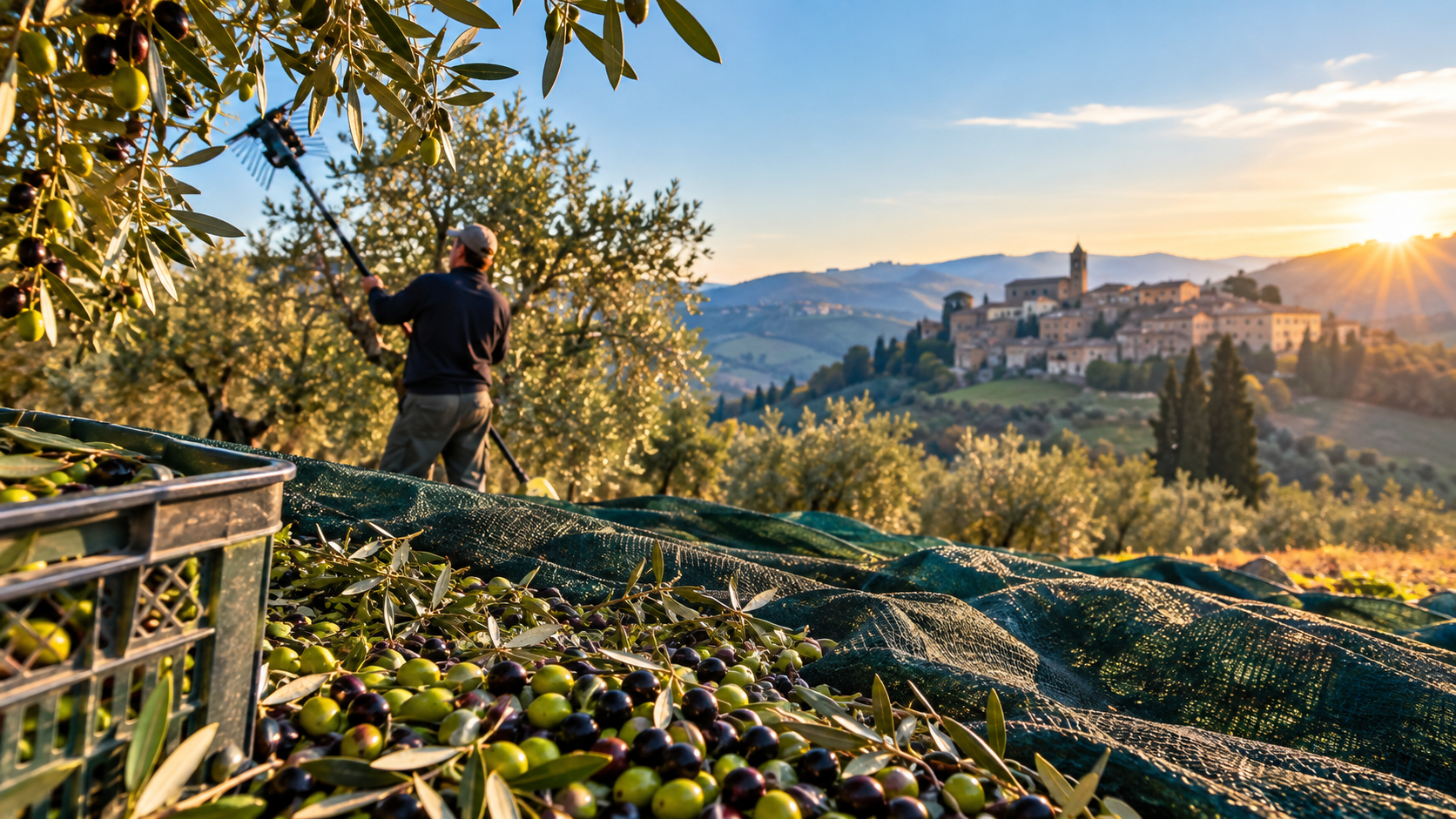
Late October, eight in the morning, and the olive harvest experience Italy never puts on a postcard has already begun. The grass is wet. The cold reaches your fingers before you touch a single branch. Down the slope, an electric agevolatore (a hand-held rake that shakes the fruit loose) whines like a hornet. Nets lie spread across the ground, and the olives land on them like light rain on a tarp.
Later, at the frantoio (the mill that crushes the olives), the air smells of cut grass and green artichoke. The new oil bites the back of your throat. I have stood in groves like this for professional reasons, and the scene barely changes from farm to farm. What changes is who may do what. Few English-language guides explain that part, so this one does.
Any olive harvest experience Italy sells to tourists falls into one of two legal categories, and a third activity sits outside tourism altogether. Oleotourism (oleoturismo) is a tourist service with its own rules: you pay a producer, and you are a guest. A tourist harvest is an unpaid recreational activity of a few hours, run under supervision on the model of a national grape-harvest protocol. Farm labor is real employment, open only to people with the right to work in Italy. A US passport entering visa-free covers the first two. It does not cover the third.
A note on links: one booking link in this article is an affiliate link. If you book through it, I earn a small commission at no extra cost to you. The platform I use lists mill visits and tastings in Umbria, not hands-on picking, so the harvest itself you book directly with a farm, as I explain below.
What an Olive Harvest Experience in Italy Really Means in Law
Two words in Italian law shape every olive harvest experience Italy offers to visitors: oleoturismo and enoturismo. The first covers olive oil, and the second covers wine. Neither is a marketing label. Instead, each is a legal category, and I read those rules like a building code: every clause exists because something once went wrong.
Enotourism came first, in Law 205/2017, article 1, paragraphs 502 to 505. A ministerial decree of March 12, 2019 set its minimum standards. Oleotourism followed in Law 160/2019, article 1, paragraphs 513 and 514, in force since January 1, 2020. A second decree, dated January 26, 2022, then filled in the details. The law treats it as a connected agricultural activity under article 2135 of the Civil Code. In short, a farm tour counts as part of farming.
To start, a farm files a SCIA (a self-certified notice of activity) with its town hall. The farm must then open at least three days, even seasonally. It must offer booking tools and say where guests can park. Its staff must also have training, including on the local territory.
So any olive harvest experience Italy offers as oleotourism gives you a registered farm, trained staff and a quality floor. The Rapporto sul Turismo Enogastronomico Italiano, by Roberta Garibaldi of the Associazione Italiana Turismo Enogastronomico, counts 14.5 million potential food and wine tourists in Italy. Wine draws 38.1% of their preferences, and extra virgin olive oil draws 24%.
Why Your Harvest Experience Lasts Two Hours
The short answer is a protocol. The longer answer is that the protocol works as a sign of a serious farm. Every olive harvest experience Italy runs for guests has to fit inside it.
The 2023 protocol behind the clock
On July 12, 2023, Italy’s national labor inspectorate (Ispettorato Nazionale del Lavoro) signed a protocol with Città del Vino, the national association of wine towns. It defines a tourist harvest as unpaid, brief and recreational. It states plainly that this is not employment. The text names grapes. Olive producers apply the same logic, because oleotourism and wine tourism belong to one legal family.
Then come the limits. Guests receive no pay, in cash or in kind. The activity lasts a few hours, in one time slot, morning or afternoon. It cannot repeat more than twice a week at the same farm. Also, guests pick in rows separate from the professionals, and signs mark those rows. One tutor supervises no more than eight guests. Badges tell the tutor from the tourist harvester. Guests never use farm machinery, and they never load or unload crates. Finally, the farm must hold a civil liability policy before it starts. It must also notify the town through the SUAP (the local one-stop office for business permits) or by certified email. The workplace safety law, Legislative Decree 81/2008, is the reference point.
How to tell a serious operator from an improvised one
Read those limits as a checklist. First, a serious farm tells you the session is short before you ask. Then it names your tutor and shows you the marked rows. Guests also get a badge. The farm never asks you to carry crates or run the rake, however politely you offer. And it can say, without hesitation, that the insurance is in place and the town knows about you.
An improvised operator does the opposite. It sells a full day of picking, or it promises free lodging for a week of help. Both promises break the protocol from opposite sides. That is your cue to ask more questions before you pay.
What Americans Can and Cannot Do
For the olive harvest experience Italy offers Americans, this section gives you the rules as they stand. You decide what to do with them. According to the same report, interest among Americans and Britons outruns actual participation by more than 20 points. A clear guide can help close that gap.
The 90/180 rule and the missing working holiday
US citizens can enter the Schengen area without a visa for up to 90 days in any 180-day period. The count covers all Schengen countries together. A tourist stay allows tourism. It does not allow work.
Italy does offer working holiday visas, but only through bilateral agreements. They exist with Australia, Canada, New Zealand and South Korea. They cover about 1,000 visas a year, for ages 18 to 30, or up to 35 for Canadians and Australians. Italy has no such agreement with the United States. So an American cannot use that route.
The one legal door for short farm work
Italy has a simplified regime for casual farm work, called LOAgri (Law 197/2022, article 1, paragraphs 343 to 354). It allows up to 45 days a year per worker. But only defined groups qualify: the unemployed and benefit recipients, pensioners, students under 25 and prisoners. Law 199/2025, article 1, paragraph 156, made the regime permanent. Immigration law adds a second barrier, because a tourist entry does not allow work of any kind.
The WWOOF and work-exchange knot
WWOOF Italia is a membership association. Membership costs €35 for 12 months and includes insurance, according to its own site. The network lists over 800 host farms. Also, its FAQ says WWOOFing is volunteering, not grounds for a work visa. It adds that you can do it if you already hold a regular visa, tourism included. In addition, the association says its model is neither employment nor labor in exchange for lodging. It cites a 2014 certification from the Biagi Institute at the University of Modena.
Commercial work-exchange platforms differ. Workaway, for example, sells a yearly membership, listed at $69 for a solo traveler. It connects you with hosts who offer room and board for help. Italian law does not care what a platform calls the arrangement. It looks at what happens on the ground: hours, obligations and what the host gives back. So a work exchange is a different product from an olive harvest experience Italy sells to tourists, and it is never automatically safe. The useful question is what your day involves, in writing, before you arrive. Treat this as a map, not legal advice, and confirm the details with an Italian consulate.
EES and ETIAS at the border in 2026
The Entry/Exit System, or EES, has been fully operational at every Schengen external border since April 10, 2026. It records your photo and fingerprints at first entry and replaces the passport stamp. ETIAS is a different story. It is a travel authorization, not a visa, and it is not running yet. The EU’s official ETIAS page says the system is not in operation and collects no applications. In July 2026, the EU dropped its earlier target of late 2026. No new date exists, though industry coverage points to 2027. Once live, it will cost €20 and last three years or until your passport expires. The EU says it will announce the start several months ahead. Until then, no site can issue you a real ETIAS.
What a Real Day in the Grove Feels Like
A professional crew starts at first light and ignores the weather. Nets go down under the tree. The electric rake combs the branches. Where the tree is tall, someone climbs a ladder and reaches. Then the crew gathers the nets, tips the olives into crates and moves to the next tree. The work is honest and hard. Your back bends. Your shoulders burn from holding your arms overhead.
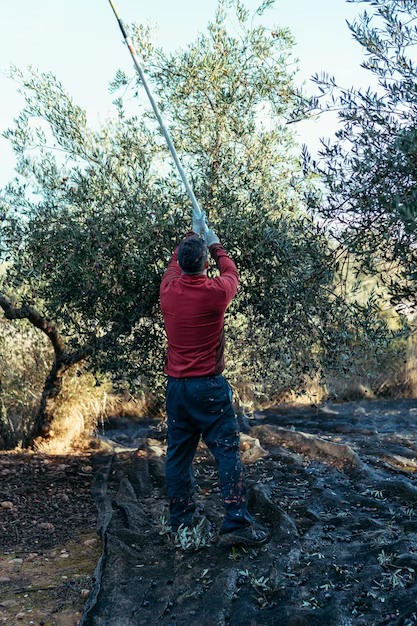
The cold bites for the first hour. Then you strip a layer, because a moving body heats up fast. Gloves get wet. Also, boots matter more than anything else you pack. I have watched crews like this while working on farm buildings for clients, and I still admire the rhythm.
Around noon the crew stops for lunch, in the field or in the farmhouse kitchen. Bread comes out, with cheese, cured meat and a first taste of that day’s oil. In the Marche, you may see ciauscolo, a soft, spreadable salami.
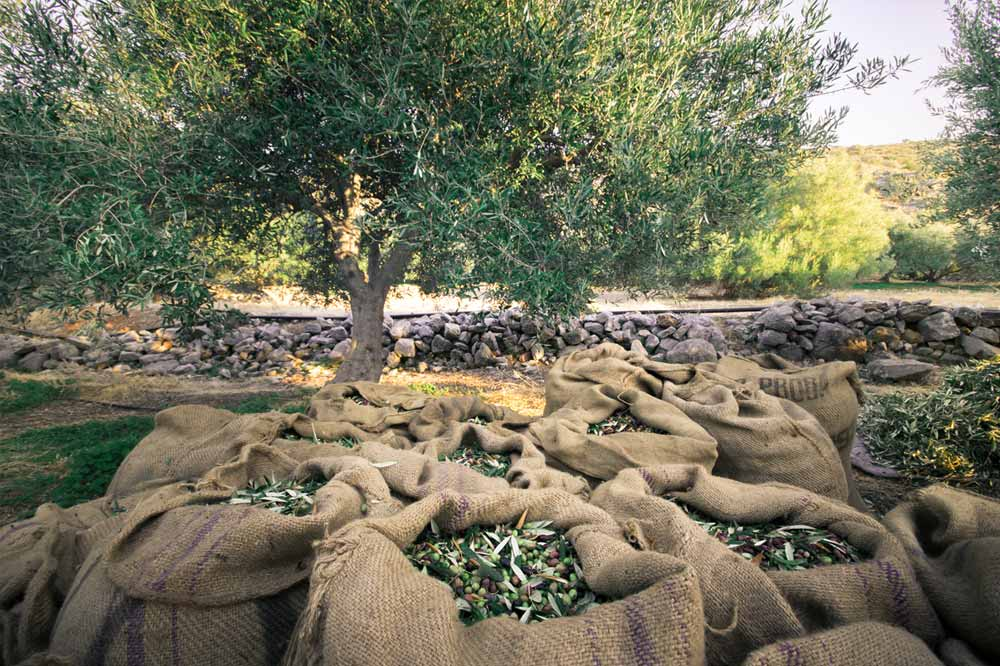
The fruit cannot wait as long as the crew can. Olives lose quality quickly once picked, so good producers deliver them to the mill within a day, often within hours. The best tasting happens there, when the first oil runs from the spout, cloudy and green. The olive harvest experience Italy sells to visitors gives you a slice of this day: a short stretch of picking, ideally followed by the mill. Ask for a session that ends there.
Where to Go for an Olive Harvest Experience: Central Italy, Region by Region
Umbria and Abruzzo have the most structured offers. The Marche have the only olive oil DOP in the region and almost no English-language packages. Each region sells the olive harvest experience Italy travelers want in a different way.
Umbria
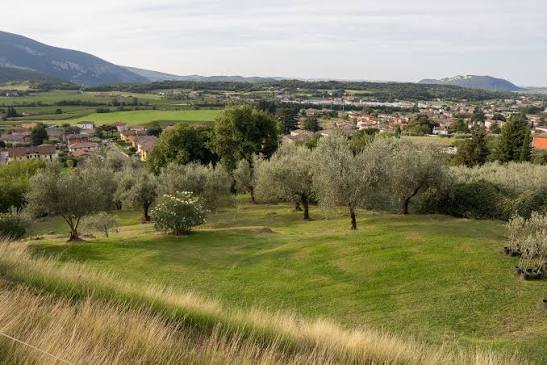
Umbria’s anchor is Frantoi Aperti (Open Mills), run by the Associazione Strada dell’olio e.v.o. DOP Umbria. The 29th edition runs from October 17 to November 15, 2026, and mills across the region welcome visitors. Spello, the subject of Infiorate di Spello: an Italian insider’s guide, also sits in olive country.
Perugia, the regional capital, gives you a working mill without a car. Antico Frantoio Trampolini sits a few minutes from the historic center, near the Templar church of San Bevignate. Its guided mill visit with an olive oil tasting lasts about 90 minutes and costs about $50, in groups of up to ten. It is a tour and a tasting, not a harvest. Pair it with a picking session booked directly with a farm, and you have both halves of the day.
Abruzzo
Abruzzo packages the olive harvest experience Italy visitors want well too. Ask each farm which days include hands-on picking, because the offer varies from one host to the next.
The Marche
First, the Marche hold the region’s only olive oil DOP, Cartoceto, which the EU recognized in 2004. A DOP (Protected Designation of Origin) is a European label that ties a product to a place and a method. Yet almost no English-language package exists for the region. That gap works in your favor. Fewer packages usually mean smaller groups and a conversation with the owner instead of a script. The same inland hills appear in the guide to the Mediterranean diet in Le Marche, and Cingoli shows what that interior looks like.
What the packages cost
Published multi-day packages in central Italy span a wide range in 2026. A four-day, three-night stay in Abruzzo starts from about €450. Meanwhile, a week in Umbria with an oil quota included starts from about €500. At the top, a seven-day program for groups of up to 12 reaches about €1,995. Treat these as ranges, not quotes, and confirm the current price with each producer.
Timing Your Olive Harvest Experience in Italy: the 2026-2027 Calendar
The harvest runs from late September to December. Tuscany and Umbria concentrate it in October, and central Italy carries on into November. Fruit ripens on its own schedule, so no farm can promise a date months ahead. Still, the fixed appointments below anchor any olive harvest experience Italy offers you in 2026.
- Cantine Aperte in Vendemmia (the grape harvest, with over 800 wineries of the Movimento Turismo del Vino): August 24 to October 25, 2026
- Frantoi Aperti in Umbria, 29th edition: October 17 to November 15, 2026
- Camminata tra gli Olivi (the national walking day of the Città dell’Olio): last Sunday of October, which is October 25, 2026
- Cartoceto DOP, il Festival, 49th edition: October 25 and November 1, 2026
- Ascoliva Festival, Ascoli Piceno: August 8 to 19, 2026, already over
Note the overlap on Sunday, October 25. The national walk among the olive trees and the first day of Cartoceto fall on the same date, so you must pick one.
Dates also drift. Cartoceto’s festival ran on November 5 and 12 in 2023, November 3 and 10 in 2024, and November 9 and 16 in 2025. In 2026 it starts two weeks earlier. So treat any 2027 date as unconfirmed until the organizers publish it. No 2027 dates had surfaced for these events by late September 2026. Plan around the window from mid-October to mid-November, and confirm each event about three months ahead.
What to Book for Your Olive Harvest Experience in Italy, and What to Ask First
Book the short, supervised olive harvest experience Italy allows at a registered farm, ideally one that ends at the mill. So write to producers in spring for an October or November visit. Farms can run the activity only twice a week, and one tutor handles no more than eight guests, so spots stay few.
Before you send a deposit, ask three questions:
- Do you hold registration with the town for oleotourism, and did you tell it about guest harvests?
- Who is my tutor, and how many guests does each tutor supervise?
- Does your liability insurance cover guests in the grove, and can you send me proof?
A serious farm answers all three in one email. If the answers come slowly or vaguely, wait.
Booking Notes: The Grove, the Mill and What I Would Skip
The grove, booked direct. The picking session is the part no booking platform sells. Write to a registered farm, ask the three questions above, and pay the farm. That keeps you inside the protocol, and your money reaches the people who tend the trees.
The mill, booked online. For the second half of the day, the guided visit and tasting at Antico Frantoio Trampolini in Perugia is the one I would reserve. It is short, close to the center, and rated 5.0 from 31 reviews at the time of writing. Book it for late October or November if you can. A mill visited in season smells of fresh olive paste and new oil. Out of season, you see a still machine and a museum.
What I would skip. Any offer that sells a full day of picking, or a week of free lodging in exchange for help in the grove. The first breaks the short-session logic of the 2023 protocol. The second turns a holiday into undeclared work, which a tourist entry does not allow. Neither is a bargain. I would also skip any website that offers to sell you an ETIAS today, because the system is not running yet.
Planning a trip to central Italy and want Italian insider guidance? You can reach me through the About page to arrange a consultation. Together we can check your plan against the rules in this guide, and match the week, the region and the farm.
FAQ: Olive Harvest Experience in Italy
Can I join an olive harvest experience in Italy as a tourist?
Yes. Any olive harvest experience Italy offers to tourists falls under the oleotourism rules or the supervised harvest protocol. You pay the producer for the visit, and you receive no pay in return. As a tourist, you cannot work on the farm.
Can Americans volunteer on an Italian farm through WWOOF?
Yes, with limits. WWOOF Italia accepts members aged 18 and over for €35 a year. Its FAQ says you may WWOOF while in Italy on a regular tourist entry. Your stay still falls under the 90/180 rule. Italian law also judges the reality of your day, not the label.
How long does the Schengen 90/180 rule let me stay?
You may stay up to 90 days in any rolling 180-day period, counted across all Schengen countries together. For example, days in France or Spain use the same allowance as days in Italy.
What are EES and ETIAS, and do they affect me?
EES is the EU’s entry and exit registration system. It has run at every Schengen external border since April 10, 2026, and it records your photo and fingerprints. ETIAS is a future travel authorization costing €20. However, it is not yet in operation, and officials have set no start date.
When is the best time for an olive harvest experience in Italy?
The olive harvest experience Italy offers follows the fruit, which ripens from late September to December. Tuscany and Umbria peak in October, and central Italy continues into November. In 2026, Frantoi Aperti in Umbria runs from October 17 to November 15.
How much does an olive harvest experience in Italy cost?
Any olive harvest experience Italy sells as a package runs from about €450 to about €1,995. The low end buys four days and three nights in Abruzzo. The high end buys seven days with groups of up to 12. A week in Umbria with an oil quota starts from about €500. For a single visit, ask the producer for the all-in price.
Is an olive harvest experience in Italy physically demanding?
A professional day is demanding. You bend, climb and reach for hours in the cold. An olive harvest experience Italy offers to tourists is much lighter: a few hours, no machinery and no crate lifting. Still, you stand on uneven, often sloped ground, so wear waterproof boots and layers.