Buying a House in Italy: An Italian Engineer’s Honest Guide for 2026
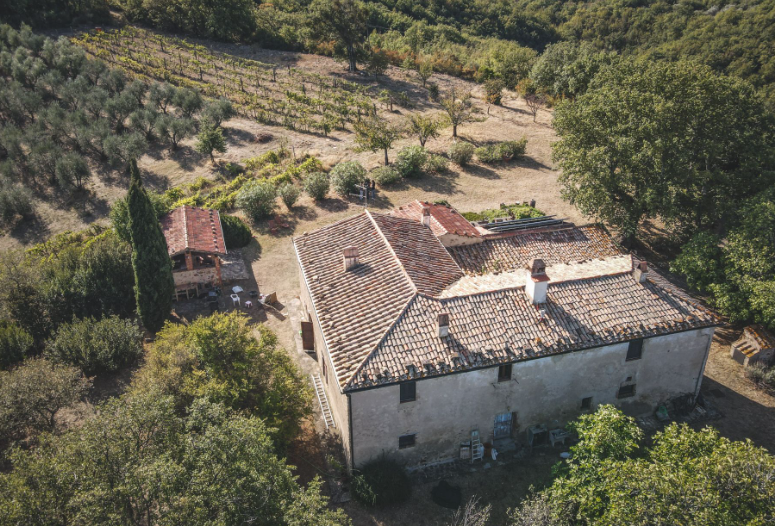
The first time I walked through a farmhouse a foreign couple was about to buy, I spent ten minutes in the cantina before I said a word about the view. The owners had shown them the terrace, the olive trees, the way the evening light came across the valley. Nobody had looked at the east wall, where a hairline crack ran from the floor to the first beam, or noticed that the lowest course of stone was darker than the rest because it had been drinking groundwater for a century. The couple were in love with the house. I was reading it the way I read every building I am asked to assess: as a structure that either tells the truth about itself or hides it.
I am an engineer in the Marche, not an estate agent. I have spent thirty years inside Italian houses — surveying them, certifying them, working out why a wall is moving or why a roof is failing — and in the last few years more and more of those houses have belonged, or were about to belong, to Americans, Germans, and Britons who had fallen for the idea of Italy before anyone explained the reality of an Italian building. This guide is the conversation I wish someone had with them first.
Why Are So Many Foreigners Buying Houses in Italy Right Now?
Foreigners are buying houses in Italy in record numbers because the country offers something that has become rare in the wider Western world: real architectural beauty at a price ordinary people can still reach, inside a legal system that lets non-citizens own property outright. In 2025, foreign buyers spent roughly 5.5 billion euros on Italian homes — the highest figure of the past decade, according to the research firm Scenari Immobiliari. The number of foreign purchasers reached around 8,700, up from 8,000 in 2019 and a pandemic low of just 1,700 in 2020. Measured differently, the Tecnocasa group found that foreign buyers made up about 14 percent of all transactions in 2025, against 9.5 percent in 2019; some agencies report figures approaching 20 percent in the most international markets. The exact percentage depends on who is counting and whether residents of foreign nationality are included, but the direction is not in dispute. The share of Italy that belongs to people who were not born here is growing every year.
What follows is not a sales pitch. It is the explanation an Italian would give you across a kitchen table — why this is happening, what these buyers are actually getting for their money, and what I, as the person who inspects these houses after the romance has worn off, would tell you to check before you sign anything.
The Real Reasons: Price, Tax, and the Exchange Rate
Italians complain about Italy constantly. We complain about the bureaucracy, the wages, the slowness of everything. So foreigners are often surprised to learn that the country we grumble about is, on paper, one of the better financial decisions a Northern European or American can make. There are three concrete reasons, and none of them is the wine.
The first is price. A comfortable two- or three-bedroom flat in Munich or London now costs what a restored villa with a garden costs in much of central and southern Italy. In the less-trafficked regions, the gap is almost absurd: in the Marche, a sector specialist recently noted that a fully restored townhouse can still be found from around 70,000 euros. This is not a temporary dip. Italy has been structurally cheaper than its northern neighbours for decades, because our population is shrinking, our interior towns have emptied, and there is far more old housing stock than there are Italians who want it. The foreigner who buys here is, in part, buying the houses my own countrymen have left behind.
The second reason is tax, and this is where Italians themselves are often the least informed. Italy actively pays certain foreigners to move here. A retiree who transfers residence to a town of fewer than 30,000 inhabitants in the south can elect a flat tax of 7 percent on all foreign income for up to ten years. For a pensioner with a comfortable foreign pension, the saving against ordinary rates runs to tens of thousands of euros a year. At the opposite end of the wealth scale, there is the so-called new-residents regime for high-net-worth individuals: a single annual lump sum that covers all foreign income regardless of its size. That figure rose on 1 January 2026 from 200,000 to 300,000 euros, with an additional 50,000 per family member — though anyone who entered the regime before that date keeps the older, lower rate. Three hundred thousand euros sounds enormous until you are a person whose foreign income is measured in the millions, at which point it is one of the most generous arrangements in Europe. These schemes are written by Italians, for the explicit purpose of attracting foreign capital and residents, and they are a large part of why wealthy Britons in particular have been relocating here.
The third reason is the exchange rate, and it deserves a calmer treatment than it usually gets. For years the dollar and the pound were strong against the euro. In 2024 the euro and the dollar moved close to parity, so that an American buying a 300,000-euro house was spending roughly 300,000 dollars. As I write, in June 2026, one euro is worth about 1.16 dollars — the dollar has weakened, partly because of geopolitical instability and the monetary picture in the United States. That makes the headline arithmetic slightly less flattering for Americans than it was a year ago. But the underlying advantage has not moved: an Italian house and an Italian life still cost a fraction of their American equivalents, exchange rate or no exchange rate. The currency is a factor in timing, not in the fundamental decision.
Who Is Actually Buying, and Where
The picture most people carry in their heads — the Russian or German millionaire buying a clifftop estate — is real but rare. That buyer is a small slice of the market. The large majority of foreign purchasers are working with budgets that would not turn a single head in California or the Home Counties: a great many buy ordinary houses for under 250,000 euros. The luxury sale makes the newspaper precisely because it is unusual, and because in many cases no Italian would have bought that property at all. But the everyday reality is more modest and more interesting.
Broadly, the foreign buyers I encounter fall into four types. There is the remote worker, often with the smallest budget, who wants a base from which to live the life they cannot afford in their home city. There is the retiree, frequently chasing that 7 percent southern tax regime, sometimes with surprising spending power. There is the pure investor, buying to run short-term rentals or an agriturismo — a working farm-stay — and treating the house as a business. And there is the high-net-worth individual, who has stopped thinking about return on investment entirely and is buying authenticity: the stone, the beams, the sense of a place that has been lived in for four hundred years.
Where they buy is changing, and this is the part of the story I find most telling. For a generation, the foreign map of Italy had three pins: Tuscany, Lake Como, the Amalfi Coast. That map is dissolving. In the latest data, Tuscany’s share of foreign preference fell from 22 percent to 13 percent, and Umbria collapsed from 10 percent to just 2 percent — not because foreigners stopped wanting them, but because they discovered everywhere else. Rome’s foreign demand surged. Turin, Bologna, and Bari climbed into the conversation, the last of them carried by remote workers moving to Puglia. The single most-searched town of the year, by some measures, was not Florence or Venice but Ostuni in Puglia, a place buyers were chasing sight unseen, on the strength of a video. The Italy that foreigners want has stopped being three postcards and started being the whole peninsula. That shift is the single most important thing in this market, and I will come back to what it means for where a sensible person should actually be looking.
What You Are Actually Buying: An Engineer’s Warning
Here is where my trade and the estate agent’s part company. The agent is selling you a feeling. I am paid to tell you what the building is going to do for the next thirty years, and an old Italian house has opinions of its own.
An American buyer who recently spent close to a million euros on a Tuscan estate put it well in an interview: the best protection against the pitfalls, he said, is to hire a real estate attorney, an accountant, and a geometra — a surveyor — before you commit. I would put the technical adviser first on that list, not last. A geometra or an engineer is the person who reads the house the way the couple in my opening story had not been taught to read it.
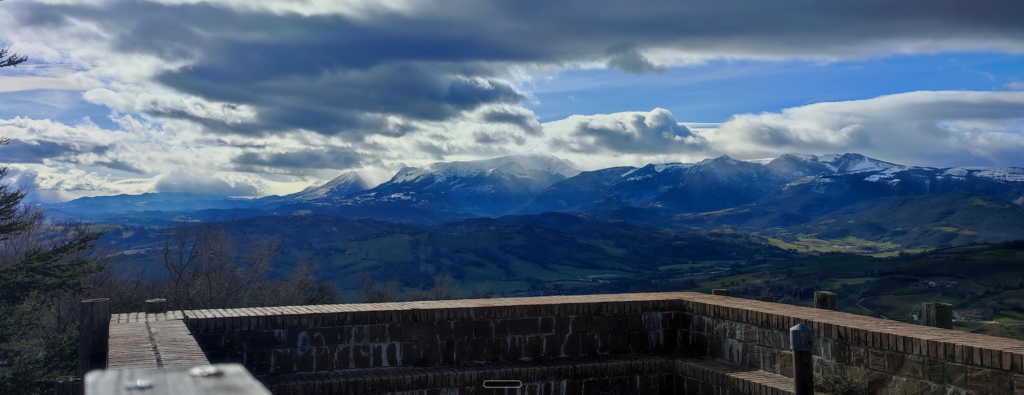
What are we reading for? In a stone farmhouse, the first question is always water: where it comes from, where it goes, and what it has been doing to the foundations. Rising damp in the lowest courses of masonry is the single most common condition I find, and it is rarely mentioned in a listing. The second question is movement — cracks that follow the line of a beam or open at the corner of a window, which tell you whether the building is simply old or actively failing. The third is the roof, because in central Italy, where I work, the roof is also the line of defence against an earthquake. The Marche and the central Apennines are seismic country. A house that has stood for three centuries has usually survived several earthquakes by being repaired badly each time, and the cost of doing it properly — tying the walls together, making the roof behave as a single rigid plane — can quietly equal the purchase price.
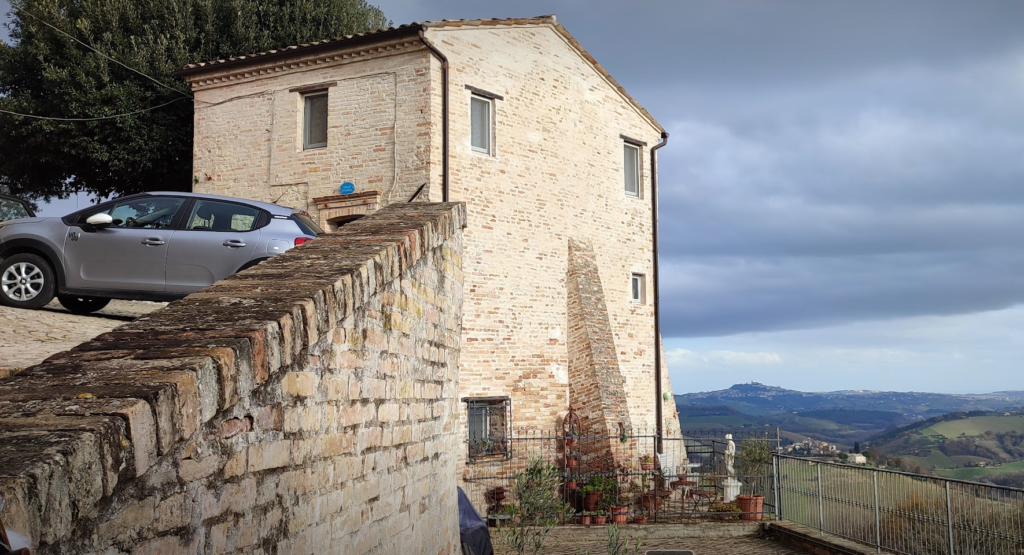
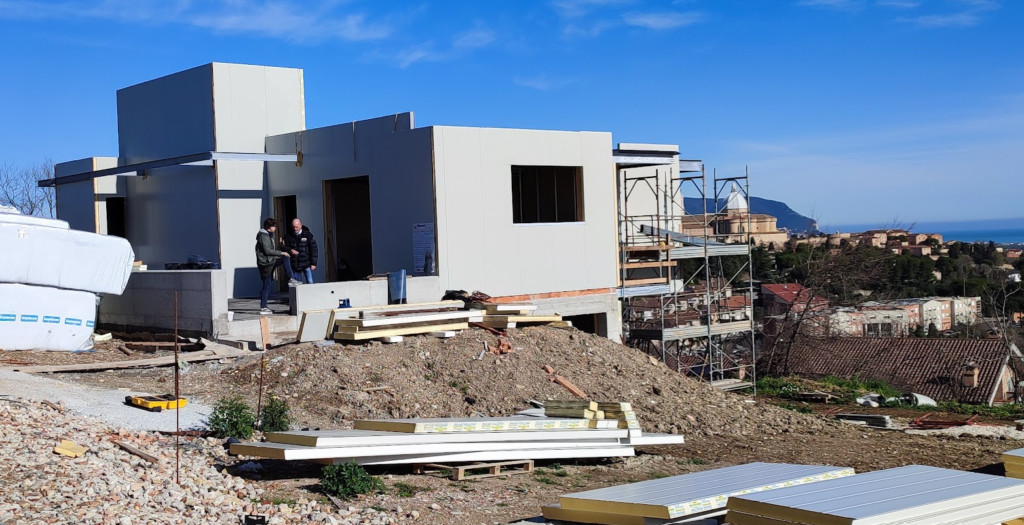
Then there are the things that are not structural but are just as expensive to discover late. Many beautiful rural houses have no mains gas and weak electrical supply. Many have been extended or altered over the decades without the paperwork ever catching up, which in Italy is not a minor inconvenience: a discrepancy between the building as it stands and the building as the land registry describes it can stall a sale, complicate a future resale, and occasionally cost real money to regularise. This is why I tell every foreign buyer the same thing. The romance of an Italian house is real, and so is the bill behind the plaster. Pay an independent technical professional — one who works for you, not for the seller or the agency — to inspect the property and check its documents before you make an offer, not after.
The Buying Process, and Where Foreigners Get Caught
The Italian purchase process is logical, but it is not the process an American or a Briton expects, and the differences are exactly where people lose money.
You will first need a codice fiscale, the Italian tax code, which is required for almost any official act, and an Italian bank account is effectively necessary too. Most foreign buyers cannot navigate these alone and should not try. The transaction itself usually moves in three stages: an irrevocable proposal to buy; a compromesso, or preliminary contract, at which a deposit changes hands; and the rogito, the final deed signed before a notaio, a public notary whose role has no exact equivalent in the English-speaking world and whose presence is not optional.
The trap sits at the compromesso. The same American buyer I quoted earlier learned that the Italian system tends to protect the seller, and that there are no easy opt-out clauses of the kind common in United States contracts. If you sign the preliminary contract and then walk away, you can lose your deposit — and that deposit is commonly between 10 and 30 percent of the price. This is the single most important sentence in this article: in Italy, your due diligence belongs before the preliminary contract, not after it. By the time you have signed and paid the deposit, the structural survey you skipped is no longer a negotiating tool. It is a regret.
Budget, too, for the costs around the price. Notary fees, taxes, and agency commission together add a meaningful percentage to the headline figure, and the tax treatment differs depending on whether the home will be your main residence or a second home. None of this is a reason not to buy. It is a reason to know the real number before you fall in love with the listing number.
Why Le Marche Might Be the Smartest Place to Buy
I have saved my own region for last, not out of loyalty but out of logic. If the defining trend of this market is foreigners discovering the Italy beyond the three postcards, then the intelligent move is to be slightly ahead of that wave rather than behind it.
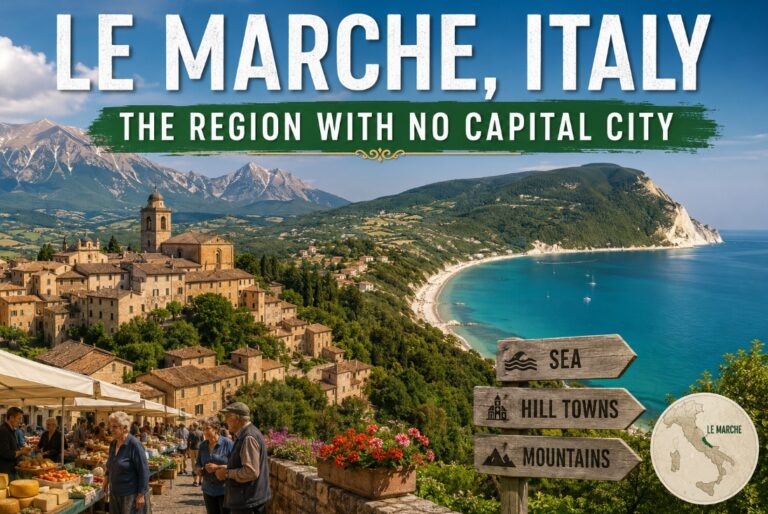
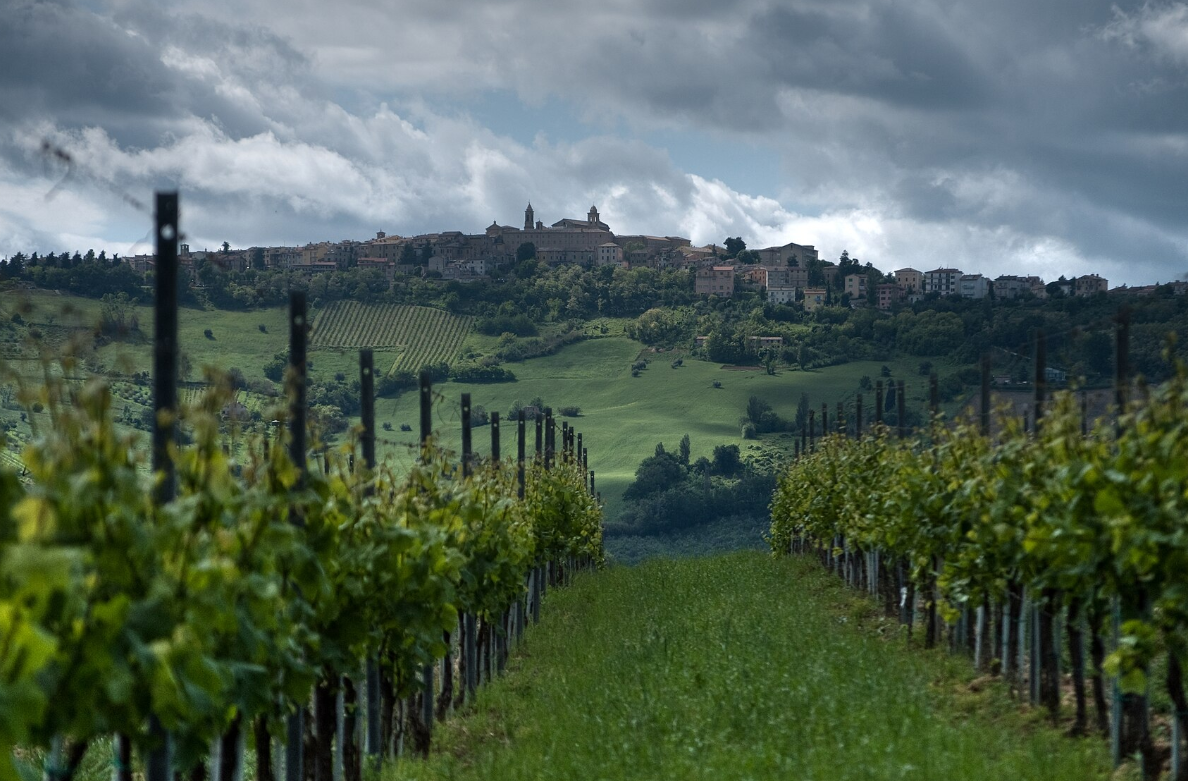
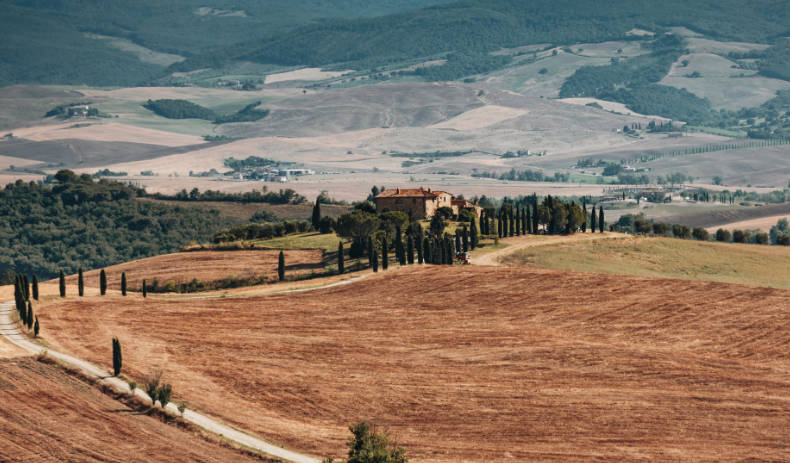
Tuscany is no longer a bargain, and its foreign-buyer share is falling for the simple reason that the value has been bought out of it. The Marche, on the Adriatic side of the same mountains, offers much of what made Tuscany famous — the hill towns, the vineyards, the slow valleys — at prices that still favour the buyer, and it has remained, in the words of one property analyst, largely off the radar of foreigners. The region gives you the Sibillini Mountains on one side and Blue Flag beaches on the other, medieval towns that Siena’s crowds never reach, and a cost of entry that can begin around 70,000 euros for a restored townhouse. I am not a disinterested observer here: this is where I live and work, and where I have inspected more houses than I can count. But that is precisely why I can say it plainly. The Marche is what Tuscany was twenty-five years ago, and the people buying here now are buying at the bottom of a curve that the rest of the market is only beginning to find.
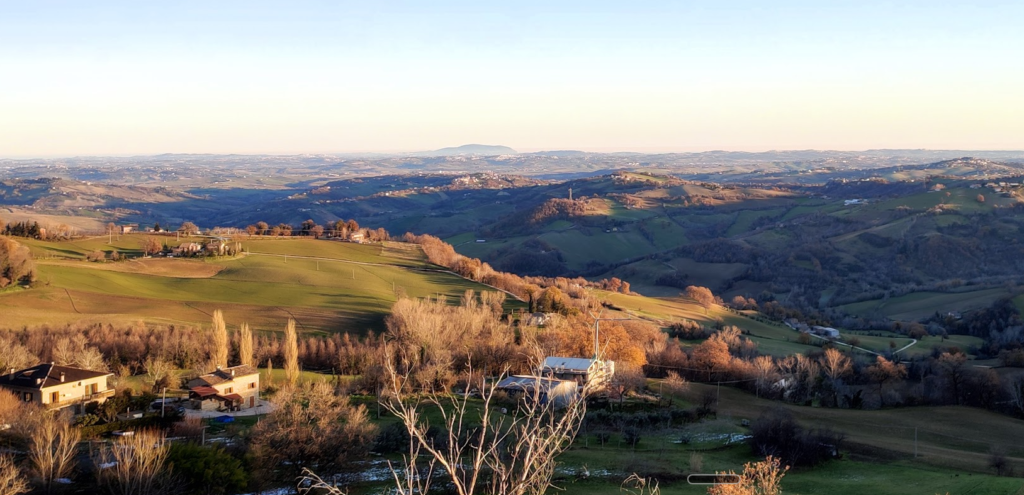
That is also the right note of caution on which to end. The reason to buy in a place like the Marche is not that it is undiscovered and cheap, full stop. It is that it is a real region, with real houses that have real conditions, where a foreign buyer who does the technical homework can own something genuine for a price that has not yet been inflated by attention. The opportunity and the warning are the same sentence. Buy the house, not the feeling — and have someone read the east wall before you sign.
Practical Information
Can foreigners legally buy property in Italy? Yes. Italian law permits 100 percent foreign ownership of real estate, and ownership rights are well protected. Citizens of most countries, including the United States, the United Kingdom, and the EU, can buy freely.
What you will need: an Italian tax code (codice fiscale), almost certainly an Italian bank account, and professional support — at minimum a notary (legally required), and in practice a technical surveyor or engineer and, for tax questions, an accountant.
The three stages of a purchase: the proposal to buy, the preliminary contract (compromesso, with deposit), and the final deed (rogito) before a notary.
Budget beyond the price: notary fees, purchase taxes (different for a main residence versus a second home), and agency commission. Treat the listing price as the start of the calculation, not the end.
When to do your survey: before the preliminary contract, never after. The deposit is at risk once the compromesso is signed.
Frequently Asked Questions
Is it a good time to buy a house in Italy in 2026? For most foreign buyers, the fundamentals remain favourable: prices are still low by Northern European and American standards, foreign ownership is legally secure, and demand is rising rather than falling. The euro has strengthened against the dollar compared with 2024, which slightly raises the cost for American buyers, but the underlying price advantage of Italian property is far larger than any recent currency movement.
How much of the Italian housing market do foreigners now own? In 2025, foreign buyers accounted for roughly 14 percent of all transactions according to the Tecnocasa group, up from 9.5 percent in 2019, with total foreign spending of about 5.5 billion euros reported by Scenari Immobiliari. In the most international local markets the share approached 20 percent.
Do I really need a surveyor or engineer to buy an old Italian house? In my professional opinion, yes. Old Italian houses commonly carry hidden conditions — rising damp, structural movement, seismic vulnerability in central regions, and discrepancies between the building and its land-registry records. An independent technical inspection before you make an offer is the cheapest insurance you will ever buy.
What is the 7 percent flat tax for retirees in Italy? Foreign retirees who move their residence to a town of under 30,000 inhabitants in southern Italy can elect a flat tax of 7 percent on their foreign income for up to ten years. It cannot be combined with the high-net-worth regime, and individual circumstances vary, so confirm eligibility with a qualified Italian tax adviser.
Why are foreigners moving away from Tuscany toward regions like Le Marche? Not because Tuscany has lost its appeal, but because its prices have risen while other regions offer comparable landscapes and culture for far less. Foreign-buyer preference for Tuscany fell from 22 percent to 13 percent in the latest data, as buyers discovered alternatives such as the Marche, which is often described as “the new Tuscany” and remains comparatively undervalued.
What is the biggest mistake foreign buyers make in Italy? Signing the preliminary contract (compromesso) before completing due diligence. Unlike in the United States, there are typically no easy opt-out clauses, and a buyer who withdraws can forfeit a deposit of 10 to 30 percent of the price.
—
Planning a move, or a serious search, in central Italy? I help foreign buyers understand the Marche, Umbria, and Abruzzo before they commit — the regions, the towns, and the questions to ask before an offer. You can book a consultation with me directly, or join the newsletter for a monthly letter from the Italy most visitors never see.