Venice Film Festival 2026: How to Actually Attend (Tickets, the Lido, and What Nobody Tells You)
The Lido di Venezia in early September is a strange kind of theater. By day it is still a beach resort, all striped umbrellas and vaporetto commuters in flip-flops. By six in the evening, the same waterfront fills with photographers three rows deep, security barriers appear outside a rationalist concrete building from 1937, and a red carpet gets rolled out toward the Adriatic as if the sea itself had RSVP’d. I have made that crossing by boat more times than I can count, in every mood the lagoon offers, and the festival never stops feeling like an intrusion the island has agreed to tolerate once a year.
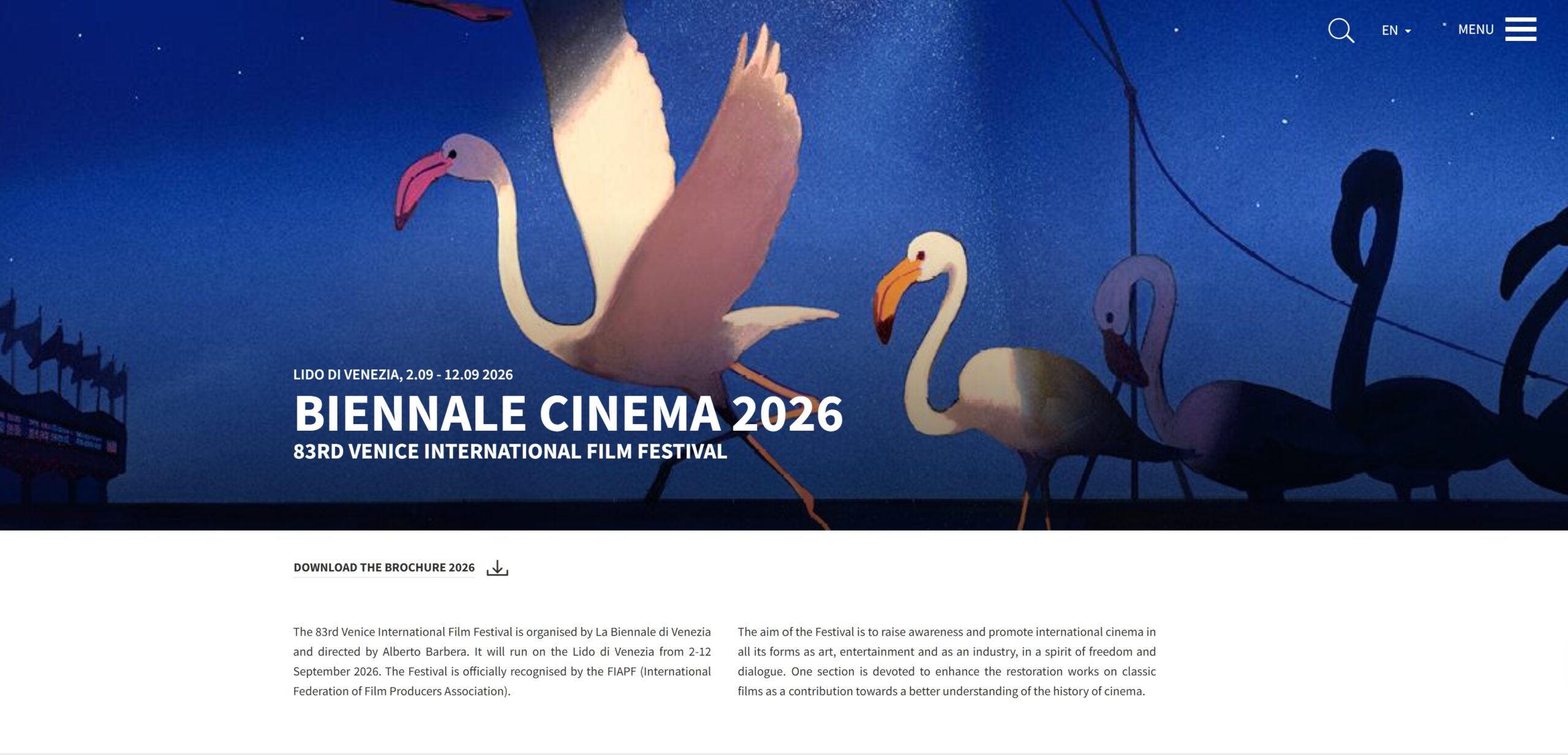
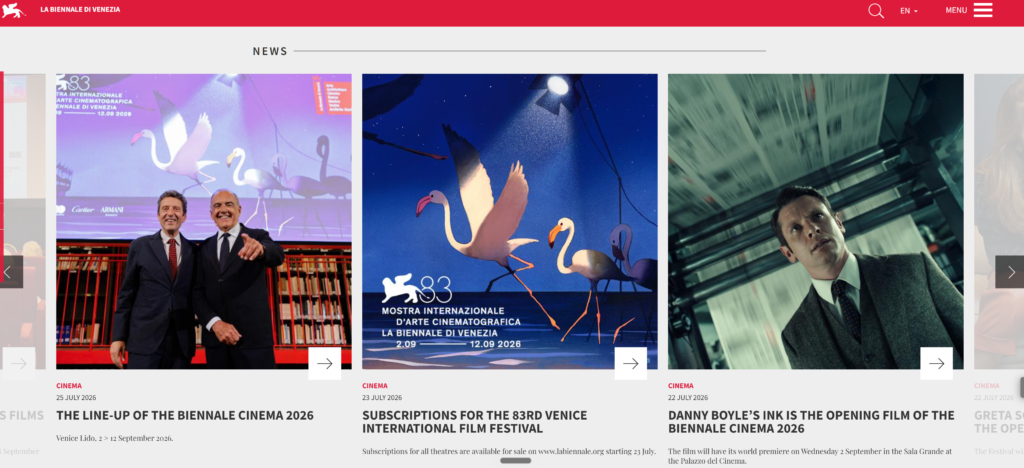
The Venice Film Festival 2026 — officially the 83rd Venice International Film Festival, or Mostra Internazionale d’Arte Cinematografica — runs from September 2 to September 12, 2026, on the Lido di Venezia. Unlike Cannes, where a public badge gets you close to nothing, Venice sells tickets directly to non-industry visitors for most screenings, including films in official competition. Subscriptions go on sale July 23, 2026, and individual public tickets follow in mid-August, sold exclusively online through La Biennale di Venezia’s official platform. They do not last long. This guide covers exactly how the ticketing system works, what it actually costs, how to get to and stay near the Lido, and what you can experience even without a single ticket in hand.
A note on links: some of the booking links in this article are affiliate links. If you book through them, I earn a small commission at no additional cost to you. Festival tickets and accreditation are not among them — those come only from La Biennale.
What’s Happening: The 83rd Venice International Film Festival at the Lido
Dates, Direction, and the 2026 Edition
The festival runs eleven days, September 2–12, 2026, entirely on the Lido di Venezia, a narrow barrier island about twenty minutes by vaporetto (the public water bus) from Piazza San Marco. Alberto Barbera continues as artistic director, a role he has held for over a decade, and American actress and filmmaker Maggie Gyllenhaal presides over the main competition jury. This edition also marks the first time the festival has awarded two honorary Golden Lions for lifetime achievement in the same year: one to George Clooney, one to Ellen Burstyn.
The main venue is the Palazzo del Cinema on Lungomare Marconi, but screenings spread across several halls on the island, and the festival’s daily program — including which titles compete for the Golden Lion — is typically confirmed in the last week of July, right before ticket sales accelerate. If you are checking this in late July or early August, the lineup should already be public on La Biennale’s official site.
Beyond the main competition, two parallel sidebar sections run on their own venues and schedules: Orizzonti, dedicated to films exploring new trends in world cinema, and Venice Days, a more independently curated selection. Both are worth checking if the headline competition titles sell out first — the sidebars draw smaller crowds and tend to hold tickets later into the sale window than the Sala Grande premieres.
A Festival Built Before the Word “Festival” Existed for Cinema
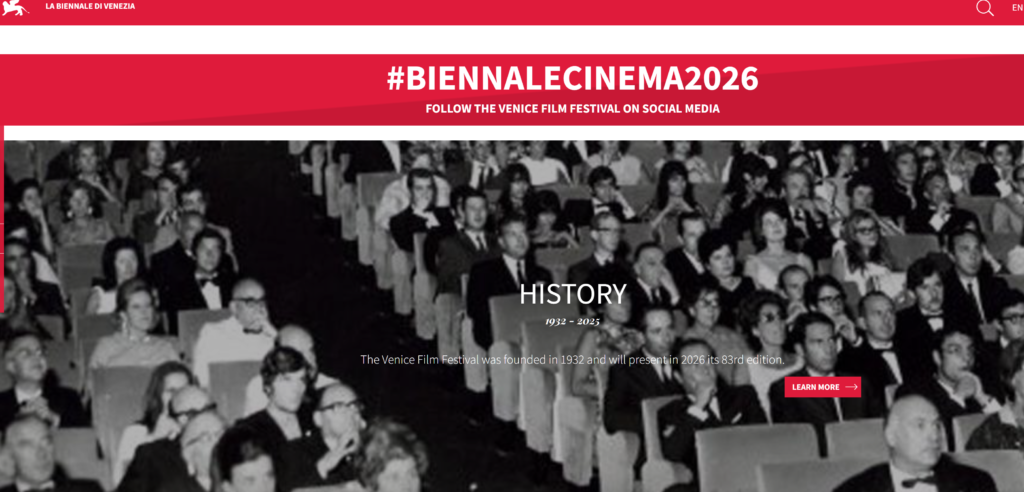
The Venice Film Festival opened in 1932 as a section of the Biennale’s visual arts exhibition, making it the first event of its kind anywhere — Cannes did not exist until 1946, and Toronto is a relative newcomer from 1976. The Golden Lion, the festival’s top prize, takes its name and image from the winged lion of Saint Mark, the same symbol that appears on the flag of the Venetian Republic and above the entrance to the Doge’s Palace across the lagoon. Winning it still opens the international awards season every year, ahead of Toronto and Telluride, which is why so many studios time their prestige premieres for the Lido rather than waiting for the fall festivals in North America.
The Palazzo del Cinema itself carries an uncomfortable footnote: it was built in 1937 under the Fascist regime, in the rationalist style favored by the period’s public architecture, and has never been replaced or substantially altered since. Italians rarely dwell on this when discussing the festival, but it is the kind of detail an American visitor standing in that lobby for the first time tends to ask about, and it is worth knowing the honest answer rather than guessing.
Why “Venice Film Festival” Is Only Half the Name
Here is a distinction most American visitors miss entirely: what English speakers call “the Venice Film Festival” is, in Italian, one of several annual events organized by the same parent institution, La Biennale di Venezia. The Biennale alternates a Contemporary Art exhibition and an Architecture exhibition in most years, and separately runs the Cinema festival, the Theatre festival, the Dance festival, and the Music festival on their own calendars — all under one administrative roof, all bookable through the same website, and all sharing one detail that trips up first-time visitors: an accreditation or subscription purchased for Cinema does not grant you access to Art or Architecture, and vice versa. Keep that distinction in mind before you start comparing prices across festival types online.
Tickets and Timing: The Part That Actually Decides Your Trip
This is the section that matters most, because the Venice Film Festival is far less forgiving on timing than most European cultural events. Miss the window and you are watching the red carpet from behind a barrier rather than from inside the Sala Grande.
Accreditation vs. Public Tickets
The festival runs two completely separate access systems, and understanding which one applies to you will save you real money and real confusion.
Accreditation is designed for people working in the film, television, or broader audiovisual industry — critics, distributors, festival programmers, students in relevant fields. It costs €95 at the full rate, with an €80 early-bird rate available earlier in the year, and the request deadline for the 2026 edition falls on August 12. Accreditation grants access to press and industry screenings, the Venice Immersive section on the Lazzaretto Vecchio island, the exhibition areas, and free-access conferences organized by the Venice Production Bridge — plus, notably, a discount on tickets to the concurrent Biennale Arte exhibition in central Venice.
Public tickets require no professional credentials at all. If you are simply a visitor who wants to see films, this is your route, and it is the one that makes Venice genuinely more accessible than most people assume. Public tickets are sold for individual screenings, including films in official competition, and the 7 pm gala screenings in the Sala Grande are reserved exclusively for the public — accredited industry guests do not get those seats.
When Sales Open, and Why You Cannot Wait
Multi-day subscriptions go on sale July 23, 2026, directly through La Biennale’s official website. Single tickets for the general public open later, typically in mid-August, once the daily program has been finalized and posted. Both sales windows move fast: seats for the evening premieres routinely sell out within hours, and popular competition titles can disappear from the system well before the festival even begins. If you are reading this in late July, the practical move is to decide your dates now and be ready to buy the moment the public window opens, rather than browsing casually once the festival has already started.
What It Actually Costs
Based on recent editions, single screening tickets have run roughly €12 to €20 for daytime matinee slots, rising to somewhere between €50 and €55 for the evening gala screenings in the Sala Grande — the ones with red-carpet arrivals beforehand. Multi-day subscriptions bundle several films at a lower per-screening cost but sell out faster precisely because of that value. Treat any number you see online as an estimate rather than a locked-in figure; La Biennale confirms exact pricing tiers only once the season’s ticketing platform goes live.
Discounts Worth Knowing About
Italy’s cultural sector runs on age-based discounts more consistently than American visitors expect, and this festival is no exception. Visitors under 26 and over 65, along with Biennale Card holders, qualify for a discounted Promotional Card that grants access to films marked for general pass holders, subject to seat availability. If you fall into either bracket, apply for it rather than paying full public-ticket price by default.
Mistakes First-Time Buyers Consistently Make
A few patterns repeat every year among American visitors booking their first Venice Film Festival trip:
- Assuming a ticket purchased for one screening carries over to another. Every screening is booked separately; a ticket is tied to a specific film, date, and time slot, and showing up late means losing the seat entirely.
- Confusing accreditation with a public ticket. Applying for the €95 accreditation when you simply want to watch films as a visitor is unnecessary expense and paperwork — the public route is both simpler and cheaper for non-industry travelers.
- Waiting until arriving in Venice to sort out tickets. By the time you land, the mid-August public sale window for the most in-demand titles has usually already closed.
- Forgetting photo ID. Tickets are strictly personal and non-transferable, and venues check that the name on your ticket or QR code matches a valid photo ID at the door.
Getting to the Lido and Where to Stay
Getting There
The Lido has no bridge to Venice proper — everything arrives by water, which is part of what gives the island its strange, cut-off atmosphere during festival week. From Piazza San Marco, the public vaporetto takes about twenty minutes and is by far the cheapest option. A private water taxi runs faster, around 45 to 55 minutes door to door from Marco Polo Airport, but expect to pay in the range of €140 to €180 for the boat itself, not per passenger — worth splitting across a group. Booking the private boat transfer ahead of time costs the same as arranging it at the dock and removes the negotiation at one in the morning after a delayed flight; the shared water taxi is the compromise for two travellers who still want to arrive by water. Budget travelers coming from the airport typically combine the Alilaguna ferry with a connecting vaporetto, a route that takes anywhere from 90 minutes to two hours depending on the time of day and how the connections line up.
Once you are actually on the Lido, the island itself is small enough to cover mostly on foot, and a local ACTV bus line runs the length of Lungomare Marconi past the festival venues for anyone unwilling to walk in evening dress. If you hold accreditation or a subscription pass, transport on the designated Lido bus and vaporetto lines is included at no extra charge — a detail worth confirming at the accreditation desk on arrival, since it is easy to miss in the paperwork. Everyone else should do the arithmetic before buying single tickets: crossing to the Lido and back twice a day for a week costs considerably more than a multi-day waterbus pass, and the pass covers the mainland buses to Mestre as well.
Where to Sleep: Lido, Venice Proper, or Mestre
Three realistic bases exist for festival week, and each trades convenience for cost differently. Staying directly on the Lido puts you inside the festival bubble — you can walk to most venues — but rooms here are scarce and priced accordingly during the eleven days. Venice proper, particularly the Cannaregio district, offers a reasonable middle ground: more affordable than Lido hotels, well connected by water, and a genuine city to retreat to once the festival crowds thin out for the night. Mestre, on the mainland, is the budget option, but factor in the actual commute — train into Venice, then a vaporetto transfer to the Lido — before assuming the lower nightly rate is the better deal. On festival nights, that commute stretches longer than you’d expect once the last vaporetto crowds fill up.
What You Can Experience Without a Single Ticket
A ticket is not the only way into this festival, and this is where most first-time American visitors underestimate how much of the spectacle is free. The public viewing areas along the red-carpet barriers cost nothing, though the good spots fill up several hours before the evening galas begin — arrive early if seeing arrivals matters to you more than seeing the films. Open-air screenings at Campo San Lorenzo, when programmed, show competition titles with live translation at no charge. Press conferences held at the Casino building are, in practice, open to the general public if seats remain after accredited journalists take theirs — a detail most guides never mention, and one worth checking at the information desk each morning.
I’ll add one observation from thirty years of assessing buildings for a living: the Palazzo del Cinema, built under the Fascist regime in 1937 and never demolished, functions as an accidental case study in crowd engineering. Its wide, single-direction lobbies and oversized staircases were designed for mass movement long before “crowd flow” became a design discipline, and it shows on festival nights — the building absorbs thousands of people without the bottlenecks you’d expect from a structure this old.
Celebrity sightings, for what they’re worth, cluster less around the Palazzo del Cinema than around the Hotel Excelsior nearby, where much of the cast and crew stay during the festival. Buying a day pass to the hotel’s adjacent beach club is a workaround some visitors use to be near the industry crowd during the day, though it has nothing to do with the festival’s official program and should be treated as a curiosity rather than a plan.
Combine It: Pairing the Festival with the Biennale Arte and the Regata Storica
If you are already crossing the Atlantic for this, it is worth building a longer Venice stay around two other events happening on overlapping calendars. The 61st International Art Exhibition of the Biennale Arte, titled In Minor Keys, runs May 9 through November 22, 2026, across the Giardini and Arsenale venues in central Venice — meaning it will still be open throughout the entire film festival, and Cinema accreditation holders receive a discount on entry. Anyone building an itinerary around both events should read our full guide to the Venice Biennale 2026 tickets and hours before booking.
The Regata Storica, Venice’s centuries-old historic boat parade and rowing competition down the Grand Canal, falls on the first Sunday of September — September 6, 2026 this year, squarely inside the festival’s eleven-day run. It costs nothing to watch from a public vantage point along the canal and gives visitors a very different, distinctly Venetian counterpoint to the film industry’s red-carpet version of the city. Combine early September in Venice with a stop in Italy’s central regions, where the crowds thin out considerably once the festival circus packs up and heads home.
Booking Notes: The Hours Between Screenings
Festival days have long dead stretches. Screenings cluster in the morning and the evening, and the middle of the afternoon on the Lido is a beach town in September with the shutters half down. Most visitors underestimate this and spend it queuing for something they could have booked.
The one to book in advance. The Doge’s Palace with the New Prisons and St. Mark’s Basilica takes two to three hours, which is exactly the shape of a festival afternoon, and it puts you back at San Marco for the vaporetto to the Lido in time for an evening screening. The New Prisons wing is the part that most itineraries leave out and the part worth the ticket.
For a quieter afternoon. The Jewish Ghetto walk in Cannaregio is two hours in the part of Venice that stays a functioning neighbourhood in September. The synagogue interiors are not accessible without a guide, and Cannaregio is where you will actually want to eat afterwards.
What I would skip. The gondola ride, during festival week specifically. Not because it is a cliché — it is one, and it is still worth doing once — but because the Grand Canal in the first week of September is at its most congested, the price is at its annual peak, and thirty minutes in traffic is not the version of that experience anyone remembers fondly. Come back in November.
FAQ: Venice Film Festival 2026 Questions Answered
What is the Venice Film Festival, and when is the 2026 edition? The Venice Film Festival, officially the Mostra Internazionale d’Arte Cinematografica, is the world’s oldest film festival, founded in 1932. The 83rd edition runs September 2 to September 12, 2026, on the Lido di Venezia.
When do public tickets go on sale? Multi-day subscriptions open July 23, 2026. Single public tickets typically go on sale in mid-August, once the full daily program is confirmed, directly through La Biennale di Venezia’s official website.
Do I need industry accreditation to attend? No. Public tickets are available to anyone for most screenings, including films in official competition, without any professional credentials. Accreditation is a separate, optional system built for industry professionals, critics, and students.
How much do tickets actually cost? Based on recent editions, expect roughly €12 to €20 for daytime screenings and €50 to €55 for evening gala screenings in the Sala Grande. Exact 2026 pricing is confirmed only once the ticketing platform launches.
How many days should I plan for? The festival runs eleven consecutive days, but most visitors build a trip around three to five days, enough to catch several screenings and one or two evening galas without exhausting the vaporetto commute to and from the Lido.
Can I see anything without buying a ticket? Yes. Standing areas along the red-carpet barriers are free, open-air public screenings at Campo San Lorenzo are typically free when programmed, and unfilled seats at press conferences are often open to the public.
Should I stay on the Lido or in Venice proper? The Lido puts you inside walking distance of the venues but at a steep nightly rate during festival week. Venice’s Cannaregio district is a more affordable, well-connected alternative, with the added benefit of a quieter place to return to each night.
The Takeaway
The Venice Film Festival rewards visitors who treat the ticket window as the actual deadline it is, not a formality to sort out once you land. Decide your dates now, watch for the public sale in mid-August, and build in either the Lido or Cannaregio as your base depending on how much of the festival bubble you want around you at night.
If you are already planning a September crossing to Venice, it is worth pairing it with the part of Italy this blog specializes in — the Marche, Umbria, and Abruzzo, an hour’s flight and a world away from the festival crowds. If you’d like help sketching an itinerary that connects the two, you can book a planning consultation with me directly at TidyCal.
—
Written by Mirco Vitellozzi, a structural engineer from Le Marche who writes about Italy from the inside. More essays at Tastes & Wonders of Italy, and short films on YouTube.