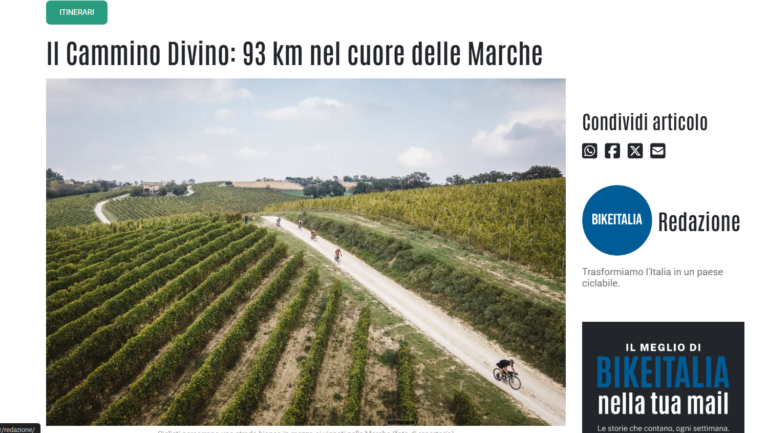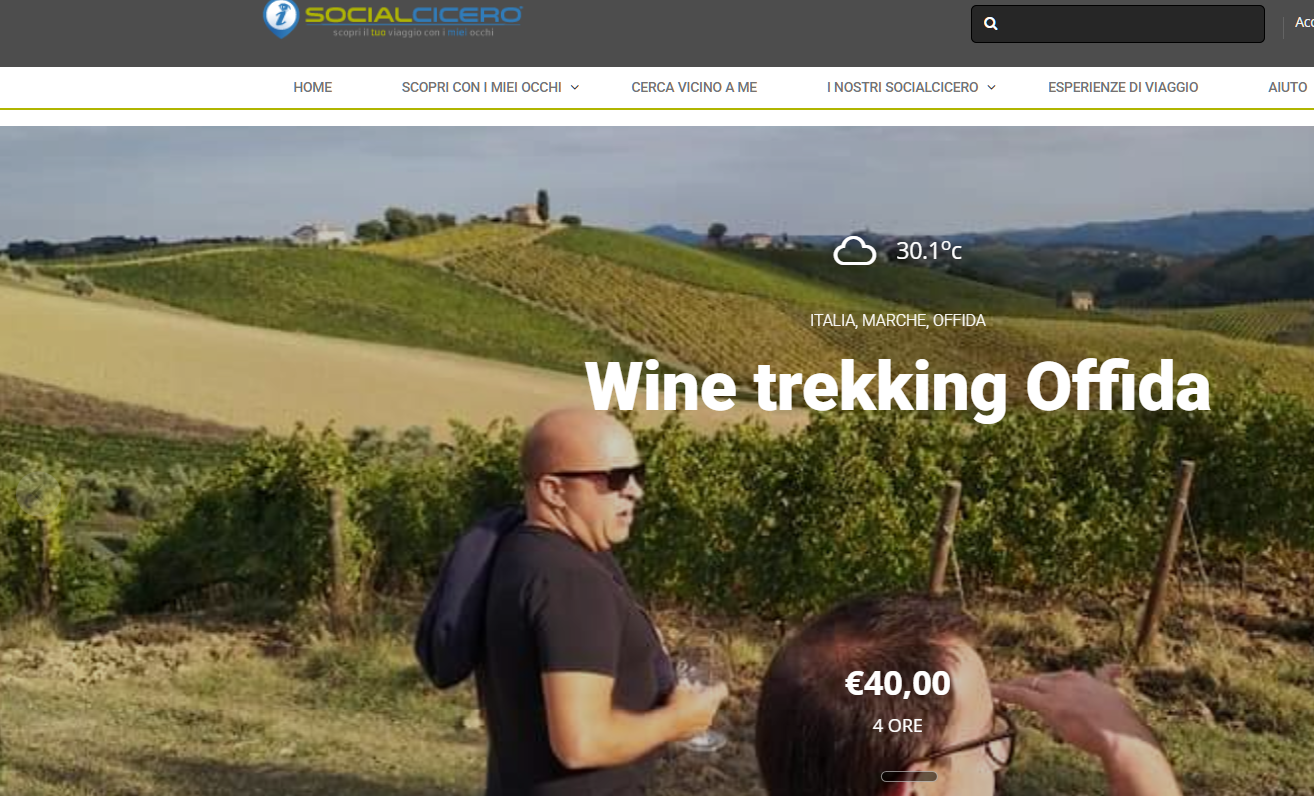
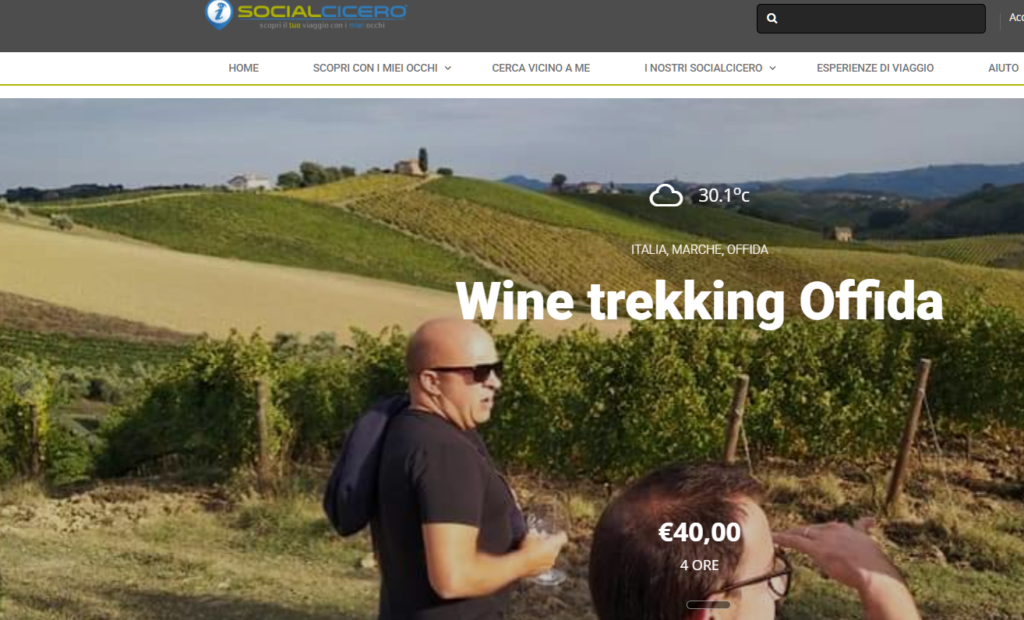
Cycling the Piceno Hills: Pecorino, Passerina, and the Calanchi Roads to Offida
By quarter to six, Grottammare’s promenade is empty except for two men fishing off the jetty and a bakery already exhaling the smell of warm bread through a cracked shutter. I load the water bottles and turn the bike east toward the hills before the sun has fully cleared the water. Within twenty minutes the flat coastal road gives way to the first real gradient, a ramp of switchbacks climbing toward Ripatransone, and the Adriatic drops behind me. This is the trade the Piceno hills offer a cyclist that no other wine district in the Marche can match: sleep by the sea, climb into a DOCG zone before breakfast, and be back on flat ground by the time the afternoon wind picks up.
An Offida cycling wine route in the Piceno hills, between Ascoli Piceno and the Adriatic coast, is Italy’s clearest case of a wine cycling region built for a mixed base. A rider sleeping in Grottammare or San Benedetto del Tronto can reach two separate wine denominations — the Offida DOCG and the Rosso Piceno Superiore DOC — inside a single morning’s climb. The core loop connects six hill towns set between 290 and 515 meters above sea level: Ripatransone, Acquaviva Picena, Cossignano, Montalto delle Marche, Castignano, and Offida. None sits more than roughly fifteen kilometers from the sea as the crow flies, so a cyclist can ride hard into the hills one morning and recover the next day on a flat, largely car-free coastal path, without ever changing hotels.
Why the Piceno Works Differently From the Rest of the Marche
Most of Italy’s wine cycling country asks you to make a choice: base in the hills and treat the coast as a day trip, or base at the sea and treat the vineyards as something you do once and photograph. The Piceno refuses that choice, mostly by accident of geography — the hill towns holding the Offida DOCG boundary and the Rosso Piceno Superiore subzone sit unusually close to the water, inside a band of country running from the Adriatic to the first serious ridgeline in under fifteen kilometers.
That closeness changes the rhythm of a week here. A demanding day — six or seven hours in the saddle, eight hundred meters or more of climbing — can be followed by a flat, forty-kilometer spin on the coastal path with no elevation at all. I have ridden regions in Tuscany and Piedmont where that alternation means relocating; in the Piceno it means choosing a different road out of the same driveway.
The Calanchi: Why This Land Moves, and Why the Villages Don’t
The hills are worth understanding before you climb them, because the geology explains where the roads go and why the villages sit where they sit. You’re riding across the exposed surface of the Argille Azzurre, a formation of blue-gray marine clay laid down here roughly five million years ago, in the Pliocene, when this hinterland was still seafloor. Rainwater does not treat that clay kindly. On the steepest, most sun-exposed slopes it cuts narrow, branching gullies that widen every winter, a form of erosion Italians call calanchi, literally “badlands,” though the word carries none of the American West’s grandeur — closer to a bare, ribbed wound in the hillside, striking to look at and treacherous to build on.
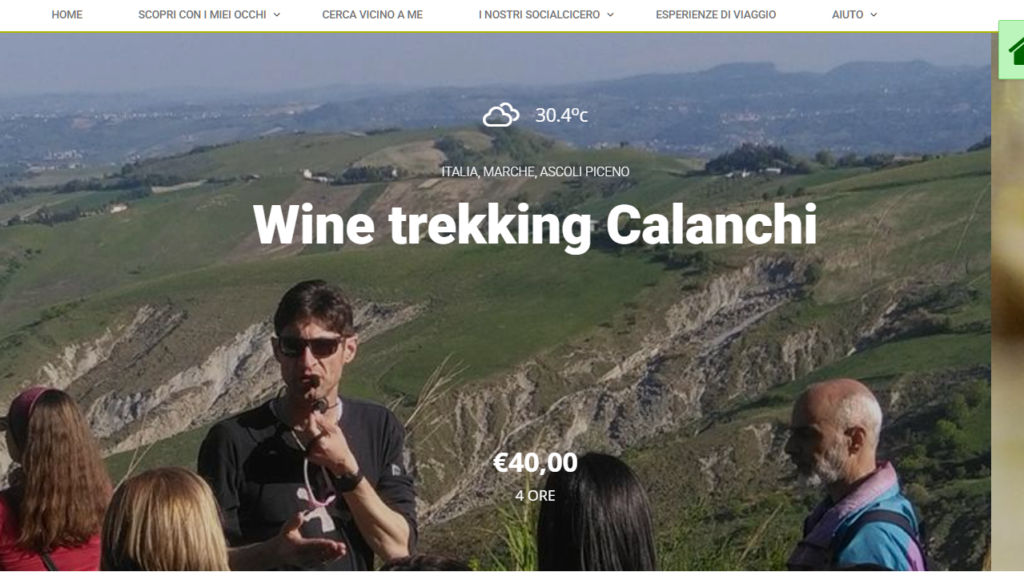
This is the failure pattern I recognize most often on slopes like these: not one dramatic collapse, but a slow, continuous loss of material that accelerates wherever vegetation has been stripped and water allowed to concentrate rather than spread. It is why almost nobody built directly on a calanco slope, and why the roads and villages you’ll pedal through sit on the crests instead. The ridgetops here are usually capped by a harder, sandier layer — locally the “Sabbie Gialle,” or Yellow Sands — laid over the softer clay beneath, and that cap resists erosion far better than the slope below it. Build on the resistant ridge and the ground stays roughly where you left it; build on the clay flank, and it doesn’t.
You can see the logic written into stone at Santa Maria della Rocca, the Romanesque-Gothic church that announces Offida on the Salaria road. It stands on an isolated sandstone spur, and it has needed help staying there: municipal records from 1887 describe a retaining wall commissioned for the cliff’s northern face, a nineteenth-century acknowledgment that even a resistant outcrop needs occasional reinforcement against the same water action working the calanchi below it. Ride the ridge road out of Castignano — its silhouette compared locally to a pyramid — and the pattern repeats at every crest, all the way to Ascoli Piceno, where the honey-colored travertine of the city center is a different stone entirely: quarried rather than eroded, and a reminder that this stretch of Marche produced both a building material that has lasted two thousand years and a landscape that reshapes itself every winter.
Six Ridgelines: Ripatransone, Acquaviva Picena, Cossignano, Montalto delle Marche, Castignano, Offida
Acquaviva Picena is usually the first ridge a cyclist from the coast reaches, announcing itself with a pentagonal Renaissance fortress rather than a church tower. At 359 meters, with the Sibillini chain visible inland on a clear morning, it is the gentlest introduction the Piceno offers: real elevation gain, but one sustained climb rather than the ridge-hopping ahead.
Cossignano, at 400 meters, is smaller and quieter, an oval-plan medieval center barely 180 by 90 meters inside walls dating to the late thirteenth century — a single scalinata worth walking slowly, and an afternoon silence the more photographed towns nearby have mostly lost.
Ripatransone is the belvedere of the group, literally — locals call it il belvedere del Piceno — and at 494 meters it delivers on the name, with sightlines toward the Sibillini and, on the clearest days, past the Adriatic haze. It also holds a contested claim to fame: a passage in the historic center, measured in 1968, narrows to 38 centimeters and is marketed as Italy’s narrowest vicolo, a title it shares, depending on who you ask, with at least two other towns in central Italy. I mention the dispute because an Italian would; nobody here believes the tape measure settled it.
Montalto delle Marche, at 513 meters the highest point on this loop, sits in hill country locals describe as a twenty-minute drive from both the sea and the Sibillini — a claim that happens to be true. It was, briefly, the seat of a pontifical government under Pope Sixtus V, a Montalto native, and the oversized cathedral in a town of under two thousand people is the evidence.
Castignano, at 473 meters, is the most engineered-looking of the group: built on the highest of five hills between the upper Tesino valley and the Chifenti stream, its silhouette almost geometric, a near-pyramid topped by a Romanesque tower, inside the Parco dei Calanchi e Monte Ascensione, the regional park protecting the most dramatic badland scenery here.
Offida, at 293 meters, is the destination the other five towns orbit. The old town sits on a rocky spur carved by two branches of the Lama torrent, and its main square, Piazza del Popolo, is triangular rather than rectangular — an accident of terrain giving the town a theatrical quality no planner would have chosen. Offida is also the lace capital of the Piceno: tombolo a fuselli, bobbin lace worked on a cylindrical cushion, made here for generations and still sold in several historic shops. An hour walking from the square to Santa Maria della Rocca before your tasting covers everything this loop is about.
Pecorino, Passerina, and a Case of Mistaken Identity
Every American who orders a glass of Pecorino for the first time makes the same joke about the cheese, and every Italian serving it has heard the joke enough times to no longer find it funny. The grape and the sheep’s-milk cheese share a name because both were, historically, associated with pastoral land — high pasture where sheep grazed and, apparently, where an old white grape also thrived, tolerant of altitude and poor soil in a way more commercially minded varieties were not. There is no other connection: the wine is a wine, the cheese is a cheese, and the coincidence is purely etymological — exactly the kind of thing an Italian assumes everyone knows and an American visitor has usually never been told.
What matters more than the name is what happened to the grape in the twentieth century. Pecorino was nearly lost during the vineyard modernization of the 1970s, when growers across central Italy replaced old, low-yielding native varieties with more commercially reliable ones. It survived only in isolated plots around Arquata del Tronto, in the Sibillini foothills well inland from this loop, where a handful of vines had escaped both fashion and phylloxera. In the early 1980s, the Ripatransone-based winemaker Guido Cocci Grifoni went looking for those surviving vines, reintroduced them into the Piceno starting in 1984, and released the first varietal bottling in 1990. From there the grape spread quickly through Offida and its neighboring comuni; by 2001 it had earned DOC status alongside Passerina and Offida’s red blend, and by 2011 all three had been promoted to DOCG. So the grape did not originate in Offida in any strict sense — it survived in the mountains and was reintroduced to the hills — but the hills are unambiguously where it became an identity rather than a curiosity.
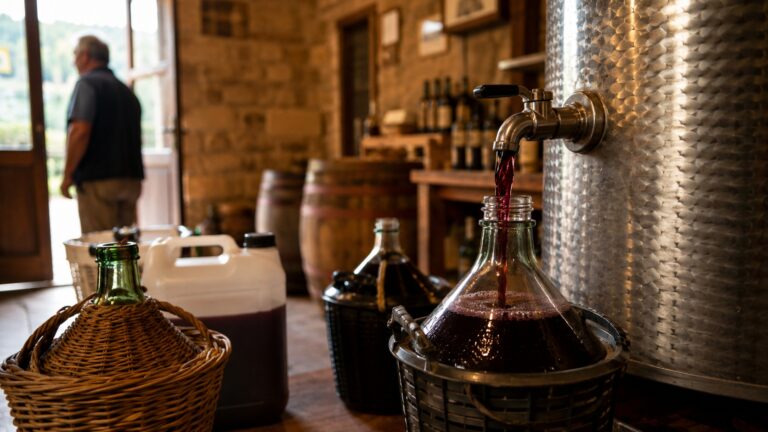
In the glass, Passerina runs pale straw with citrus and orchard-fruit notes and a saline finish, suited to easy midday drinking on a cycling stop. Pecorino is the more structured white, fuller-bodied with a persistent, savory finish that holds up well against the region’s cured meats. Offida Rosso, made primarily from Montepulciano, is the deeper commitment: ruby toward garnet, aged two years including barrel time, and close in style to Rosso Piceno Superiore, the separate, older red denomination whose zone overlaps this loop’s southern towns. Sources disagree slightly on the exact comuni count inside the Superiore boundary — thirteen in some places, fourteen in others — so for the precise legal boundary, the disciplinare itself is the only fully reliable word.
Three Route Cards for Three Kinds of Days
These three days connect real towns using confirmed road distances and elevations. The climbing figures below are composite estimates rather than a single logged GPX trace, since this is rolling country where a straight point-to-point elevation difference always understates real climbing. Load a version into Komoot or a similar app before you ride, and check current road conditions — a bridge project on the coastal route, covered under Logistics below, is a live example of something that can change a route’s shape within a season.
Route 1 — The Easy Morning: Grottammare to Acquaviva Picena and Back
- Start/finish: Grottammare, looped
- Distance: approximately 20–22 km
- Elevation gain: approximately 400–450 m
- Difficulty: 2 out of 5
- Bike type: road bike or e-bike; comfortable on a hybrid
- Road surface and traffic: paved secondary roads throughout, light traffic outside of harvest season, one sustained climb
- Wineries or stops on route: Acquaviva Picena itself, with its Renaissance fortress; no winery visits built in by design, since this is meant as an orientation day
- The hard point: the climb out of Grottammare toward Acquaviva Picena, roughly 6.5 km gaining about 350 meters, an honest but never brutal gradient
- Time with stops: 2.5 to 3 hours
Route 2 — The Queen Stage: Ripatransone, Cossignano, Castignano, Montalto delle Marche, Offida
- Start/finish: Ripatransone, looped, or point-to-point back to the coast via Offida
- Distance: approximately 60–65 km
- Elevation gain: approximately 1,100–1,300 m
- Difficulty: 4 out of 5
- Bike type: gravel bike recommended for the connecting roads between the smaller villages; an e-bike with real range makes this an entirely different, far more forgiving day
- Road surface and traffic: mostly paved provincial roads with short unpaved stretches between Cossignano and Castignano; minimal traffic away from the SS-level roads
- Wineries or stops on route: Tenuta Cocci Grifoni near Ripatransone, first to bottle Rosso Piceno Superiore and the estate behind the Pecorino revival; an Offida cellar tasting (see Logistics) toward the end of the day
- The hard point: the ridge-hopping between Cossignano, Castignano, and Montalto delle Marche — three separate climbs in succession with almost no flat recovery
- Time with stops: 6 to 7.5 hours
Route 3 — The Recovery Day: The Adriatic Coastal Path
- Start/finish: Grottammare to San Benedetto del Tronto and back, or extended north toward Cupra Marittima
- Distance: approximately 30–40 km depending on turnaround point
- Elevation gain: effectively zero
- Difficulty: 1 out of 5
- Bike type: anything, including rental city bikes
- Road surface and traffic: dedicated cycle path, separated from car traffic for nearly the entire distance
- Wineries or stops on route: none; this is a legs-and-lungs reset day, best used for the beach, the fish market in San Benedetto, or simply sitting still
- The hard point: there isn’t one, which is the entire point of scheduling this day between Route 2 and anything else
- Time with stops: 2 to 4 hours, entirely dependent on how many times you stop
Getting There, Staying There, Riding There
Base yourself on the coast rather than in the hills. Grottammare and San Benedetto del Tronto both put you within a single climb of the wine country and on flat ground for recovery days, and both sit on the regional rail line running the Adriatic coast. Trains generally accept bicycles, though space varies by service; check current conditions with Trenitalia before you travel.
The nearest airports are Ancona-Falconara and Pescara, both roughly ninety minutes away and neither a major hub, so most visitors connect through Rome or Bologna. Bike rental is available along the Riviera delle Palme coast, and a handful of Piceno-based outfits — including a Montalto delle Marche estate running multi-day guided e-bike tours with luggage transfer, and a regional operator offering a wine-and-bike itinerary through Offida and Acquaviva Picena — can take the planning off your hands. If cycling isn’t the priority for everyone in your group, a guided Rosso Piceno Superiore tasting in Ascoli Piceno, or a travertine-and-lace day trip to Ascoli and Offida, both run as bookable experiences and pair naturally with a rest day.
One practical note: the coastal path is complete from San Benedetto del Tronto through Grottammare to Cupra Marittima, with the seafront stretch between Grottammare and Cupra among the most scenic on this coast. Just north of Cupra Marittima it currently breaks at the Menocchia stream, forcing a detour of about a mile and a half onto the state road; a new bridge was under construction as of mid-2026, with completion targeted for 2027.
When to Ride the Piceno
Late spring, roughly late April through early June, and early autumn, September into mid-October, are the honest answer. Summer here is not gentle: July and August bring consistent heat in the hills and an Adriatic wind that can turn a flat coastal ride into a headwind slog, and I would not schedule a demanding climbing day at the peak of August without a very early start and a real plan for water. Harvest, generally mid-September into early October, adds the bonus of cellar activity you can watch rather than just taste, but it also means winery staff are at their busiest, so book tastings further ahead than usual.
What to Eat When You Get Back Down
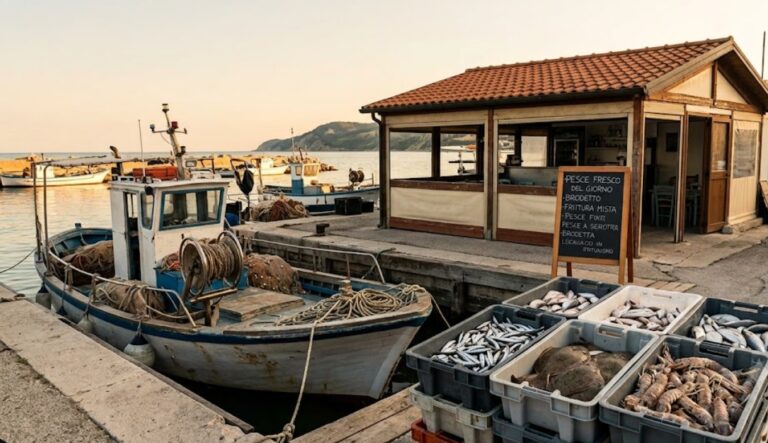
The Piceno’s answer to a hard day in the saddle is not subtle. Oliva all’ascolana — a large green olive, pitted, stuffed with a slow-cooked meat filling, breaded, and fried — is native to this exact stretch of the Marche and worth the calories after any of these three routes. On the coast, brodetto, the Adriatic’s fish stew, exists in at least half a dozen regional variations depending on the port town, and San Benedetto’s version is worth seeking out. To close a meal the way locals do, ask for anisetta, the anise liqueur Ascoli Piceno claims as its own, traditionally served with a few coffee beans dropped into the glass — anisetta con la mosca, “with the fly,” a name nobody can fully explain but everybody uses.
The Final Word
The Piceno will never have the name recognition of Chianti or the postcard fame of the Langhe, and that is precisely why it rewards a cyclist willing to put in a real week here instead of a single afternoon’s detour. You get two wine denominations, six hill towns built on the only stable ground this landscape offers, a coastline to recover on, and a grape that nearly disappeared before becoming the thing the whole territory is now known for. Bring a bike that can handle both gravel and pavement, respect the August heat, and book your cellar visits ahead of the harvest crowds.
If you want more stories like this from an Italian insider’s perspective, explore more of Tastes & Wonders of Italy, or get in touch if you’re planning a trip to Le Marche and want an engineer’s-eye view of the territory before you go.
Frequently Asked Questions
What is the Piceno wine cycling route?
It’s a network of hill roads in the southern Marche, in Italy, connecting six towns — Ripatransone, Acquaviva Picena, Cossignano, Montalto delle Marche, Castignano, and Offida — inside or near the Offida DOCG and Rosso Piceno Superiore DOC wine zones, all reachable from a single coastal base near Grottammare or San Benedetto del Tronto.
When is the best time to cycle the Piceno hills?
Late April through early June and September into mid-October offer the most reliable combination of manageable heat and low wind. July and August bring strong Adriatic winds and consistent heat that make the climbing days considerably harder.
Do I need to book winery visits in advance?
Yes, especially during harvest season in September and October. Most Offida and Ripatransone-area cellars run tastings by appointment rather than walk-in, and several are bookable directly through wine-tourism booking platforms.
How much does a day of guided cycling with wine tastings typically cost?
Individual winery tastings in the area generally run from about six to fifty euros depending on the format, while multi-day guided packages with a support vehicle and lodging run into the hundreds of euros per person; prices change by operator and season, so confirm current rates directly before booking.
How long do I need to ride the full Piceno loop properly?
Three to four days lets you cover an easy orientation ride, the demanding ridge-hopping queen stage through the DOCG towns, and at least one full recovery day on the flat coastal path, without rushing any of it.
What should I pair this trip with?
Ascoli Piceno, with its travertine center and its own Rosso Piceno Superiore tastings, sits close enough to combine with any of these routes as a non-cycling day, and the Sibillini foothills where the Pecorino grape originally survived are a logical next destination for anyone extending the trip inland.
Is this route suitable for an e-bike, or do I need to be an experienced cyclist?
The coastal recovery route suits any fitness level on almost any bike. The queen-stage ridge route is genuinely demanding on a standard bike and is far more approachable on an e-bike with real range, which several local rental and tour operators can supply.