Curling in Rome: The Winter Sport Now Played at the Colosseum
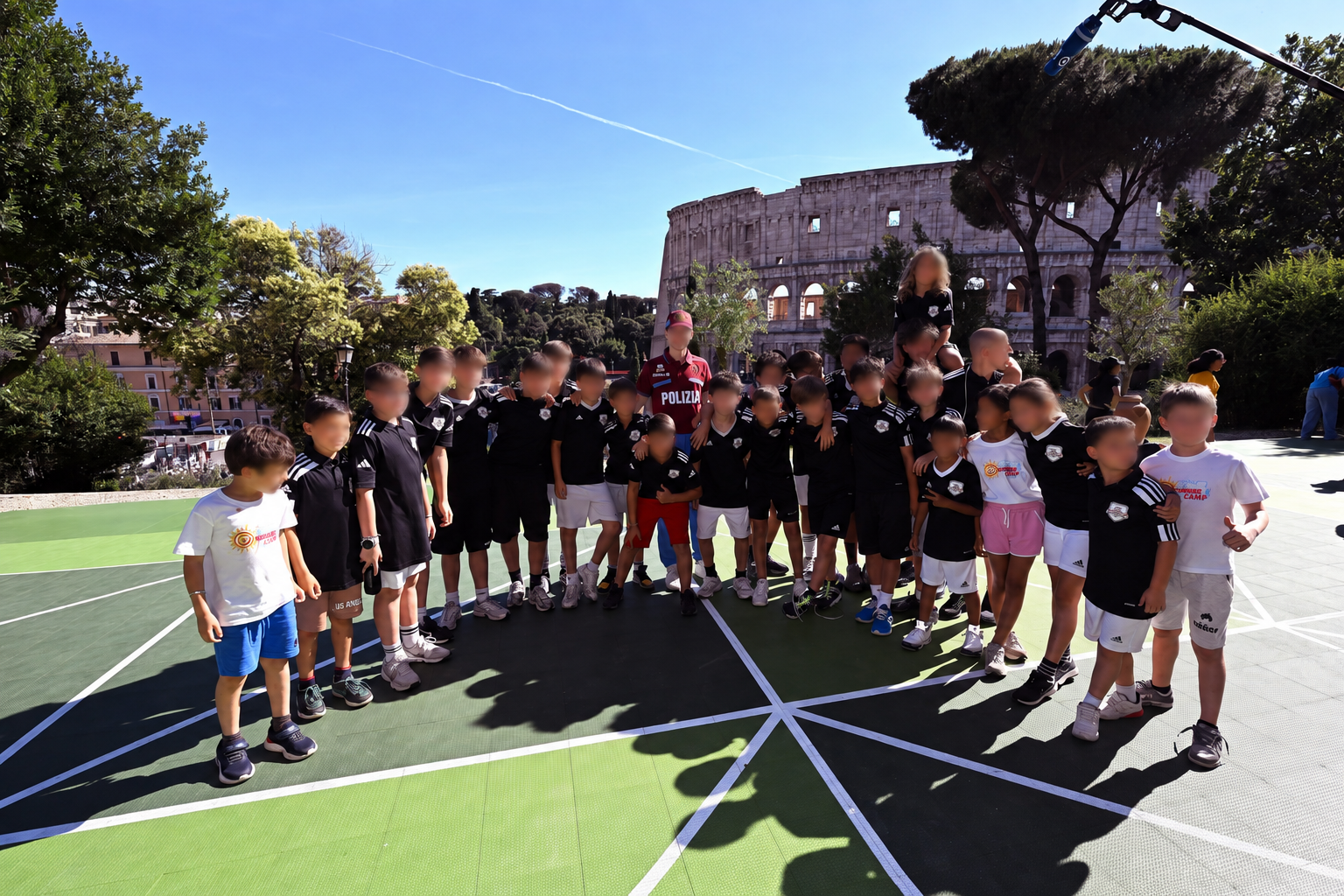
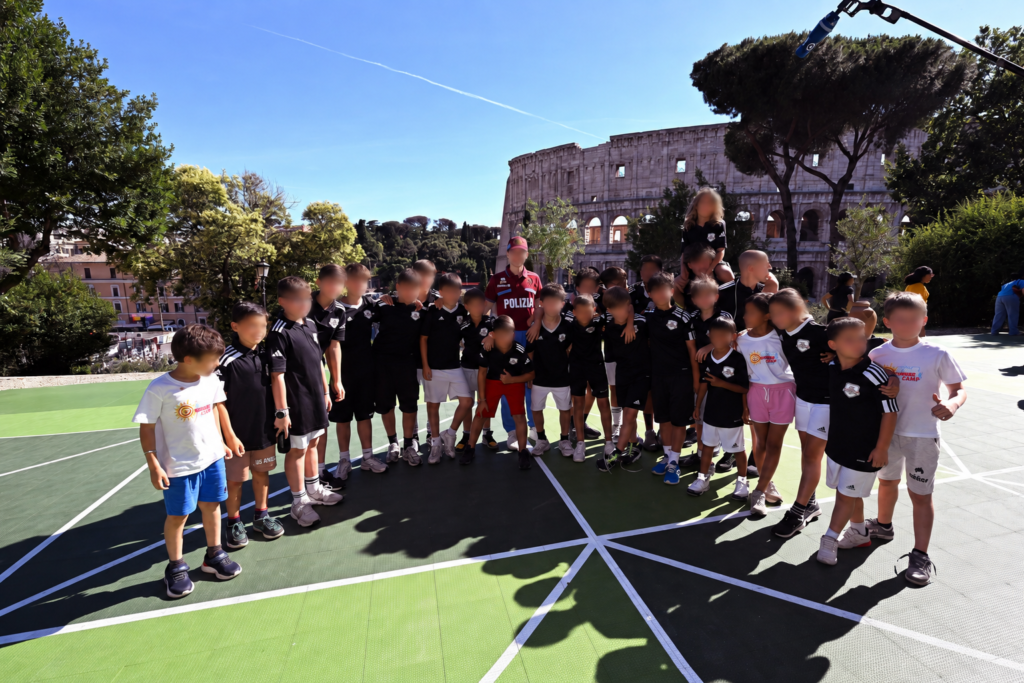
Curling in Rome sounds like a joke until you stand at Colle Oppio at nine in the morning, when the gravel paths are already hot underfoot and a stone is sliding across a strip of white plastic with a sound closer to a hockey puck than to ice. Three synthetic sheets have occupied this park, a two-minute walk from the Colosseum, since mid-June 2026, and through the harshest weeks of the Roman summer, people have kept showing up to throw stones toward a target painted on plastic instead of ice.
Here is the short version. Sport e Salute, the public agency responsible for developing sport in Italy, installed three synthetic curling sheets in the Colle Oppio park in central Rome, working with the Federazione Italiana Sport del Ghiaccio (FISG), Italy’s ice sports federation. The sheets opened on June 15, 2026, and are scheduled to remain through at least mid-September 2026. Each sheet measures 12 by 3 meters, a fraction of a regulation ice sheet, and the surface is made of high-density polyethylene panels rather than ice: no refrigeration, no water, no freezing temperatures required. Access is free, and FISG technicians are on hand to walk beginners through the basics.
Why a winter sport landed in Rome
The short answer is Milano-Cortina 2026. Italy hosted the Winter Olympics this year, and curling, a sport most Americans encounter only once every four years, produced two of the country’s most recognizable recent athletes: Stefania Constantini and Amos Mosaner, who won mixed doubles gold at Beijing 2022 and returned with bronze at Milano-Cortina. Their 2022 gold-medal match drew close to three million viewers in Italy, a startling number for a sport almost nobody here actually plays.
https://www.romatoday.it/sport/altro/curling-roma-colle-oppio.html
That gap between watching and playing is the real problem Sport e Salute is trying to solve. Curling in Italy is practiced with any regularity by a few hundred people, nearly all of them clustered in a handful of alpine towns: Cembra in Trentino, Claut in Friuli, Bormio in Lombardy, Cortina d’Ampezzo in the Veneto. South of the Alps, there is no dedicated curling facility at all. The closest thing in the Rome area is a rink in Mentana, on the city’s outskirts, where the sport is played informally rather than as an organized club activity. FISG president Andrea Gios has been open about the goal: use a low-stakes, no-ice, no-cost installation to build public appetite before committing to the far larger expense of a real facility, possibly attached to one of the many rowing clubs along the Tiber.
What is actually under your feet
This is where the story stops being about sport and starts being about Rome itself, and it is the reason I think the location matters more than the novelty. Colle Oppio is not simply a park with a view of the Colosseum. Nero built his Domus Aurea, the sprawling palace complex he raised after the fire of 64 AD, on this hill, incorporating the land that would later hold the amphitheater itself. When Nero fell from favor, later emperors buried the palace and built over it. The Baths of Trajan, designed by the architect Apollodorus of Damascus, went up directly on top of the Domus Aurea’s remains, dedicated around 109 AD as a public bathing complex on a scale that became the model for later imperial baths, including Caracalla’s. The park visitors walk through today, with its avenues and fountains, is a twentieth-century layer on top of that: it was laid out between 1928 and 1932 by the architect Raffaele De Vico, incorporating what survived of the Trajan bath ruins into a public garden.
So the sequence, standing at one of the curling sheets, runs: a Neronian palace, buried under an imperial bathhouse, buried under a Fascist-era public park, with a sheet of plastic and a granite-colored stone sitting on top of all three. That is not an exaggeration for effect. It is simply what Colle Oppio is.
The engineering that made it possible
This is the part of the story most coverage skips, and it is the part I find genuinely interesting. Whatever gets installed at Colle Oppio has to leave the ground exactly as it found it. That is very likely a condition of the permit itself, because any structure sitting above the Domus Aurea and the Baths of Trajan is, by definition, sitting inside an archaeological area under the joint oversight of the Parco Archeologico del Colosseo and the Soprintendenza Capitolina, Rome’s heritage authority. A real ice rink needs a flat concrete slab, a refrigeration plant, and a reliable water supply, none of which belongs on ground this sensitive, even on a temporary basis.
The high-density polyethylene panels used at Colle Oppio solve two problems with one material. They do not melt in the Roman summer, which is the reason most people notice them in the first place. But they also require no foundation, no excavation, and no fixed utilities: the sheets can be lifted and moved to another city entirely, which is precisely what Sport e Salute intends to do once the Rome installation ends. In thirty years of assessing buildings for a living, the constraint I recognize immediately in a project like this is reversibility: anything built in a protected space has to be capable of disappearing without a trace, and that requirement shapes the choice of material as much as any budget line does. A rink built to leave no mark is not a compromise here. It is the only kind of rink this site could ever have allowed.
What it feels like, honestly
It is worth being precise about what this is and is not, because the framing matters. What Sport e Salute has installed at Colle Oppio is sometimes called dry curling, and the difference from the real sport is not cosmetic. The stones used here weigh roughly a tenth of a regulation stone, which under World Curling Federation rules must weigh between 17.24 and 19.96 kilograms (38 to 44 pounds). A regulation sheet runs about 45 meters long and 4.3 to 4.75 meters wide; the Colle Oppio sheets, at 12 by 3 meters, cover roughly a quarter of that length. Two of the sport’s defining physical actions are missing entirely. There is no sliding delivery, the crouched, sock-footed glide that sends a stone down the ice, because a plastic panel does not accommodate it safely. And the brooms in use are not sweeping a path to alter the stone’s speed and curl, which is the tactical heart of competitive curling; they are simply retrieving stones from the target area.
None of that makes the installation pointless. What it offers is the two things that actually take newcomers time to understand about curling: reading a target and a line, and learning how little force it takes to move a stone a meaningful distance. Both of those lessons come through even on plastic. What does not come through is any real sense of the physical effort or precision of the sport as it is actually played, and a visitor should not mistake five minutes at Colle Oppio for having tried curling. It is closer to a demonstration than a lesson, and it is honest about that.
How to try it
The sheets sit inside Colle Oppio park, reachable in under ten minutes on foot from either the Colosseo or Cavour stops on Metro Line B, both a short uphill walk via Via Labicana or the staircase off Via Nazionale. As of this writing, Sport e Salute has not published fixed opening hours, a booking system, or an age minimum for the Colle Oppio installation; the practical approach is to simply arrive and ask the instructors on site, who have been present since the June opening. Given Rome’s August heat, the sensible windows are before ten in the morning or after six in the evening, when the plastic surface and the surrounding travertine paths have had a chance to cool.
Pair a visit with what is already within walking distance. The Domus Aurea itself is open to the public only on guided tours, which require advance booking and sell out during peak season. San Pietro in Vincoli, a short walk downhill, holds Michelangelo’s Moses and gets a fraction of the crowds waiting at the Colosseum ticket line below. The Colosseum and the Roman Forum are close enough to combine with a curling stop in a single morning, particularly if you go early to beat both the heat and the queues.
What’s left when the season ends
The Colle Oppio installation is scheduled to close around mid-September 2026, and no extension has been confirmed as of this writing. That closing date matters less than it might seem, because the sheets themselves were built to travel. Sport e Salute has designed the panels to be relocated from city to city, and Rome is explicitly framed as a proof of concept rather than a permanent fixture: if the appetite Gios is hoping for materializes, the next step is a real, fixed facility, with a rowing club on the Tiber floated as one possible home.
For visitors whose interest survives the season, the places where curling is actually played on real ice in Italy remain the same handful of alpine towns: Cembra, Claut, Bormio, and Cortina d’Ampezzo, all of which host club activity through the winter months and are realistically paired with a broader trip to the Dolomites or Trentino rather than a Rome itinerary. Anyone building an autumn visit around Rome instead should look at what the city does once the crowds thin: our Italy in August guide covers what the capital is actually like at the peak of the heat, and our Ferragosto explainer walks through why the city empties out around August 15. For the archaeological sites nearby that keep extended summer hours, the Colosseum and Pantheon evening hours trial and Caracalla After Dark are both worth reading before you plan a late-summer Rome trip around them.
FAQ — Curling in Rome
What exactly is the curling installation at the Colosseum?
It is three synthetic curling sheets installed by Sport e Salute and FISG in the Colle Oppio park, a short walk from the Colosseum. The sheets use high-density polyethylene panels rather than ice, opened June 15, 2026, and are scheduled to run through at least mid-September 2026.
Is it really free, and do I need to reserve a spot?
Access is free. As of this writing, no formal booking system or fixed schedule has been published; visitors arrive and check with the instructors on site, who have been present since the opening.
What’s the best time of day to try it in the Roman summer?
Early morning, before ten, or evening, after six, when the plastic surface and the surrounding paths have cooled. Midday in Rome’s summer heat is uncomfortable for standing on any outdoor plastic surface, curling sheet or otherwise.
How is this different from real, ice-sheet curling?
Considerably. The stones weigh about a tenth of a regulation stone, the sheets are roughly a quarter the length of a regulation sheet, and two core techniques, the sliding delivery and competitive sweeping, are not part of the experience. It teaches the basics of aim and touch, not the physical sport as played on ice.
How long should I plan to spend there?
Most visitors spend fifteen to thirty minutes: enough time for an introduction from the instructors and a handful of throws. It pairs easily with a longer morning or evening at the Colosseum and the surrounding park.
Is it suitable for kids and total beginners?
Yes. The installation was designed specifically as a low-barrier introduction, and FISG has run sessions with groups of children since the June opening. No prior knowledge of curling is expected or needed.
If this makes me want to try real ice curling, where do I go in Italy?
The country’s active curling clubs are concentrated in a handful of alpine towns: Cembra (Trentino), Claut (Friuli), Bormio (Lombardy), and Cortina d’Ampezzo (Veneto). All are realistically visited as part of a Dolomites or Trentino trip rather than a Rome-based itinerary.
The takeaway
Curling in Rome will not be here forever, and it was never designed to be the point. What is worth paying attention to is what it took to put a winter sport, however scaled down, on a hill that has been continuously built on, buried, and rebuilt since the first century AD. The plastic sheet under the stone is doing a quieter job than the game being played on top of it: proving that even the most protected ground in Italy can host something new, as long as it is willing to leave without a trace.
Planning a visit to Rome or central Italy and want an Italian’s read on what’s actually worth your time on the ground? You can reach me directly at mirco.vitellozzi@gmail.com to talk through a central Italy itinerary.
Written by Mirco Vitellozzi, a structural engineer from Le Marche who writes about Italy from the inside. More essays at Tastes & Wonders of Italy, and short films on YouTube.