Alba Truffle Fair 2026: How to Actually Go
On a Saturday morning in the Cortile della Maddalena, the smell of white truffle reaches you before you see a single stand. It is earthy and faintly sweet. Almost fermented. It clings to wool coats for the rest of the day.
Alba is a town of roughly 31,000 people in the hills of Piedmont. Yet for nine straight weekends every autumn, it absorbs more visitors than it has residents. The Fiera Internazionale del Tartufo Bianco d’Alba, the Alba Truffle Fair, is Italy’s most famous truffle market. It runs on legal opening hours, ticketed entry, and city traffic rules that most travel features never mention. This guide skips the romance. Instead, it gives you the mechanics: dates, tickets, trains, and the mistakes an unprepared visitor makes.
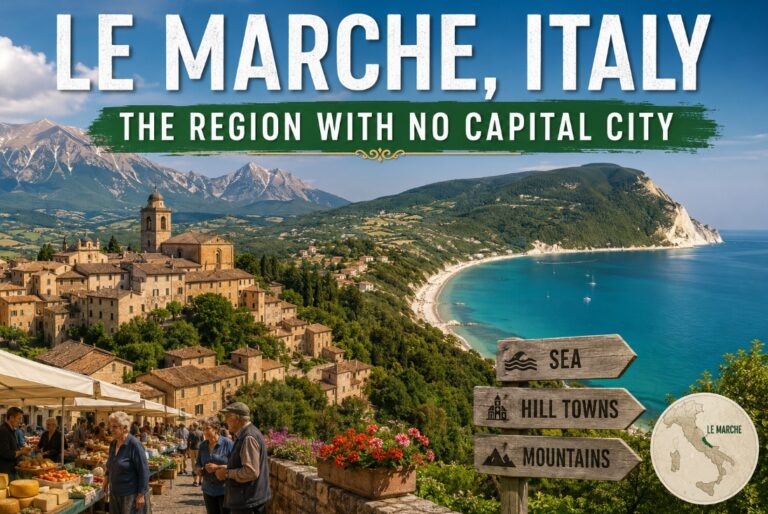
One note on where I am writing from. I am an engineer from Le Marche, on Italy’s other truffle coast. Acqualagna, not Alba, is my region’s fair, and I compared the two directly in another piece on this site. That distance works in my favor here. I have no hometown loyalty to defend. Just thirty years of watching how Italian fiere actually function, and a professional habit of checking a number before I repeat it.
The Short Answer
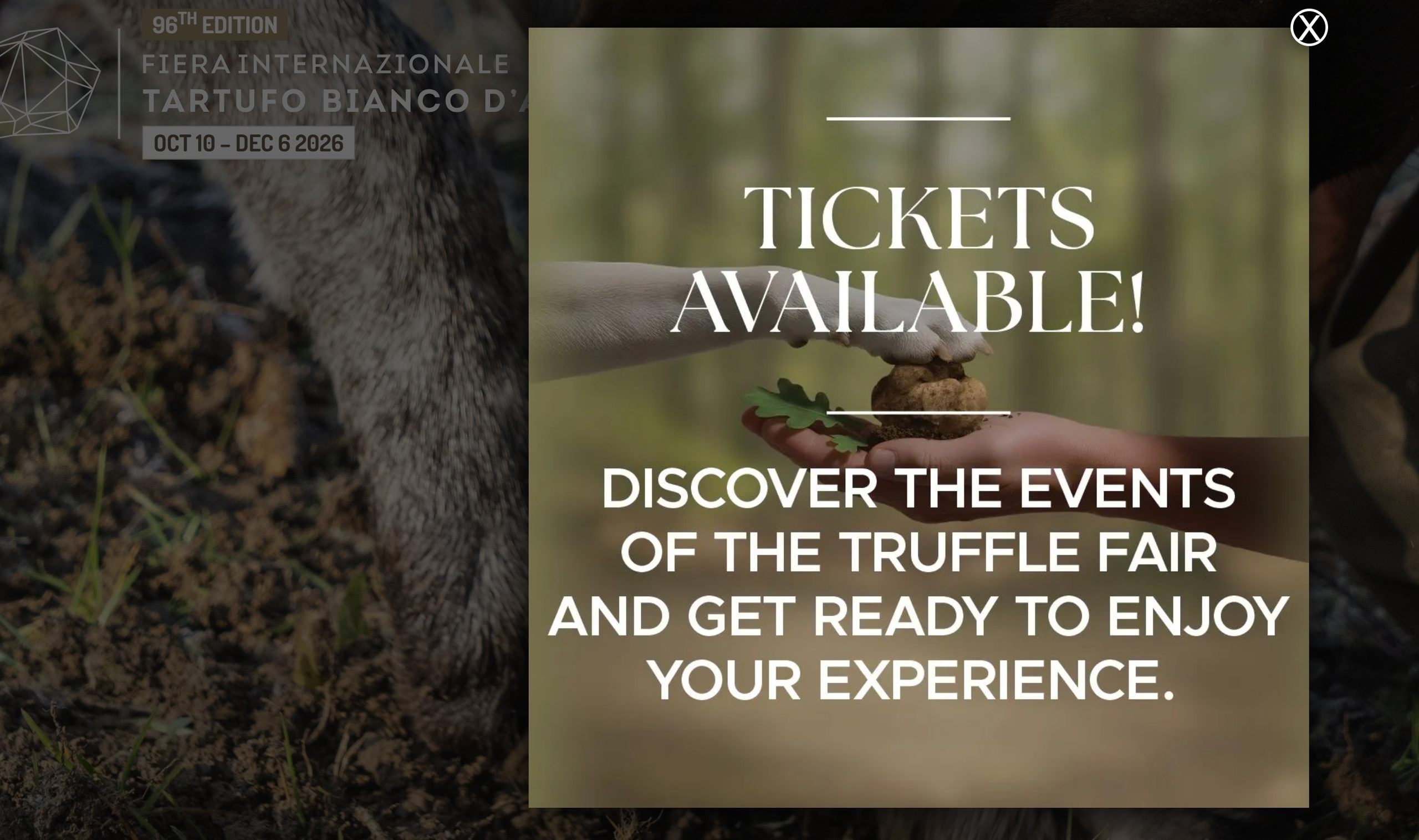
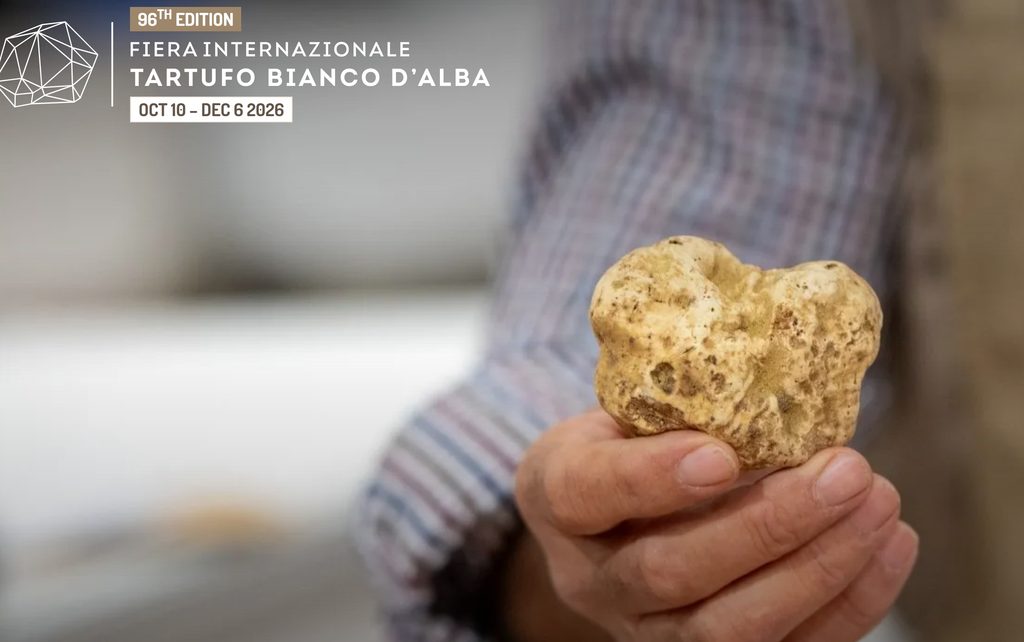
The 96th Fiera Internazionale del Tartufo Bianco d’Alba runs from October 10 to December 6, 2026, under the theme “Autentiche Relazioni.” The ticketed heart of the event, the Mercato Mondiale del Tartufo (World Truffle Market), opens only on Saturdays and Sundays, inside the Cortile della Maddalena in central Alba. General admission runs around €5 to €6. An early-bird discount on several fair experiences closes on September 7, 2026. So book truffle hunts and wine tastings by late August. Book a hotel even earlier than that.
What the Fair Actually Is, and What It Is Not
Americans researching this trip usually mix up three separate things. That confusion causes real problems once you land.
The Fiera itself is the whole eight-week season. Decorated streets, truffle-menu restaurants, cooking demonstrations, wine events. A general festive mood across Alba and the surrounding Langhe hills. Walking through town during these weeks costs nothing at all.
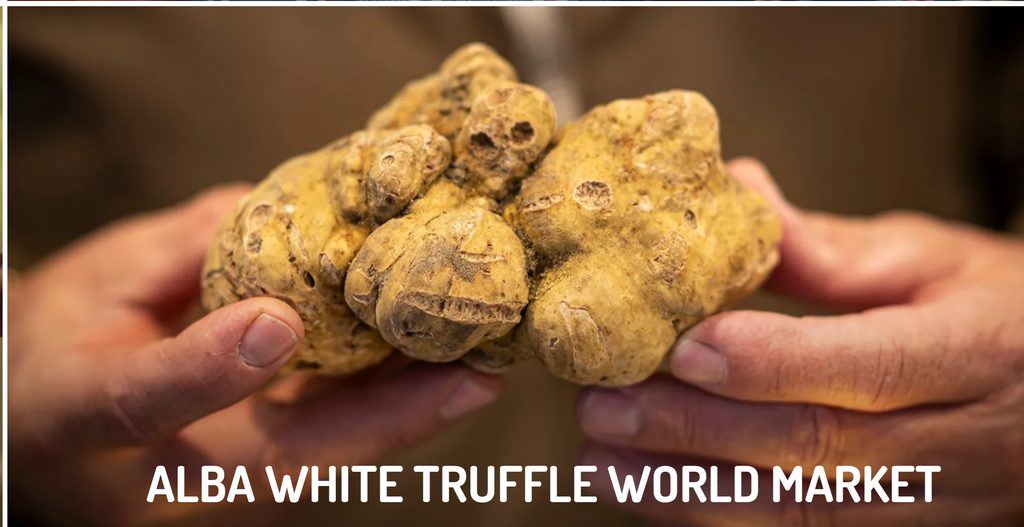
The Mercato Mondiale del Tartufo is different. In fact, it is the one part of the Alba Truffle Fair that actually costs money to enter. It is the ticketed market inside the Cortile della Maddalena, with entrance from Piazza Falcone. This is where licensed sellers, the trifolao (truffle hunters) and dealers, display and sell truffles under the supervision of a quality commission. It opens only on Saturday and Sunday. And only from October 10 through December 6. You need a ticket to enter.
The MUDET, Alba’s truffle museum, is a third and separate attraction near Piazza Falcone. It opens daily except Tuesday, from 10:30 a.m. to 6:00 p.m. It costs €5 for adults, based on 2025 pricing worth confirming before you go. In practice, pairing MUDET with a weekday visit is the smartest way to understand the product before you face the weekend crowd.
Here is the mistake I see most often. An American arrives on a Tuesday in November expecting the truffle market. They find decorated streets and truffle menus, but no stalls. They never realize the market itself runs only two days a week. So plan around the weekends, deliberately, or you will miss the one thing you came for.
The 2026 Calendar, Weekend by Weekend
The season opens symbolically with the Capodanno del Tartufo, a midnight event on the night of September 30 into October 1. Then comes the Palio degli Asini, a folk donkey race through the town’s piazzas, on October 4. After that, the Mercato Mondiale itself runs nine consecutive weekends:
| Weekend | Dates | Notes |
|---|---|---|
| 1 | Oct 10–11 | Opening weekend, highest energy |
| 2 | Oct 17–18 | |
| 3 | Oct 24–25 | |
| 4 | Oct 31–Nov 1 | Ognissanti long weekend; expect Italian domestic crowds |
| 5 | Nov 7–8 | Asta Mondiale del Tartufo (charity auction) at Grinzane Cavour, Nov 8 |
| 6 | Nov 14–15 | |
| 7 | Nov 21–22 | |
| 8 | Nov 28–29 | |
| 9 | Dec 5–6 | Closing weekend, season winds down |
On market Saturdays, hours run 9:30 a.m. to 7:30 p.m., with last entry at 7:00 p.m. On Sundays, it is 9:30 a.m. to 7:00 p.m., last entry 6:30 p.m.
Meanwhile, the Asta Mondiale del Tartufo, held at the UNESCO-listed Grinzane Cavour Castle, is a charity auction attended by chefs and public figures. It is not really a walk-in event for the average visitor. Even so, it is worth knowing about, even if you do not plan to attend in person.
A word on dates, because this matters more than it sounds. A few English-language travel sites list the fair as running October 11 to December 8. But the official organizer’s site, fieradeltartufo.org, states October 10 to December 6. I am following the official source here. I would recommend you do the same before booking a flight. That said, if you are also planning around Italy’s legal truffle-hunting calendar rather than the fair itself, I have covered that full regional breakdown separately, region by region.
Getting to Alba
Three routes get you to the Alba Truffle Fair from outside Piedmont: train, car, or a flight into one of two nearby airports. Here is how each one actually works.
By train
Alba sits on a regional line to Torino Porta Nuova. This is how I would arrive, if I had the choice. Direct regional trains run roughly hourly. The trip takes about 1 hour 20 minutes to 1 hour 30 minutes. It costs somewhere around €7 to €8 one way. There is no need to change trains. More importantly, there is no need to fight for parking in a town that turns most of its historic center into a limited-traffic zone on fair weekends. Confirm current schedules on trenitalia.com closer to your travel date. Regional timetables shift a few times a year, and weekend service can differ slightly from weekday service.
By car
Alba is roughly an hour’s drive from Torino on the A6 autostrada. It sits about 25 kilometers from Bra, through vineyard hills that reward the detour on their own. But here is the catch: what happens once you arrive.
The historic center is a ZTL, a zona a traffico limitato, meaning ordinary cars cannot enter without a permit. Paid parking lines the streets around the ZTL boundary. Free parking exists farther out, at areas like San Cassiano. On fair weekends, the city has historically run shuttle buses connecting those outer lots to the center. So if you are driving, plan to park once, then walk from there for the rest of the day.
By air
The fair’s own visitor page names two airports: Milano Malpensa and Torino Caselle. Caselle is the practical choice. It sits close to Torino, and connects onward by the same regional trains described above. Malpensa works if your international flight only serves Milan. Even so, budget close to two hours of additional travel to reach Alba, whether by train through Torino or by car.
Tickets: What You Pay For, and What Is Free
Walking Alba’s streets during the fair costs nothing. Entering the Mercato Mondiale del Tartufo requires a ticket, and that is where the spending starts. Expect roughly €5.25 online, or €6 at the gate, based on the most recent season I could verify. Treat this as a reference point, not a locked-in number, and check the fair’s official ticketing page before you travel.
Entry is free for children up to a certain age, and for visitors with disabilities. The exact age threshold is worth confirming on the official site, since different sources disagree slightly year to year.
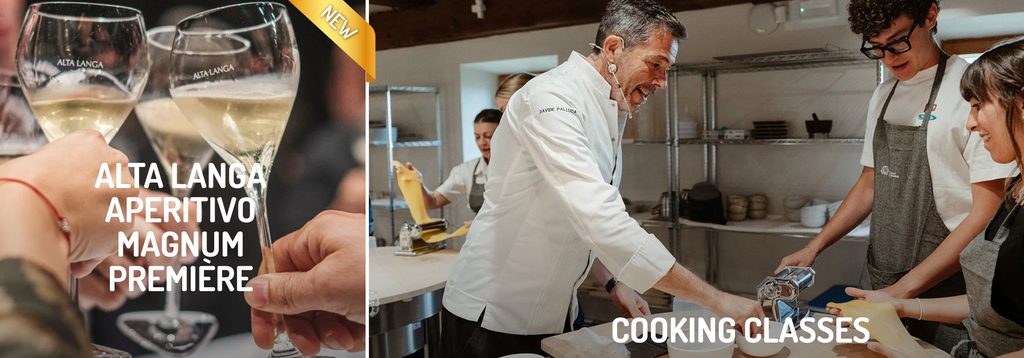
Here is the part American visitors often miss. If you book a Wine Tasting Experience, a Truffle Sensory Analysis, a cooking show, or a pasta workshop through the fair’s official channels, market admission comes bundled into that ticket automatically. Book three or more of these different experience types together, and the fair applies a 15 percent discount across all of them. In short, if your trip includes more than one paid activity, buying them as a bundle is close to free money.
Separately, the early-bird window for several fair-related tickets, including grandstand seats for the Palio degli Asini, closes on September 7, 2026. After that date, prices step up meaningfully. One example from the folklore program jumps to €33 full price starting September 8. So if you know your travel dates by late August, buy then, not later.
Where to Sleep, and When to Book
Alba has roughly 31,000 residents. The fair pulls in over 600,000 visitors across its eight-week run. As a result, hotel supply in town is thin, and rooms for the first and fifth weekends sell out months in advance.
Rather than naming specific hotels that may or may not still exist by the time you read this, I will give you the structure instead. Alba itself has the smallest supply and the highest prices. It also puts you inside walking distance of the market, which matters if you plan to be there for opening hour.
By contrast, Bra, Asti, and the smaller Langhe villages, La Morra and Barolo among them, offer more rooms at gentler prices. The cost is a 20 to 30 minute drive, or a less convenient train connection back into Alba after dark. If you are staying outside Alba and plan to attend on a Saturday, decide your transportation home before the evening starts. Not after several glasses of Barolo.
For the actual booking, the fair’s own visitor page points to Langhe Experience, the local tourism consortium. It builds custom stays, and can secure restaurant reservations that are otherwise difficult during fair weekends. This kind of concierge service exists precisely because independent, last-minute booking in Alba during October and November is genuinely hard. For the first and last weekends of the season, plan four to six months out if you want a real choice of neighborhoods, rather than whatever is left over.
The Weekend Problem
The Mercato Mondiale only opens Saturday and Sunday. That means every visitor with a normal work schedule arrives on exactly the same two days you do. A Saturday afternoon in the Cortile della Maddalena during peak weeks means shoulder-to-shoulder browsing. It means a wait to reach the stands you actually want. It means restaurants booked solid by early evening.
On the other hand, if your schedule allows any flexibility, a Sunday morning arrival, right at the 9:30 opening, is measurably calmer than a Saturday afternoon. Early November weekdays, when the market is closed but the town is not, are the quiet alternative. You get the restaurants, the wine bars, and the MUDET museum without the crowd. You just do not get the stalls themselves.
My honest recommendation, if you can only pick one day: Sunday morning, first hour, before the tour buses from Torino and Milan arrive.
Buying Truffle Without Getting Burned
This is where thirty years of checking claims before I repeat them becomes useful, even outside my own field.
White truffle pricing swings hard within a single season, and the swings are steeper than most first-time buyers expect. In the 2025 season, the Centro Nazionale Studi Tartufo’s official Borsino del Tartufo, a truffle price board, opened around €2,500 to €3,000 per kilogram. Within about a week, that price roughly doubled, to €4,000 to €4,500, driven by scarce early supply. Retail prices at the consumer end touched €5,000 per kilogram at the peak.
By November and December, prices typically settle back toward €3,500 to €4,000 per kilogram. More truffle reaches the market by then, and supply catches up with demand. For example, a small, 10 to 15 gram truffle, enough for two people at one meal, runs somewhere around €50 to €70 at a normal point in the season. These are 2025 reference figures, not a promise. The 2026 season will move on its own supply and weather, so check the Borsino del Tartufo directly for the week you plan to buy.
Inside the Mercato Mondiale, every truffle sold is supervised by a quality commission. This supervision is, in fact, the entire reason to buy there rather than from a folding table outside the fairgrounds. The commission verifies that what is labeled Tuber magnatum Pico, the genuine Alba white truffle, actually is that species, at the weight claimed.
Above all, ask the seller to weigh the truffle in front of you. Then ask what species and origin you are buying. Black truffle and lower-grade white truffle circulate at much lower prices, and occasionally get passed off to visitors who do not know the difference. A seller operating under the fair’s own supervision has no reason to dodge these questions. One who does is a signal to walk away, no matter how good the story sounds.
Two More Days in the Langhe
If the fair is your reason for coming, the surrounding Langhe hills are your reason to stay a little longer. Barolo and Barbaresco, the two villages that gave their names to Piedmont’s most serious reds, sit within a 20 to 30 minute drive of Alba. They reward slow, unhurried visits to small cellars far more than a checklist approach ever will.
Grinzane Cavour Castle, home to the truffle auction and a UNESCO World Heritage site in its own right, stays open for tours and lunches outside the auction date itself. La Morra, perched above the vineyards, gives you the single best panoramic view of the Langhe, and you do not even need a car to reach it.
None of this needs the fair weekend crowds. In practice, a Monday or Tuesday spent this way is a better use of your time than fighting Saturday’s market queue twice in one trip.
Booking Notes: What I Would Actually Reserve
For a hands-on introduction to how truffle hunting actually works, the small-group Langhe Truffle Hunting Experience is the one I would book first. It runs 1.5 to 3.5 hours with a licensed trifolao and his dog. It holds a 4.8-star rating across more than 200 reviews, and starts at roughly $93 per person. That is a reasonable price for a licensed, professionally guided outing, instead of a generic countryside walk with no real expertise behind it.
If you want the hunt paired with a sit-down tasting afterward, the Truffle Hunting with Cheese, Truffle, and Wine Tastings tour near Monforte d’Alba adds a guided wine tasting with black truffle-topped cheese to the same basic format. One detail worth flagging before you book: the trifolao‘s fee is charged separately, in cash, on the day. It runs roughly €40 per person for a pair, or €30 per person for groups of three or more. Budget for it going in, so it does not feel like a surcharge sprung on you in the middle of the woods.
What I would skip: any all-in-one bus day trip that combines Torino, the truffle market, and a winery visit into a single Saturday afternoon. These tours typically drop you at the Cortile della Maddalena during the single most crowded ninety minutes of the week. They leave you thirty or forty minutes to browse a market that rewards a slower pace. Then they rush you to a winery for a tasting timed by the bus schedule, instead of your own interest. Given how easily Alba connects by regional train, I would go independently, on your own clock. Book the truffle hunt separately, as its own half-day experience.
A note on links: some of the booking links in this article are affiliate links. If you book through them, I earn a small commission at no additional cost to you. I have not accepted payment from any tour operator to be included here. The recommendation above, to skip bundled bus tours, cost me nothing to write.
FAQ: Alba Truffle Fair 2026 Questions Answered
When exactly does the Alba Truffle Fair run in 2026?
The 96th Fiera Internazionale del Tartufo Bianco d’Alba runs October 10 through December 6, 2026, according to the official organizer. The ticketed Mercato Mondiale del Tartufo opens only on the nine Saturdays and Sundays within that window.
Do I need a ticket just to walk around Alba during the fair?
No. Walking the decorated streets, browsing truffle-menu restaurants, and taking in the general atmosphere costs nothing. A ticket is required only to enter the Mercato Mondiale del Tartufo itself.
How much does the truffle market cost to enter?
Around €5.25 if bought online, roughly €6 at the gate, based on the most recent season’s pricing. Confirm current prices on the fair’s official ticketing site before you travel, since rates can shift from one year to the next.
What is the best way to get from Torino to Alba?
Direct regional trains run roughly hourly and take about 1 hour 20 to 1 hour 30 minutes, for around €7 to €8 one way. It is the option I would choose over driving, given the ZTL and the limited parking in Alba’s historic center.
How much should I expect to pay for white truffle at the market?
Prices moved between roughly €2,500 and €5,000 per kilogram across the 2025 season, opening low and climbing fast in the first weeks before settling back down toward November and December. Check the Centro Nazionale Studi Tartufo’s Borsino del Tartufo for the current week’s reference price before you buy anything.
Is Saturday or Sunday better for visiting the market?
Sunday morning, close to the 9:30 opening, is noticeably calmer than any point on a Saturday. If your schedule only allows a Saturday, arrive right at opening rather than mid-afternoon.
Should I book a hotel in Alba itself, or somewhere nearby in the Langhe?
Alba puts you within walking distance of the market, but it has the smallest and priciest room supply in town. Bra, Asti, and villages like La Morra and Barolo cost less and add a short drive. For the opening and closing weekends, book four to six months ahead regardless of where you choose to stay.
The Takeaway
The Alba Truffle Fair 2026 season rewards visitors who treat it as logistics first, and romance second. Know which weekend you are coming for. Book the truffle hunt and the hotel before the crowd does. Arrive on a Sunday morning, if your schedule allows it.
If truffle season and Italy’s legal calendar interest you beyond Alba, I have covered the full regional picture, and the comparison with my own region’s fair, elsewhere on this site. If you want more of this kind of ground-level, verify-before-you-repeat-it guidance from an Italian engineer’s perspective, there is more waiting for you on Tastes & Wonders of Italy.