Granita vs Cremolata: The Sicilian Word That Means the Opposite Thing 300 Miles North
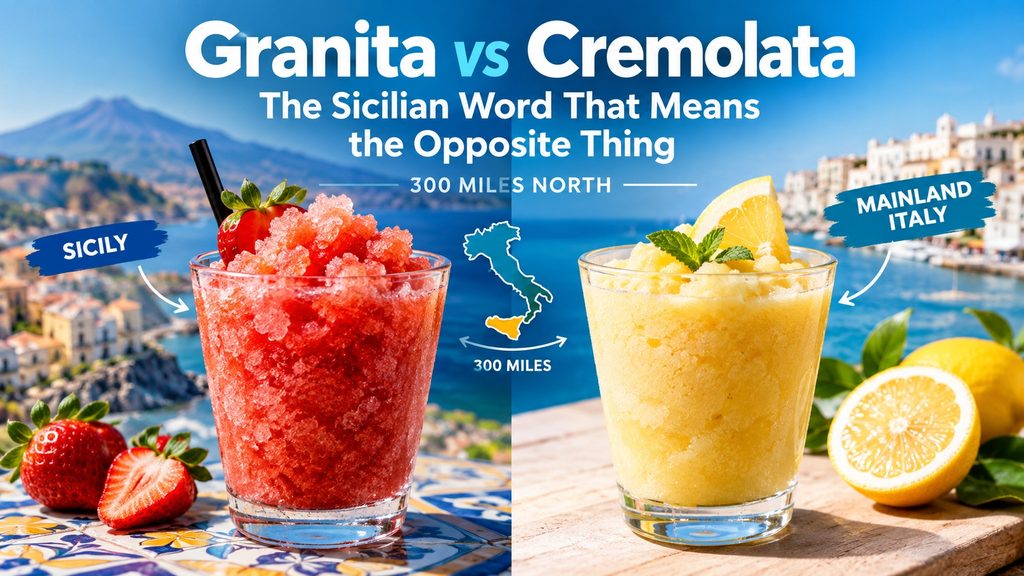
Order a cremolata in Catania. A waiter hands you a glass packed with fruit chunks. It’s coarse. It’s cold enough to make your teeth ache for a second. Now order the same word in a bar near Bari. You get something closer to velvet. No chunks at all. Just a smooth, dense chill. Same four syllables. Two different desserts. Nobody warns you.
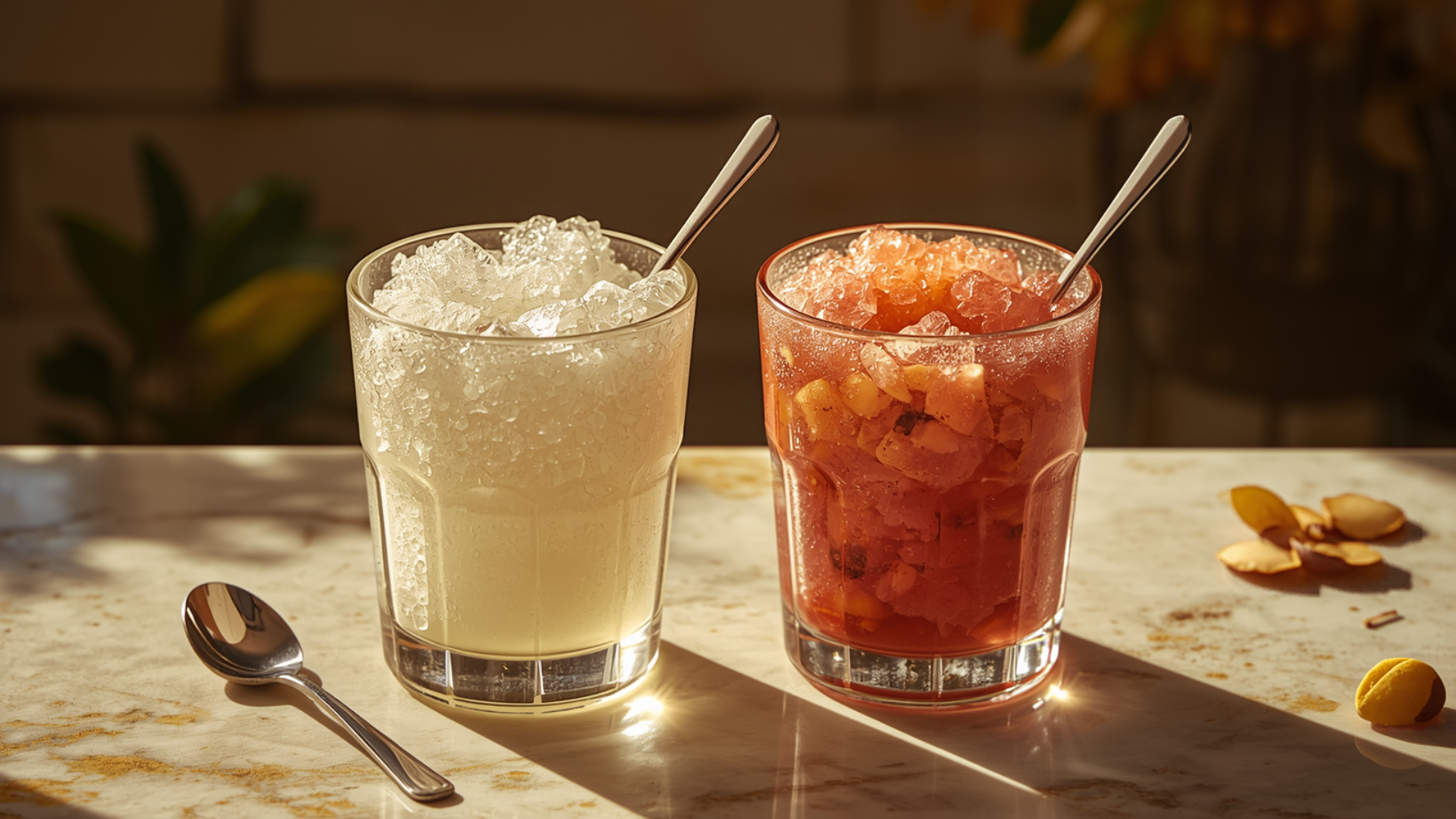
Here’s the short answer. Granita and cremolata both start from water, sugar, and fruit. But they split on one thing: how much of the fruit stays whole. Granita leans on juice, worked into fine ice crystals you barely notice. Sicilian cremolata keeps close to 80 percent pulp. It gets blended coarsely, so you see and feel the fruit in every spoonful. That makes Sicilian cremolata rougher than granita, not smoother. On the mainland, the word points the other way. There, a cremolato usually means the creamiest thing on the menu. Get the region wrong, and you order the texture you didn’t want.
A word that flips its meaning at the Strait of Messina
Word confusion around Italian food is common. A panino means one thing in Rome and something narrower in Milan. A cornetto competes with a brioche depending on where you stand. But granita and cremolata are a sharper case. The confusion runs in opposite directions on either side of a 300-mile stretch of coastline.
What granita and cremolata mean in Sicily
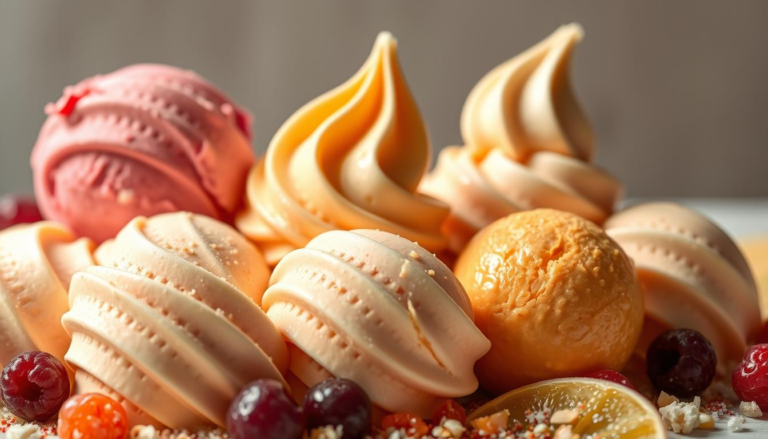
In Sicily, cremolata is defined by fruit quantity. Sources on the island’s sweets describe a mix built from roughly 80 percent pulp. That pulp gets blended coarsely, frozen, then grated and mixed into small chunks. The texture reads as more granular than a classic granita. Every glass shows visible pieces of fruit. The Sicilian dessert leans rustic, not smooth.
What “cremolato” means everywhere else
Move north to Puglia, and the picture reverses. There, a cremolato gets described as a specialty set apart from granita by a far finer, creamier texture. Its tradition ties back to fig fruit. The name signals silkiness, not chunkiness. A Naples-area gelateria’s own comparison guide makes the same case for the mainland version. Granita, it says, is defined by its visible ice crystals. The smoother preparation sits on the other end of the spectrum.
So the same root word — cremolata, cremolato — describes a rougher dessert in Sicily. Everywhere else it appears, it describes a smoother one. An American traveler might read a general guide to Italian frozen desserts before landing in Palermo. That traveler is reading the wrong meaning for where they’re going.
The physics behind the spoon
Why doesn’t either dessert turn into an ice block? Before getting into the fruit ratio, it helps to know why both stay spoonable at all. That’s the part an engineer notices before a food writer does.
Water alone freezes into a hard, uniform block. Add sugar, and the math changes. Dissolved sugar lowers the freezing point of the water around it. This is freezing-point depression: more sugar in the liquid means it has to get colder before ice can form. The effect builds on itself as freezing continues. Pure water molecules lock into ice crystals first. That leaves the sugar with less liquid to dissolve into, so its share of what’s left climbs. A higher share lowers the freezing point even further. The mixture never fully turns solid. It stalls in a soft, half-frozen state. That stall is the entire dessert.
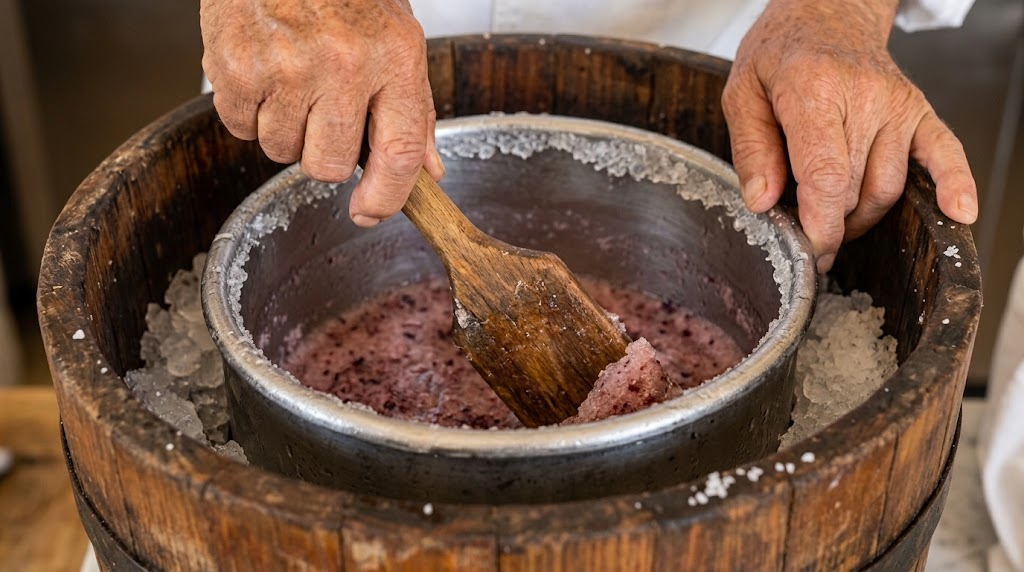
Stirring does the second half of the job. Stirring the mix, again and again, as it freezes keeps the ice crystals small. Small crystals disappear on the tongue instead of crunching like shaved ice. This is where regional technique splits. It’s also where the sources genuinely disagree with each other — worth saying plainly rather than smoothing over.
[VERIFY — conflicting sources]: Several sources describe Sicilian granita as churned non-stop during freezing, much like gelato. At least one technical source says the opposite. It describes a freeze that’s static or stopped and started, meant to keep air out of the mix. Air is what separates gelato from granita in the first place. One plausible fix: the old vertical-paddle mantecatore — a wooden or metal churner once packed in ice and salt — scrapes the mix without whipping it in. Motion without air. But that’s a guess, not a confirmed fact. It needs a chat with a working gelatiere, not a guess dressed up as certainty.
One thing isn’t in dispute. Granita carries no milk and no whipped-in air. That’s exactly what separates it from gelato. Want the deeper mechanics — overrun, churn speed, fat ratios, the variables that define gelato, not granita? I’ve laid those out separately in Gelato vs Ice Cream: What Makes Italian Gelato So Special. I won’t repeat that ground here. This piece stays on the dairy-free side of the freezer.
Two solutions to the same problem
Once you accept that both desserts solve the same problem, the comparison gets easier. Both are trying to trap water in a soft, half-frozen state. Neither should turn fully liquid or freeze hard. From there, granita and cremolata stop looking like a matter of taste. They start looking like a design choice.
Granita: built from the liquid side
Granita works from the liquid side. The base is mostly juice, water, and sugar. Solid matter stays minimal. That lets the mix get worked into fine, close-to-invisible ice crystals. The result is smooth. In some versions it’s thin enough to sip through a straw — cold and clean rather than chunky.
Cremolata: built from the solid side
Cremolata, in its island form, works from the solid side. It starts with fruit pulp, not juice. That pulp gets blended only coarsely, not pureed smooth, so fiber and cell structure survive. The pulp is frozen, then grated and cut into small pieces before being folded back together. The fruit visibly holds its shape. Locals describe the feel directly: you see the pieces of fruit, and the texture reads as more granular than granita, not less.
Here’s the engineer’s read. Granita cuts down on structure to boost smoothness. Cremolata keeps structure on purpose, using the fruit itself as scaffolding. Neither is a lesser version of the other. They’re two answers to the same freezing-point problem, built from a different base material.
Where geography edits the recipe
Sicily doesn’t agree with itself on granita either. The disagreement runs mostly along the east coast.
Messina: light and almost foamy
Messina makes what several sources call the lightest version on the island. It’s nearly foamy, sweeter than its rivals. Some describe the texture as never fully frozen and never liquid. It’s a narrow middle state. One Messina-based writer compares it, half-joking, to something close to permafrost. Lemon is the benchmark flavor here. It’s prized for hitting a precise balance between tart and sweet.
Catania and Siracusa: dense and creamy
Catania runs denser and creamier, closer to a thick cream than an ice. Siracusa, further south, shares that character. Almond is the signature flavor in Catania. It’s often served alongside coffee as la minnulata. Locals treat that pairing as its own category, not two scoops side by side.
Palermo: jasmine, cinnamon, and scursunera
Palermo breaks from both coasts with jasmine and cinnamon. The pairing is known locally as scursunera. That’s a dialect word that once named a wild plant, salsify. Over time, the word attached itself to this flavor instead of the plant.
None of this is trivia for its own sake. The “best granita” question has no single answer. Messina and Catania aren’t offering variations on the same dessert. They’re offering two different textures that both happen to be called granita.
Origins nobody fully agrees on
Granita’s backstory starts with snow. Workers packed snow down from Etna and the Peloritani mountains into stone-lined pits called neviere. They hauled it to the coast through the warmer months. That snow chilled early fruit syrups, long before mechanical refrigeration existed. That much stays broadly consistent across sources.
The dating is where accounts split. Some trace the true, churned version of the dessert to the sixteenth century. This is the version worked into a soft, ice-crystal texture, not simply built from crushed snow. Sources tie it to the wooden pozzetto churning tub. Other accounts place that same turning point in the seventeenth century. Neither claim comes with a record precise enough to settle it. The honest version is this: the shift from flavored snow to true churned granita happened somewhere across those two centuries. It was likely gradual, not a single traceable date.
The Catania-versus-Messina rivalry over the “true” origin follows the same pattern. Locals argue it with real passion. It stays genuinely contested, and it’s not something an outside guide should referee. Some accounts place the dessert’s true birth specifically in and around Catania. Messina’s own historical claim runs just as deep. Treat both as living civic pride, not settled fact.
What’s officially recognized, and what isn’t
Italy protects regional food traditions through a label called Prodotto Agroalimentare Tradizionale, or PAT. It marks methods held steady for at least 25 years within a set territory. It stops short of the stronger DOP or IGP status used for products like Parmigiano-Reggiano.
Granita made that list, but not as one blanket category. The national list names specific regional versions on their own. Granita di gelsi neri is black mulberry granita, tied to the Messina area. Granita di mandorla is almond granita. Both appear on Sicily’s PAT roster. Granita di limone, lemon granita, joined in a more recent update. Cremolata, by contrast, doesn’t show up on that same list, under either its Sicilian or its mainland meaning. Worth noting plainly, rather than assuming one way or the other.
Ordering like you know the difference
Standing at a counter in Catania or Messina? The fix is simple. Assume the local meaning, not the general one. Ask for cremolata expecting fruit chunks and a coarser bite, not a smoother pour. If a counter offers both granita and cremolata in the same flavor, taste them side by side. The contrast is the fastest way to feel the difference the words describe.
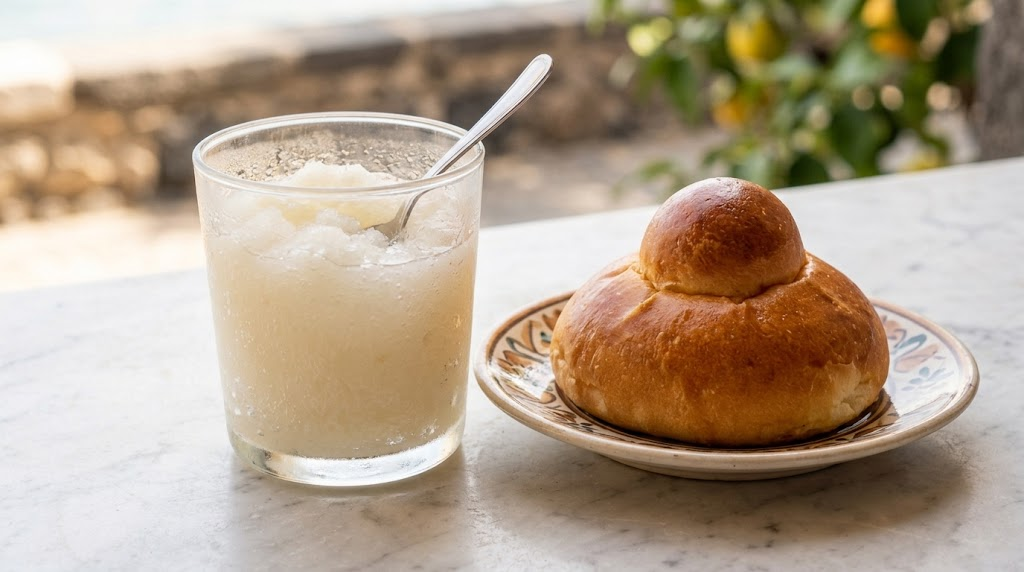
Breakfast is the traditional slot for granita specifically, not cremolata. A glass of granita next to a soft, egg-dough brioche col tuppo is standard summer-morning fare in coastal Sicily. The brioche gets its name from its small, round topknot. It’s meant for dipping, not eating on the side. Cremolata tends to show up later in the day, as an afternoon or evening treat rather than a breakfast pairing. Worth knowing before you order one at 8 a.m. expecting the other.
Timing matters too. Both desserts hit their peak between late spring and early autumn. That’s when fruit is in season and the heat makes a half-frozen glass genuinely useful, not just decorative. Planning a Sicily trip around this kind of seasonal, food-first travel? Italy in September covers the shoulder-season window, when the crowds thin and the fruit still holds its peak. A regional food festival, or sagra, is often where the small-producer versions of both desserts turn up outside the big coastal cities — I’ve explained sagre in more detail here for first-time visitors.
The final word
Granita and cremolata aren’t rivals. They aren’t interchangeable words for the same glass, either. They’re two engineered answers to one problem: keep water liquid enough to spoon, cold enough to matter, structured enough to hold a flavor. Both are built from different ratios of the same basic stuff. Sicily settled on juice for one and pulp for the other. Three hundred miles north, the same word settled somewhere else entirely. Knowing which meaning you’re standing under makes the difference. It’s the gap between getting what you expected and finding out, mid-spoonful, that you didn’t.
FAQ — Granita vs Cremolata, Answered
What is the main difference between granita and cremolata? Granita is built mostly on fruit juice, worked into fine, nearly invisible ice crystals. Sicilian cremolata uses closer to 80 percent fruit pulp, blended coarsely so visible pieces of fruit remain. That makes it coarser, not smoother, than granita.
Is cremolata the same thing everywhere in Italy? No. In Sicily, cremolata is the rougher, pulp-heavy dessert described above. In parts of mainland Italy, especially areas with a Puglia-linked tradition, cremolato instead means a finer, creamier dessert than granita. That’s the opposite texture relationship.
Why doesn’t granita freeze into a solid block? Dissolved sugar lowers the freezing point of the water in the mix. As the water slowly freezes, the leftover sugar concentrates in the liquid that’s still unfrozen. That lowers the freezing point even further, keeping the dessert soft and half-frozen instead of solid.
Does granita contain milk, like gelato? No. Traditional Sicilian granita has no dairy. It’s built from water, sugar, and fruit or other flavors, with no whipped-in air. That absence of milk and air is what sets it apart from gelato.
What’s the best time of year to try granita and cremolata in Sicily? Late spring through early autumn, when local fruit is in season and the heat makes a half-frozen dessert genuinely useful. Many coastal towns treat granita as a breakfast staple during these warmer months, paired with a soft brioche.
Should I order granita or cremolata for breakfast? Granita, traditionally. Pairing a glass of granita with a brioche col tuppo for dipping is the standard coastal Sicilian breakfast in summer. Cremolata is more of an afternoon or evening choice, not a morning one.
Is granita officially recognized as a traditional Italian product? Specific regional versions are. Granita di gelsi neri and granita di mandorla both sit on Italy’s national list of Prodotti Agroalimentari Tradizionali, tied to Sicily. Granita di limone joined in a more recent update. Cremolata does not currently appear on that list.
If you want more stories like this from an Italian insider’s perspective, explore more on Tastes & Wonders of Italy or subscribe to our YouTube channel for video dispatches from around the country.
🌍 https://tasteandwondersofitaly.com/ – 📺 https://www.youtube.com/@TasteWondersofItaly