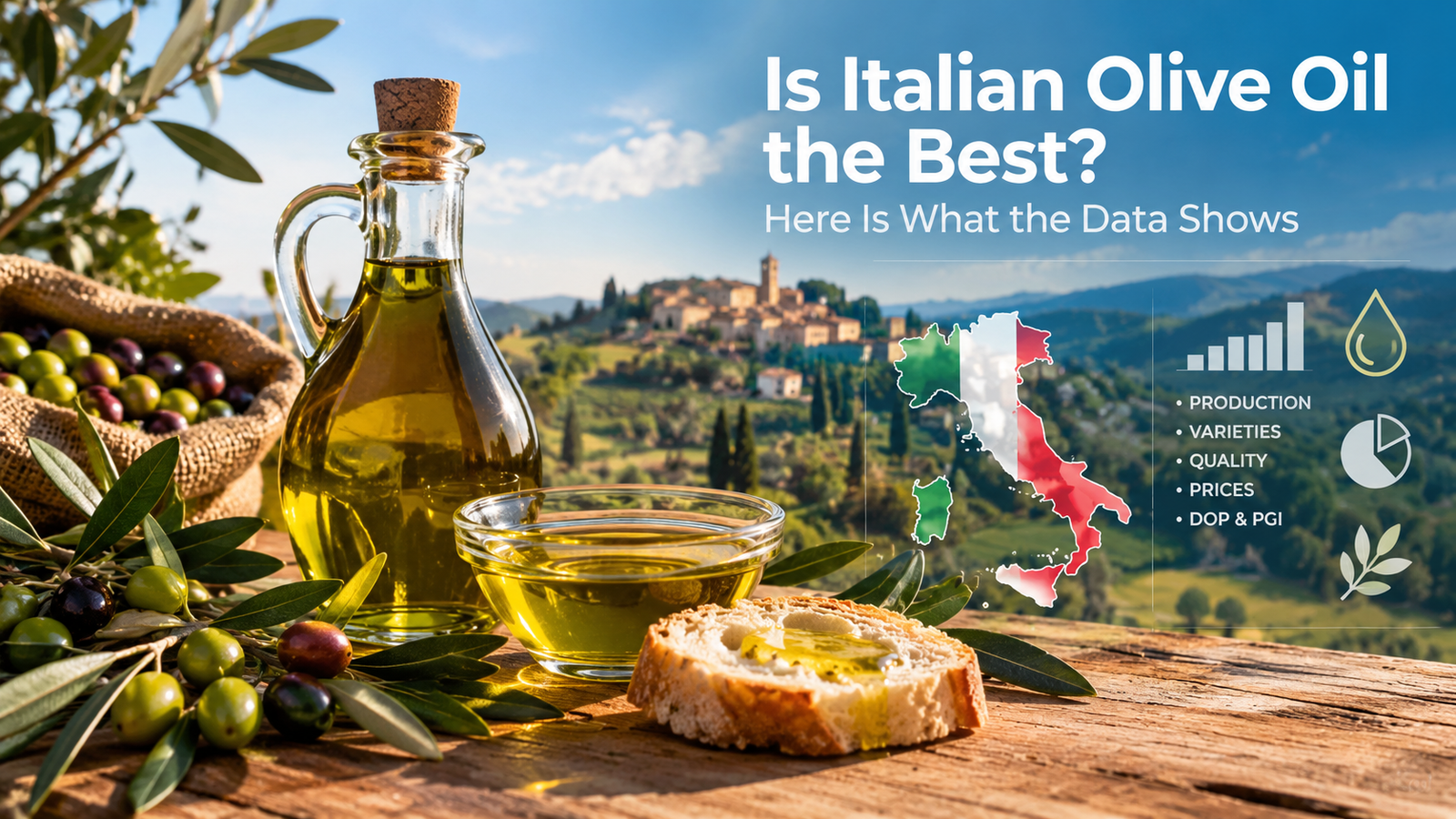
Is Italian Olive Oil the Best? Here Is What the Data Shows
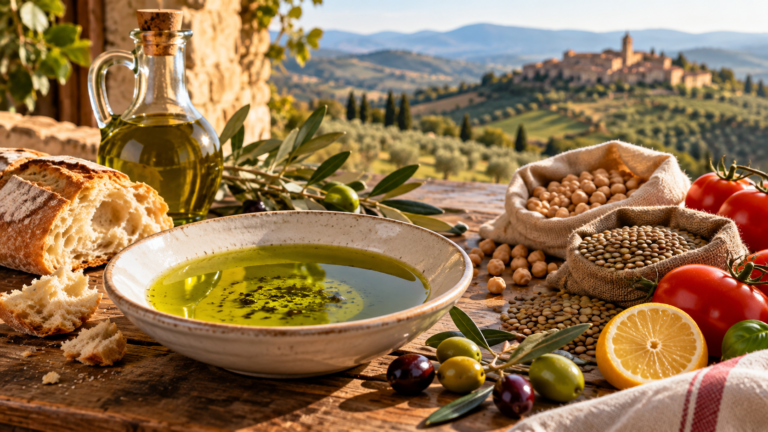
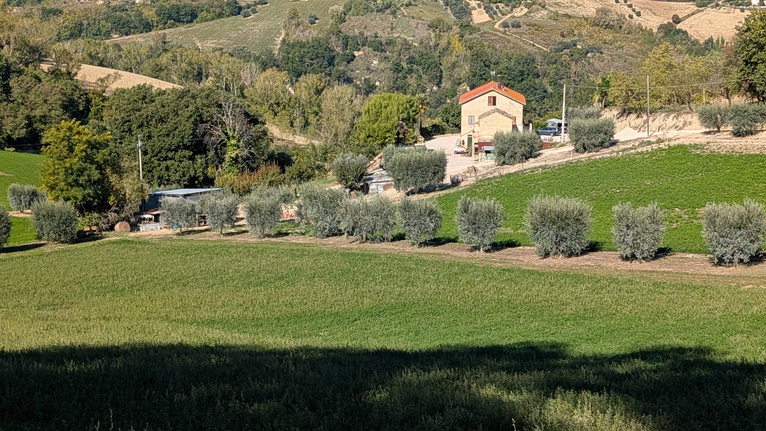
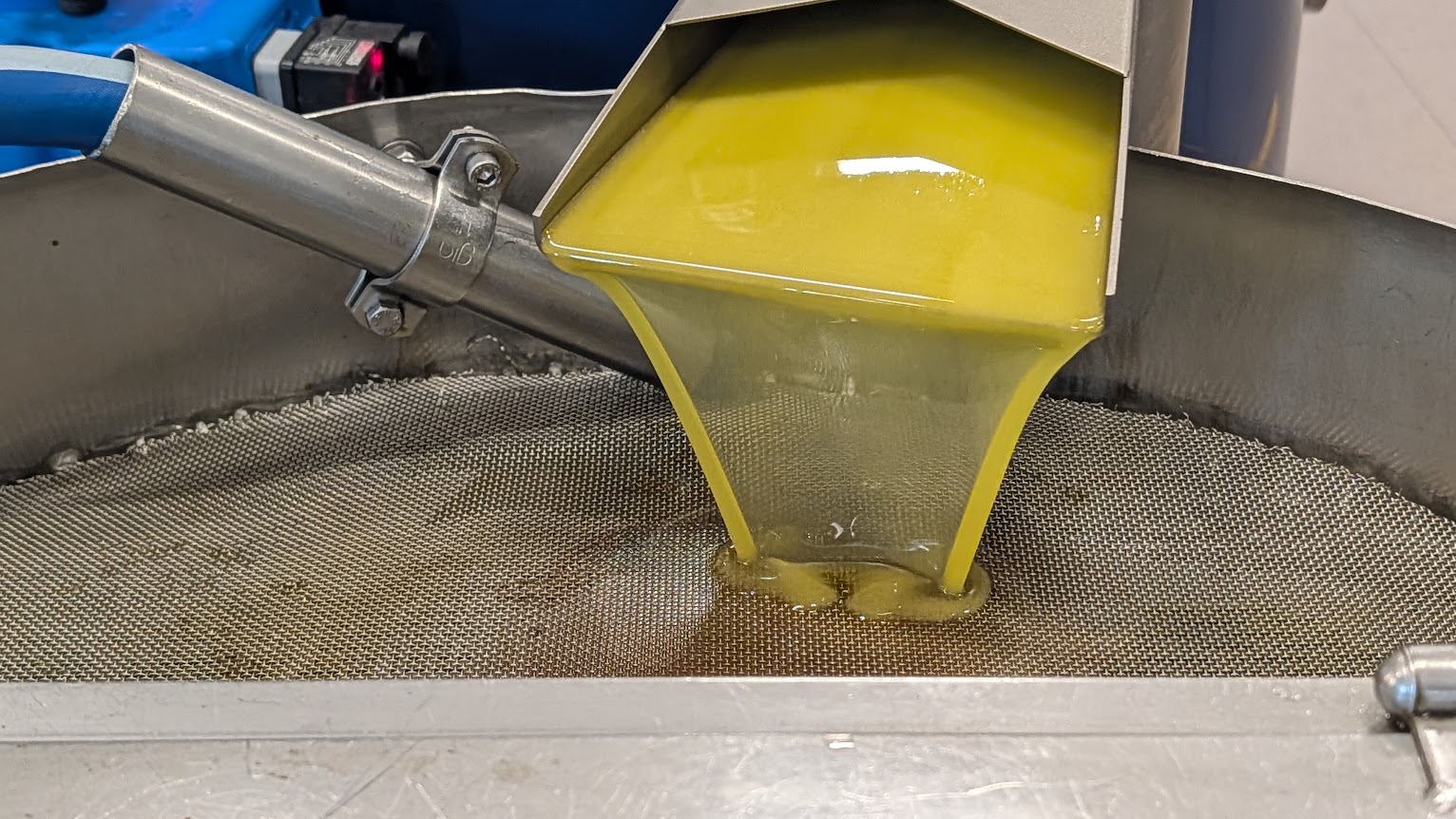
Italian olive oil earns its reputation every October, right at the frantoio near my home in the Marche. The mill runs from dawn until the last crate empties. Olives arrive dusty and bruised. Within an hour, the paste turns from green to cloudy jade. The air smells sharp, almost bitter, like crushed grass and green almonds. New oil pours from the spout the color of wet moss. Everyone nearby dips a piece of bread in it before it even settles.
Every November, someone asks me the same question over that bread. Is Italian olive oil really the best in the world? Is it better than Spanish, Greek, Tunisian, or Moroccan oil? I am an engineer, and I have worked inside mills like this one for years. So I think the honest answer deserves more than pride.
No, and the data is not close. Country of origin is not a quality marker in olive oil. Cultivar matters more. So do harvest date and milling speed. Italy’s real edge is not one national flavor. It is genetic diversity instead. Italy counts roughly 600 olive cultivars, says the CREA research center. Spain, Greece, and Tunisia, meanwhile, each lean on just three or four varieties.
A note on the links below: a few of them are affiliate links, which means I earn a small commission if you buy through them, at no extra cost to you. I buy my own oil at a mill two kilometers from my door, for roughly a sixth of what an imported bottle costs in America, so I have no reason to flatter a retailer. I link only to sellers whose listings carry the harvest dates and cultivar names this article tells you to look for.
Is Italian Olive Oil the Best by the Numbers?
Spain remains the clear production leader. The International Olive Council puts its 2025/26 harvest at 1,371,900 tons. That is more than four times Italy’s output. Tunisia follows at 450,000 tons, and Italy sits at 300,000. Turkey reaches 290,000, Greece 220,000, and Morocco 160,000. All of those figures come from the same IOC balance.
Italy, however, is not self-sufficient. Domestic output covers barely half of home demand. Italian consumption runs near 470,000 tons a year. So the country imports roughly 570,900 tons to close the gap. Most of that oil comes from Spain, at 56.8 percent. Greece adds 17.5 percent, and Tunisia adds 14 percent more.
This detail matters for shoppers abroad. A bottle can carry an Italian address legally, even when the olives grew elsewhere. In other words, bottling site and olive origin are not the same claim.
Price tells a related story. In November 2025, Italian extra virgin oil averaged €7.58 per kilogram. Greek oil sold for €5.05, Spanish oil for €4.54, and Tunisian oil for just €3.68. That gap mostly reflects smaller harvests and higher labor costs. So it does not, by itself, mean better oil in the bottle.
Where Italian Olive Oil Genuinely Leads
Six Hundred Cultivars, Not One Flavor
Spain’s production leans on a single variety. Picual alone makes up roughly half of it. Greece runs on Koroneiki instead. That one variety covers 50 to 60 percent of total output. Tunisia depends mainly on Chemlali, and northern Morocco grows mostly Picholine marocaine.
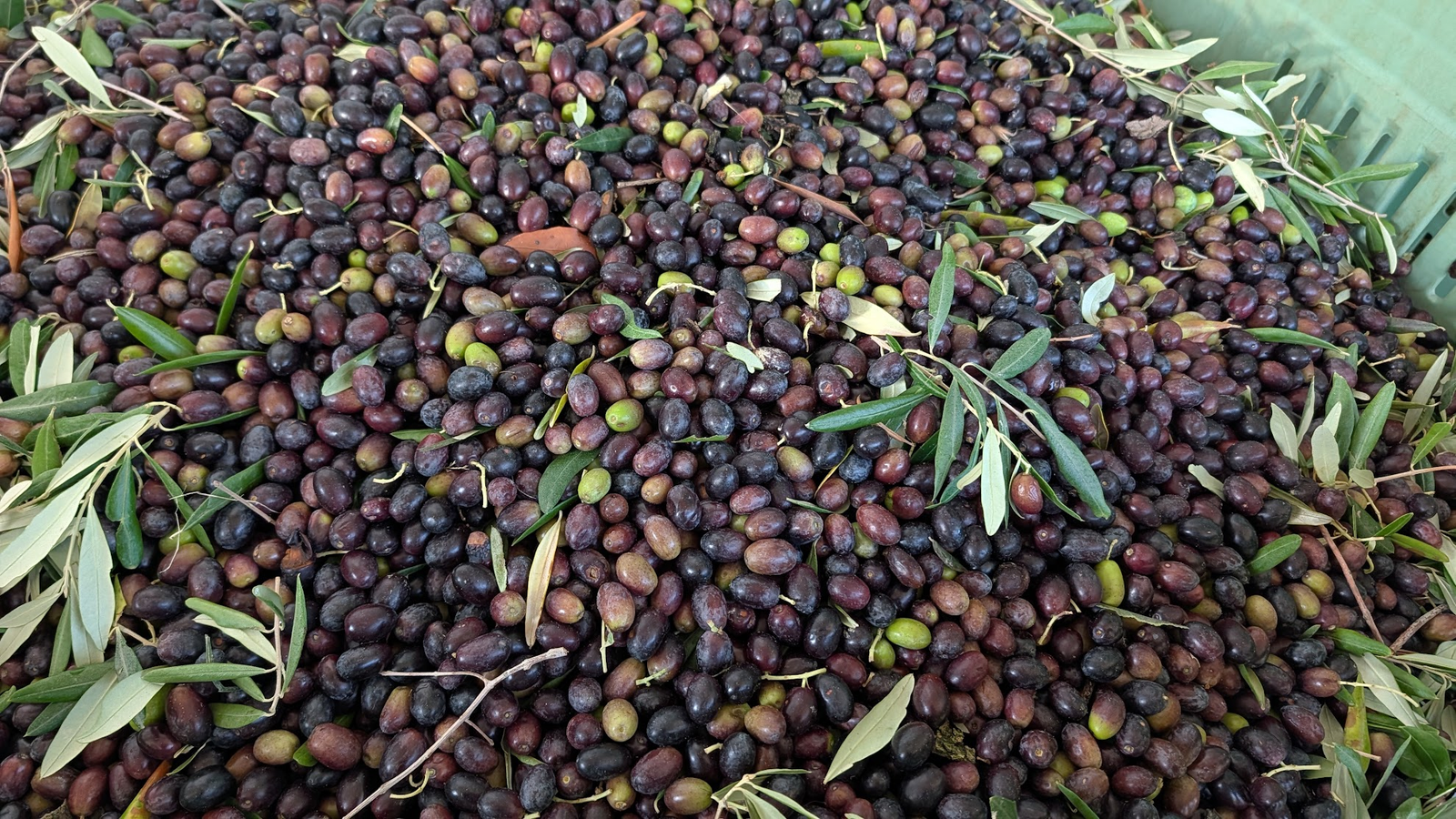
Italy has no such monoculture. In fact, CREA’s national germplasm collection holds close to 500 Italian varieties. That is 85 percent of the country’s olive genetic heritage. Researchers count around 600 cultivars nationwide, the highest total of any olive-growing country. It is roughly a quarter of the world’s known germplasm. In the Marche alone, cultivars like Coroncina, Mignola, and Raggia taste nothing alike. None of them resembles a Tuscan Frantoio, either, or a Pugliese Coratina.
That range is also the one claim in this article a reader abroad can test for themselves, cheaply. Three or four small bottles from different estates, poured on the same bread within the same ten minutes, settle the cultivar question faster than any label copy does. A single-estate tasting set costs less than one premium liter, and it tells you where your own palate sits before you commit to a case.
The Geographic Indications
Italy also holds 42 Protected Designation of Origin labels for olive oil, plus 7 Protected Geographical Indication labels on top. Together, these account for close to 40 percent of every European geographic indication in the category. Spain and Greece, by contrast, each hold roughly 30.
Still, this strength stays narrow in practice. Certified DOP and PGI oils make up only about 5 percent of total Italian extra virgin volume. So it is a genuine asset. It is just a small one.
Competition Results, With a Caveat
At the 2026 NYIOOC World Olive Oil Competition, producers from 29 countries entered 1,021 oils. Italy won 166 awards, more than any other country. Croatia and Greece followed, with Greece earning 106. The United States took 95 awards, and Spain claimed 85.
That result is worth noting. But it needs a caveat. NYIOOC is, after all, a paid, voluntary competition. So it measures the excellence of producers who choose to enter. It does not measure the average quality of a country’s olive oil.
Read the medal list that way and it keeps a narrower use. It is a shortlist of estates confident enough to send a sample to a blind panel, which is not nothing. The harder question is which of those estates an American buyer can actually reach, since most medal winners never cross the Atlantic at all. A specialist importer’s award-winner shelf is the short answer, and the overlap with the full results list is smaller than you would expect.
Why Italian Olive Oil Isn’t Always the Best Choice
By several measures, Italian olive oil trails instead. The clearest gap is the share of output that counts as extra virgin. Greece’s industry group, SEVITEL, puts that figure at 70 to 80 percent. Italy’s share, by contrast, sits closer to 50 percent, and Spain’s falls between 35 and 50 percent. For what separates the two grades on paper, see what extra virgin olive oil means under EU rules.
Polyphenol content, meanwhile, shows no national pattern at all. Greek Koroneiki typically ranges from 500 to 1,000 milligrams per kilogram. Spanish Picual runs lower, from 400 to 800. Italy’s own Coratina, grown mainly in Puglia, reaches similar levels when picked early. So harvest timing decides polyphenol content. Flag does not.
Fraud is the uncomfortable part of this story. It deserves a direct answer, not a polite dodge. In the Guardia di Finanza and ICQRF’s Verum et Oleum operation, inspectors ran 183 checks across Italy. They found that 27.2 percent of sampled oil was irregular. Even worse, 25 of 102 lab-tested samples, labeled extra virgin, turned out to be ordinary virgin oil instead.
A follow-up ICQRF sweep in July 2026 covered 167 more checks. Inspectors flagged 17 operators for breaking the rules. They also seized goods worth €10.3 million, including lampante oil sold as extra virgin. None of this means most Italian oil is fake. It does mean, though, that the extra virgin label, by itself, promises less than most shoppers assume. That is true in Italy as much as anywhere else.
Tunisia and Morocco Deserve a Second Look
The urge to dismiss Tunisian or Moroccan oil is hard to defend with data. Tunisia is now the world’s second-largest producer. It harvested 450,000 tons in 2025/26, ahead of both Italy and Greece. Extra virgin oil, in fact, makes up 89.5 percent of Tunisian exports. That share beats Italy’s own production.
Italy, for its part, is Tunisia’s second-largest import market by volume, at 18.9 percent. It is also Tunisia’s top market for organic oil. Italy buys 42 percent of everything Tunisia exports under that label. So much of the oil that Italian brands later bottle as a premium product started life in a Tunisian grove.
Morocco’s story runs differently, but it is just as misunderstood. Its signature variety, Picholine marocaine, yields oil with high phenolic content and low acidity. Peer-reviewed analysis of the Fès-Meknès region also finds strong oxidative stability. So the weak link in Morocco is not the olive. Instead, it sits downstream, in aging mills and inconsistent extraction methods. A domestic trust crisis adds to the problem, too. It is pushing many families toward pressing their own fruit at small local mills. Judge the olive on its own terms, though, and the picture changes.
The Five Variables That Actually Decide Quality
Set the flag aside, and five factors decide what ends up in your bottle.
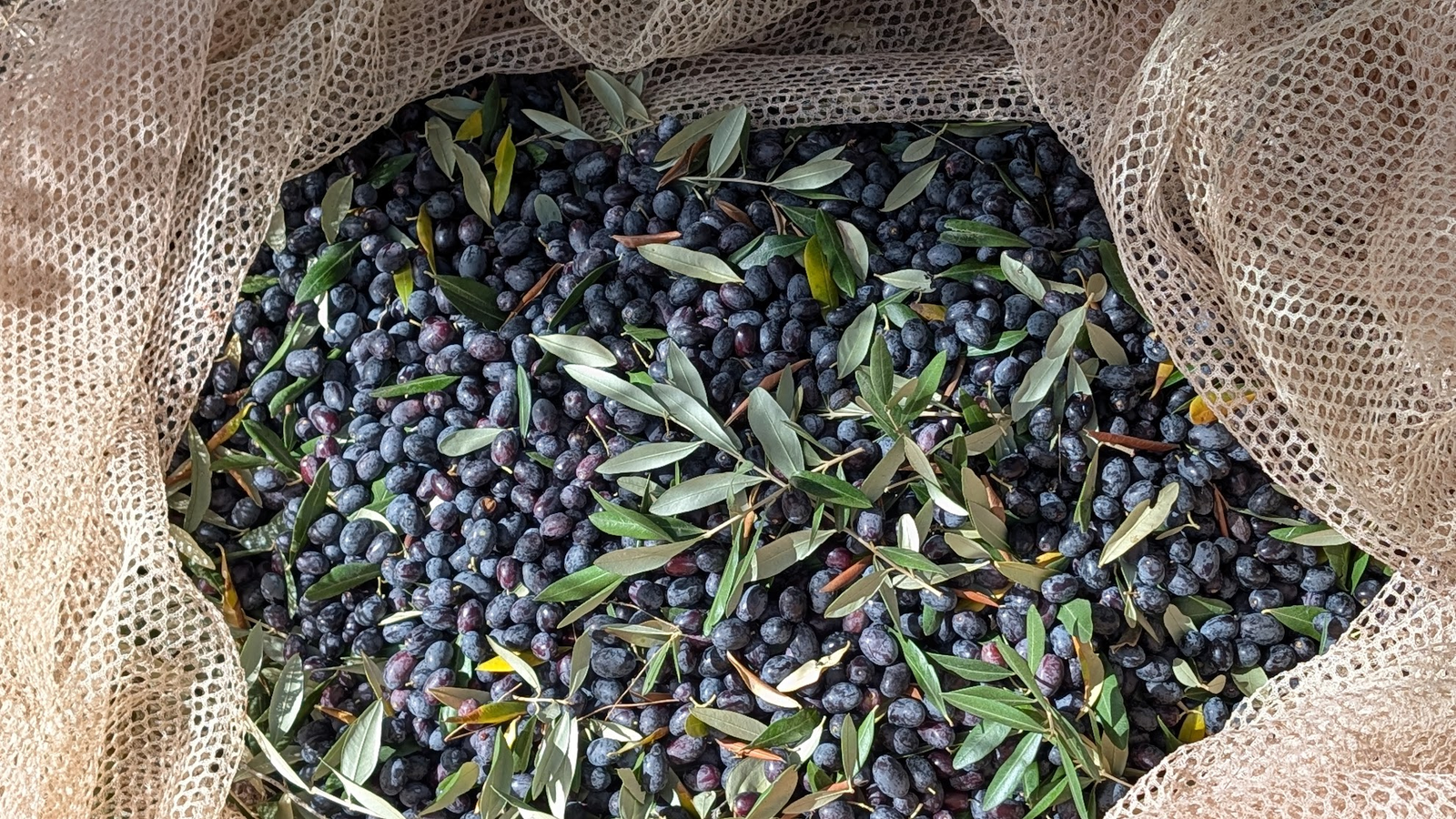
Cultivar comes first. A Koroneiki, a Picual, and a Coratina taste nothing alike. In fact, they differ about as much as a Sauvignon Blanc does from a Cabernet. Neither is objectively better. Each simply suits a different plate.
Harvest date comes second. Early-picked olives yield oil that is more bitter and more pungent. They also carry higher polyphenols. Late-picked olives work differently, though. They yield a milder, sweeter oil, but its healthful compounds fade faster on the shelf.
The third factor is the gap between picking and pressing. Olives start to oxidize the moment they leave the tree. Oil pressed within hours tastes nothing like oil from fruit left in a truck bed for two days.
Milling temperature is the fourth variable. Oil must stay below roughly 27°C, or 80°F, to legally count as cold-extracted. Low heat, after all, keeps far more aroma and polyphenol content than warm milling does. For a closer look at the mill floor, see our guide to visiting a frantoio during the olive harvest.
Storage is the fifth variable, and the most overlooked one. Light, heat, and oxygen wear olive oil down steadily from the day it leaves the press. So a fine Sicilian oil, stored for a year in clear glass on a sunlit shelf, will taste worse than a decent Greek oil bottled dark and kept cool.
How to Buy Accordingly
Buy by harvest date, not by flag. A bottle with no harvest date on the label is a weaker pick, whatever the country of origin claims on the front.
Look for a single named cultivar and a single named estate instead of a generic blend. “Oils from EU and non-EU countries” is the phrase the law requires whenever producers blend across borders. That phrase signals a mixed, lower-traceability product.
Check the acidity figure, too. Extra virgin olive oil must sit at or below 0.8 percent free acidity. That threshold comes from Commission Delegated Regulation (EU) 2022/2104, the current EU marketing standard. A lower figure, closer to 0.2 or 0.3 percent, usually signals a cleaner, faster harvest-to-mill process. Also, if you are shopping from the United States, our guide on how to buy real Italian olive oil in the US walks through which import channels hold these numbers.
Buy close to harvest season whenever you can. Italian, Greek, and Tunisian new oil all arrive between October and December. Buying inside that window is the single biggest quality lever a home cook has. Outside Italy the same window exists, only shorter and later: the new-harvest bottlings appear within weeks of the crush and are gone well before spring. If you ever plan to buy olive oil directly at an Italian frantoio, this is the season to go.
And do not assume a Tunisian or Moroccan bottle is automatically a downgrade. Much of what fills Italian shelves started in those same groves.
Frequently Asked Questions
Is Italian extra virgin olive oil better than Spanish olive oil? Not inherently. Spain produces more than four times as much oil as Italy, says the International Olive Council. Its top-rated Picual oils, in fact, compete directly with Italy’s best Coratina on polyphenol content. The real difference lies in variety and harvest timing, not national origin.
Why does Greek olive oil have a reputation for being healthier? Mainly because more of it qualifies as extra virgin. SEVITEL puts that figure at 70 to 80 percent in Greece, against roughly 50 percent in Italy. Extra virgin status reflects freshness and low acidity. Both traits, in turn, track with higher polyphenol levels.
Is Tunisian olive oil inferior to Italian olive oil? No, and the trade numbers say so clearly. Tunisia is the world’s second-largest producer, and 89.5 percent of its exports are extra virgin. Italy itself is Tunisia’s second-largest buyer, and its top market for organic Tunisian oil. So much of what reaches Italian bottlers starts as Tunisian fruit.
What does the extra virgin label actually guarantee? Under EU Regulation (EU) 2022/2104, it guarantees free acidity at or below 0.8 percent, with no chemical or sensory defects. It does not, however, guarantee country of origin, harvest date, or polyphenol content. That gap is why Italian inspectors still find mislabeled oil on Italian shelves.
What is the single best way to judge olive oil quality? Check the harvest date first. Check the acidity level next, then the named cultivar. Country of origin ranks well below all three of those factors. So a fresh, low-acidity Tunisian or Greek oil will consistently outperform a year-old, blended Italian one sitting on the same shelf.
The Takeaway
So no, Italian olive oil is not simply the best in the world. Pretending otherwise does a disservice to the people who make it well.
What Italy offers instead is choice. It has six hundred ways to press an olive, from the peppery Coratina of Puglia to the almond-soft Coroncina I watched pour into steel tanks last week in the Marche. For the fuller picture of how that diversity shaped an entire food culture, our overview of Italian olive oil culture is a good next stop. That diversity, not a flag on the label, is what is worth paying for.
If you want more dispatches like this, the kind that look past the marketing and into the mill, subscribe to the Tastes & Wonders of Italy newsletter. You will get stories from the Marche, Umbria, and Abruzzo that rarely make it into guidebooks.