Olive Harvest in Le Marche and Umbria: The Season Behind Italy’s New Oil
This article contains affiliate links. If you book through them I may earn a small commission, at no extra cost to you. See the affiliate disclosure.
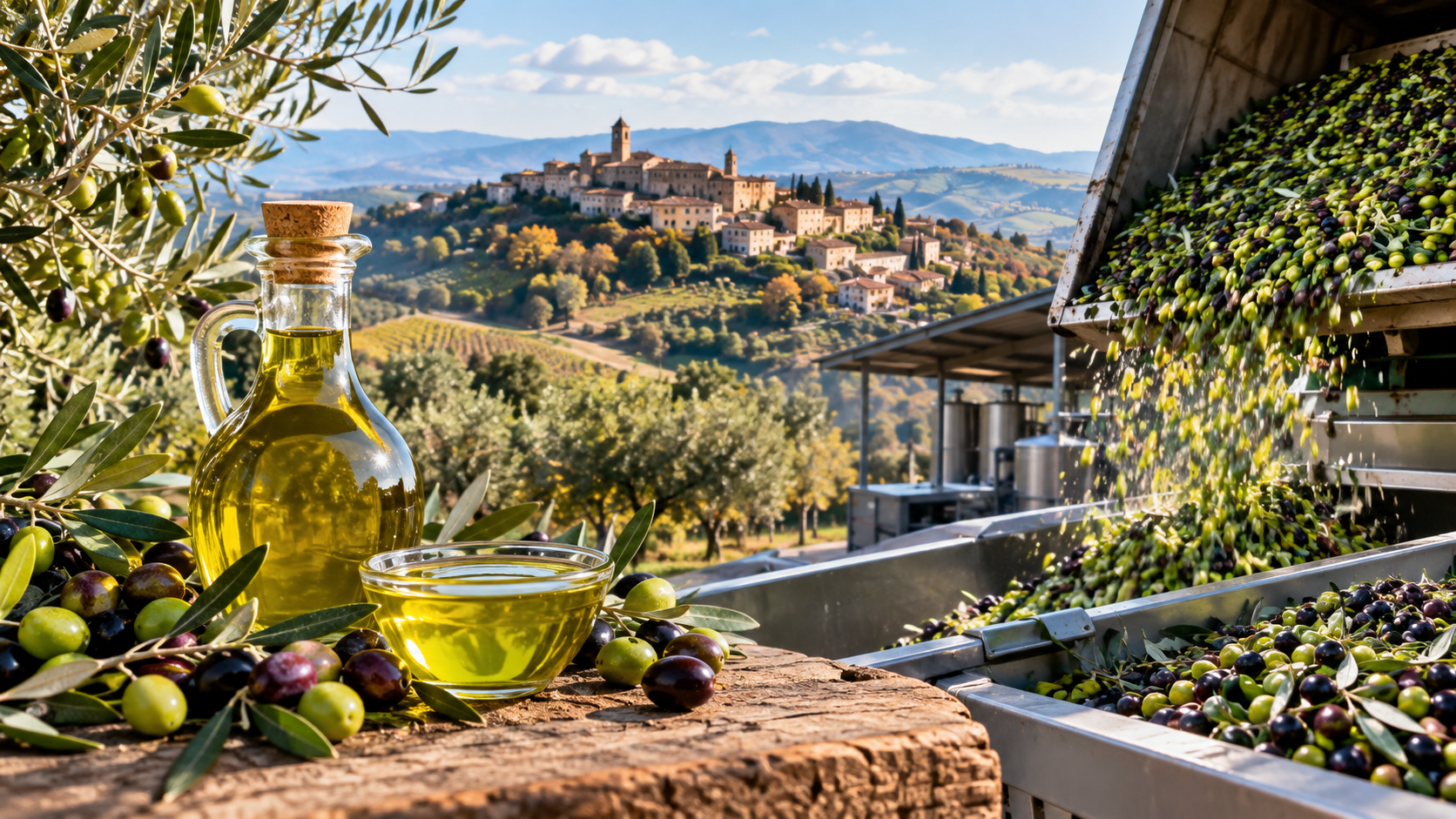
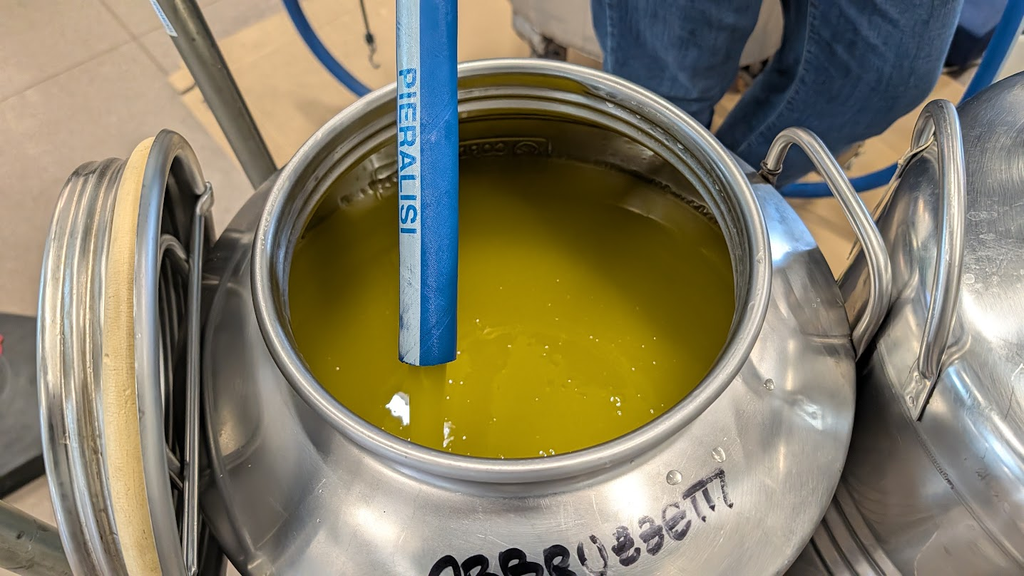
The first thing you notice inside a frantoio in late October is not the smell. It is the sound. A continuous-cycle mill runs at a steady mechanical hum. Every few minutes, a trailer dumps another load of olives onto the steel grate with a metallic clatter. Then the smell arrives. It is grassy and sharp, almost vegetal, and nothing like the mellow oil on an American pantry shelf. This is the olive harvest in Le Marche and Umbria: the six-week window each autumn when two of central Italy’s least-photographed regions turn their trees into olio nuovo, the green, unfiltered oil that exists for only a few weeks a year.
Here is the short version. The Marche and Umbria olive harvest runs roughly from mid-October through late November. Still, timing shifts earlier or later each year, depending on weather and pest pressure. Visitors can watch the pressing at open mills, and they can taste the unfiltered oil on warm bread within hours of milling. A trip can also overlap with truffle season in the same hills. Overall, the oil itself has little in common with the blended bottles most Americans know. Instead, it is sharp, bitter, and peppery enough to catch in your throat. That sting is a sign of quality, not a flaw.
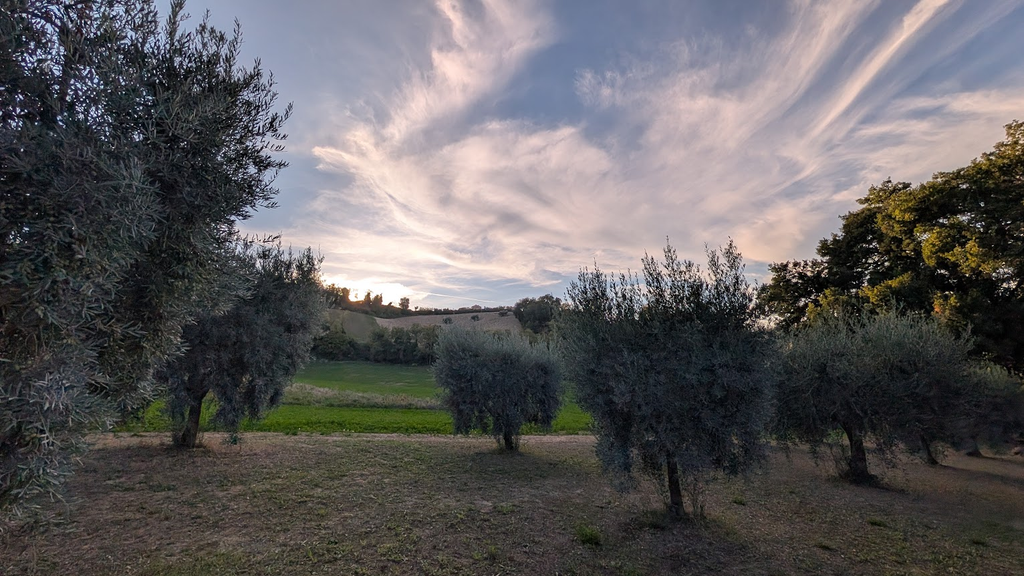
A Calendar That No Longer Holds
Older growers in these hills used to work from a fixed script. First, olives ripened through September. Then the color shifted from green to purple-black by mid-October. Picking began once that shift, called invaiatura, reached the right stage. Regional agricultural bulletins still publish that script every week during harvest season, complete with ripeness indices and pest thresholds. However, the trouble is that the weather no longer reads the script.
Two forces now compete for control of the calendar, and they pull in opposite directions. In a warm, humid autumn, the olive fruit fly thrives. Growers here call it simply la mosca; its scientific name is Bactrocera oleae. It punctures the fruit and multiplies fast, so it forces an early harvest to save the crop before the damage spreads. In a hot, dry autumn, by contrast, the fly struggles to survive. Instead, drought stress on unirrigated trees becomes the bigger threat. Either way, the old fixed date is gone. Growers now watch weekly advisories, fruit firmness tests, and fly traps before deciding when to pick. As a result, the decision can shift by two or three weeks from one year to the next.
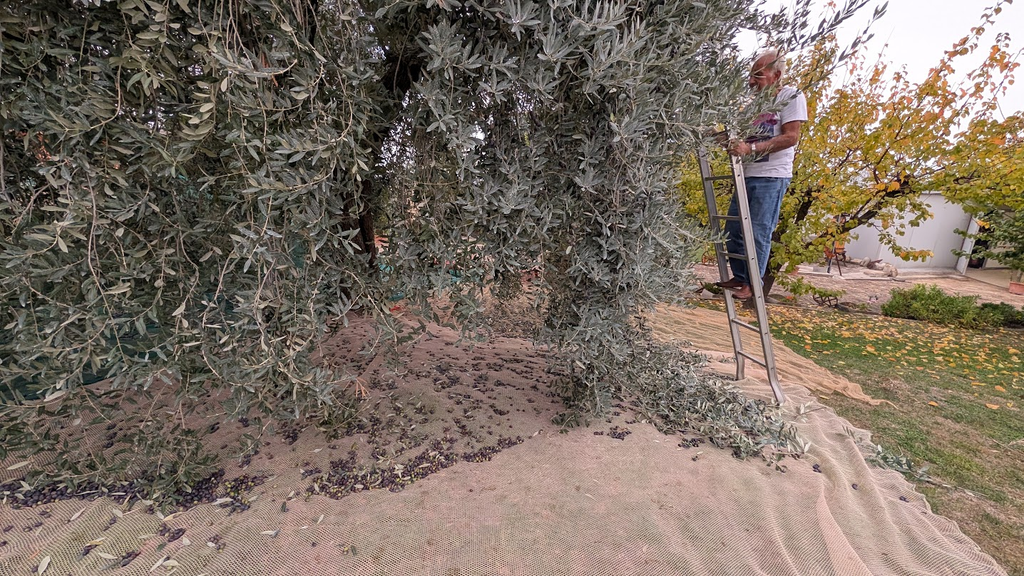
Regional bulletins from the Marche agrometeorological service illustrate the pattern well. Notices through September and October regularly recommend moving the harvest forward wherever fly pressure is high. They also warn that delaying beyond ten to fifteen days risks losing both quantity and quality. For instance, press coverage of recent seasons in Macerata province has described growers starting their pick in early October, well ahead of the traditional mid-month start, after fly damage threatened entire plots. So, for a visitor, the consequence is simple. A trip planned around a fixed mid-November olive harvest date is planning around a calendar that stopped being reliable years ago.
One Olive Everyone Knows, and the Ones Nobody Does
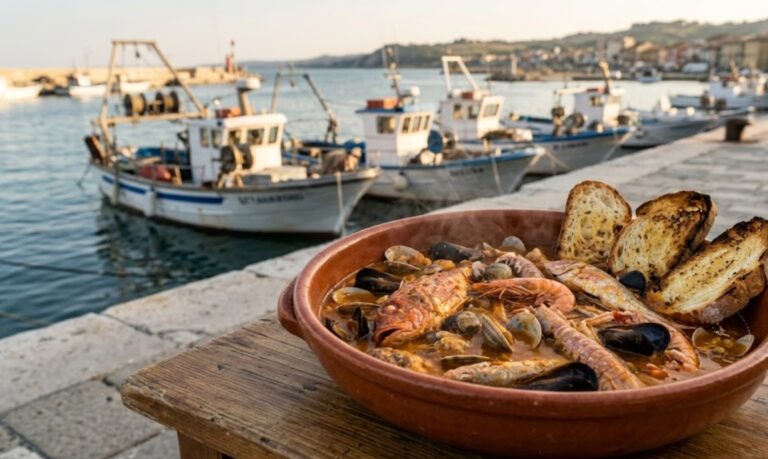
If you have eaten at an Italian restaurant in the United States, you have probably met a Marche olive already. Still, you likely do not know it. The large, mild, green olive stuffed with meat and fried golden is called oliva all’ascolana. It comes from the Ascolana Tenera, a cultivar native to the province of Ascoli Piceno. Since 2005 it has carried its own protected status, Oliva Ascolana del Piceno DOP, covering both the brined table olive and the stuffed, fried version. It is one of the region’s proudest exports. However, it is also the single biggest source of confusion for American visitors who assume it tells them something about Marche olive oil.
In fact, it mostly does not. The Ascolana Tenera is prized above all as a table olive, large and tender enough to pit, stuff, and fry without the flesh collapsing. That said, a small number of producers do press it into a delicate monovarietal oil, so the line between table and oil fruit is not absolute. Instead, the oil that fills bottles across Marche and Umbria comes almost entirely from a different set of trees. These are smaller and far less decorative, bred for yield and resilience rather than for a dinner plate.
The Working Trees of Le Marche
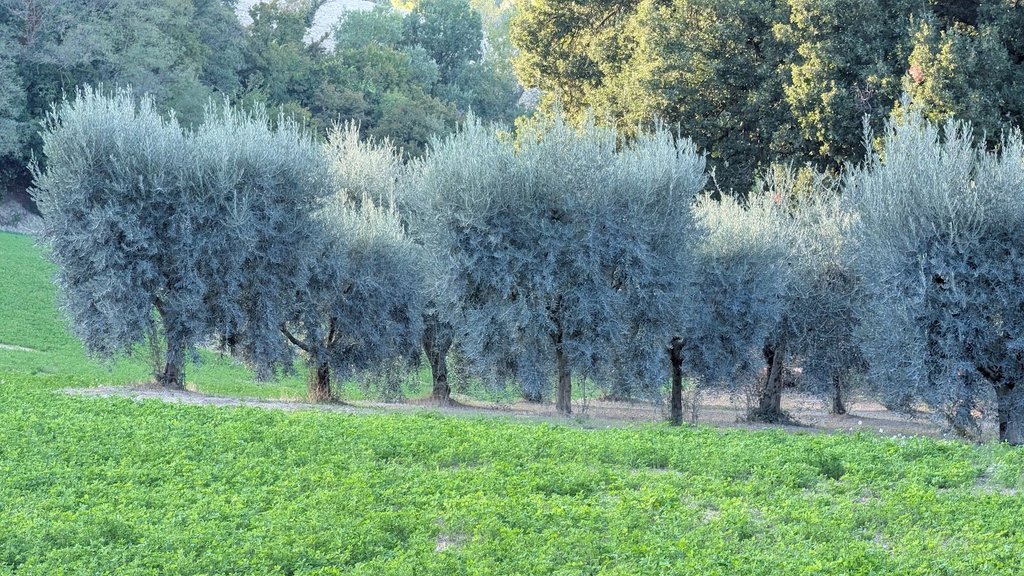
Marche counts roughly two dozen native olive cultivars. That is a density of local biodiversity most visitors never suspect from the bottle on a restaurant table. For instance, three names come up constantly among producers in the hills around Macerata and Ascoli. First, Coroncina is a small, hardy fruit with relatively low oil yield, prized for its resistance to cold. Second, Orbetana is a double-purpose variety that can go to the table or the mill, depending on the season. Third, Piantone di Mogliano is a vigorous, productive tree that local growers in parts of the region still call by its older name, Raggiola. These trees rarely appear in a tourist’s photograph. Still, they are the ones filling the tanks during the Marche olive harvest each November.
The DOP Backbone of Umbria
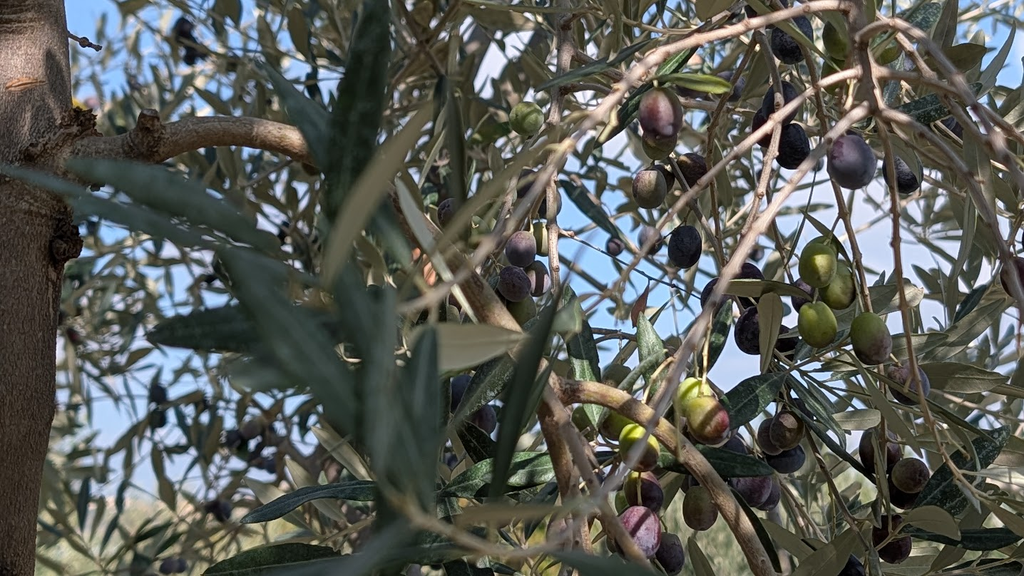
Cross the regional border into Umbria, and the oil changes character again. Umbria holds a distinction no other Italian region can claim. Its producers filed for Protected Designation of Origin status in 1997, and DOP Umbria became the first PDO ever granted to an entire Italian region’s extra virgin oil, rather than to a single province or valley. This designation splits into five geographic sub-zones: Colli Assisi-Spoleto, Colli Martani, Colli Amerini, Colli Orvietani, and Colli del Trasimeno. Each one has its own required blend of cultivars, printed directly on the label. The dominant variety across nearly all of them is Moraiolo, a small, intensely bitter olive loaded with polyphenols, usually blended with Leccino and Frantoio for balance. Meanwhile, around Lake Trasimeno, growers add Dolce Agogia, a softer, rounder variety that tempers Moraiolo’s bite. So ask to see the sub-zone on the label the next time you are handed a bottle in Umbria. It tells you more about what is in the glass than any marketing copy ever will.
Inside the Mill: What an Engineer Sees
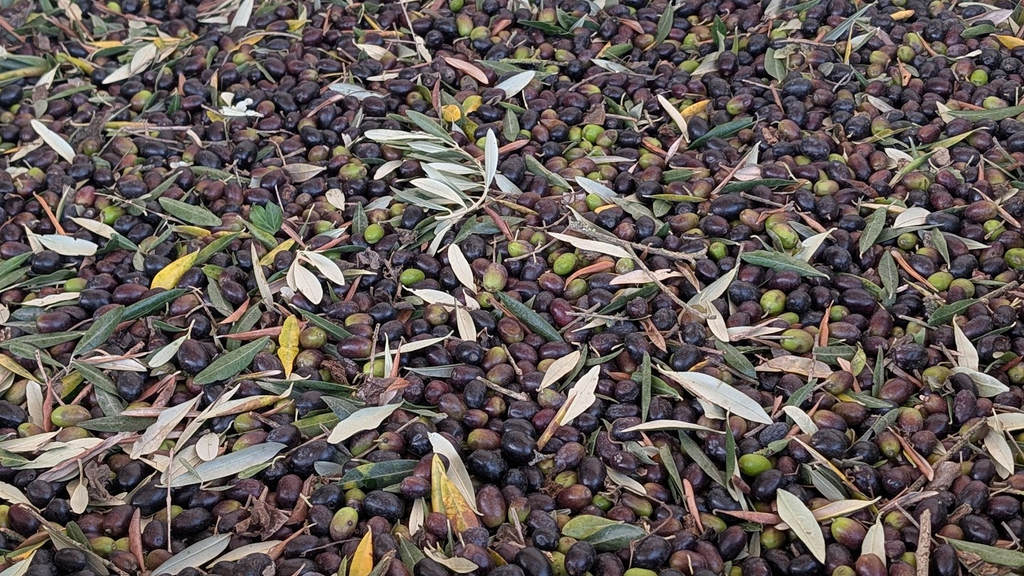
I have spent thirty years inspecting buildings across these hills. Still, a frantoio running at full capacity in November is unlike anything else I work on. It behaves like an industrial process with an agricultural deadline. First, olives arrive and get washed. Then they get crushed into paste. That paste must be separated into oil, water, and solid residue within hours, because the clock on quality starts the moment the fruit leaves the tree.
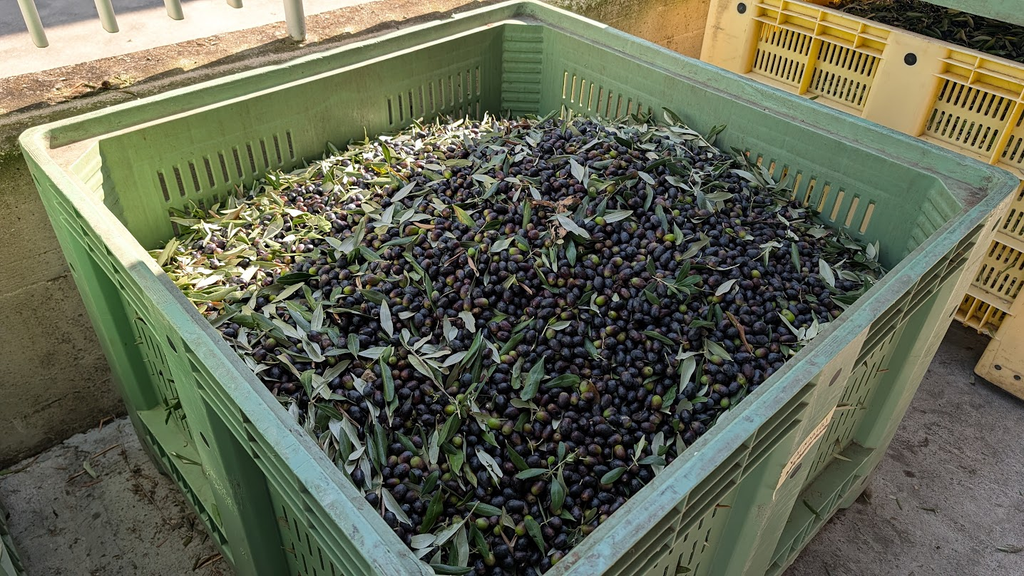
That urgency is not folklore. European Union marketing rules define “cold extraction” and “cold pressing” with a hard number. The paste may never exceed 27°C, or about 81°F, during separation. Go above it, and the oil loses the legal right to either term, whatever the label claims. Older hydraulic presses, which crush the paste in layered discs, physically cannot push past that line without serious intervention. So most mills in Marche and Umbria today run continuous-cycle systems instead. They centrifuge the paste at controlled temperatures, which is both faster and far easier to keep compliant.
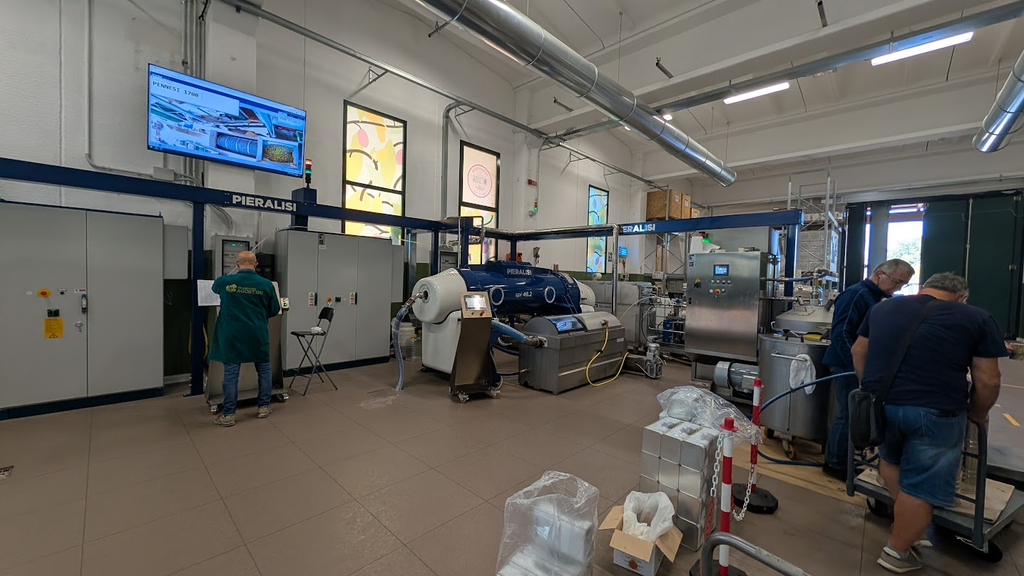
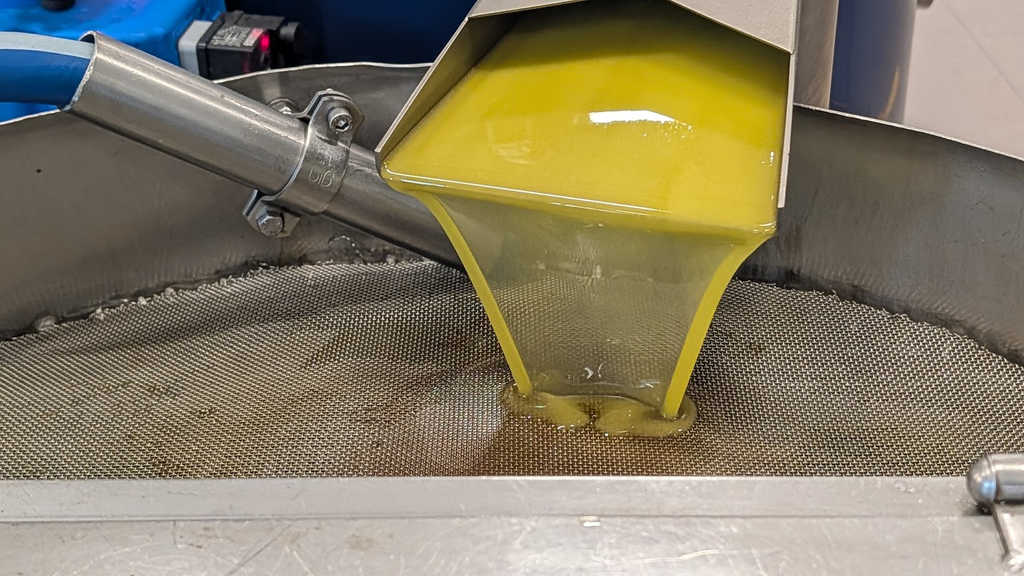
The other number worth knowing is free acidity, measured in grams of oleic acid per hundred grams of oil. Extra virgin olive oil must sit at or below 0.8 percent. Ordinary virgin olive oil, by contrast, stretches to 2.0 percent. I always ask a producer for that figure before I ask about the variety. After all, a grower who tracks acidity closely is usually paying close attention to everything else in the process too. Low acidity means the fruit was healthy, picked at the right stage, and milled fast. High acidity means something slipped: bruised fruit, a damaged crop, or too much time sitting in a crate before pressing. None of this shows up on a label in a way most shoppers would notice. Instead, it shows up in the sting at the back of your throat when you taste the oil fresh. That brings us to what a visitor actually does during the olive harvest.
What You Can Actually Do During the Harvest
Most mills in Marche and Umbria run an open-doors program during harvest season, often called Frantoi Aperti. It lets visitors walk the production floor and watch the entire process from crate to bottle. However, exact dates and hours vary by producer and by year, so confirm directly with the mill before you show up. If you would rather not depend on a producer answering the phone in Italian, a handful of mills sell scheduled visits in advance: in Umbria, a mill visit paired with a structured tasting near Perugia is the most reliable booking I know of during the season. Generally, the window runs from late October through late November, overlapping almost exactly with the picking season itself.
The main reason to go is the tasting, not the tour. Olio nuovo exists for only a few weeks after pressing, before its sharpest edges soften with age. Most mills serve it the same way local families have for generations: drizzled warm over grilled or toasted bread rubbed with raw garlic. That preparation is called bruschetta in its original sense, well before the word came to mean anything topped with diced tomatoes. Often, the first mouthful surprises American visitors. It should burn slightly at the back of the throat, a sensation producers call pizzicore. That bite comes directly from the polyphenols responsible for the oil’s health benefits and its shelf life alike. In short, bland oil is not gentle oil. It is usually old oil.
If you want that first mouthful explained rather than simply handed to you, a grove-to-table session near Assisi walks through the pressing and what you are actually tasting, which is worth more than a tour of the machinery. On the Marche side the pickings are thinner, as they tend to be here, but an olive oil tasting in Ascoli Piceno is the easiest thing to book without a car and sits in the middle of the Piceno growing area.
Timing a trip around the olive harvest pairs naturally with the region’s other autumn specialty: the white truffle. Acqualagna, in the Marche province of Pesaro-Urbino, hosts two-thirds of Italy’s national truffle trade. Its Fiera Nazionale del Tartufo Bianco runs across weekends from late October through mid-November, sitting almost exactly inside the olive harvest window. So a single November trip through these hills can reasonably include a mill visit, a truffle hunt with lunch, and a meal built entirely around whatever was dug or pressed that same week.
The 2026 Season, As of This Writing
This section is dated deliberately. After all, an olive harvest article that claims to be current forever is not telling the truth. Here is where things stand as harvest work got underway in early October 2026.
Industry estimates from trade publication ItaliaOggi–Teatro Naturale point to a national Italian olive oil crop down roughly 25 percent for the 2026/27 season. This decline is driven mainly by sharp losses across southern Italy, where drought hit unirrigated groves hard. However, Marche and Umbria are an exception to that national trend. Early estimates for both regions point toward production gains of 20 to 30 percent over last year’s weak result, a recovery after a genuinely difficult 2025 season. That year, fly damage pushed many growers, including several in Macerata province, to start picking in early October instead of their usual mid-month window. This year, by contrast, growers report the opposite pressure. The same heat that worried southern producers kept fly populations unusually low in central Italy, so the main concern shifted toward drought stress rather than pest damage.
Still, none of this is a final result. Harvest and milling continue into November and December, and yield figures firm up only once the pressing season closes. So anyone planning a 2026 trip around these numbers should treat them as a reasonable early read, not a guarantee. Always confirm current conditions directly with a mill before booking.
Planning Your Olive Harvest Visit
Late October through mid-November is the reliable window for watching an active olive harvest in full swing. Still, the exact start can shift by two or three weeks depending on that year’s weather, so build in flexibility rather than booking around a single fixed date. Always contact mills directly to confirm open-door hours. A short email or phone call in Italian or English, sent a week or two ahead, is standard practice and far more reliable than anything listed on a producer’s website months in advance.
Buy directly from a mill or a trusted local shop rather than from an airport gift counter. Also check the harvest year and sub-zone on any DOP bottle before paying a premium for it. A bottle without a harvest date printed on it is not necessarily poor oil, but it is telling you less than it could. Finally, pack accordingly: these hill towns run cool and often wet in November, mills are working spaces with hard floors and open doors, and the best tastings happen standing up with a piece of bread in hand, not seated at a table.
For the deeper story of how olive oil fits into the region’s wider food culture, see our guide to Le Marche and the Mediterranean diet. And if Cingoli is already on your itinerary, you are already in the heart of the Coroncina and Orbetana growing country described above. See our guide to Cingoli for where to base yourself.
FAQ: The Olive Harvest in Le Marche and Umbria
What is the olive harvest season in Le Marche and Umbria? It generally runs from mid-October through late November, though the exact start shifts year to year depending on weather and olive fruit fly pressure. There is no single fixed date.
When is the best time to visit a working olive mill? Late October through mid-November offers the strongest chance of seeing active milling, since this overlaps with most producers’ picking and pressing schedule. Confirm current hours directly with the mill before visiting.
Do I need to book a mill visit in advance? Most mills running open-doors programs do not require formal booking for a walk-through. A short email or call a week or two ahead confirms hours and avoids a wasted trip if picking is delayed.
Is visiting an olive mill expensive? Watching the pressing process is typically free or low-cost at mills with open-doors programs. A tasting with bread may carry a small charge. Buying bottles directly from the producer is usually priced close to what you would pay in a local shop.
How long should I plan for a mill visit? An hour covers a walk-through and a tasting comfortably. Pair it with a nearby town or a truffle market visit to fill out a half-day in the area.
Does the olive harvest overlap with truffle season? Yes. White truffle season in Acqualagna runs across weekends from late October through mid-November, sitting almost entirely inside the olive harvest window. That makes a combined trip straightforward to plan.
What makes Le Marche and Umbria olive oil different from what I can buy at home? Most oil sold internationally is blended across harvests, countries, and years to keep flavor consistent. Oil from a single mill in a single harvest, often from named local cultivars like Moraiolo or Coroncina, carries the sharpness and bitterness of fresh, unblended extra virgin oil. That character softens with age rather than appearing in the bottle from the start.
The Takeaway
The sting at the back of your throat from a fresh glass of olio nuovo is not a flaw to apologize for. It is the clearest evidence you will get, outside a laboratory, that the oil in front of you was pressed from healthy fruit within hours of picking, somewhere in these hills, this season. Everything else, from the DOP sub-zones to the cultivar names to the acidity thresholds, exists to protect that one sensation from being diluted into something blander and more exportable. Catch it while it lasts.
Planning a trip to central Italy and want insider guidance built around the calendar, not the postcard? You can book a consultation with me through the link on the site.
🌍 https://tasteandwondersofitaly.com/