Frantoi Aperti Umbria vs. a Real Farm Stay: How to Choose Your Olive Harvest
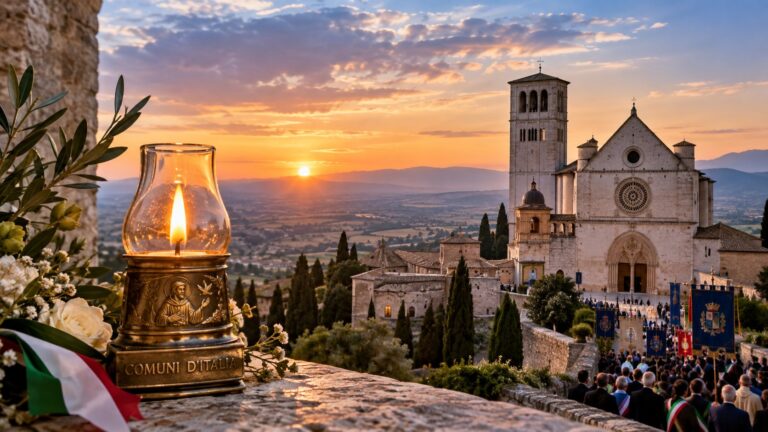
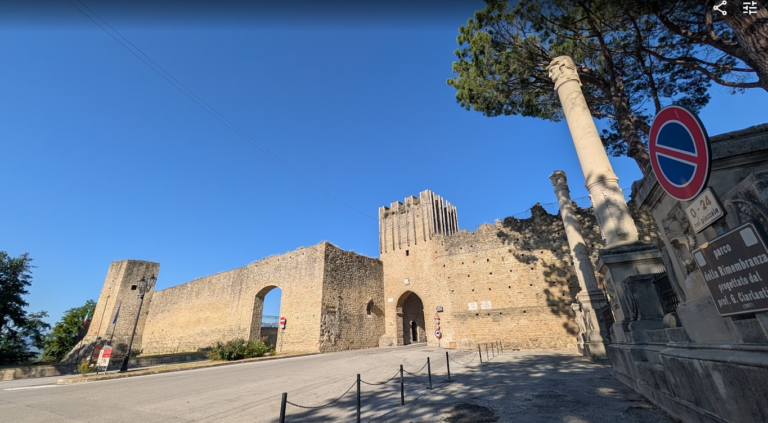
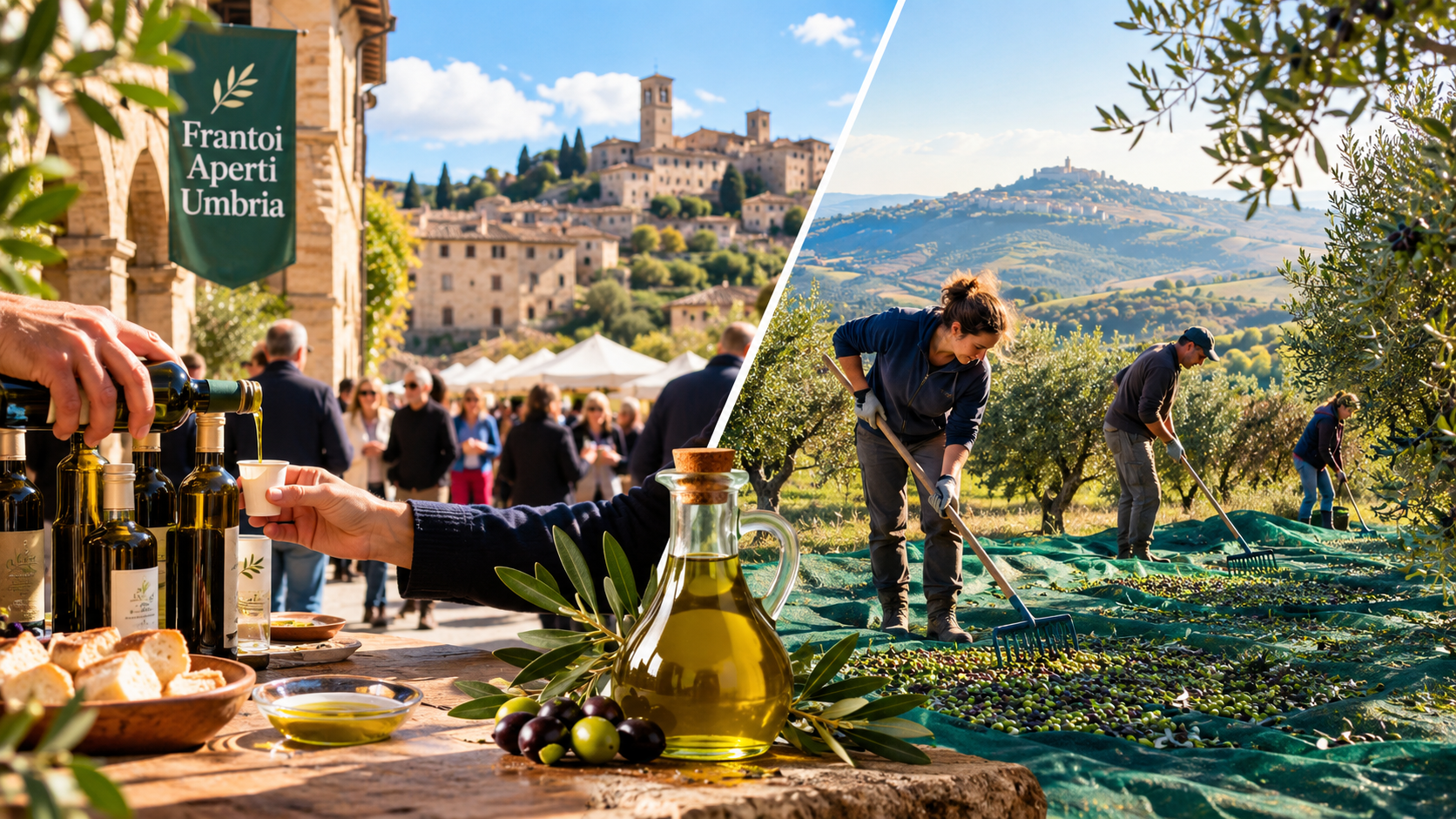
On a late-October Saturday, Frantoi Aperti Umbria looks like a party in a hill-town square. A tasting table stands under the arches. Someone hands you warm bread and a small cup of new oil. The oil catches the back of your throat, and you cough. Everyone coughs, so everyone laughs. Meanwhile, cars line the road below the walls, and the crowd grows by the hour.
Now drive 20 minutes into the hills. It is eight in the morning, and the grass is still wet. A net lies spread under one olive tree. Four people stand around it with plastic rakes, and nobody else is in sight. The only sound is the soft tick of olives landing on the mesh.
People call both scenes the Umbrian olive harvest. Yet they are not the same trip, and too many travelers book the wrong one. This guide gives you a way to choose.
A note on links: some of the booking links in this article are affiliate links. If you book through them, I earn a small commission at no extra cost to you. I do not link any farm stays. Those you book directly with the farm, after asking the six questions below.
Frantoi Aperti Umbria or a farm stay: the short answer
Choose Frantoi Aperti Umbria if you want to see how Umbria makes its oil. Choose an olive harvest farm stay in Italy if you want to help make it. That is the whole decision.
The festival runs from October 17 to November 15, 2026, over five weekends, as Vivo Umbria reported. It gives you breadth: many towns, many mills, many tastings, and plenty of company. A farm stay gives you depth. You get one grove, a few other guests, real work, and oil to carry home.
So the booking rules differ too. Book the festival a few weeks ahead. Book the farm stay about a year ahead. Neither trip is better. They answer different questions, and only one of them fits you.
Frantoi Aperti Umbria 2026: the olive oil festival that shows you the mill
Frantoi Aperti Umbria is a regional festival built around the frantoio, the olive mill. The Associazione Strada dell’Olio e.v.o. DOP Umbria organizes it, and 2026 is the twenty-ninth edition. Working mills, farming villages and art towns open their doors for tastings, guided visits and meals. For the full calendar, read our guide to the 2026 festival.
One detail changes how you should think about it. The festival celebrates the frangitura, the milling of the olives. It does not celebrate the raccolta, the picking. By the time you see the oil, someone else has already done the picking. The mill, not the grove, is the star.
That is not a weakness. It is the design. A mill in season is a line of machines: a crusher, a malaxer that slowly stirs the paste, and a centrifuge that separates the oil. I read it the way I read any industrial plant, and it is easy to follow even if you know nothing about machines. At the end of the line comes the reward, which is new oil, green and peppery.
The festival also gives you range. You can compare oils from several mills in one weekend. You can walk, cycle or ride a shuttle between mills and town centers. Organized tours, such as the new EVO&Art Experience routes tied to the Franciscan eighth centenary, use shuttle buses and guides, so you do not have to drive. Physical effort stays light, and the mood is warm. On the other hand, the five weekends are busy, and you share every tasting table with other visitors.
What a real olive harvest farm stay in Italy gives you
A farm stay in harvest season is a different product. You sleep on a working farm, and in the morning you go out to the grove. Then you pick. On small farms, picking is still mostly done by hand, with small rakes and nets spread under the trees. One Umbrian farm that publishes its numbers says a mature tree takes about an hour to pick and gives two or three bottles of oil. So a morning of work means a handful of trees, and the reward is lunch, not a ticket stub.
Small groups are the point. A small farm has only a few rooms, so you pick beside the owners and the other guests. You learn which trees ripen first, and why the olives cannot wait long before the mill. After that, the fruit goes to the press.
Italian law protects the difference between a farm stay and a hotel. Under Law 96 of February 20, 2006, agriturismo hospitality must be run by an agricultural entrepreneur, using the farm itself, in connection with real cultivation. The meals must come mainly from the farm’s own products and from other local farms. Each region adds its own rules on top. So a genuine agriturismo is a working farm first. A hotel with olive trees in the brochure is something else.
Finally, think about what you carry home. In many Italian households, the year’s oil comes from one grower the family knows. A farm stay lets you meet that kind of grower. If that idea interests you, read why no Italian family buys oil the way you do.
Frantoi Aperti Umbria vs. a farm stay at a glance
Here is the trade-off in one table. Read the rows that matter most to you.
| Factor | Frantoi Aperti Umbria | Real farm stay |
|---|---|---|
| What you see | Many mills, towns and events | One farm, one grove, one mill |
| What you do | Taste, watch, walk, buy | Pick, sort, eat, help |
| Physical effort | Light | Real, outdoors in autumn weather |
| Crowds | Busy on the five weekends | A few guests |
| Dates | Fixed: October 17 to November 15, 2026 | Float with ripeness and weather |
| Book ahead | A few weeks; tours and shuttles sooner | About a year |
| You take home | Bottles you buy | Bottles from one farm, plus know-how |
| Best for | Seeing the oil world | Entering it |
Four tests to choose your olive harvest experience in central Italy
These four questions do the work. Answer them honestly, and the choice usually makes itself. One constraint sits outside all four, and it is legal rather than personal: what Americans can and cannot do in an Italian grove.
Test one: do you want to watch or to work?
Ask what you want to remember in 10 years. If the answer is a mill at full speed and 10 different oils, choose the festival. If the answer is your hands smelling of green leaves, choose the farm. Be honest here. Three hours outdoors on a wet November morning can feel long, so do not romanticize the rake.
Test two: how many nights can you give it?
The festival works in a weekend. Two days, two or three towns, and you leave satisfied. A farm stay does not. The first morning you are slow, and by the second you improve. I would not book fewer than four nights, because a shorter stay buys you only the learning curve.
Test three: how do you feel about schedules and crowds?
The festival is social and structured. You follow a program, and other people are always around. A farm runs on the trees and the weather instead. Rain can move the picking, and the owner decides. So if you love quiet and spontaneity, lean toward the farm. If you like a plan and lively company, lean toward the festival.
Test four: can you commit a year ahead to a date that moves?
This test catches most people. Festival dates are fixed and announced well ahead. Harvest dates are not. Growers pick when the olives change color, so the calendar follows the fruit. Hosts of one Umbrian farm stay told the Untold Italy podcast that they start picking around October 20, and that about 80 percent of local growers finish by mid-November. The window can also shift by up to two weeks from year to year. Therefore you book a window, not a day. Choose flexible flights, and expect final dates to firm up only days before you arrive.
Who should skip which one
Each option is wrong for someone. Here is who should walk away.
Skip the farm stay if you only have a long weekend
Do not book a harvest stay if you have three days. Do not book it if cold, wet mornings sound miserable, or if you cannot fix your dates a year out. Also skip it if your goal is to see six towns and taste a dozen oils. A farm keeps you in one place by design.
Skip Frantoi Aperti Umbria if you want quiet or want to work
Skip the festival if crowds drain you. Skip it too if you dream of picking olives, because the festival mostly shows the milling. Finally, do not expect a private lesson from a producer. A mill in season is a busy plant, and the staff often have little time to talk. Our guide to what really happens inside a frantoio explains why, and how to visit without getting in the way.
How to book Frantoi Aperti Umbria or a farm stay without regrets
For the festival, pick one weekend and one base town. Then check that town’s own calendar, since each town runs its own events. Book your room early, and reserve tours and shuttle seats as soon as you can. Remember, too, that mill staff in season rarely have time to explain. If you want someone whose job is to walk you through the line, book a guided visit to a family oil mill near Giano dell’Umbria for one morning of your weekend.
For a farm stay, ask six questions before you pay a deposit.
- Is this a working agriturismo with its own olive grove, and how many trees does it have?
- Do guests pick, for how many hours a day, and is the work optional?
- Do you pick by hand or with machines?
- Where do you press the olives, and can guests visit the mill?
- What happens when it rains, or when the olives are not ready?
- Does the price include meals and harvest days, and what is the cancellation rule if the dates move?
A good host answers all six in one email. A vague answer is your warning sign. Then check the oil itself. If the farm sells oil under the DOP Umbria name, the label must carry one of the five subzone names. Ask which one applies.
Can you do both? Yes, in this order
If you have 10 days, do the farm stay first and the festival last. The two windows overlap, since both fall between mid-October and mid-November. After a week in the grove, you will read the mill differently. You will know what the fruit cost before it reached the crusher.
Then the tasting tables in the square will mean more. Early-picked oil bites harder because it holds more of the compound behind the cough. A 2005 study in Nature named it oleocanthal. For what else is on in that season, check our Italy in October guide.
Booking Notes: What I Would Reserve for a Festival Weekend
A weekend cannot hold a farm stay, but it can hold a morning in a grove and a morning in a mill. Those are the two things the festival squares do not give you. Prices below were checked in October 2026 and can change.
The grove, in two hours. If the farm stay fails Test two, this is the honest substitute. A small Assisi winery runs an olive grove lesson with an organic oil tasting, a few minutes’ drive from the Basilica of Saint Francis. You walk the certified organic grove, learn to taste oil the way a panel does, then sit down to five local wines and a bruschetta board. It costs about $44 per person, and free cancellation runs to 24 hours before. Be clear on what it is not. You will not pick a tree, and you will not see a press. It is also new on the platform, with only a handful of reviews so far. I still prefer it to anything bigger, because it puts you among the trees.
The mill, with someone who has time to talk. This is the festival side done properly. The guided tour of the Del Sero oil mill near Giano dell’Umbria takes about 90 minutes. You follow the oil from olive to bottle along a fenced walkway, and the tasting comes at the end. It starts at about $16 and holds a 4.9 rating from 140 reviews. That record matters more to me than the price. Read the mill section above first, and you will recognize each machine as you pass it.
What I would skip. I would skip the one-hour wine, oil, cheese and salami tastings in Assisi’s town center. They are pleasant, but during Frantoi Aperti the tasting tables in the squares already give you new oil, bread and company. What you cannot find in a square is the grove and the mill, so spend your booked hours there. For the same reason, ignore any “Umbria olive oil” listing that turns out to be a Chianti and San Gimignano day trip. That is Tuscany, and another trip.
FAQ: Frantoi Aperti Umbria and olive harvest farm stays
What is Frantoi Aperti Umbria?
It is Umbria’s yearly olive oil festival. Working mills, hill towns and art cities open for tastings, tours and meals over five weekends. The Associazione Strada dell’Olio e.v.o. DOP Umbria organizes it. The 2026 edition, the twenty-ninth, runs from October 17 to November 15.
When is the best time to see the Umbrian olive harvest?
Late October to mid-November. Picking runs from mid-October into late November, and most growers finish by mid-November. For a farm stay, plan a window of 10 to 14 days that starts in late October, and stay flexible.
Do I need to book Frantoi Aperti Umbria in advance?
Yes, for rooms and for tours. Book your lodging first, since weekend rooms in hill towns go early. Then check the calendar for guided tours and shuttle seats, which may need a reservation.
How much does an olive harvest farm stay cost?
Prices vary by farm, season and meals, so any number here would go stale. Ask what the nightly rate covers, whether harvest days cost extra, and how the deposit works.
How long should I stay?
One weekend is enough for the festival. It gives you two or three towns and a few mills. For a farm stay, book at least four nights, because the first morning is mostly learning.
Can I combine the festival and a farm stay?
Yes. Book the farm stay first, and save the festival for your last weekend. That order lets you compare what you saw in the grove with what you taste in the square.
How can I tell a real farm stay from a hotel with olive trees?
Ask about the grove, the mill and the label. Italian law requires a genuine agriturismo to be run by a farmer through a working farm. A real host names the number of trees, the picking method and the place where the olives are pressed.
The takeaway
Frantoi Aperti Umbria shows you the oil. A real farm stay puts you inside the harvest. If you have a weekend and a taste for hill towns, go to the festival this year. If you have a week and a year to plan, book the farm for 2027. Either way, taste the new oil where it was made, and let it catch your throat.
Planning an olive harvest trip to Umbria and unsure which week to hold? You can reach me through my About page, and I will tell you what I would do.
Mirco Vitellozzi is a licensed engineer from Le Marche and the author of Tastes & Wonders of Italy. He has worked on Italian buildings for about thirty years.