Marche Olive Varieties: The Cultivars No American Store Carries
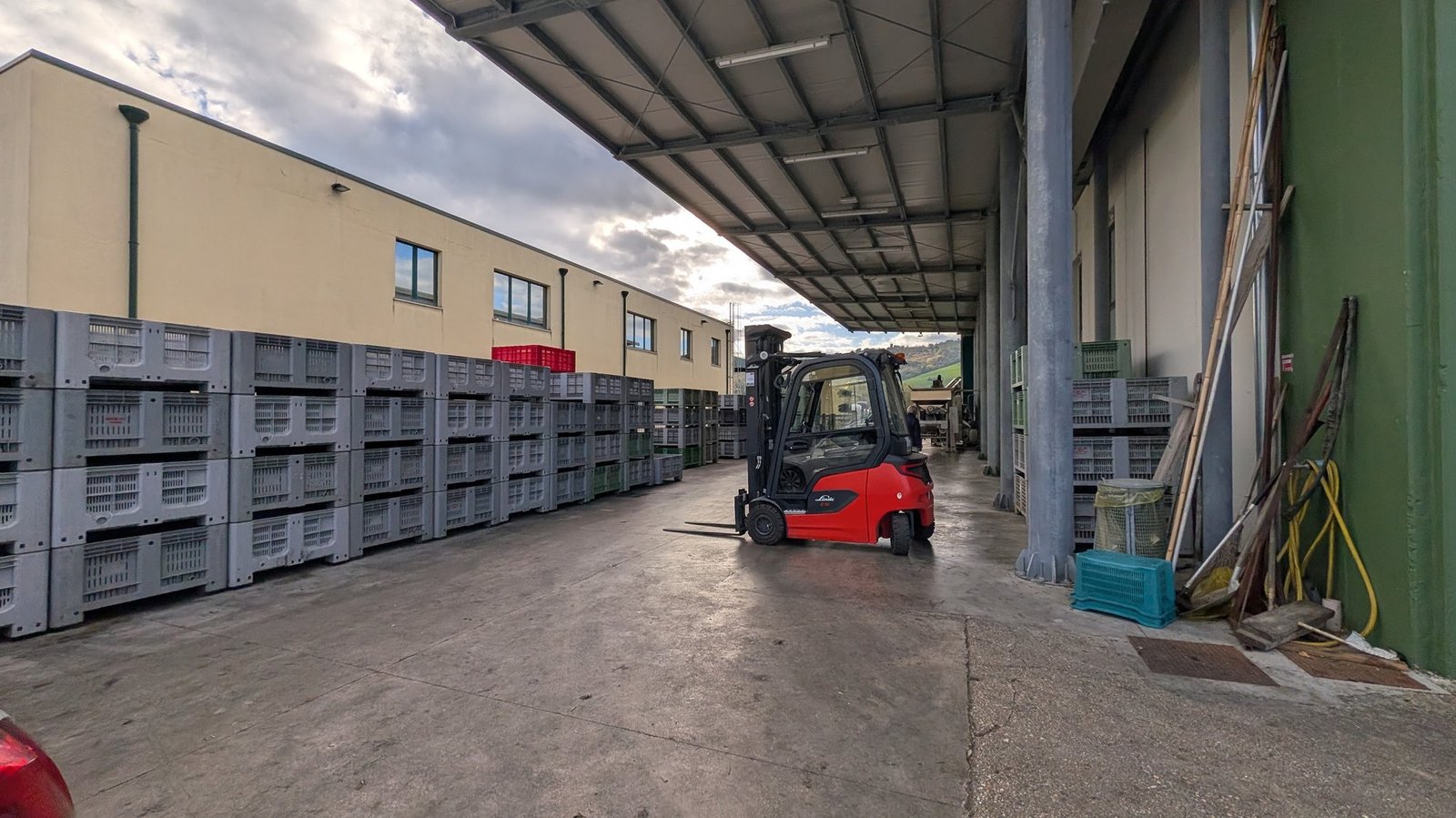
Marche olive varieties rarely leave this valley. By six-thirty on a clear October morning, the reason is already stacked in crates outside the Agostini mill in Petritoli.
The gravel lot holds a line of pickup trucks, each bed loaded three and four crates high. They are still wet with dew and smell faintly of crushed leaves. I park behind a farmer from a hamlet up the valley.
He nods, recognizes the rhythm of the wait, and goes back to his phone.
We are all here for the same reason: frangitura, the pressing. Every one of us has brought olives picked by hand over the past two or three days. That is still how it works in this part of the Marche.
My own crates sit in the back of the car.
These are olives from trees that are mine, grown on hillside ground not far from here. They were picked by hand, because the terrain does not allow for shaking machines or continuous harvesters.
My neighbors gather their own olives the same way, one by one, into nets. I am not a journalist visiting a picturesque mill for a story.
I am a customer in line like everyone else, waiting my turn to watch my fruit disappear into the hopper. Less than an hour later, it comes back out as oil, still warm from the press.
The frantoio in Petritoli sits in Contrada Paganelli, in the Valle dell’Aso. This is the river valley that runs between the Sibillini Mountains and the Adriatic coast. Fog still sits low over the vineyards across the valley.
A forklift beeps somewhere behind the building, moving another pallet of steel drums. Nobody rushes.
Olive milling in the Marche has never been a fast business. The farmers standing around me mostly tend a few hundred trees behind their own houses. None of them show any sign of wanting to change that.
What Are Marche Olive Varieties, and Why Don’t They Leave Italy?
The olives heading into the press this morning are not Frantoio, Leccino, Koroneiki, or Picual. Those four cultivars dominate the extra virgin olive oil sold on American supermarket shelves. That holds whether the label says Italian, Greek, or Spanish. Most of what moves through a mill like Agostini is something else entirely.
The names are Ascolana Tenera, Raggia, Mignola, Coroncina, Piantone di Mogliano, and Orbetana.
These are regional Italian olive cultivars, native specifically to the Marche. Families grow them on small plots, not large estates.
They press them in volumes too small to interest any international distributor. They are not rare here.
They are simply the olives that have always grown on this ground. What keeps them invisible in the United States has nothing to do with quality. It comes down to scale, labor, and the economics of export.
A cultivar that yields modestly and ripens unevenly must be picked by hand, not shaken mechanically. It will never fill a shipping container. It does not matter how good the oil tastes in October.
Scale decides what crosses the ocean, not quality.
That gap between quality and availability also explains something else. The Marche rarely comes up in conversations about Italy’s olive oil culture.
This holds true even among readers who already buy real Italian oil in the US. Many of them know this region as the home of the Mediterranean diet.
The Working Trees of the Marche: Six Cultivars Worth Knowing
Ascolana Tenera: The Olive That Became Dinner Before It Became Oil
Most Americans who have eaten an Ascolana Tenera did not know it. It is the fat, pale-green olive at the center of olive all’ascolana.
That fried stuffed olive gives the city of Ascoli Piceno its best-known dish. Its name literally means “tender,” a reference to the flesh, not the oil.
As a table olive, it dominates. As an oil, Ascolana Tenera olive oil is rounder and gentler than most Italians expect.
There is a mild almond note and moderate bitterness. None of the throat-catching sharpness of southern oils, built around Coratina or Nocellara, shows up here. Agostini presses it as a single-variety oil, a monocultivar line. Nothing else goes into the blend, so the character stays true to the fruit.
Growing it for oil rather than the table takes discipline. The large, soft-fleshed fruit bruises easily and oxidizes fast once damaged. So it has to be picked by hand and milled quickly. That rules out exactly the kind of mechanical handling export logistics would require.
Raggia: The Quiet Backbone of a Blend
Raggia almost never appears on a bottle by itself. Instead, it works as the structural partner in blended lines. It adds body and a steady, grassy-fruity character, without pulling the oil toward bitterness or sweetness. Individual trees are productive, but Marche groves rarely plant Raggia at commercial density.
It tends to grow alongside Ascolana Tenera and Frantoio on the same hillside, rather than filling orchards of its own.
A variety that only makes sense in combination with others has no natural path to a single-origin export deal. It is grown at modest scale across scattered family plots.
Mignola: Small Fruit, Green Edge
The name points at the fruit itself, small even by Marche standards. The oil follows suit: lighter in body, with a greener, more vegetal edge. It leans closer to fresh-cut grass and artichoke than to ripe fruit.
Mignola trees tend to be scattered through older, mixed-variety groves rather than planted deliberately.
As a result, the volume a mill receives from this cultivar shifts considerably from one harvest to the next. No importer builds a supply contract around a variety like this. It might deliver half as much oil this year as it did the last.
Coroncina: The Peppery Outlier
Among local millers, Coroncina has a reputation that outruns its production numbers. Some of the oldest trees in the valley are this variety.
The oil they produce tends to be the most aggressively bitter and peppery of anything that comes through the mill. It is the kind that catches in the back of the throat on the first sip. Millers describe it as phenol-rich, based on taste alone.
A rigorous, published phenolic dataset specific to Marche-grown Coroncina is hard to find. What exists is mostly sensory consensus among people who press it every year, not laboratory confirmation.
That gap in the record is itself telling. A cultivar this distinctive has still never been studied closely enough in this region. The science has not caught up with what every local palate already knows.
Piantone di Mogliano: Named for a Single Town
This cultivar carries the name of Mogliano, a hill town in the province of Macerata. It stays almost entirely within a radius of a few valleys around it. It adds weight and a moderate, lingering bitterness to blended oils, rather than appearing on its own. The families who grow it measure their harvest in crates, not tons.
A variety this tied to a single place was never going to end up on a cargo manifest. It is grown by households, not companies.
Orbetana: The One Nobody Exports, Because Nobody Can
Orbetana is the quietest name on this list. It grows in enough groves to matter to a blend, yet it is documented almost nowhere for a general reader. It disappears into multi-cultivar lines like Classico, adding its share to a character no single variety could produce alone. The biodiversity on these hillsides is unusual even by Italian standards. Six distinct cultivars grow within a few miles of one another.
That diversity is also exactly what makes this olive oil from the Marche region of Italy commercially invisible abroad. Fine-grained variety like this resists the uniformity export markets expect from a bottled product.
Inside the Mill: What an Engineer Sees That a Tourist Doesn’t
A visit focused on what actually happens inside a frantoio during harvest covers the process in general terms.
What follows here is narrower. It is the specific set of choices at this mill. Those choices decide whether these cultivars keep the polyphenols that make them worth seeking out at all.
Two Phases, No Shortcuts
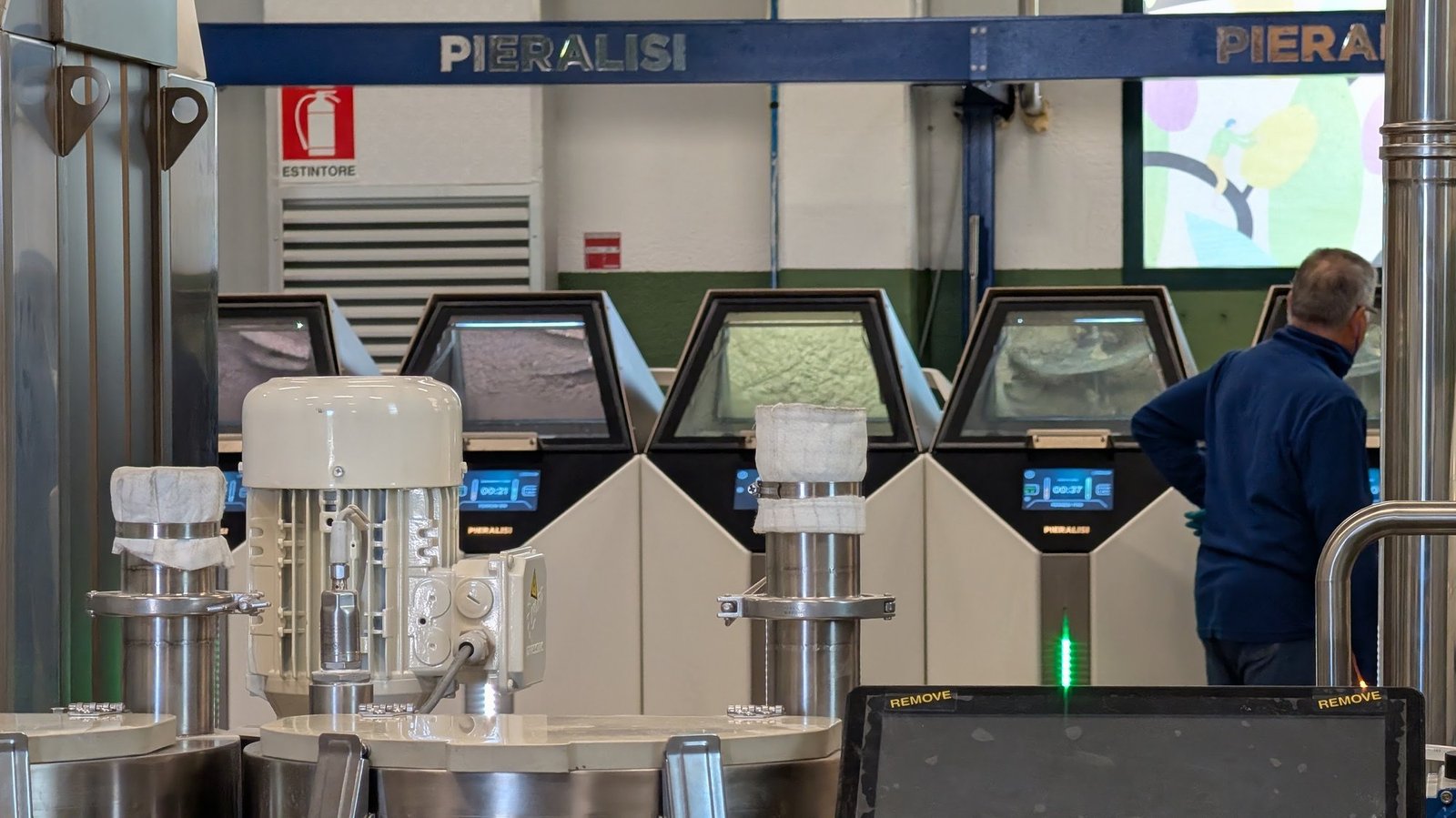
Agostini runs a continuous-cycle, two-phase extraction system. The practical difference from an older three-phase decanter comes down to water.
A two-phase system separates oil from olive paste using centrifugal force alone. It skips the large volume of water a three-phase machine adds to help the separation along. Less added water means less dilution of the water-soluble polyphenols that give good olive oil its structure. It also means less wastewater leaving the mill at the end of the day. For a visitor, it looks like a steel cylinder humming in the back room.
For an engineer, it is the one piece of equipment that decides most of what ends up in the bottle.
The Six-Hour Rule
Olives start oxidizing the moment they are bruised. That can happen by a hand picking them off the branch, or by a machine knocking them off a net.
Agostini mills within roughly six hours of harvest, a window that matters more than almost anything else in the process. Every hour an olive sits in a crate before pressing gives enzymes more time to work.
They break down the phenolic compounds that flavor the oil and protect it. That is also why olives destined for mass-market blends start from a structural disadvantage. They are often trucked long distances and stored for days, and no amount of marketing can fix that later.
Cold, On Purpose
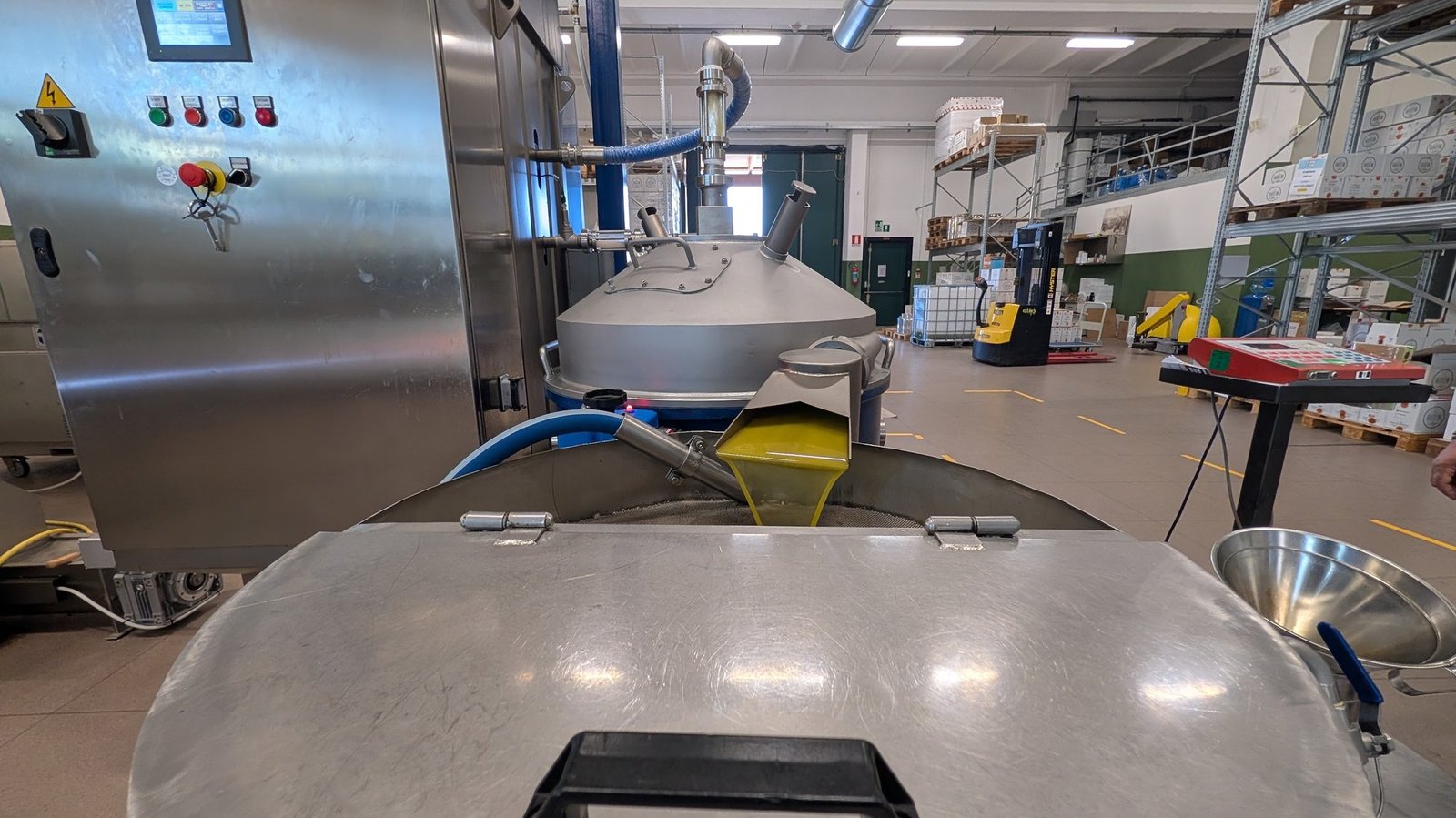
“Cold extraction,” the phrase on half the bottles in an Italian supermarket, has a legal meaning. The paste must stay under roughly 27°C through malaxation and pressing for the oil to use the term. Gramolatura is the slow churning that lets microscopic oil droplets coalesce into a continuous stream the press can separate.
This is where temperature discipline matters most. Push the paste a few degrees warmer, for a few minutes longer, and the yield improves. But the aromatic compounds that make fresh oil smell like cut grass and green tomato start burning off. So do some of the same phenols responsible for the oil’s bitterness and resistance to rancidity.
What the PNRR Paid For
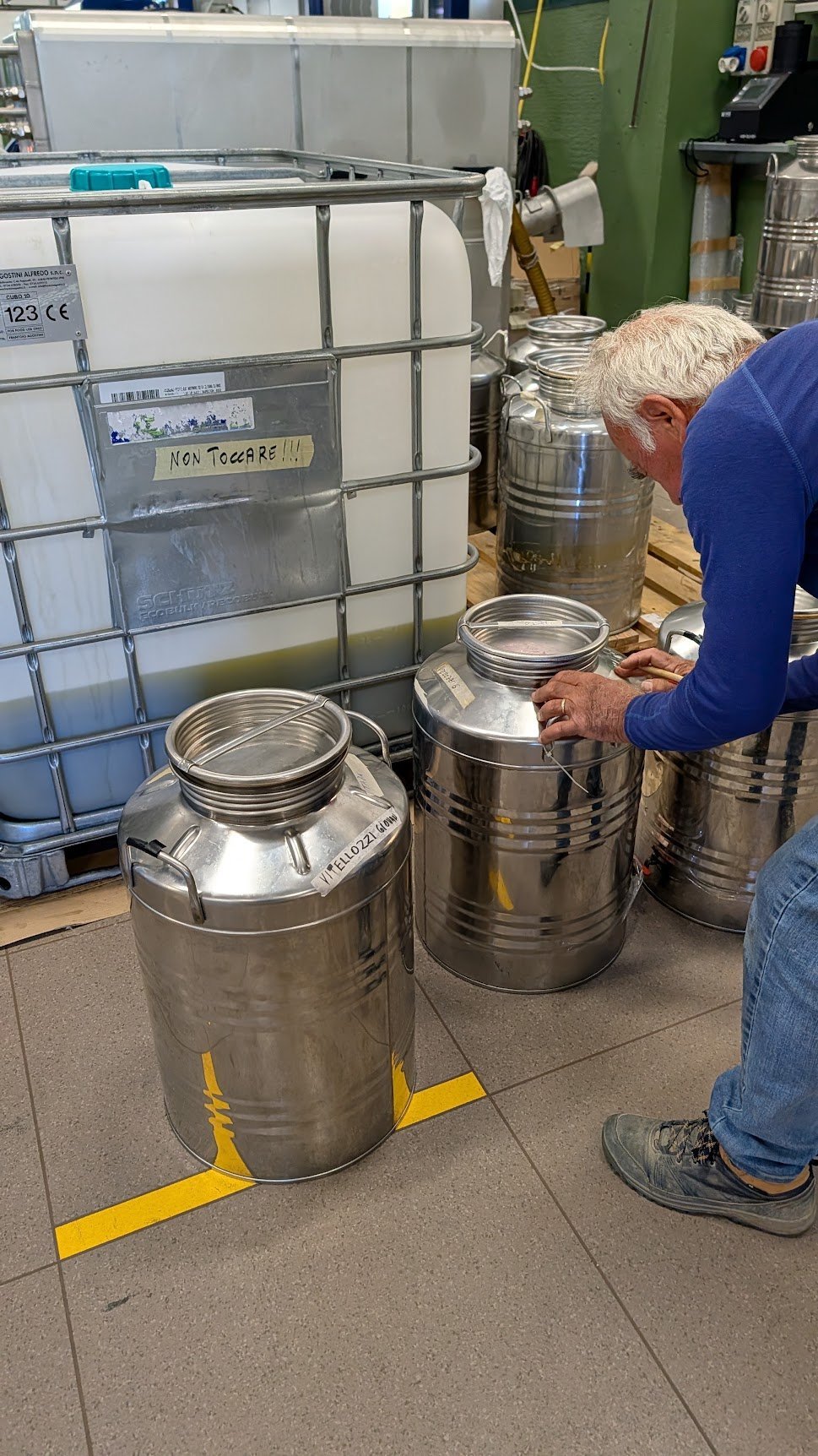
The storage room holds rows of stainless steel tanks.
Each one is saturated with inert gas above the oil line, to keep oxygen away from the surface. Some of this equipment was modernized through Italy’s national recovery plan, the PNRR.
The funding came under Mission 2, Component 1, Investment 2.3, the sub-measure earmarked for upgrading olive mills nationwide.
Oxygen is olive oil’s slowest, most patient enemy.
It does not spoil the oil overnight, but it erodes polyphenol content and flavor month by month. That is precisely why the tanks matter as much as the press itself.
The Paradox: Italy’s Best Miller of 2026 Is Marchigiano, and You Still Can’t Buy His Oil
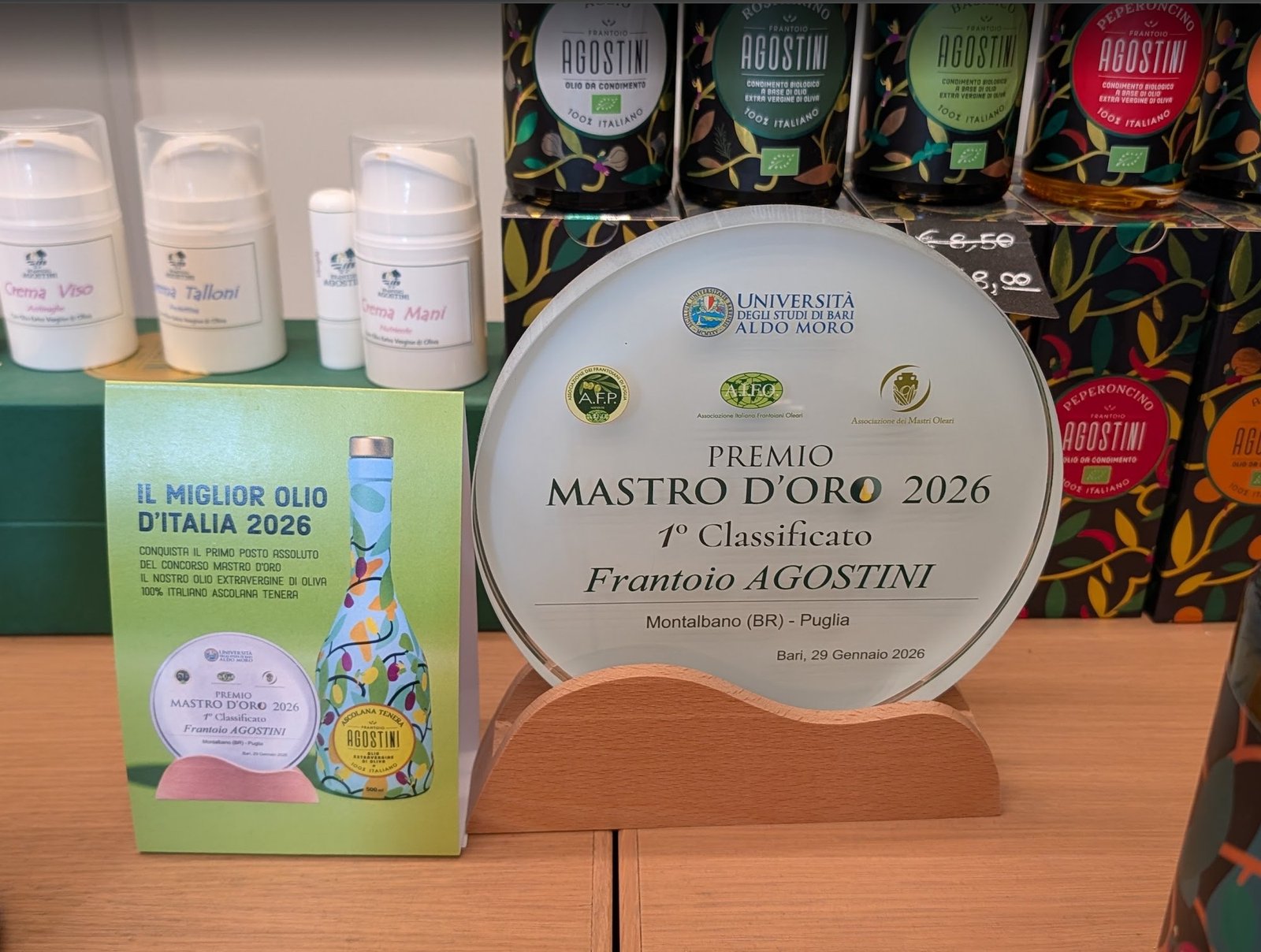
In January 2026, Gaetano Agostini’s organic, single-variety Ascolana Tenera took first place overall at Mastro d’Oro.
The competition is now in its eighth edition, promoted by AIFO and AFP. It is worth being precise about what that means.
Mastro d’Oro is Italy’s only national competition that judges the miller, not the bottled oil. That makes it closer to a craft award than a product review.
The ceremony took place on January 29, 2026, at the Fiera del Levante in Bari, during Evolio Expo. That detail says nothing about where the oil came from. The trophy simply traveled south to collect the title.
Then it came back to Petritoli, in the Marche, where every drop of it was actually made.
That win sits alongside a longer record. Agostini’s oils have placed at the NYIOOC World Olive Oil Competition every year since 2016.
That streak includes Gold medals for the Ascolana Tenera in both 2024 and 2025. They also carry Gambero Rosso’s Tre Foglie recognition.
The same mill won L’Oro delle Marche in 2022 for a blend, and again in 2024 for a monovarietal. None of these medals certify the producer as a whole. Each one certifies a single sample, tasted on a single day.
That is worth remembering before treating any award as a permanent guarantee. It is a longer conversation, and I take it up in my guide to the award-winning Italian olive oils you can actually buy in the US.
What matters here is simpler. A mill like this keeps winning national and international competitions.
It sits in a region most American readers could not place on a map. It makes an entire category of single-variety Italian olive oil that almost none of them will ever taste.
Nothing it makes is built to reach a shelf in the United States.
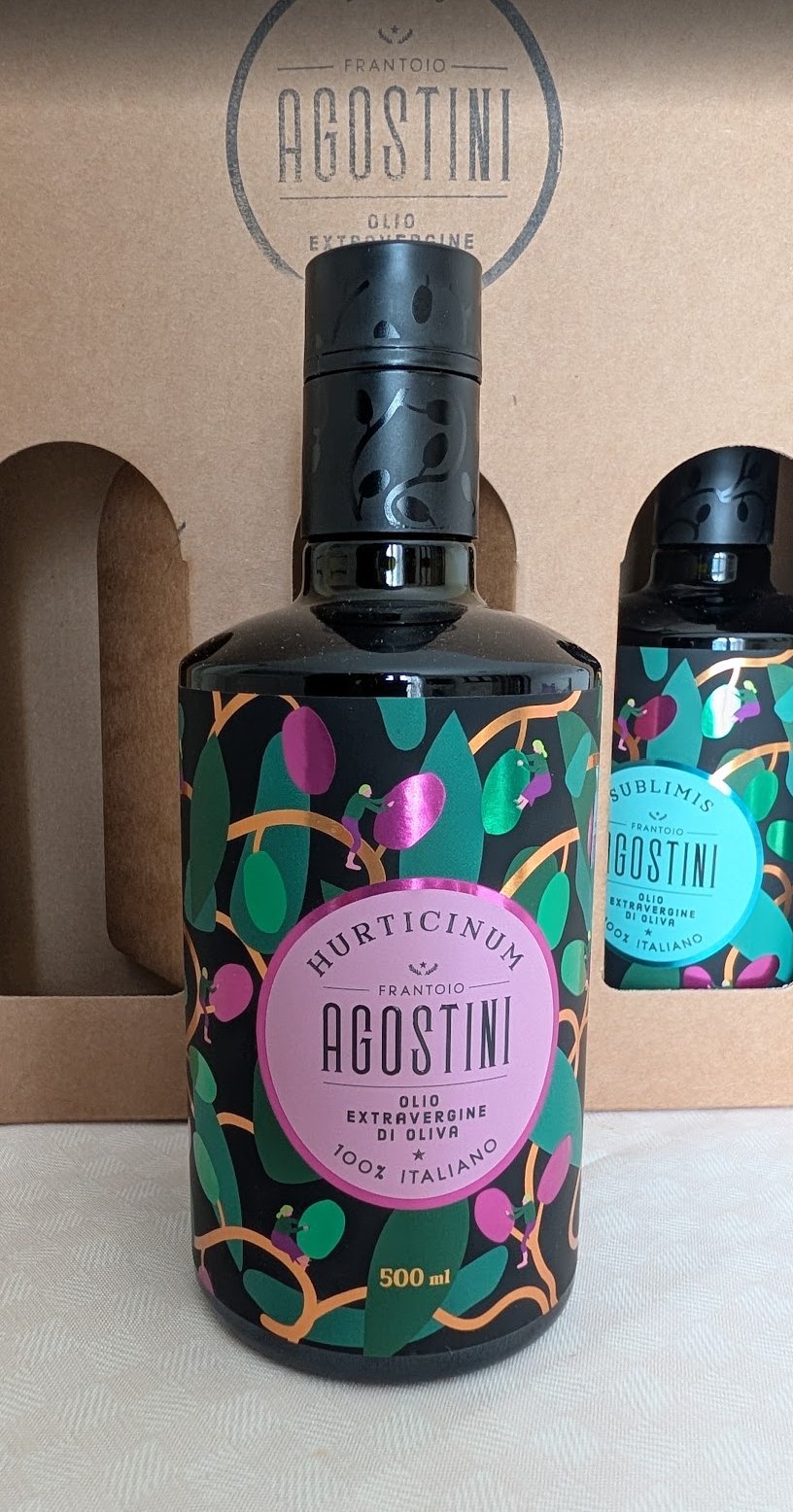
I paid for the milling that morning, like every other truck in that line. I bought my own bottles off the counter afterward, at the same price anyone else pays. I have no commercial arrangement with Agostini, now or at any point.
What to Ask For If You’re Standing in a Marche Mill Yourself
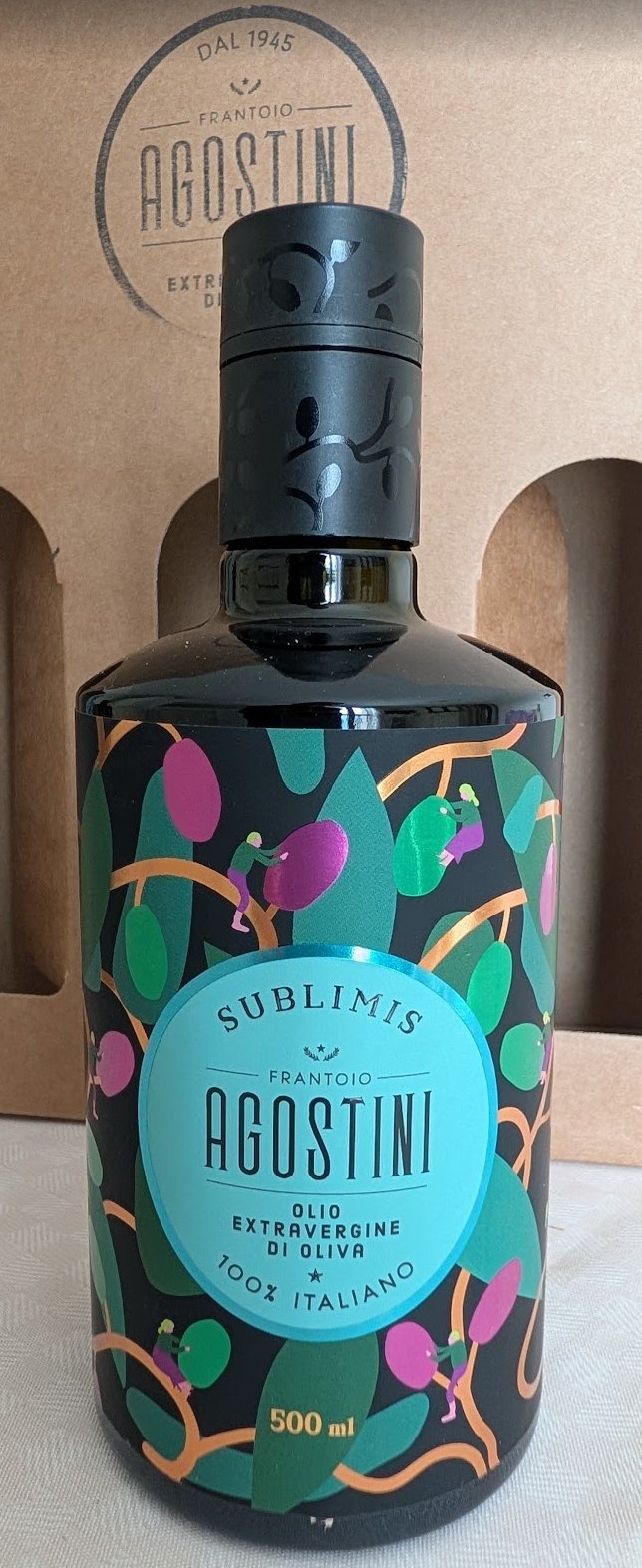
If you are in the Marche between October and December, a few questions separate a real purchase from a souvenir.
That is the harvest window, when mills like this one run at full tilt. Ask the miller which cultivar is in the bottle, and whether it is a single variety or a blend. Both are legitimate, but only one lets you taste a specific tree rather than a house style. Ask for the harvest date on the back label, not the expiration date on the front.
The harvest date tells you how recently the oil was pressed. That matters, because polyphenol content declines steadily from the moment of milling onward.
Regulation (EU) 432/2012 sets Europe’s strict antioxidant claim, requiring roughly 5 milligrams of hydroxytyrosol and derivatives per 20 grams of oil.
An oil that meets this threshold at the mill can fall short of it within a year.
A bottle sitting unopened since last winter is not spoiled. It is simply not the oil it was the day it was pressed.
Cultivar and harvest date are the two questions that matter most on the day. For the broader mechanics of buying directly at an Italian frantoio, a fuller guide covers the rest.
When the oil bites back, with a peppery catch in the throat, do not read it as a flaw.
That bitterness may simply surprise a palate used to supermarket blends.
That sensation is a sensory marker of the same phenolic compounds the EU claim is built around.
Mild, flat-tasting oils simply do not have enough of them to notice.
Sweetness is not the standard to chase in olive oil. Bitterness and pungency, within reason, are the ones worth trusting.
If You Can’t Get to the Marche: Buying Olio Novello in the United States
Olio novello is the closest thing to what came out of the press that morning.
It is oil from the harvest just finished, bottled within weeks, often unfiltered and still cloudy. It reaches
American shelves for a few weeks each winter, and then it is gone. The window runs roughly from late November into January.
So I checked what is actually available this year. Olive Oil Lovers carries the widest novello range in the United States.
This season’s Novello and Nuovo selection runs to eighteen bottles.
They come from Italy, Spain, Greece, Portugal, and California. Not one of them is from the Marche. Not one of them is any of the Marche olive varieties described above.
That absence is the argument of this entire article, laid out on a retail page.
What you can buy is still worth the money.
In Umbria, Viola presses a Nuovo with a green, grassy edge. It comes closest to the Marche olive varieties I have been describing.
Marina Palusci in Abruzzo and Pruneti in Tuscany both bottle a novello with real pepper behind it. Prices run from roughly 42 to 55 dollars. Most of the list ships as a preorder from late November onward.
Buy it the week it lands, and drink it fast. Novello is not built to wait.
Disclosure: the links in this section are affiliate links. This blog earns a small commission if you buy through them. Your price does not change. I have no relationship with the producers named here, and none with Frantoio Agostini.
Frequently Asked Questions About Marche Olive Varieties
What are the main Marche olive varieties? The most significant are Ascolana Tenera, Raggia, Mignola, Coroncina, Piantone di Mogliano, and Orbetana. All are native Italian olive cultivars from the Marche region of central Italy. All are distinct from the Frantoio, Leccino, Koroneiki, and Picual varieties common on US store shelves.
Why can’t I buy Marche olive oil in the United States? Most Marche cultivars are low-yielding, hand-harvested, and produced in volumes too small for export contracts. The oil is sold locally, often directly from the mill. It rarely enters the channels that bring other Italian olive oil to American shelves.
What does “cold extraction” actually mean? It means keeping the olive paste under roughly 27°C throughout malaxation and pressing. Lower temperatures preserve aromatic compounds and polyphenols that heat would otherwise degrade, at some cost to overall yield.
Why does fresh Italian olive oil sometimes taste bitter or spicy? Bitterness and a peppery catch in the throat are sensory markers of phenolic compounds. These are the same antioxidants referenced in the EU’s regulated polyphenol health claim. A mild, flat-tasting oil typically has fewer of them, not more refinement.
How can I find genuine single-variety olive oil while traveling in Italy? Visit a working mill during harvest season, from October through December. Ask directly which cultivar is in the bottle, and when it was pressed. Buying straight from the mill gives a far clearer answer than any label alone.
Does winning a competition medal guarantee an oil’s quality? No. A medal certifies one sample, tasted on one day, not a producer’s entire output or every future harvest. It is a meaningful signal, not a permanent guarantee.