Italy in July: The Brutally Honest Guide from Someone Who Lives Here
Italy in July begins, for me, with the stone. By eleven in the morning, the paving of an Italian piazza has already stopped being a surface you walk on and become something that radiates heat back at you, like the inside of a bread oven an hour after the loaves come out. I have crossed the main square of my own town in the Marche at that hour and felt the warmth pressing up through the soles of my shoes. Any honest account of the month has to begin here, with the heat, before it gets to the festivals and the long golden evenings. The country is at its loudest, its most expensive, and its most crowded. It is also, on the right terms, magnificent. The trick is knowing which trade-offs you are actually signing up for.
Italy in July is peak summer: hot, busy, and pricey, with daytime highs of 88 to 92°F (31 to 33°C) in central cities like Rome and Florence and over 95°F (35°C) inland during heat waves, alongside record visitor numbers and the highest accommodation rates of the year. It rewards travelers who plan their days around the heat, book major sites and trains weeks ahead, and lean toward the coast, the lakes, or the mountains in the afternoons. It punishes anyone expecting a quiet, spontaneous trip. By the final week of July, many Italians have already started leaving for their August holidays, so some family-run businesses begin to close.
The short answer: what July in Italy is really like
If you only read one section, read this. July is the deep end of the Italian summer. The weather is reliably hot and dry, the daylight stretches past nine in the evening, and the whole country tilts outdoors. That same heat and energy come bundled with the largest crowds and the steepest prices you will see all year.
Here is the honest ledger:
- Heat: intense and sustained, especially midday in inland cities. The sun does real work on you between noon and 5 p.m.
- Crowds: at or near their annual peak, concentrated in a handful of famous places.
- Prices: the highest of the year for hotels, flights, and rentals.
- Atmosphere: open-air opera, village festivals, beaches alive until midnight, the best evenings of the calendar.
- A catch most guides skip: the last week or so of July is the runway into the August shutdown, when locals begin to scatter and some shops post the chiuso per ferie sign (“closed for the holidays”).
July is worth it if you arrive prepared. It is a poor month for anyone hoping to wander an empty Italy.
The heat is not a detail. It is the trip.
Travelers tend to file Italian summer heat under “warm weather” and pack accordingly. That underestimates it. In July, Rome and Florence sit around 88 to 90°F (31 to 32°C) on an ordinary day, and Florence is reliably the hottest of the major art cities thanks to its basin setting. During the heat waves that now arrive most summers, inland readings push past 95°F (35°C), and the south goes further still. In July 2025, a pharmacy thermometer in Catania, Sicily, recorded 43.9°C (111°F), and forecasters warned of values near 45°C (113°F), with Palermo placed under a red heat alert that advised even healthy people to stay indoors during peak hours. The midday ultraviolet index in an Italian July routinely hits 11, which sits in the “extreme” band.
As an engineer, I cannot help reading a historic city center as a thermal system, and it is not built for your comfort in July. Stone, brick, and paving absorb sun all day and release it well into the night, so a narrow medieval lane can stay several degrees warmer than the open countryside after dark. This is why the Colosseum, the Roman Forum, and an open archaeological site like Pompeii feel so punishing at two in the afternoon: there is no shade, and every surface is throwing heat back at you.
The practical consequence is simple. You cannot move through a July day the way you would in May. Italians do not fight the heat; they schedule around it. Serious activity happens before 11 a.m. and after 6 p.m., with the hottest hours surrendered to lunch, shade, and the old habit of a midday pausa (the afternoon slowdown that empties smaller towns between roughly 1 and 4 p.m.). Build your trip on that rhythm and July is livable. Ignore it and you will spend your vacation overheated and irritable in a queue.
The crowds, the prices, and the math nobody tells you
July is also when the rest of the world shows up. Italy projected roughly 27 million international arrivals between June and September 2025, with foreign arrivals running about 4.6 percent ahead of the previous summer, according to figures from the country’s Ministry of Tourism. Americans are the second-largest group of those visitors, behind the British. The crowding is not evenly spread, and that is the part worth understanding. Venice has seen up to 85,000 day-trippers on a single busy day against a historic-center population now under 50,000. The Visit Italy tourism observatory reported that 64 percent of visitors experienced overtourism at their chosen destination in summer 2025, and noted that around 99 percent of the country’s territory barely figures in trip planning at all. The pressure is real, but it lives in a very small fraction of Italy.
The bill matches the demand. Nightly hotel rates in Rome and Florence now run well above their pre-pandemic levels, and a layer of tourist taxes sits on top: roughly 3 to 7 euros per night in Rome, 1 to 5 in Florence, with a national proposal floated to charge up to 25 euros a night on the most expensive rooms. Venice has added a day-tripper access fee of 5 to 10 euros, reconfirmed for 2026. Timed-entry tickets for the Colosseum, the Uffizi, and the Vatican Museums sell out weeks ahead in high season; in July, “we’ll buy tickets when we get there” is not a plan.
One currency note worth saying plainly to American readers: the euro has been strong against the dollar, which quietly raises the real cost of everything once you land. In mid-2025, some Italian operators reported softer American demand precisely because the weaker dollar made the trip more expensive. None of this should scare you off. It should simply correct the fantasy that July is a casual month. It is the opposite. It is the month that most rewards the people who did their homework.
The quiet exodus: why late July already feels like August
Here is the thing almost no English-language guide explains, because you have to live here to notice it. The Italian calendar bends toward one date, Ferragosto, the national holiday on August 15 that traces back to the feriae Augusti established by the Emperor Augustus in 18 BCE. Around it, the country takes its great collective breath: under Italian labor law full-time workers are guaranteed at least four weeks of paid vacation, and a large share of them spend two or more of those weeks in late summer, often during a scheduled company shutdown.
That exodus does not switch on at midnight on August 1. It builds through the last week of July. You start to see the handwritten chiuso per ferie signs appear on the door of the neighborhood bakery, the trusted trattoria, the dentist, the hardware store. The big tourist machines in Rome, Florence, and Venice keep running for visitors, but step into a residential neighborhood or a small town and you meet a different, half-shuttered Italy. I think of it as two countries occupying the same map: the one staged for tourists, which stays open and lit, and the working one, which is starting to lock up and head for the coast.
For a July traveler, this cuts two ways. The downside is that if you build your trip around a specific small osteria you read about, you should email and confirm it is open, not assume. The upside is that an emptier residential city in the back half of July, the locals gone and only international visitors left, can be unexpectedly calm. The famous sites are as busy as ever, but the lived-in streets between them quiet down.
If you are going anyway: a local’s playbook for surviving July
You have your dates, the flights are booked, and July it is. Good. Here is how I would coach a friend through it.
Plan your day like an Italian
Treat the morning as your real sightseeing window. Be at the gate of the major site when it opens, do the hot, exposed things first, and be done with the heavy walking by lunch. Surrender the early afternoon: eat slowly, find a museum with serious air conditioning, or simply rest the way the country does during its pausa. Come back out around six, when the light turns and the passeggiata (the evening stroll that fills every Italian town center at dusk) begins. The best hours of an Italian July are between 7 p.m. and midnight, and they are wasted if you have burned yourself out by 3.
Go where the heat breaks
The smartest July itineraries spend their afternoons where the temperature is survivable. The Dolomites and the Apennines stay markedly cooler and turn into prime hiking country in summer; in my own region, the Sibillini range offers high meadows and trails while the cities below bake. The northern lakes, Garda and Como above all, moderate the air around them. And the sea is the obvious answer Italians choose by instinct, whether on a managed beach with rented umbrellas (a stabilimento balneare) or a free public stretch. If you want the Adriatic side with fewer foreign tourists, the coast of the Marche and its Riviera del Conero is a calmer alternative to the saturated Tyrrhenian resorts.
Book the things that sell out
In July, advance booking is not optional for the headline experiences. Lock in timed-entry tickets to the Colosseum, the Uffizi, and the Vatican Museums when you book your flights. Reserve high-speed trains on popular city-to-city routes early, because peak-season seats and reasonable fares disappear. Make dinner reservations a day or two ahead in tourist centers, and confirm directly with any small place you have your heart set on.
Use July for what it is actually good at
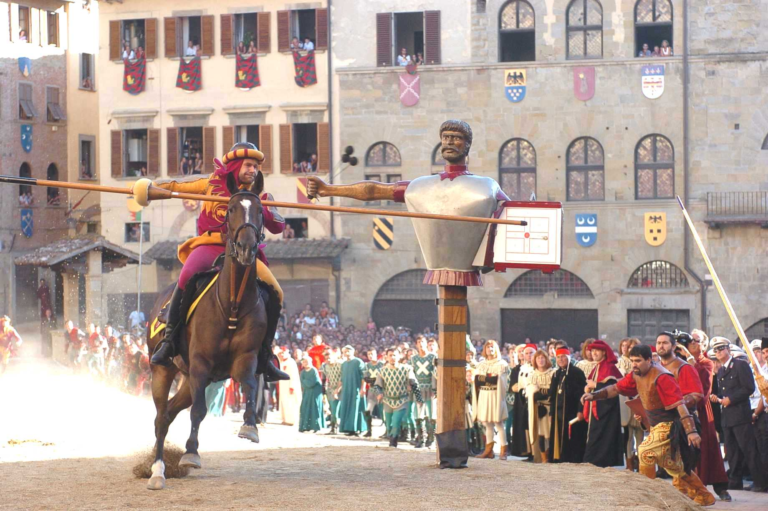
July is genuinely the best month for one thing: outdoor cultural life. The Palio di Siena, the bareback horse race around the Piazza del Campo, runs its first edition on July 2. Umbria Jazz fills Perugia in the middle of the month. Open-air opera season is at full volume, from the Arena di Verona to the Sferisterio in Macerata, near where I live, where July evenings carry voices out over a nineteenth-century arena under the stars. And every region runs its summer sagra (a village food festival built around one local specialty), where you eat better, and far cheaper, than in any tourist restaurant. These are the experiences July does that no other month can.
The case for waiting: September, October, November
I will be honest about my own bias. If a traveler has flexibility and asks me when to come, I rarely say July. I say September, or even October. The weather stays warm and swimmable on the coast well into September, the light softens, the crowds thin sharply once European schools restart, and prices come down from their summer ceiling. October brings the truffle and olive-oil season and the grape harvest. The shoulder months give you most of what July promises without the heat tax and the crowd tax.
This is not a small preference; it is the strategic heart of how I think about Italy. The shoulder season is when the country is most itself. I have written separately about (forthcoming) what September and October actually feel like on the ground, and that cluster is where I would point anyone who can choose their dates freely. July is for people who are locked into school calendars or simply love high summer with their eyes open. There is no shame in either, as long as you know which one you are.
Where I would actually send you in July
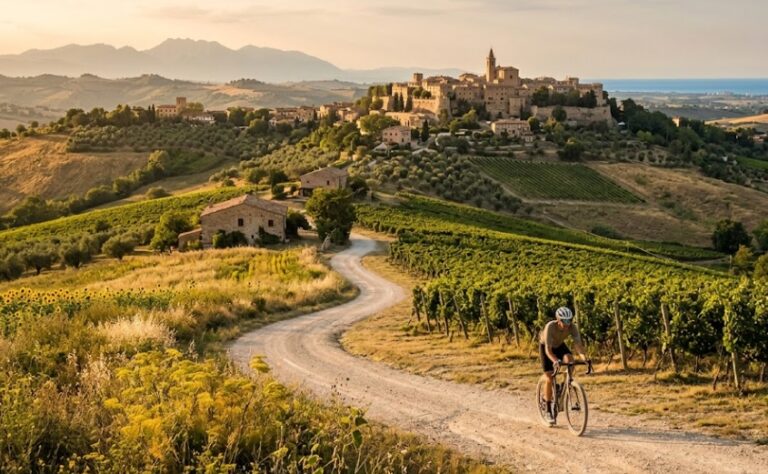
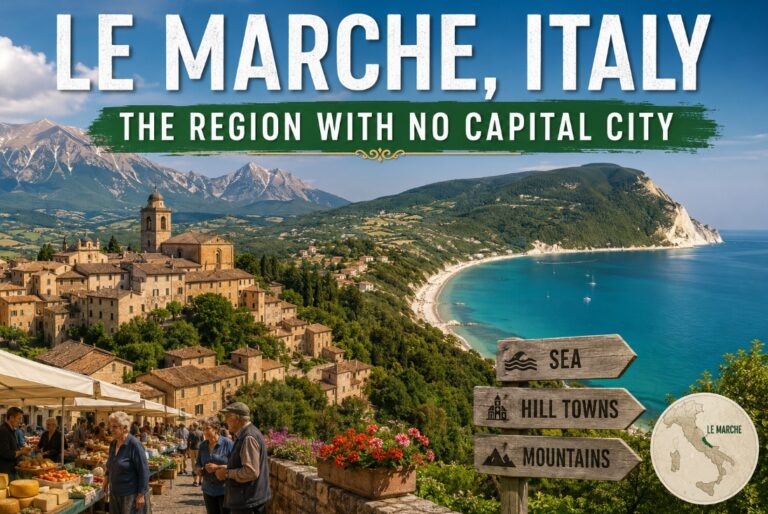
If you are coming in July and want to escape both the worst heat and the worst crowds, my answer is the part of Italy I know from the inside: the center, and the Marche in particular. In 2025, with the famous hubs straining and some operators reporting softer demand, travel observers began describing the Marche as “the new Tuscany,” offering Renaissance towns and rolling hills with fewer crowds and lower prices. That is not regional pride talking; it is the arithmetic of the 99 percent of Italy that crowds ignore.
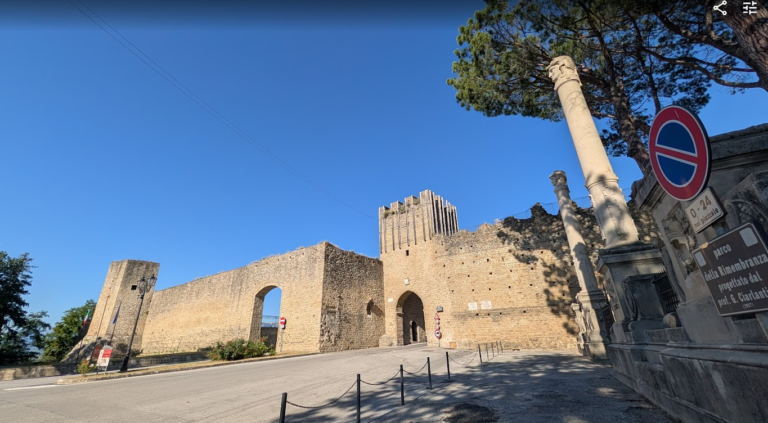
A July week here might mean mornings in a walled hill town like Cingoli, nicknamed the balcony of the Marche for its long views; afternoons on the Adriatic beaches or in the cool of the Sibillini; and dinners built around the regional food that gave this area its place in the Mediterranean diet. You trade a little fame for a great deal of breathing room. That is a trade I would make in July every time.
FAQ — Italy in July, answered
Is July a good time to visit Italy? July is a good time if you accept peak summer on its own terms: intense heat, the year’s largest crowds, and the highest prices, balanced by long evenings, open beaches, and the richest calendar of outdoor festivals. It is a poor choice for travelers seeking quiet or spontaneity. If your dates are flexible, September and October deliver similar warmth with fewer crowds.
How hot does Italy get in July? Central cities like Rome and Florence average daytime highs of 88 to 92°F (31 to 33°C), and inland heat waves push past 95°F (35°C). Southern Italy and the islands run hotter still; Sicily recorded nearly 44°C (111°F) in July 2025. The midday UV index regularly reaches 11, the “extreme” level, so midday sun is a real hazard, not a backdrop.
Is Italy crowded in July? Very, but unevenly. Italy expected around 27 million international arrivals over the summer of 2025, and the pressure concentrates in a few places: Venice, Florence, Rome, Cinque Terre, and the Amalfi Coast. The vast majority of the country stays comparatively empty, which is why central regions like the Marche offer a genuine escape during peak month.
Is everything closed in Italy in July? No. Major attractions, hotels, and tourist-zone restaurants stay fully open through July. The closures begin late in the month as Italians start their August holidays: small family-run shops and neighborhood restaurants post chiuso per ferie signs. Confirm directly with any specific small business you are counting on.
How far in advance should I book for a July trip? Book flights and hotels several months out for the best rates, and reserve timed-entry tickets for the Colosseum, the Uffizi, and the Vatican Museums weeks ahead, since they sell out in high season. Book high-speed trains on popular routes early, and make restaurant reservations a day or two ahead in tourist centers.
Where should I go in Italy in July to avoid the worst heat and crowds? Aim for higher or cooler ground in the afternoons: the Dolomites, the Apennines and Sibillini Mountains, and the northern lakes stay cooler, while the coasts offer sea breezes. For fewer foreign tourists overall, central Italy, especially the Marche and its Conero coast, gives you Renaissance towns and beaches without the saturation of the famous hubs.
What is the one thing July does better than any other month? Outdoor cultural life. July is the peak of open-air opera at venues like the Arena di Verona and the Sferisterio in Macerata, the month of the first Palio di Siena on July 2 and of Umbria Jazz in Perugia, and the height of local sagre, the village food festivals where you eat regional specialties cheaply and well. No other month matches its evening energy.
The takeaway
July in Italy is not the month to improvise, and it is not the month to escape other people. It is the month of heat you have to respect, crowds you have to route around, and prices you have to plan for, redeemed by evenings and festivals that genuinely have no equal. Come in July with a local’s rhythm, the right reservations, and a willingness to point yourself at the 99 percent of the country that the crowds forget, and you will have a fine trip. Or keep this guide, move your dates to September, and have an easier one. Either way, decide on purpose rather than by accident.
If you are planning an Italian summer and want honest, insider guidance on where to go and when, I offer one-on-one trip consultations from here in the Marche. You can find out how to reach me on the About page.
—