Frasassi Caves: The Underground Cathedral Most Italy Itineraries Skip
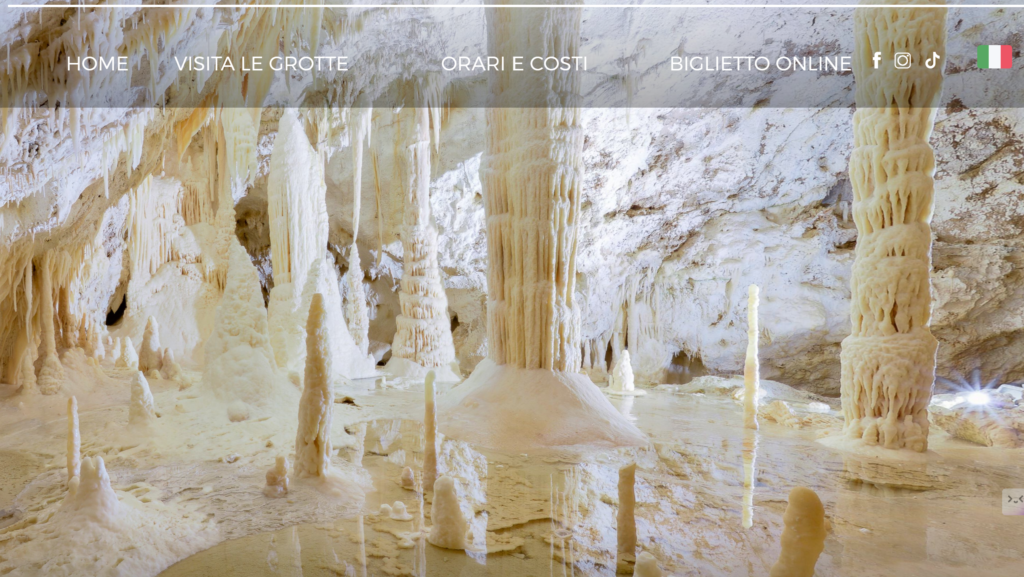
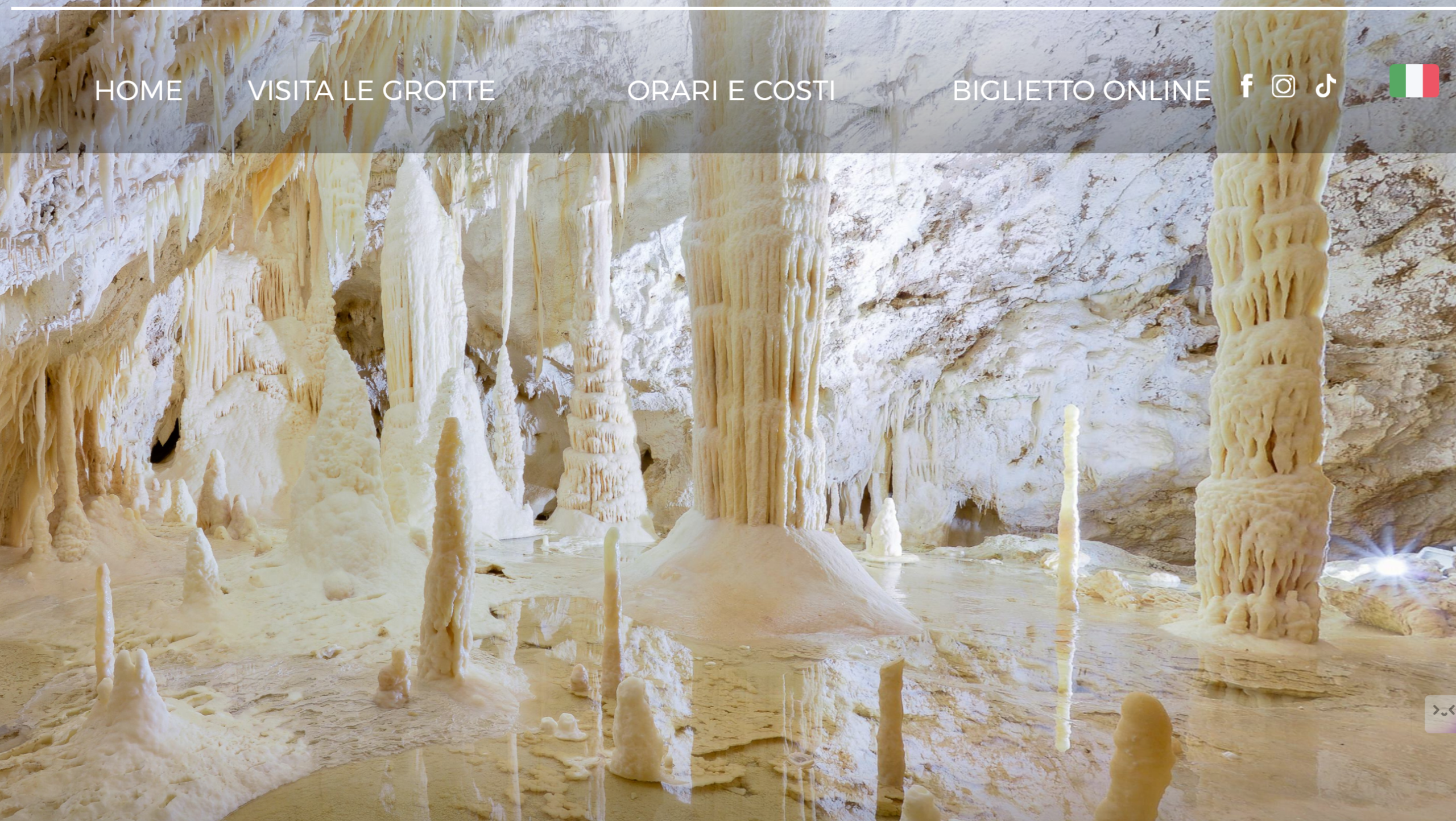
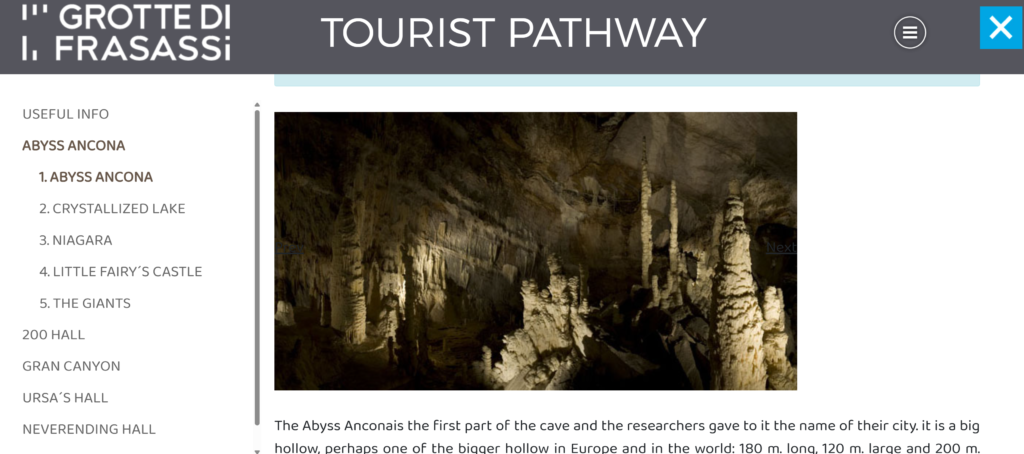
On September 25, 1971, a team of speleologists from the Gruppo Speleologico CAI of Pesaro lowered themselves through a narrow opening in the limestone cliff above the Sentino River gorge in the northern Marche. They were looking for a known cavity, a small chamber that local cavers had explored before. What they found instead, when their lights swept the darkness beyond the initial passage, was a void so large that they could not see the walls. Their lamps — the strongest they carried — disappeared into blackness before reaching the opposite side. The chamber they had entered measures 240 meters in length, 120 meters in width, and 200 meters in height. It is large enough to contain the Milan Cathedral with 30 meters of clearance above the roof.
They named it the Sala delle Candeline — the Room of Little Candles — for the small stalactite formations near the entrance. That name was later given to a different chamber; the great void became the Abisso Ancona, the Ancona Abyss, named in honor of the city that funded the initial surveys. It remains one of the largest cave chambers in Europe discovered in the modern era, and it was unknown to the world three days before those speleologists climbed down into it.
The Frasassi cave system opened to the public in 1974, three years after discovery. In the fifty years since, it has received more than 12 million visitors. It is the most visited cave system in Italy and among the ten most visited in Europe. And it appears in almost no American Italy itinerary I have ever seen.
I have lived forty minutes from Frasassi for most of my life. I have taken my children there, brought colleagues from other regions, and returned more times than I can easily count — partly because the cave repays repeated visits in a way that surface monuments rarely do, and partly because, as a civil engineer who has spent a career thinking about structures and loads and the behavior of materials under stress, I find the geology of this system one of the more intellectually stimulating things within driving distance of Macerata.
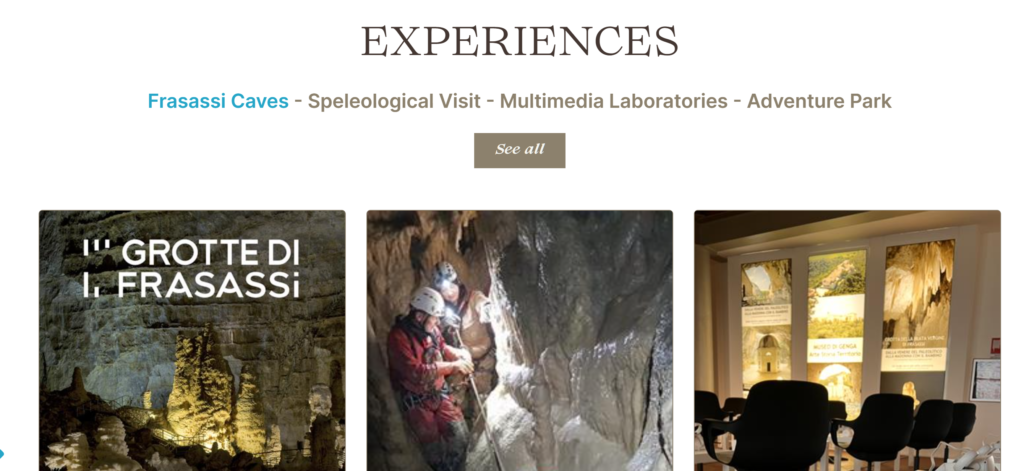
A note on links: some of the booking links in this article are affiliate links. If you book through them, I earn a small commission at no additional cost to you. The cave sells its own tickets at frasassi.com, usually for less, and I say below when that is the better option.
What the Frasassi System Is
The Gola di Frasassi — the Frasassi Gorge — is a river canyon cut by the Sentino, a tributary of the Esino, through the limestone massif of Monte Frasassi and Monte Valmontagnana in the Apennine foothills of the northern Marche. The gorge itself is striking before you descend underground: vertical limestone walls rising 150 meters above the river, a Romanesque hermitage — the Eremo di Santa Maria Infra Saxa — embedded directly in the cliff face, accessible by a stairway cut into the rock in the eleventh century and still intact.
The caves formed over a period of approximately five million years through a process of sulfuric acid speleogenesis — a mechanism distinct from the more common carbonic acid dissolution. Groundwater rising from depth, rich in hydrogen sulfide, dissolved the limestone from below, creating voids that were subsequently decorated by the carbonate formations — stalactites, stalagmites, columns, cave flowers, flowstone — that now fill the accessible chambers.
The total surveyed length of the system is approximately 30 kilometers of passages. The section open to the public covers about 1.5 kilometers through nine interconnected chambers. The temperature inside is a constant 13–14 degrees Celsius year-round, humidity approaches 100 percent, and the formations are still active: water still moves through the limestone above, depositing calcium carbonate at rates of approximately one cubic centimeter per century in the fastest-growing formations.
That last figure is worth pausing on. The largest stalagmite in the Abisso Ancona — the great chamber — stands approximately 20 meters tall and has a base diameter of several meters. At one cubic centimeter per century in a favorable location, the arithmetic is instructive. The Frasassi formations are not geological curiosities. They are a record of deep time made visible at walking pace.
The Engineer’s Reading of the Cave
I want to explain what makes Frasassi structurally remarkable in terms that go beyond the standard superlatives, because the cave is often described in ways that convey scale without conveying the reason scale matters here.
The Abisso Ancona — the great entrance chamber — is not simply large. It is large in a way that raises immediate structural questions. The limestone vault spanning 120 meters of width at heights up to 200 meters has been stable for millions of years under the gravitational load of the mountain above it. The rock mechanics that permit this are not trivial: the massif is a competent limestone formation, well-cemented, with fracture patterns that have distributed stress without catastrophic failure across geological time. The cave exists because the rock was strong enough to remain standing as the dissolving agent removed material from below.
For a visitor with no engineering background, the practical implication is this: you are standing in a naturally formed structure that would be considered a significant engineering achievement if a human being had built it. The largest single-span domes produced by human construction — the Pantheon in Rome at 43 meters, the Florence Cathedral at 44 meters, the Hagia Sophia at 31 meters — are a fraction of the Abisso Ancona’s span. The cave is not a curiosity adjacent to the real Italy of art and history. It is, by any structural measure, more impressive than most of what the standard Italy itinerary contains.
The speleothem formations — the stalactites and stalagmites — raise a different kind of structural observation. The largest column in the cave, the so-called Grande Colonna, stands approximately 20 meters from floor to ceiling where a stalactite and stalagmite have grown together over an estimated period of several hundred thousand years. The column’s geometry — its taper, the eccentricities in its profile reflecting variations in drip rate across millennia — is the kind of formation record that hydrogeologists read the way a dendrochronologist reads tree rings. Each change in color, diameter, and crystal structure is a proxy for conditions at the surface: wet centuries, dry centuries, changes in vegetation above the cave.
This is the reading I find most rewarding on repeated visits: not the formations as decoration, but the formations as document.
The Nine Chambers: What to Expect on the Tour
The standard guided tour covers approximately 1.5 kilometers through nine chambers over about 75 minutes. The route is a loop — you enter from one side and exit from another, which means the tour is not reversible and the pace is set by the group. This is worth knowing in advance if you prefer to stop and look.
Sala delle Candeline (Room of Little Candles): the entrance chamber, where the 1971 team first entered. Relatively modest in scale compared to what follows; named for delicate stalactite formations near the floor. The eye adjusts here to the cave’s darkness and the quality of the artificial lighting.
Abisso Ancona (Ancona Abyss): the great chamber, approximately the fourth stop on the tour route. Nothing in the earlier chambers prepares you adequately for the transition into this void. The guide will typically pause here and extinguish the lights for approximately thirty seconds — total cave darkness, which is different from darkness in any surface environment. There is no gradation, no adjustment possible, no ambient light from any source. Thirty seconds is long enough.
Sala delle Pale (Room of the Spades): named for the shovel-shaped stalactite formations on the ceiling. One of the chambers most commonly used to demonstrate the difference between stalactites (growing down from the ceiling, shaped by dripping water) and stalagmites (growing up from the floor, formed by the splash of the same drops). The simplest mnemonic is the English one: stalactite with a t for top, stalagmite with an m for mud — it works in Italian too, where the words are the same.
Sala delle Croci (Room of the Crosses): a chamber where the fracture patterns in the limestone ceiling are visible as intersecting joint systems — the natural geometry that controlled how the dissolution process carved the rock. An engineer or geologist will find this particularly legible. To the general visitor it reads as a complex ceiling texture.
Sala Bianca (White Room) and adjacent chambers: the most heavily decorated section of the tour, where the density of active formations — still-growing stalactites with water droplets visible at their tips, flowstone sheets covering entire walls, cave coral (mondmilch) on some surfaces — is highest. These rooms are also where the temperature differential between the cave air and the visitor’s body becomes most perceptible; a light jacket is appropriate even in August.
The final sections move through progressively smaller passages before the exit route, which involves a modest climb and an outdoor section through the gorge back to the visitor facilities.
The Gorge Above the Cave
The experience of Frasassi should not begin and end underground. The Gola di Frasassi — the gorge — is one of the more dramatic pieces of Apennine landscape in the central Marche, and it is almost entirely ignored in the coverage that does reach American travelers.
The Eremo di Santa Maria Infra Saxa deserves its own paragraph. This Romanesque hermitage, whose name translates roughly as “Saint Mary Between the Rocks,” is built into a natural cavity in the limestone cliff approximately 80 meters above the valley floor. The structure visible today is largely eleventh-century, though the cavity had been used as a religious site from at least the ninth century, and traces of earlier occupation exist. The hermitage is accessible by the stone stairway cut into the cliff; the view from the terrace outside the chapel, across the gorge to the opposite limestone wall and down the river corridor toward the plain, is the kind of view that Italian hill-country architecture was specifically designed to inhabit. It takes perhaps thirty minutes to climb to, visit, and descend. It has no ticket, no queue, and no gift shop.
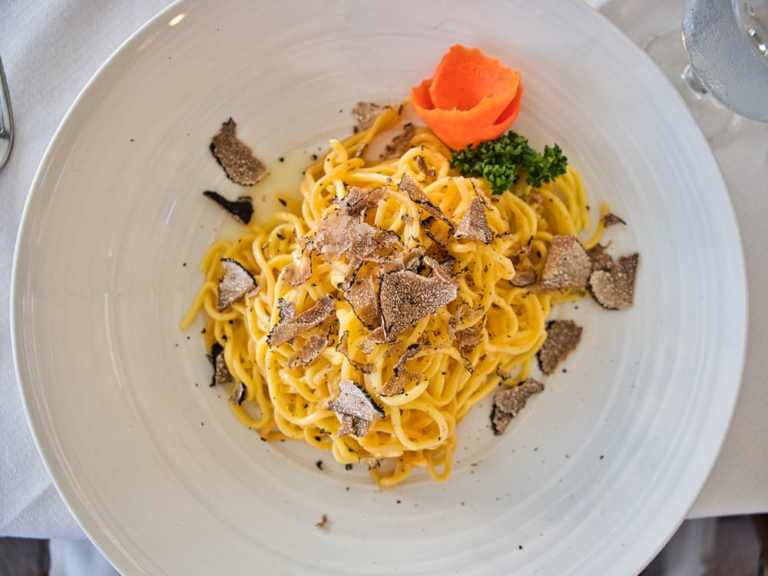
The road through the gorge — the SS76 following the Sentino — is one of the better short drives in the Marche: the river has carved the valley narrow enough that the road and the watercourse share the same corridor, the limestone walls rise on both sides, and in autumn the mixed woodland on the upper slopes turns through yellow, orange, and copper in a sequence that begins in mid-October and holds through early November. This is the same period as truffle season at Acqualagna, 30 kilometers to the north. The combination of a morning in the gorge, a cave tour, and a lunch in a trattoria in Genga or Arcevia before an afternoon at the Acqualagna market is a day that uses October in the Marche correctly.
Frasassi and the Surrounding Territory
The cave sits at the confluence of several other worthwhile sites in the northern Marche that are rarely treated as a coherent itinerary. Within 50 kilometers:
Fabriano (30 km southwest): historically one of the most important centers of papermaking in medieval Europe — the Fabriano technique of watermarking, developed here in the thirteenth century, is the direct ancestor of the security watermarks used in modern banknotes. The Museo della Carta e della Filigrana is a working paper museum housed in a fourteenth-century convent with equipment still in operation.
Sassoferrato (20 km south): the town where the seventeenth-century painter Giovanni Battista Salvi was born. Salvi, known universally by his town’s name, produced Madonnas of such precise, jewel-like color that they were widely mistaken for earlier Renaissance work and appear in collections from the National Gallery in London to the Hermitage. The town itself is a compact medieval hill town with the ratio of architectural significance to visitor numbers that characterizes the Marche interior.
Serra San Quirico (15 km east) and the Esino Valley: the valley of the Esino river running from the Apennines to the Adriatic, with a series of small hill towns — Cupramontana, Staffolo, Maiolati Spontini — that sit within the Verdicchio dei Castelli di Jesi DOC production zone. Wine cantinas are open for tasting in this valley; the combination of the cave, the gorge, and an afternoon in the Verdicchio hills is a coherent two-day itinerary from a base in Jesi or Senigallia on the coast.
Practical Information
Tickets and booking: Entry to the Frasassi Caves is by guided tour only. Tickets cost approximately €16–18 for adults (standard tour), with reduced rates for children and groups. In July and August, the cave receives up to 2,000 visitors per day and booking in advance is essential; in the shoulder months (April–June, September–October) same-day tickets are usually available. The tour runs approximately every 20–30 minutes in peak season, less frequently in winter.
Official website: frasassi.com — tickets can be purchased online, and this is the cheapest route. The official guided tour with entry ticket sold through the booking platforms carries a modest markup over the gate price; what it buys is a reserved slot confirmed in English and a cancellation window, which matters in July and August when the same-day slots for the English departures are the first to go.
What to wear: The cave is 13–14 degrees Celsius year-round and extremely humid. A light waterproof jacket or fleece is necessary regardless of the outside temperature. Comfortable walking shoes with grip are appropriate; heeled shoes are impractical on the wet paths. The tour involves approximately 1.5 km of walking on treated paths with some gentle gradients.
Accessibility: The standard tour is not fully wheelchair accessible due to the path gradients and some narrow passages. An alternative shorter route with better accessibility exists; contact the ticket office in advance to arrange.
Getting there: Frasassi is in the municipality of Genga, approximately 60 km southwest of Ancona. By car: exit the A14 at Fabriano or follow the SS76 west from Jesi. Journey time from Ancona is approximately 50 minutes, from Macerata approximately 45 minutes, from Urbino approximately 1 hour 15 minutes. There is a train station at Genga-San Vittore on the Fabriano–Ancona line (Trenitalia), from which the cave is a 2-kilometer walk or short taxi ride.
When to go: The cave is the same temperature in every month, which makes it genuinely appealing in summer (a cool reprieve from the heat) and in autumn and spring. October is the optimal month for combining the cave with the gorge walk, truffle season at Acqualagna, and the Verdicchio harvest in the Esino valley. Avoid the first two weeks of August if possible — the daily visitor numbers are at their maximum.
FAQ
How long does the Frasassi cave tour take?
The standard guided tour covers approximately 1.5 kilometers and lasts 75 minutes. There is also an adventure tour option for smaller groups that covers additional sections of the cave system, lasting approximately 3 hours and requiring more physical engagement (crouching, crawling in some sections). Both must be booked in advance.
Are the Frasassi Caves suitable for children?
Yes. The standard tour is designed for the general public including children, and the cave’s scale and formations engage children reliably. Children under a certain height (typically 1 meter) may enter free. The tour requires sustained walking on wet paths and approximately 75 minutes of attention; children under four may find the pace difficult.
Is Frasassi one of the largest caves in Europe?
The Abisso Ancona — the great entrance chamber — is one of the largest single cave chambers in Europe by volume, large enough to contain the Milan Cathedral with clearance above the roof. The total surveyed system of approximately 30 kilometers places it among the most extensive in Italy, though larger systems exist in Slovenia (Postojna) and France.
How does Frasassi compare to Postojna in Slovenia?
Postojna is larger in total surveyed length (approximately 24 km of accessible passages versus 1.5 km at Frasassi) and receives approximately 800,000 visitors per year versus Frasassi’s 250,000. Frasassi’s great chamber is arguably more dramatic in its single-room scale; Postojna’s variety of formations over a longer route is more comprehensive. They are not in direct competition — each rewards a visit for different reasons.
What is the temperature inside the cave?
A constant 13–14 degrees Celsius year-round, with humidity approaching 100 percent. Bring a light waterproof layer regardless of the outdoor temperature. In summer, the cave entrance provides immediate relief from the heat; in winter, it is warmer than the outside air.
Can I photograph inside the Frasassi Caves?
Yes, personal photography is permitted throughout the tour. Flash photography is allowed. Tripods are not practical on the moving tour. The cave’s artificial lighting is designed to be photogenic; a smartphone camera with a night mode or a camera with wide aperture and reasonable ISO performance will capture the formations well.
Is there an adventure or spelunking tour at Frasassi?
Yes. In addition to the standard tourist route, Frasassi offers a guided adventure tour for small groups that accesses sections of the cave system beyond the lit tourist path, including passages requiring crawling and some physical agility. Helmets, headlamps, and protective suits are provided. This option requires advance booking and a minimum participant age. Details at frasassi.com.
What else is there to see near Frasassi?
The Romanesque hermitage of Santa Maria Infra Saxa, embedded in the cliff face above the gorge, is 30 minutes from the cave entrance on foot and deserves at least equal time. The town of Fabriano (30 km southwest) has the Museo della Carta e della Filigrana. Sassoferrato (20 km south) is notable for the painter Salvi and a well-preserved medieval center. The Verdicchio wine country of the Esino Valley is 20–30 km to the east.
Booking Notes: The Cave Is Ninety Minutes, the Day Is Not
The single practical problem with Frasassi is not the cave. It is that the tour lasts seventy-five minutes, the site is sixty kilometres from Ancona, and most visitors drive two hours for an hour and a quarter underground and then have no idea what to do with the afternoon. The valley around Genga is where the day is either made or wasted.
Buy direct if you can. The gate price is the lowest, and outside July and August the same-day slots are usually there. Book a platform ticket when you need the English departure confirmed in advance, when you are arriving on a summer weekend, or when your itinerary cannot absorb a wasted drive. That is a real service and worth the few euros; on a Tuesday in May it is not.
If you have no car. This is the case where a packaged day earns its price, because Genga-San Vittore station is served but the valley beyond it is not. A full day pairing the cave with Cingoli solves the whole afternoon: Cingoli sits at 630 metres with the Adriatic visible on a clear day, and it is the town that gave the Marche its nickname of the region’s balcony. The alternative is the half day that adds Jesi and the Vallesina, which is shorter and takes you into the Vallesina, where the Verdicchio comes from — note that this one does not include the cave admission, which you buy on arrival.
What I would skip. Any tour that treats Frasassi as a stop on a longer coach circuit from Rome or the coast. The cave is worth the drive on its own terms; it is not worth being delivered to it with fifty minutes of slack and no time for the gorge above. And skip the guided extras for the standard route entirely if you have a car: the cave admission already includes a guide, the tour cannot be walked alone, and the two museums at San Vittore and Genga are in the ticket. What you would be paying a second guide for is the drive.
What is actually free. The gorge walk above the cave, the Tempio del Valadier in its rock niche, and the Romanesque abbey at San Vittore delle Chiuse. None of it is bookable and all of it is better than a second underground tour. Give the afternoon to that.
Visit Frasassi — In Context
Frasassi on its own is a half-day. Frasassi in the context of the northern Marche — the gorge, the hermitage, the drive through the Esino Valley, an overnight in Urbino, the truffle market at Acqualagna — is three or four days that use the territory properly. If you want to build that kind of itinerary, I offer online consultations for exactly this kind of planning.
Book a consultation via TidyCal
For articles on the Marche, the Apennines, and the Italy that most itineraries have not reached yet, the newsletter is where to find them first.
[Subscribe to the Tastes & Wonders newsletter]
Related reading on this blog:
– Cingoli: The Marche Hill Town Italy Voted Its Most Beautiful Village
– Le Marche: The Italian Region Where the Mediterranean Diet Was Born
– Urbino: The Renaissance City That Most Americans Have Never Heard Of (forthcoming)
– Where to Eat Truffle in Italy: Acqualagna vs Alba (forthcoming)