Tartufo di Pizzo: A Calabrian Gelato and Murat’s End
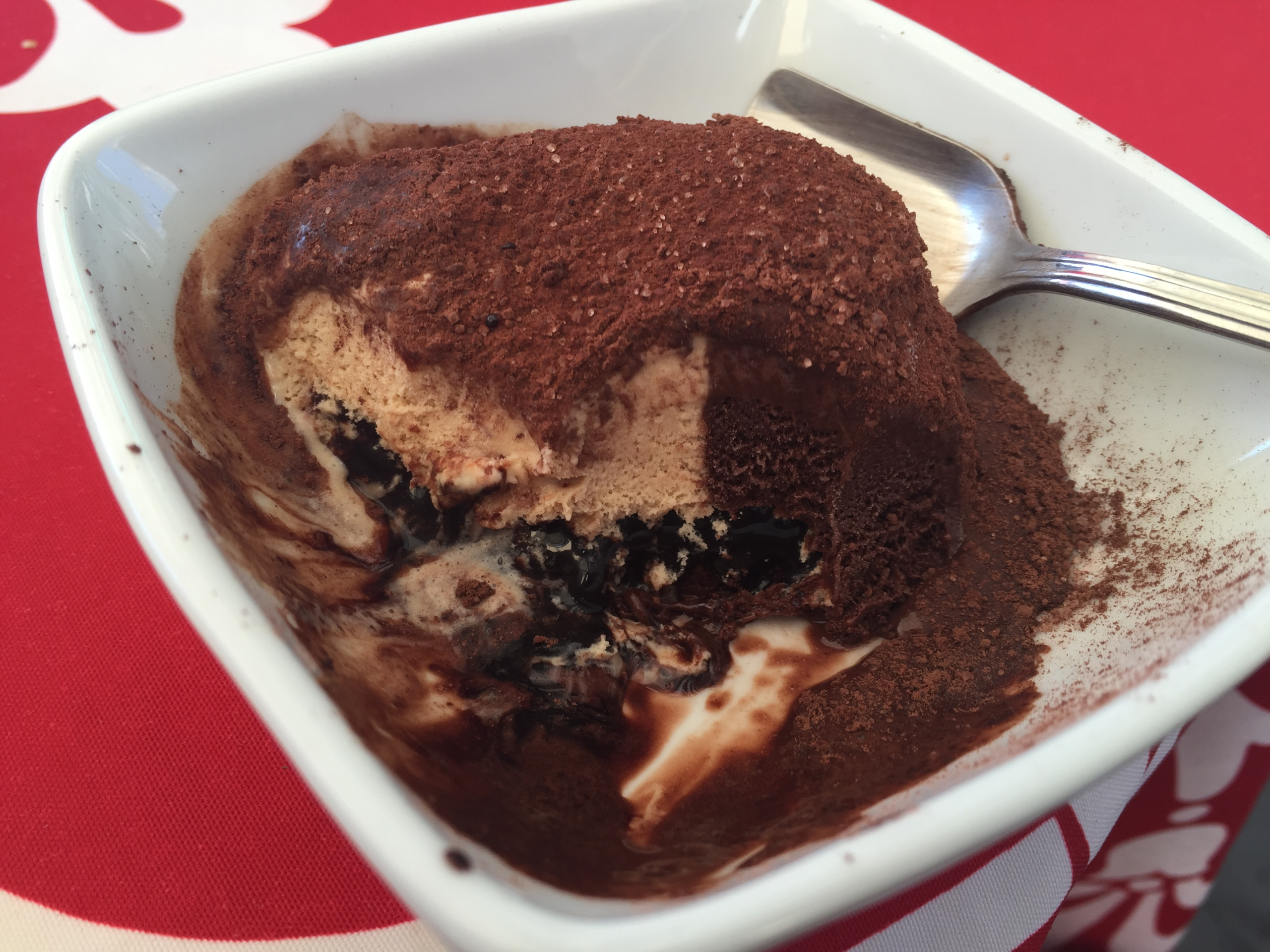
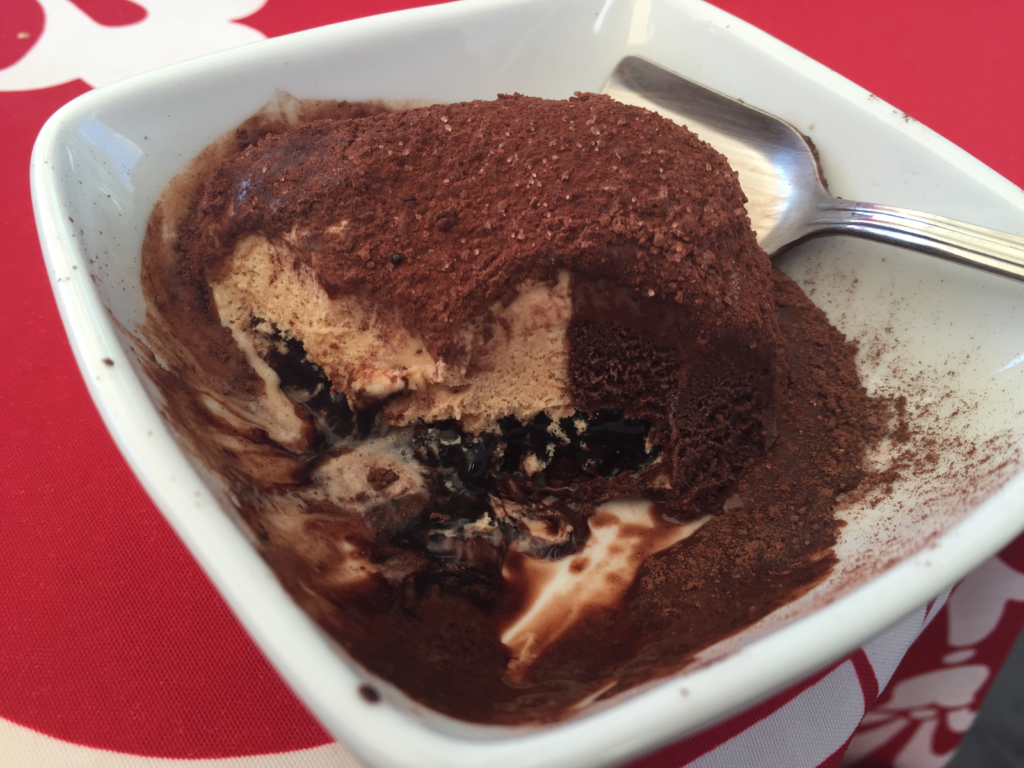
I have driven into Pizzo Calabro more times than I can count, always for the same reason as everyone else standing in line on Piazza della Repubblica: the tartufo, a hand-shaped ball of hazelnut and chocolate gelato with a molten heart. What most visitors never learn, licking it on the terrace above the Gulf of Sant’Eufemia, is that the fortress behind them is where Napoleon’s brother-in-law was shot by firing squad in 1815, five months after losing the battle that decided his fate on a plain I can see from my office window in the Marche. Two unrelated tartufi and one soldier’s last month connect a Calabrian dessert to a Marche battlefield in a way no dessert guide has ever traced.
Two things named tartufo, and nothing else in common
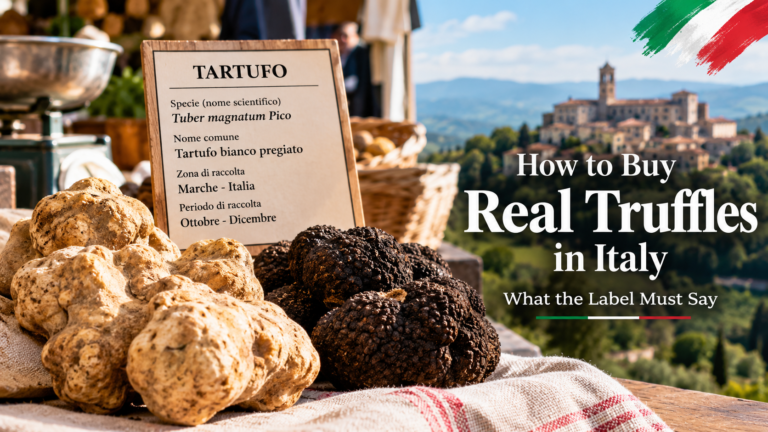
The Italian word tartufo means truffle, and in central Italy it names the underground fungus, Tuber magnatum and its relatives, that drives the autumn economy of towns like Acqualagna in the Marche. The tartufo of Pizzo has no botanical connection to that world; it borrowed the name because its irregular, cocoa-dusted shape resembles a black truffle fresh out of the ground. If a fungus is what brought you here, the truffle guide to Le Marche covers the real thing, region by region and season by season.
What the Tartufo di Pizzo actually is
Strip away the folklore and the tartufo is a precise piece of confectionery, codified down to the gram in a production specification published in Italy’s Gazzetta Ufficiale on December 12, 2007. The base gelato is built from whole milk, sugar, dextrose, and fresh egg yolk, split into two batches: one flavored with roughly 100 to 140 grams of pure hazelnut paste per liter, the other with 100 to 120 grams of cocoa powder. A separate chocolate compound is cooked from cocoa, water, sugar, and dextrose at temperatures near boiling, then cooled to room temperature.
To assemble one, a maker layers 50 to 70 grams of chocolate gelato against the same weight of hazelnut gelato, presses a hollow roughly two to three centimeters wide into the center, and fills it with 15 to 20 grams of the cocoa compound — a candied cherry is permitted here, though not required. The sealed ball is wrapped in parchment and blast-frozen to between minus 18 and minus 20 degrees Celsius, then rolled in bitter cocoa, sometimes cut with sugar, only at the moment of serving. No food coloring, no stabilizers, no powdered milk: the specification forbids all three. That level of regulatory detail on a street dessert is itself a very Italian fact, and it is the reason a scoop from a real Pizzo gelateria tastes different from an industrial imitation sold two hundred miles away.
The origin story, as told locally, places the invention in 1952 at what was then Bar Dante, later Gelateria Dante, on Piazza della Repubblica. A young pastry maker from Messina named Giuseppe De Maria, known as Don Pippo, ran out of the molds used to portion bulk gelato for a wedding reception. He shaped the ice cream by hand instead — hazelnut over chocolate, a plug of melted chocolate hidden in the middle — and wrapped it in sugar paper to set. Italian Wikipedia notes a second, less romantic theory: that Don Pippo’s tartufo was quite possibly inspired by an identically named chocolate praline already sold in Turin by the confectioner Talmone, built from the same base ingredients and popular decades earlier. Neither claim has documentary proof strong enough to close the question, so I present both rather than pick a winner.
The IGP claim almost everyone repeats — and gets wrong
Search for the Tartufo di Pizzo in English and you will find, on nearly every result, the same sentence: it was the first gelato in Europe to earn Protected Geographical Indication status, supposedly in 2007. As an engineer who has spent thirty years reading regulatory documents for a living, I want to walk through what actually happened, because the real sequence is more interesting than the myth.
There is a genuine trademark in this story: a collective mark called Tartufo di Pizzo, registered in Italy in 1989, reserved for artisan gelaterie inside the municipality that follow the disciplinare. That trademark is real and still in force. What happened next is where the confusion starts. In 2008, the Consorzio Gelatieri Artigiani di Pizzo formally petitioned Italy’s Ministry of Agriculture for full European Union Protected Geographical Indication status, and the Ministry granted transitional national protection while the application moved to Brussels — the decree appeared in the Gazzetta Ufficiale on March 26, 2008. The European Commission’s Directorate-General for Agriculture and Rural Development then rejected the file, reportedly because it classified the tartufo as an ice cream rather than a pastry product, and ice cream did not fit the category the application had been filed under.
That rejection is the detail that almost never makes it into the English-language retellings. Italian Wikipedia’s own entry on the dessert states plainly that the Tartufo di Pizzo currently holds no EU protection mark at all, and instead sits on Italy’s national list of Prodotti Agroalimentari Tradizionali, or PAT — a real but different form of recognition, one that certifies traditional origin without granting the legal exclusivity of an IGP. Regional records confirm Calabria’s PAT list runs into the hundreds of products, this dessert among them. I could not locate a Commission record in the EU’s eAmbrosia geographical indications database confirming a completed IGP registration under this name, which is consistent with what Italian Wikipedia reports. Given that the claim of a 2024 EU registration also appears on at least one hospitality industry blog, I am flagging this as an open discrepancy rather than resolving it in either direction: readers who need a legally certain answer should check the Commission’s eAmbrosia register directly before relying on the IGP label in any commercial context.
Why the center never fully freezes
Pull a tartufo out of a chest freezer running at minus 18 degrees Celsius and the outer gelato is rock solid within seconds, but the molten chocolate core still gives when you press it. That is not a trick of temperature control; it is basic physical chemistry. The chocolate compound at the center carries a far higher ratio of dissolved sugar than the surrounding gelato, and dissolved solutes lower the freezing point of a solution — the same colligative property that keeps salted roads from icing over in winter. At a high enough sugar concentration, the compound’s freezing point drops below the temperature of a standard blast freezer, so the center stays soft while everything around it hardens.
It is a small piece of food science, but it explains something a tourist brochure never will: why the contrast between shattering cold shell and flowing center, the signature of a well-made tartufo, is not a matter of the maker’s skill alone. It is written into the ratio of sugar to water before the mixture ever touches a freezer.
The battlefield that connects a Marche river valley to a Calabrian seaside town
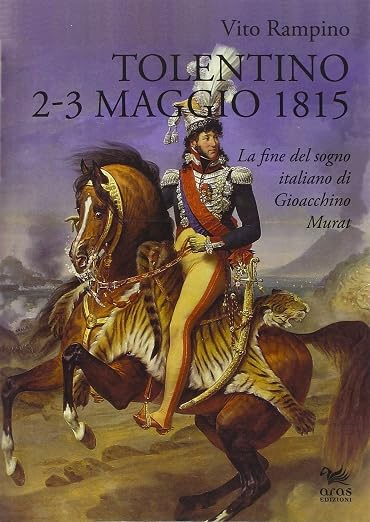
I live a short drive from the plain where the Battle of Tolentino was fought on May 2 and 3, 1815, in the province of Macerata. It is sometimes described as the opening battle of the Italian Risorgimento, though the term is used loosely enough that I would not stake a claim on it without the qualifier.
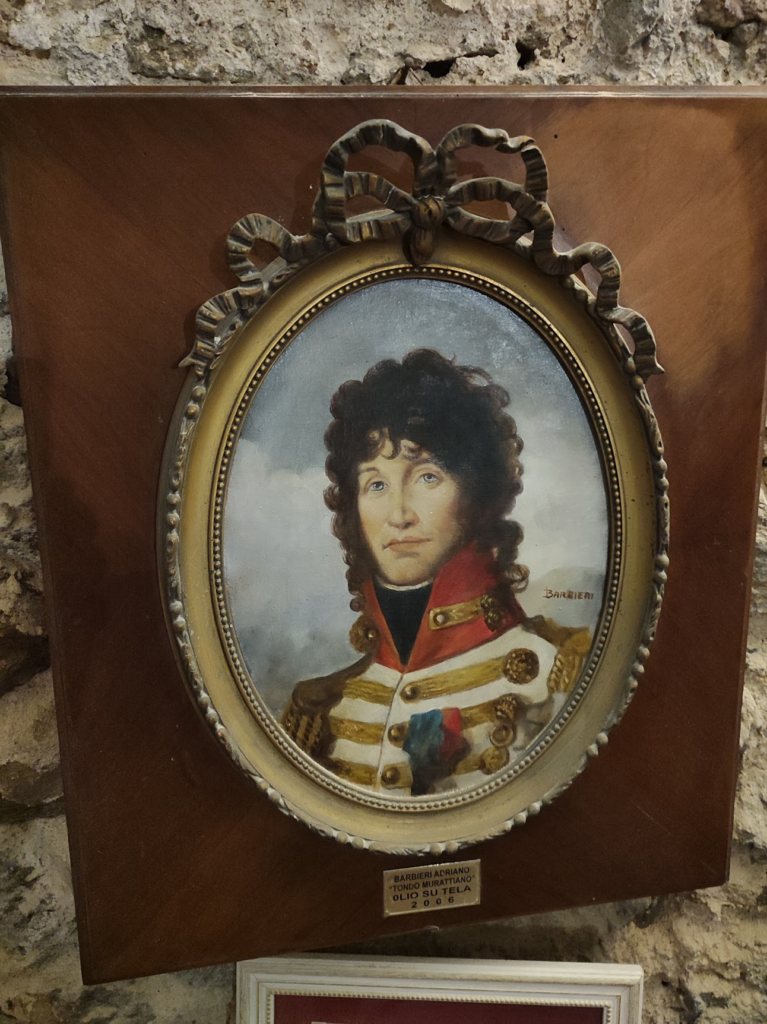
What is not in dispute is who lost. Gioachino Murat, Napoleon’s brother-in-law and, since 1808, King of Naples, had gambled his throne on returning to the Emperor’s side during the Hundred Days, marching north through the Papal States and the Marche to confront the Austrian army under General Federico Bianchi.
At Tolentino, along the Chienti river, Bianchi’s forces broke Murat’s infantry squares after two days of fighting. Murat retreated south, his kingdom collapsed within weeks, and by late May he had fled to Corsica.
What happened next reads like the second half of the same story, staged eight hundred kilometers south.
On the night of September 28, 1815, Murat left Corsica with six small boats, hoping a landing in Calabria would rally support for a return to his throne.
A storm scattered the flotilla; only two boats reached the coast, and on October 8 Murat came ashore at Pizzo with a handful of loyal officers.
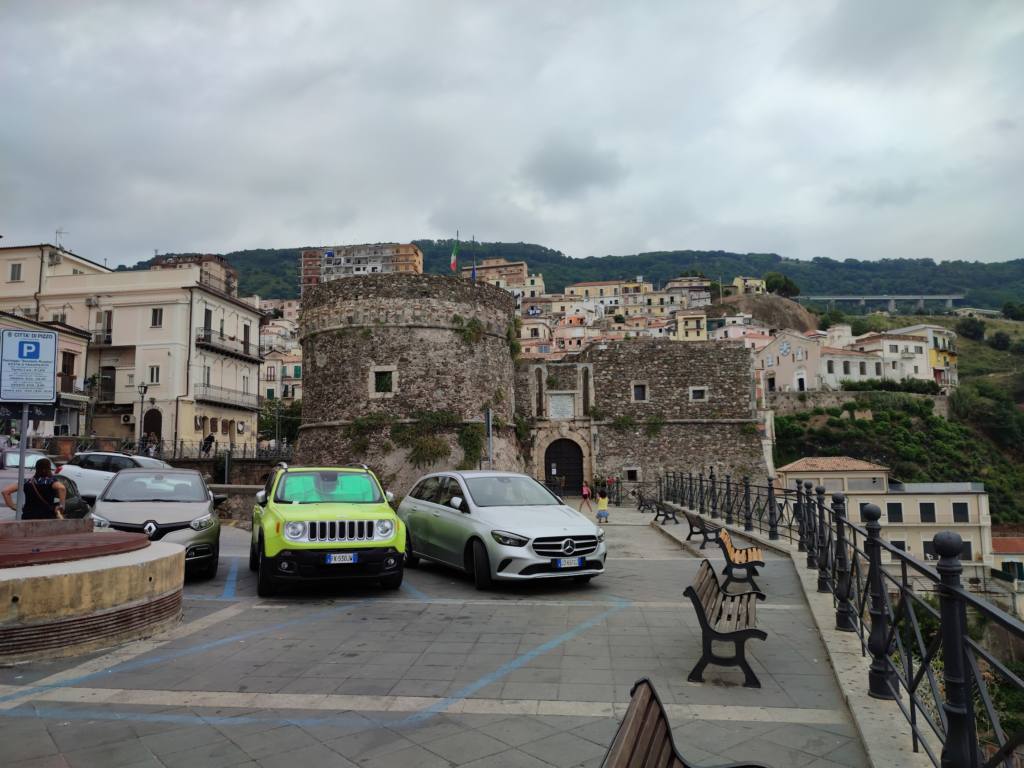
They were captured almost immediately and locked inside the town’s fortress, the same building that still overlooks the piazza where the gelaterie do their business today, and which the town now calls the Castello Murat.
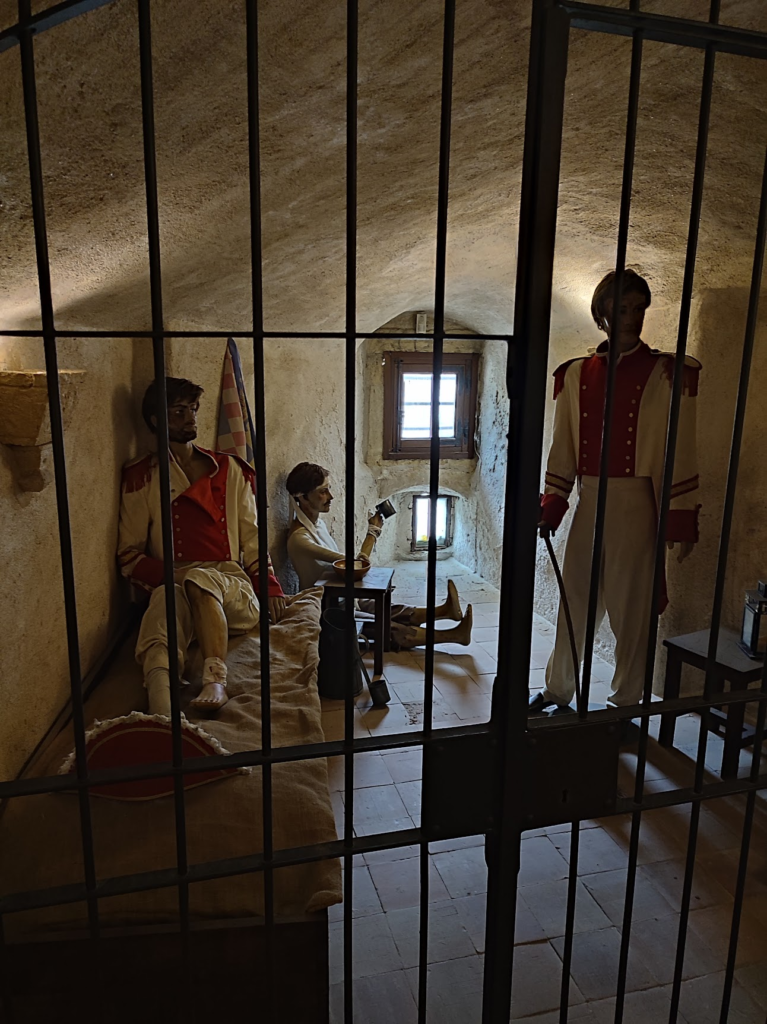
A military commission tried him within days. On the night of October 13, 1815, Murat was executed by firing squad inside the castle, struck by six shots, at the age of forty-eight.
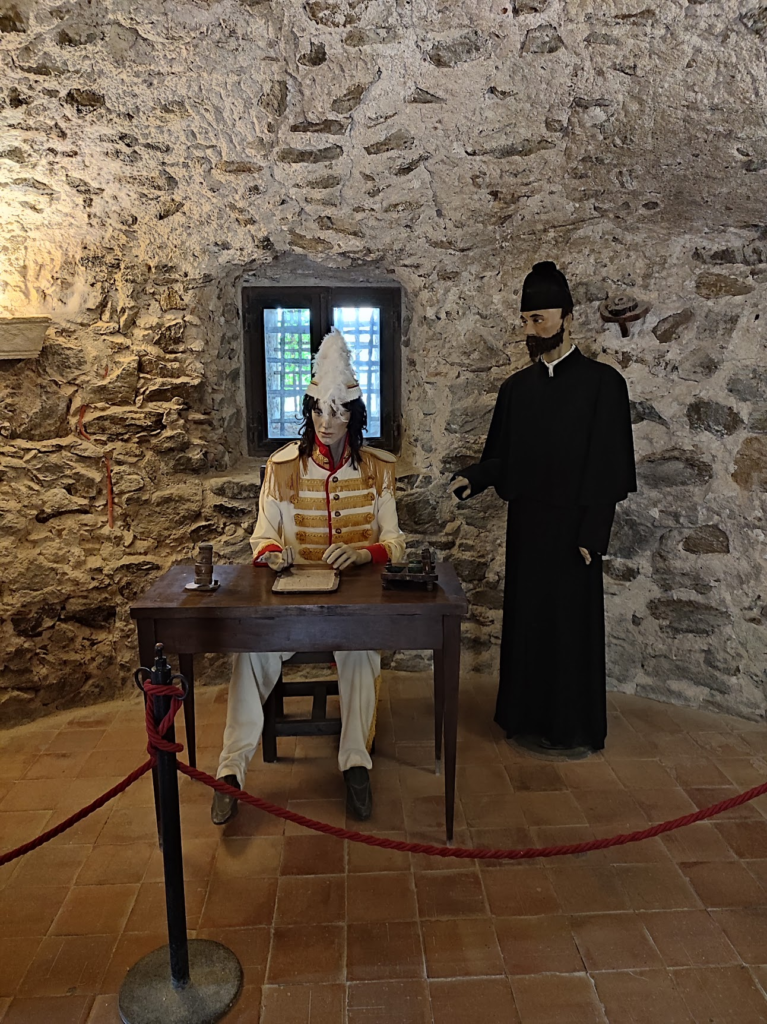
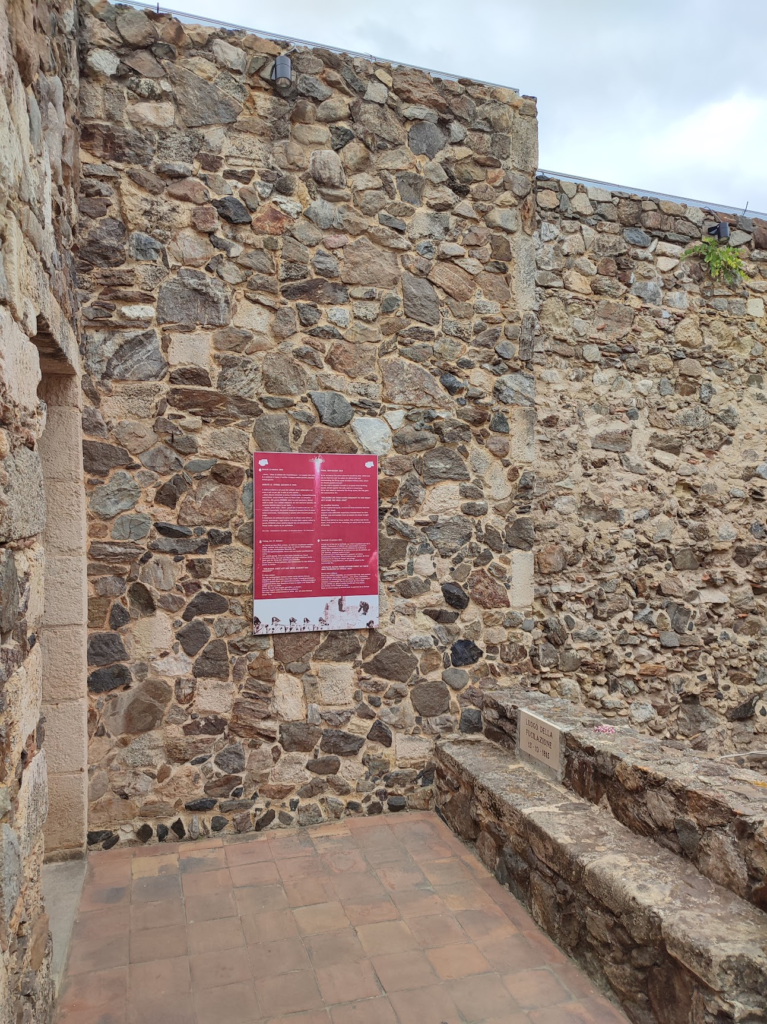
His body was carried that same night to the nearby Chiesa Matrice di San Giorgio and buried in a common grave beneath the nave, marked only later by a memorial stone; a definitive identification of the remains has never been confirmed, and Italian forensic teams have opened the crypt more than once, most recently with DNA testing, without a conclusive result.
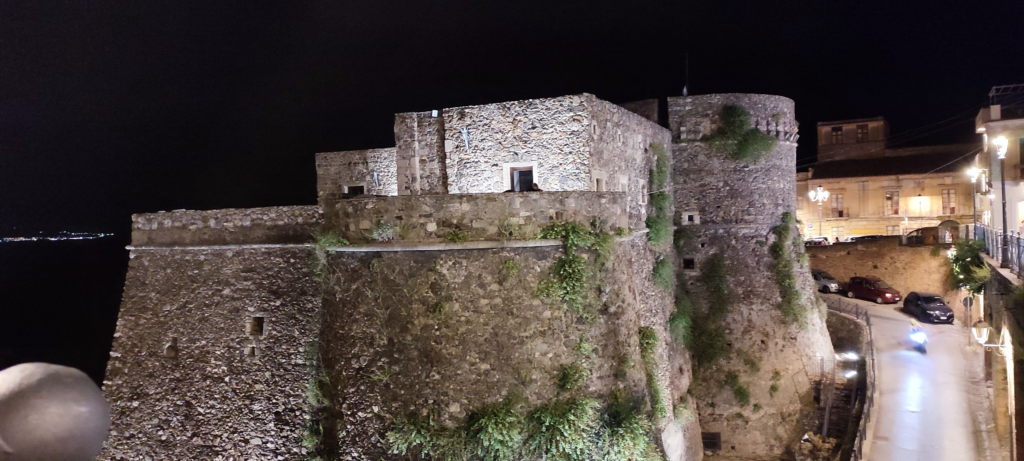
Tolentino and Pizzo are usually filed under separate itineraries — one a Napoleonic battle site in central Italy, the other a Calabrian beach town famous for dessert — and almost nothing written for English-speaking travelers connects them. They are, in fact, the first and last chapters of the same soldier’s final campaign, four months and eight hundred kilometers apart.
Eating the tartufo where it was invented
Italian gelato culture runs deep, and Piazza della Repubblica remains the center of tartufo production, and the gelaterie descended from the original Bar Dante lineage still trade on that history; ownership and shop names on the square have shifted across generations of the same families since the 1940s and 1950s, so ask any local which counter is currently run by which branch rather than trusting an outdated online list. A tartufo eaten standing on the terrace above the gulf, with the Castello Murat at your back, is the way locals expect a visitor to have it — no plate, no spoon beyond what comes wrapped with it, eaten within a few minutes of leaving the freezer case.
Planning your visit
Pizzo sits on the Tyrrhenian coast of Calabria, in the province of Vibo Valentia, roughly forty minutes by car or local train from the Lamezia Terme international airport, which connects to Rome and several other Italian cities. The town pairs naturally with Tropea, fifteen minutes further down the coast and considerably more visited, making Pizzo a quieter base for the same stretch of shoreline. Summer brings the heaviest crowds to Piazza della Repubblica; late spring and early autumn offer the same gelato and the same view of the castle with a fraction of the wait.
FAQ — Understanding the Tartufo di Pizzo
What is the Tartufo di Pizzo?
It is a hand-shaped ball of hazelnut and chocolate gelato with a molten chocolate center, invented in the town of Pizzo, Calabria, and rolled in bitter cocoa before serving.
Is the Tartufo di Pizzo related to the Italian truffle mushroom?
No. It shares only the name and the visual resemblance to a black truffle; the fungus Tuber magnatum and its relatives belong to an entirely separate culinary world centered on central Italy.
Does the Tartufo di Pizzo have EU Protected Geographical Indication status?
Sources conflict. A 2008 national decree granted transitional protection while an EU application was pending, but the European Commission reportedly rejected that specific filing, and Italian Wikipedia states the dessert currently holds no EU mark, sitting instead on Italy’s national PAT list. Anyone relying on the IGP label commercially should verify current status in the EU’s eAmbrosia register.
When was the Tartufo di Pizzo invented?
Local tradition dates it to 1952, at what was then Bar Dante on Piazza della Repubblica in Pizzo, though the exact circumstances are told as oral history rather than documented fact.
Where in Pizzo should I eat it?
Piazza della Repubblica is the historic center of production, with several gelaterie tracing their lineage to the original 1940s and 1950s shops on the square.
What is the connection between Pizzo and Gioachino Murat?
Murat, Napoleon’s brother-in-law and King of Naples, landed at Pizzo in October 1815 after losing his kingdom, was captured within days, and was executed by firing squad inside the town’s fortress on October 13, 1815 — the same fortress that overlooks the square where the tartufo is sold today.
How does Pizzo connect to the Marche region?
Murat’s kingdom was lost four months earlier at the Battle of Tolentino, fought May 2 and 3, 1815, in the province of Macerata in the Marche, roughly eight hundred kilometers north of where he was later executed.
The final word
A gelato and a battlefield rarely belong in the same paragraph, but Murat’s last campaign put them on the same map, four months and one soldier apart. If you want more stories that connect the Marche to the rest of Italy through the details most guidebooks skip, explore more on Tastes & Wonders of Italy or subscribe to our YouTube channel for video dispatches from around the country.