Ancona Archaeological Museum: What Survived the Bombs
Ancona Archaeological Museum: What Survived the Bombs
The Ancona archaeological museum keeps its darkest chapter twelve feet below a Renaissance palace. Workers reopened a medieval alley there in December 2025, sealed off since World War II bombs buried it under rubble. I have worked around this corner of Ancona for most of my career as an engineer in Le Marche. I never knew the alley existed until the museum let visitors in. It now sits inside the museum’s newly opened storage rooms. That is a strange way to begin a visit: underground, in the dark, before you have seen a single Picene gold crown.
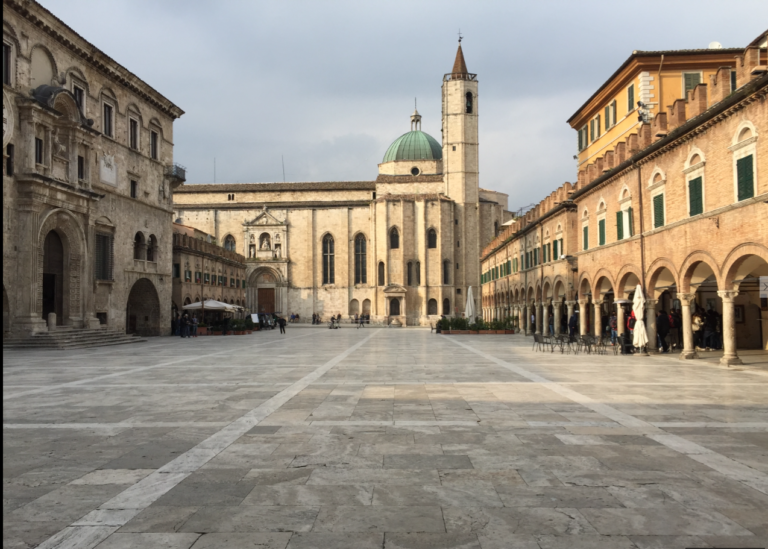
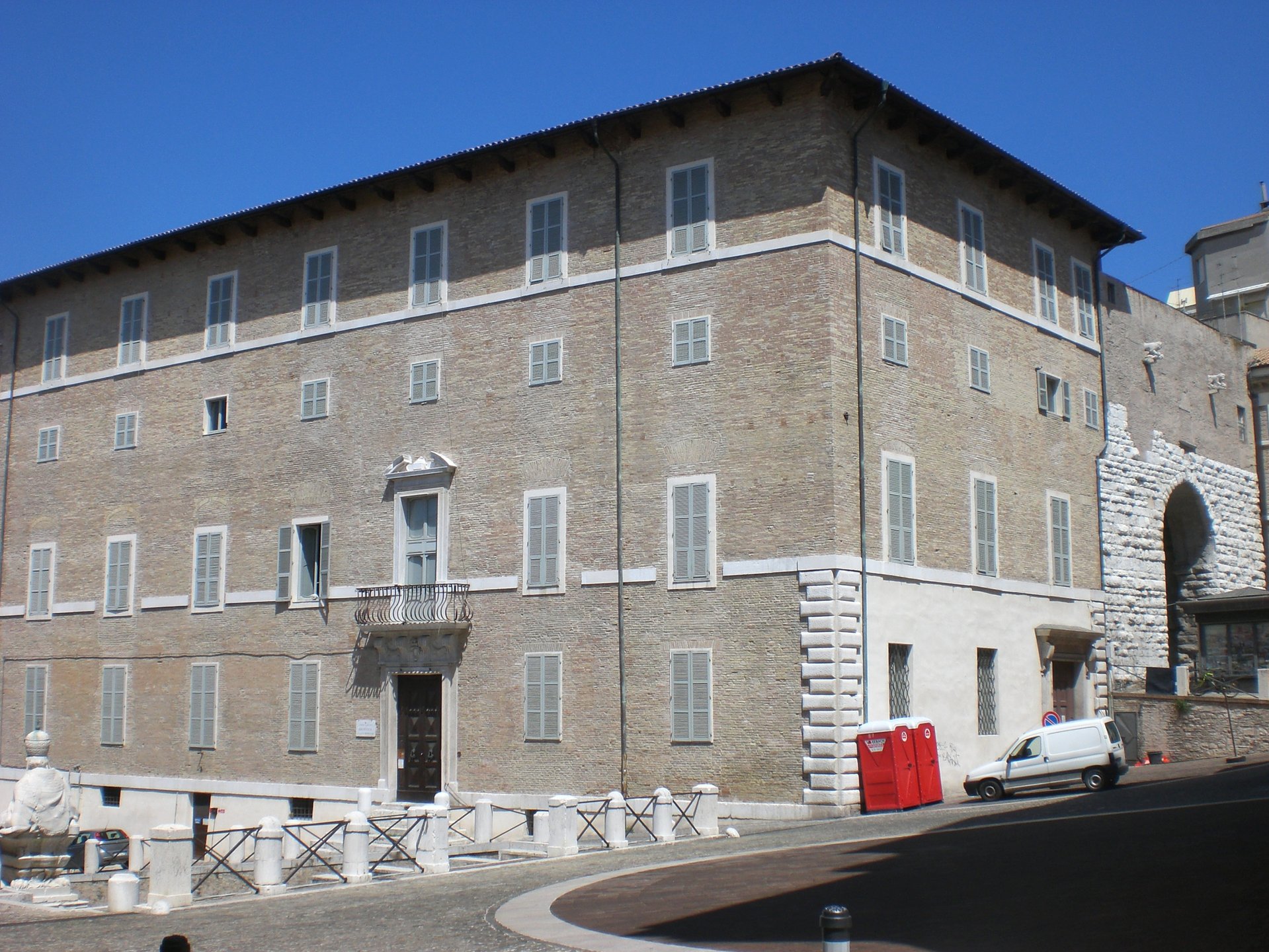
The Museo Archeologico Nazionale delle Marche, known locally as MAN Marche, has occupied Palazzo Ferretti in central Ancona since 1958. It holds the world’s most important collection of Picene civilization, the pre-Roman culture of Italy’s central Adriatic coast. Today, its galleries move chronologically from the Paleolithic era to the Roman period. A full ticket costs 5 euros, and a reduced ticket for EU citizens ages 18 to 25 costs 2 euros. Visitors under 18 enter free. A combined ticket with the Roman amphitheater of Ancona costs 8 euros. The museum closes on Mondays. Since December 16, 2025, its storage depositi — previously off-limits to the public — have opened as well.
Why This Museum Almost Disappeared Twice
During World War II, the museum’s director made a choice that still troubles curators today. Soprintendente Pasquale Rotondi had prepared hidden depositi inside the Rocca di Sassocorvaro. The fortress later earned the nickname “ark of art,” for masterpieces it saved by Giorgione, Piero della Francesca, and Titian. The Ancona director refused to send his collections there. He feared theft. Instead, he packed the smaller artifacts into crates and stored them at the base of the bell tower of San Francesco.
That decision proved disastrous. Allied bombs struck Ancona in 1943, and the bell tower collapsed onto the crates below. Among the losses was the amber face of a small ivory statue of Cupra, one of the most important goddesses in the Picene pantheon. Even so, her ivory body survives today. Her amber face, carved separately, was never recovered.
Not every rescue failed, though. In 1946, with the museum still in ruins, a single employee named Nereo Alfieri got word of a discovery. A farmer near Pergola had unearthed a hoard of gilded bronze statues, then left suddenly for Rome. As it turned out, Alfieri suspected he planned to sell them on the black market. He reached the site first, seized the bronzes in the name of the Italian state, and recovered hidden fragments as well. Those statues, the Bronzi Dorati di Cartoceto, are now displayed in their own museum in Pergola. Only copies stand on the rooftop terrace in Ancona.
From a Risorgimento Idea to a National Museum
The museum began as a political statement. One month after Le Marche joined the Kingdom of Italy, governor Lorenzo Valerio signed a royal decree calling for a regional collection. The date was November 3, 1860. Count Carlo Rinaldini and scholar Carisio Ciavarini pushed the project forward, partly to keep local discoveries out of the antiquities trade. In fact, the first purchases date to 1863. The collection opened to the public in 1868, inside a technical school where Ciavarini taught.
By 1906, the museum earned national status. At the time, Italy had only ten national archaeological museums, including three in Rome and others in Naples, Florence, Cagliari, Taranto, Parma, and Portogruaro. Ancona had joined a short, exclusive list. The collection later moved into the former convent of San Francesco alle Scale. It was inaugurated on October 9, 1927, in front of King Vittorio Emanuele III, who cut the ribbon with a Bronze Age dagger.
A Renaissance Palace Built Twice, a Century Apart
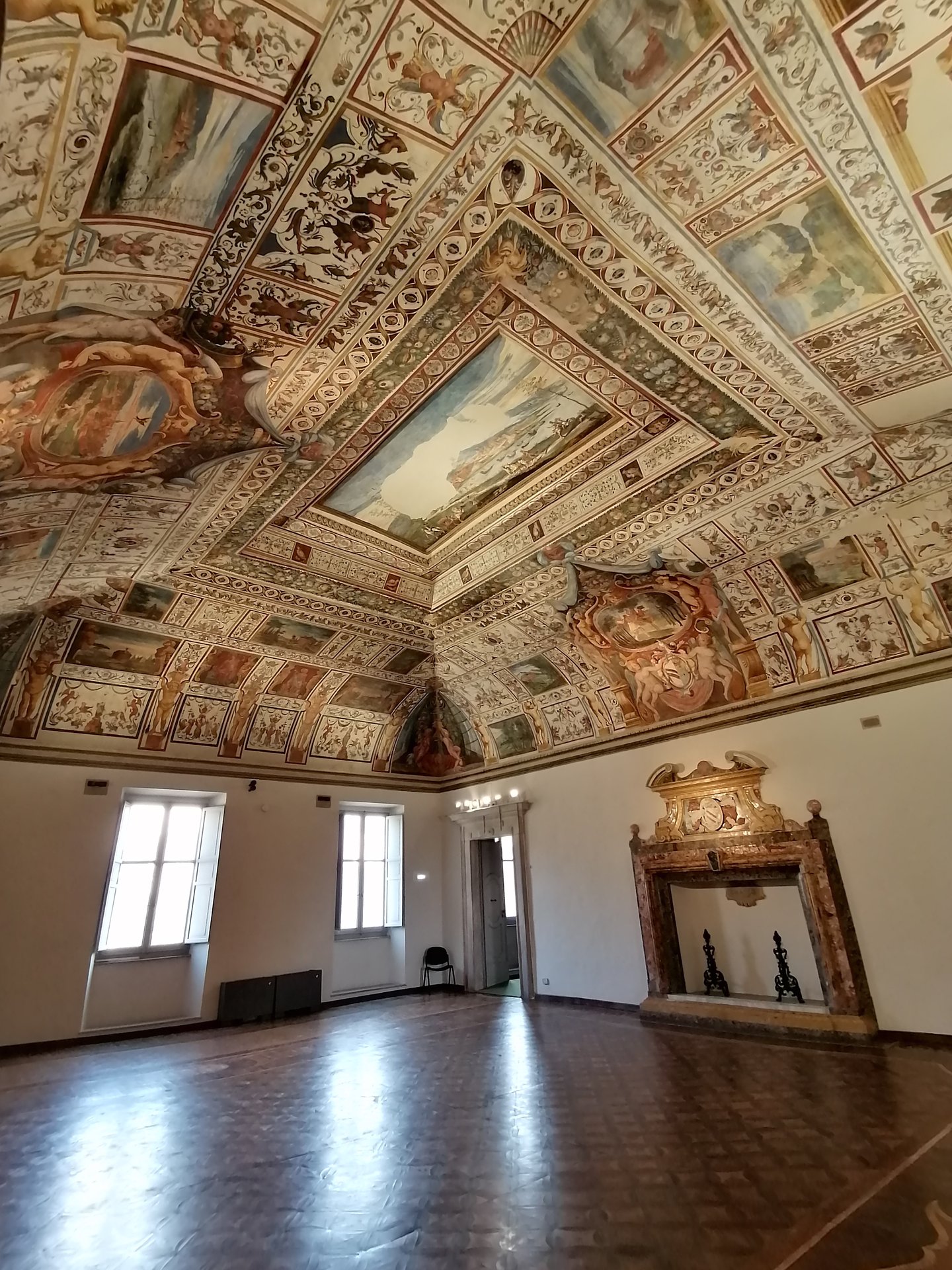
Palazzo Ferretti predates the museum by four hundred years. Count Angelo Ferretti began building it around 1540. The design is attributed to Antonio da Sangallo the Younger, the same architect who had recently fortified Ancona’s citadel for Pope Clement VII. Around 1560, the Ferretti family hired Pellegrino Tibaldi to decorate the main floor. He painted a frieze of Olympian gods in the reception hall, added myths and emblems in adjoining rooms, and carved wooden ceilings overhead. Federico and Taddeo Zuccari painted further rooms between 1577 and 1585.
The palace carries a political story too. Construction began soon after Ancona expelled Cardinal Benedetto Accolti the Younger, the papal legate blamed for the city’s lost independence in 1532. Building a grand new residence, in that context, read as an act of civic confidence. Lorenzo Lotto was painting his Pala dell’Alabarda in Ancona during those same years.
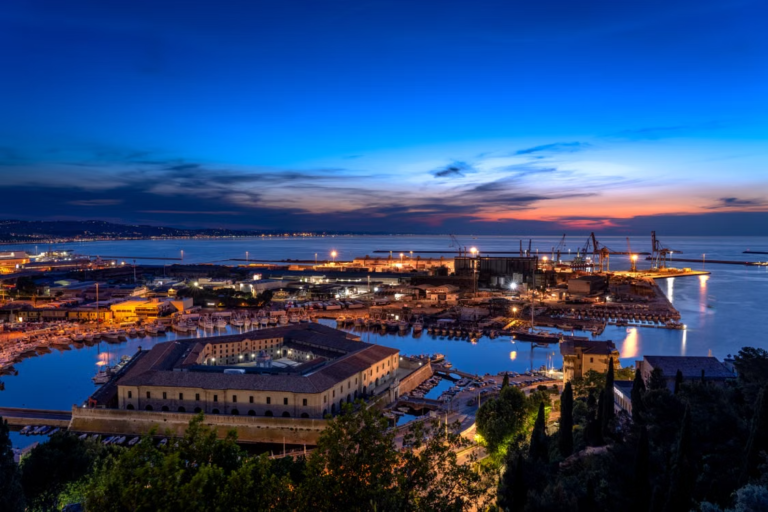
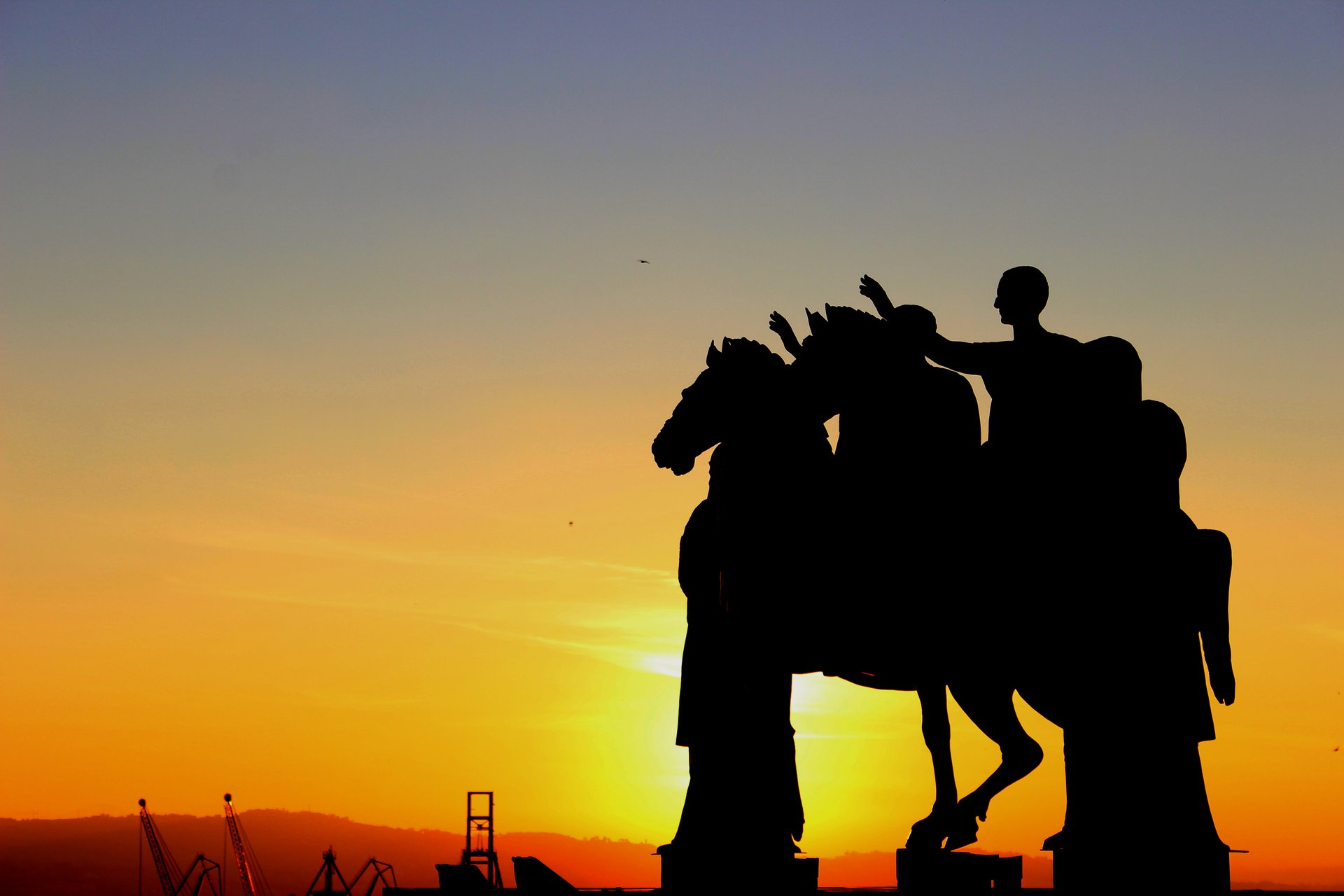
Two centuries later, in 1759, Cristoforo Ferretti hired Luigi Vanvitelli — the architect behind the Royal Palace of Caserta — to expand the building. Vanvitelli absorbed a medieval tower, added a central balcony, designed the grand staircase, and built the rooftop terrace that still overlooks the port today. The stucco figures along the way came from sculptor Gioacchino Varlè’s workshop.
Reopening the Museum, One Gallery at a Time
Franco Minissi designed the museum’s first installation in 1958. He rebuilt it after a 1972 earthquake forced another closure. His second version, unveiled in 1988, focused on the Picene and Celtic collections and still shapes how the galleries feel today.
Recovery has continued in stages ever since. The prehistoric galleries reopened between 1990 and 1997, along with the Copper Age and Bronze Age sections. The rooms devoted to Hellenistic and Roman Ancona followed between 2010 and 2015. Its Roman section, covering the rest of Le Marche, reopened only on December 6, 2023 — fifty-one years after the earthquake sealed it.
Each reopening added another layer to a museum that has spent most of its history under repair.
What the Depositi Aperti Reveal
The most recent chapter opened on December 16, 2025, when the museum unveiled its Depositi Aperti, or “open storerooms.” The project cost 800,000 euros, funded through Italy’s PNRR post-pandemic recovery program. As a result, it carved new visitor space out of rooms beneath the Vanvitelli terrace that had never been open to the public.
About 6,000 artifacts now sit on view across 400 square meters, arranged like a library. Shelves hold stone fragments, galleries hold mosaics and amphorae, and a study room serves researchers. One room preserves original display cases salvaged from the old San Francesco museum, destroyed in the bombing. Another connects to via dell’Arsenale, the medieval alley mentioned earlier, restored as part of the same project.
The depositi hold roughly 90 percent of the museum’s total collection. In total, that is more than 180,000 objects, gathered over more than 160 years. Until now, most visitors never saw any of it.
Inside the Ancona Archaeological Museum’s Collection
Three hundred thousand years of history run through these galleries. A handful of objects explain why the collection matters well beyond Le Marche.
Two Ice Age Women
The Venus of Frasassi, carved from a stalactite roughly 25,000 years ago, turned up inside the Frasassi caves only in 2007. Her hands meet over a pregnant belly in a gesture of offering. Only ten comparable Paleolithic figures exist anywhere in Italy. A second, older carving shows a woman with a wolf’s head, carved on a pebble from Tolentino. Found in 1884, it was dismissed as a fake for over a century. Leading archaeologists of the era doubted Paleolithic art existed in Italy at all. Still, scholars reconsidered it only in 1997.
The People of Amber
The Picenes earned the nickname “people of amber.” Le Marche sat at the southern end of the amber trade route running down from the Baltic Sea. Their bronze disc-armor comes from this culture, along with six-looped rings known as the “wheel of Cupra.” So does a bronze situla lid showing warriors dancing around a wolf-headed totem pole. Notably, its totem animal, the green woodpecker, still appears on the official crest of the Le Marche region today.
Pottery Athens Made to Order
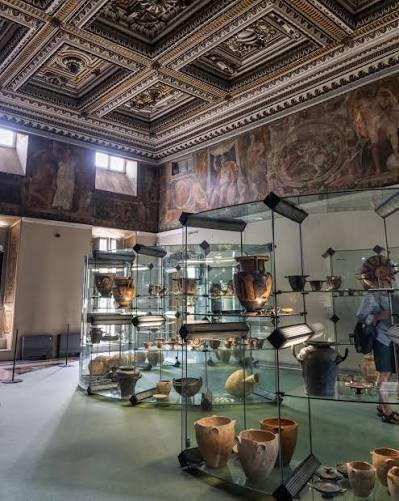
Wealthy Picenes bought Greek pottery directly from Athenian workshops, and some pieces were custom commissions. One footed plate belongs to a shape that Athenian potters produced specifically for buyers in Le Marche and the northern Adriatic city of Spina. A wine-mixing vessel painted with Prometheus handing fire to a group of satyrs shows just how far that trade reached.
Gold the Celts Left Behind
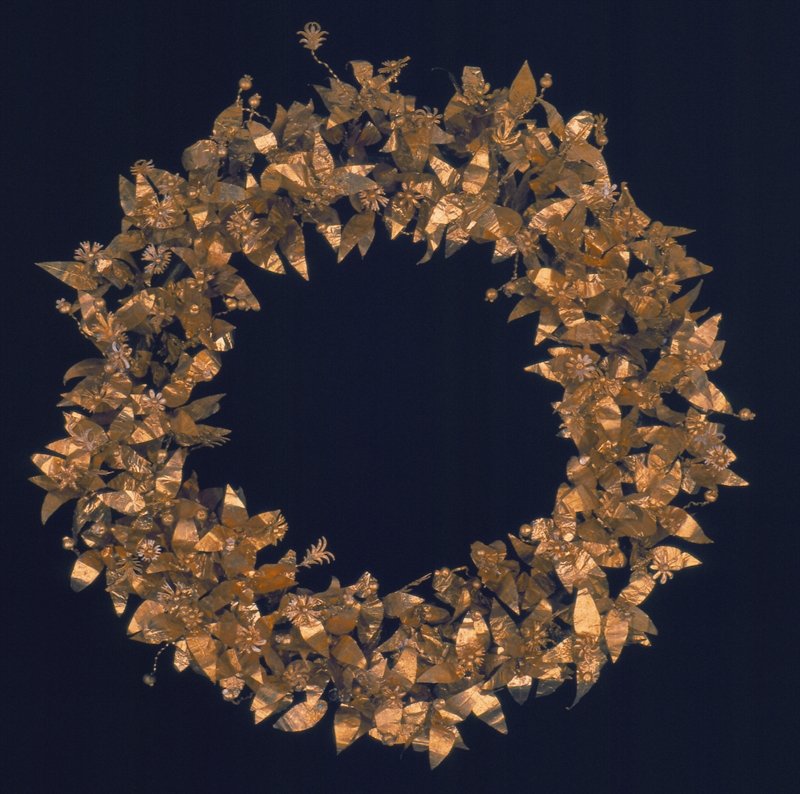
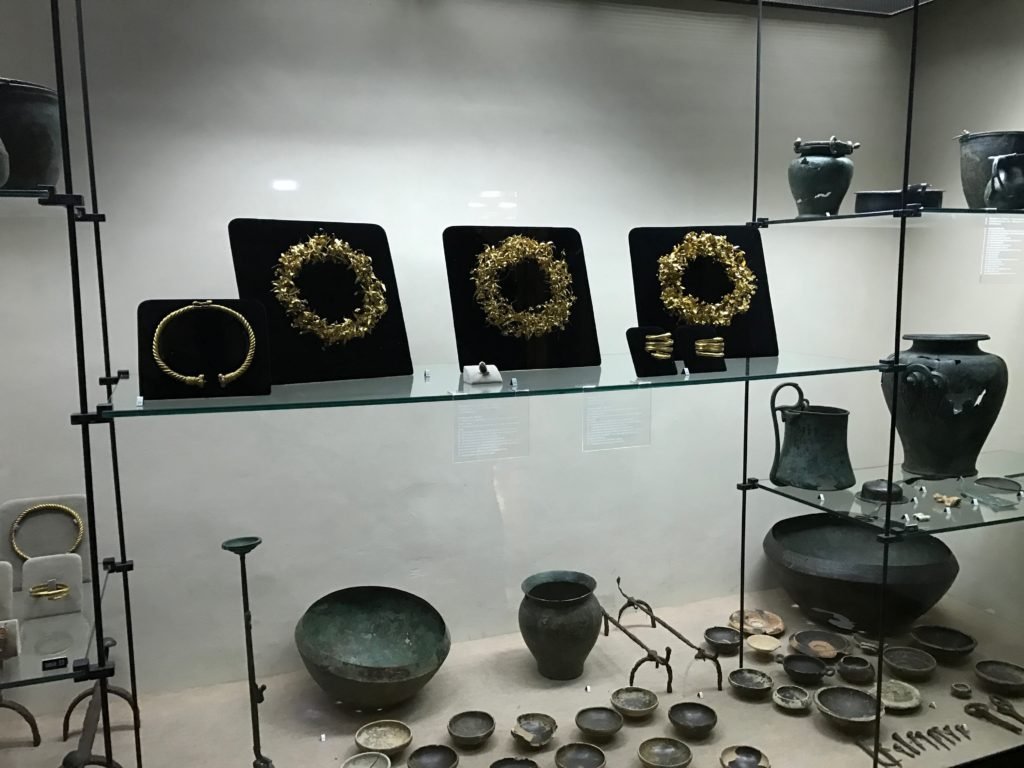
Senonian Gauls, who settled northern Le Marche around 400 BCE, favored gold jewelry made by Etruscan and Greek craftsmen. Three floral crowns from Montefortino di Arcevia, produced in northern Greece, remain unique in Italy for their technique. A terracotta frieze from the Temple of Civitalba, carved a century later, shows Celtic soldiers fleeing a failed raid on Delphi in 279 BCE. The scene was chosen deliberately, to echo Rome’s own victory over the Senones at the Battle of Sentino in 295 BCE.
An Emperor Found Beneath the Museum’s Own Floor
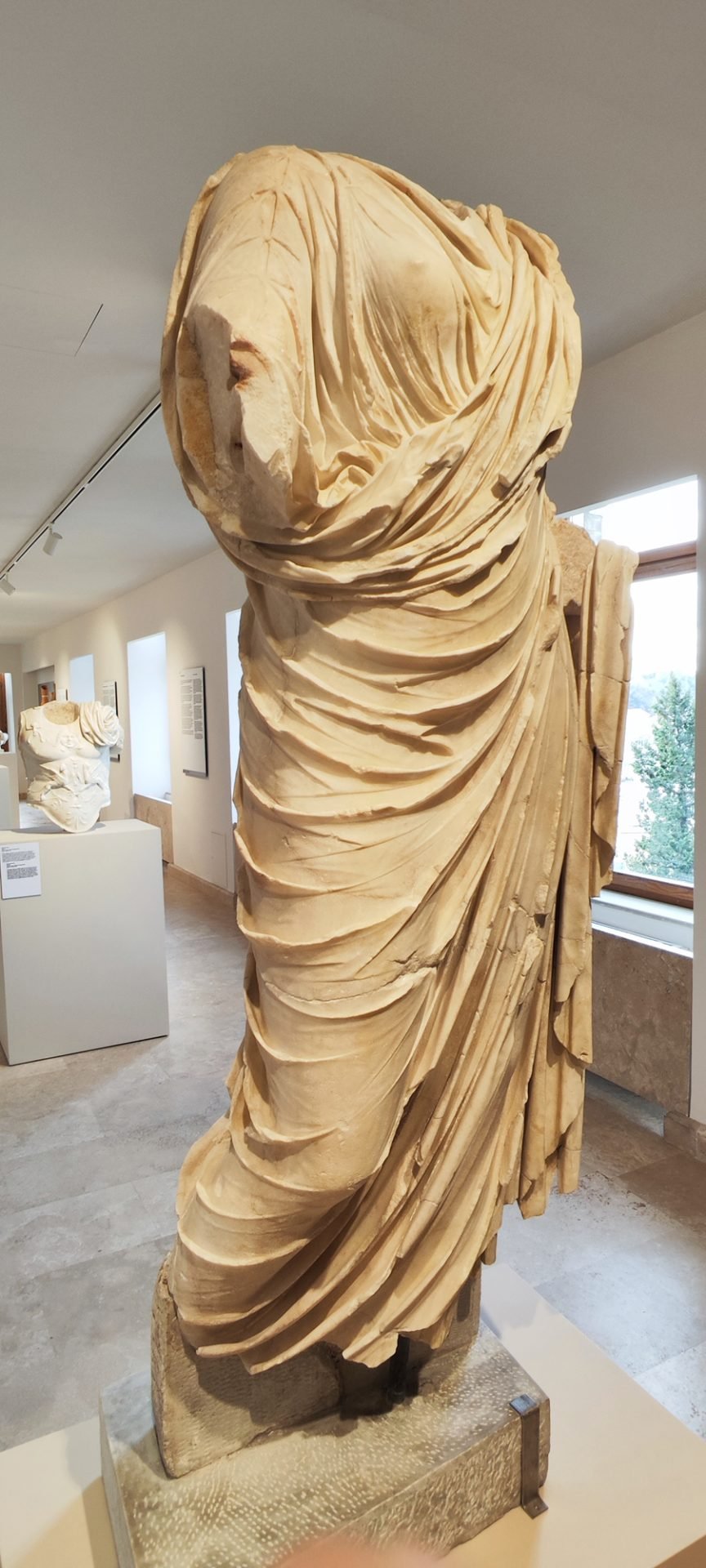
Workers digging the museum’s foundations in 1863 uncovered a marble portrait of Augustus, his head veiled for a religious ritual. It once stood in Ancona’s Roman forum, in roughly the spot where the museum stands today. For American visitors, the connection runs deeper than one statue. Much of how the United States imagined its own republic traces directly back to rooms like this one.
A Roman Who Read the Sky in Stone
As an engineer, I find the Globe of Matelica more compelling than any statue in the building. It is a spherical stone sundial, and only one other example is known anywhere in the world. Specifically, Roman astronomers used it to track solstices, equinoxes, and the hours of daylight through the year. It is a calculating instrument, not a decoration. It deserves more attention than it usually gets.
What’s Missing Here — and Where to Find It
Two of the museum’s most famous names are not actually inside it. The Bronzi Dorati di Cartoceto, the gilded bronzes Nereo Alfieri saved in 1946, live in their own museum in Pergola. Only rooftop copies stand in Ancona. The so-called Regina di Sirolo tells a similar story. She was a Picene noblewoman, buried around the sixth century BCE with two dismantled carriages and more than 1,700 grave objects. Excavators found her at the I Pini site near Sirolo. Her belongings sit mostly at the Antiquarium Statale in Numana, not in Ancona.
That gap actually points to a smarter itinerary. Ancona explains the civilization. Sirolo lets you walk through the only visitable stretch of Picene necropolis in Le Marche. Numana holds the queen’s own grave goods. Together, the three towns tell one continuous story.
A stranger fact closes this list. Before the museum existed, several major Picene finds left Italy entirely. Monumental Greek vases from Numana ended up at the Metropolitan Museum in New York. An amber carving of Aphrodite and Adonis from Falconara Marittima sits there too. A bronze Poseidon from Ancona is now in Boston, at the Museum of Fine Arts. A visitor from the United States can see objects pulled from these same hills without ever leaving home. Then they can come see exactly where those objects came from.
Why 2028 Changes the Calculus
On March 18, 2026, Ancona was named Italy’s Capital of Culture for 2028. It is the second time the honor has gone to Le Marche, after Pesaro in 2024. The museum plans three additions for the year. First, an exhibition tracing Ancona’s Doric and Picene roots. Second, a new room dedicated to the Venus of Frasassi, alongside a second Paleolithic Venus from Tolentino. Third, eventually, a room for the Ancona treasure: eleven kilograms of gold coins, mostly minted in the 1600s. Workers found the coins at the city’s old Mandracchio harbor in 1928. The public has still never seen them, a century later.
None of that argues for waiting. If anything, it argues for going now, before the title brings the crowds it usually attracts.
Travelers building a longer trip through the region often pair the museum with something else. They add the hill towns of inland Le Marche that most Italy guidebooks skip entirely. Cingoli, recently voted Italy’s most beautiful village in a national poll, sits under an hour’s drive away.
Planning Your Visit to the Ancona Archaeological Museum
- Address: Via Gabriele Ferretti 6, Palazzo Ferretti, 60121 Ancona. Phone: +39 071 202602.
- Hours: Tuesday–Thursday, 8:30 a.m.–1:30 p.m. Friday–Saturday, 8:30 a.m.–7:30 p.m. Sunday, 2:00–7:30 p.m. Closed Monday. Last entry is 45 minutes before closing.
- Tickets: full price, 5 euros. Reduced price (EU citizens ages 18–25), 2 euros. Free under 18. A combined ticket with the Roman amphitheater costs 8 euros and stays valid at the museum the day after your amphitheater visit too.
- Free admission: the first Sunday of every month, plus April 25, June 2, and November 4.
- Accessibility: elevators and step-free routes throughout, tactile 3D reproductions, audio content, and an introductory video in Italian Sign Language. Call ahead for entrance assistance.
- The Vanvitelli terrace does not open on a regular schedule. It opens for occasional evening events instead, such as Ancona’s Festa del Mare on September 6, 2026. Plan around one of these evenings if the view matters to you.
- One honest note: the museum sits inside a multi-year renovation, and a few rooms rotate in and out of closure. Email pal-pu.manmarche.an@cultura.gov.it before your trip if a specific gallery matters to you.
FAQ — Visiting the Ancona Archaeological Museum
What is the Ancona archaeological museum known for? It holds the world’s most important collection of Picene civilization, the pre-Roman culture of Italy’s central Adriatic coast. The collection sits inside the Renaissance-era Palazzo Ferretti.
When is the best time to visit? Weekday mornings run quietest, since hours end at 1:30 p.m. Friday, Saturday, and Sunday afternoons allow more time. They occasionally line up with evening terrace access, too.
Do I need to book tickets in advance? No — regular visits require no advance booking. Combined tickets with the Roman amphitheater are sold at the museum’s own ticket office.
How much does it cost to visit? A full ticket costs 5 euros. A reduced ticket for EU citizens ages 18 to 25 costs 2 euros, and entry is free for visitors under 18.
How long should I plan for a visit? Generally, two to three hours covers the main galleries and the Depositi Aperti storerooms without rushing.
Can I combine this museum with other Picene sites nearby? Yes. The I Pini archaeological area in Sirolo and the Antiquarium Statale in Numana both hold material from the same civilization. That includes the grave goods of the so-called Regina di Sirolo.
What’s the one thing most visitors miss? The Depositi Aperti, opened in December 2025. Inside them sits a restored medieval alley, via dell’Arsenale, reachable only on the same museum visit.
The Final Word
This museum does not perform for a quick visit. It asks for time. In return, it rewards patience. This collection survived a war and an earthquake. Even so, it came out complete enough to tell the whole story of a civilization most Americans have never heard of.
Are you building a trip through central Italy? If you want a local engineer’s read on how a stop like this fits into a longer Le Marche itinerary, reach out directly at mirco.vitellozzi@gmail.com.
Tastes & Wonders of Italy | YouTube: Tastes & Wonders of Italy