Pontormo Exhibition in Rome 2026: An Italian’s Guide
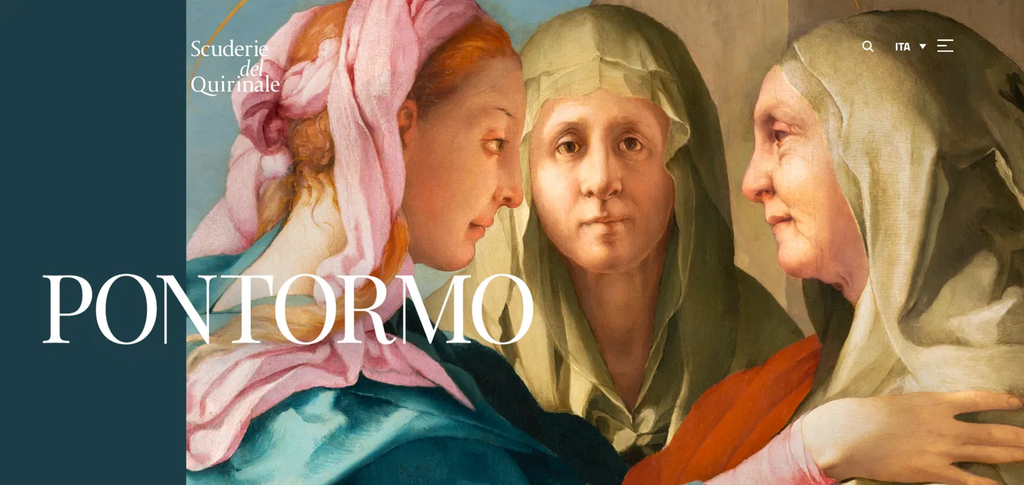
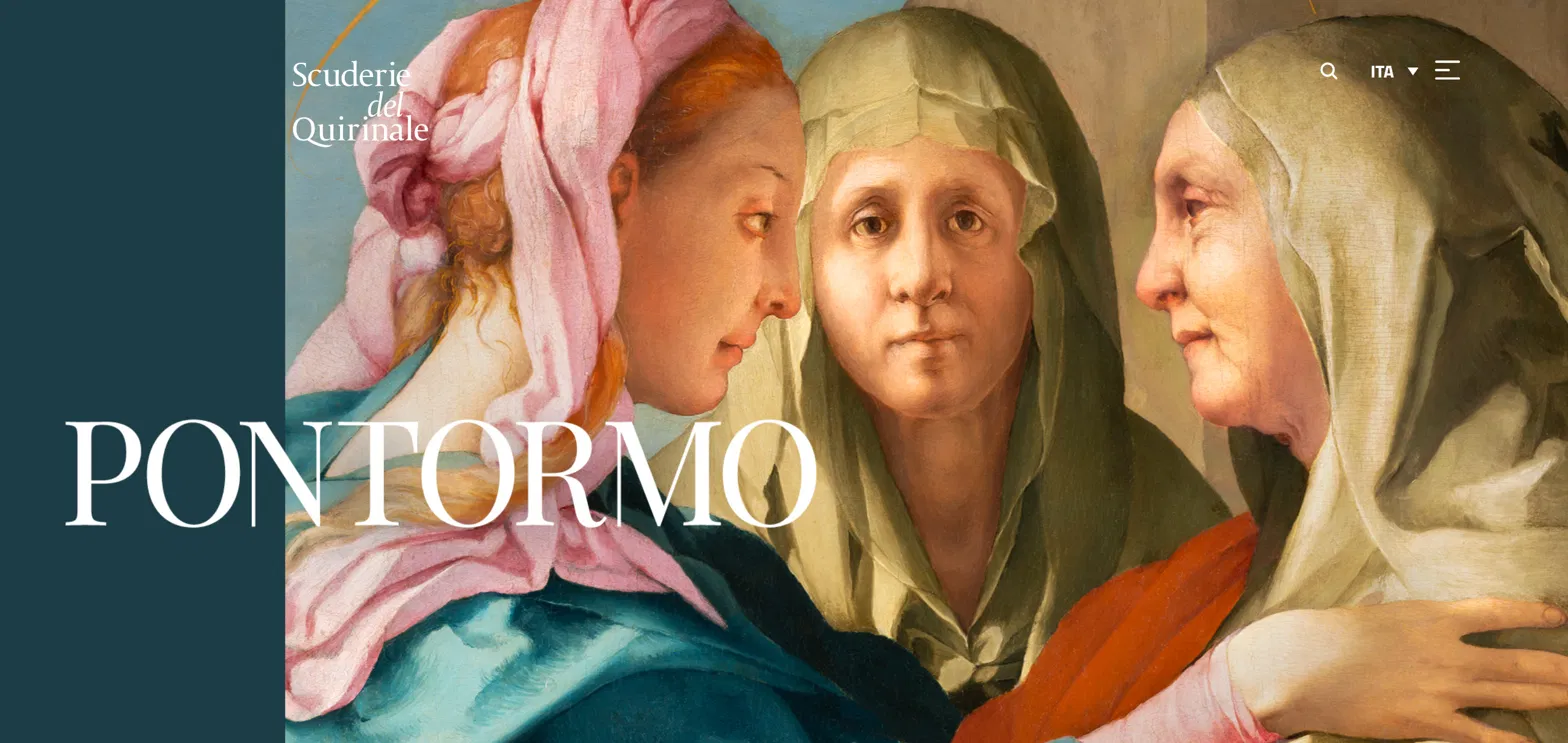
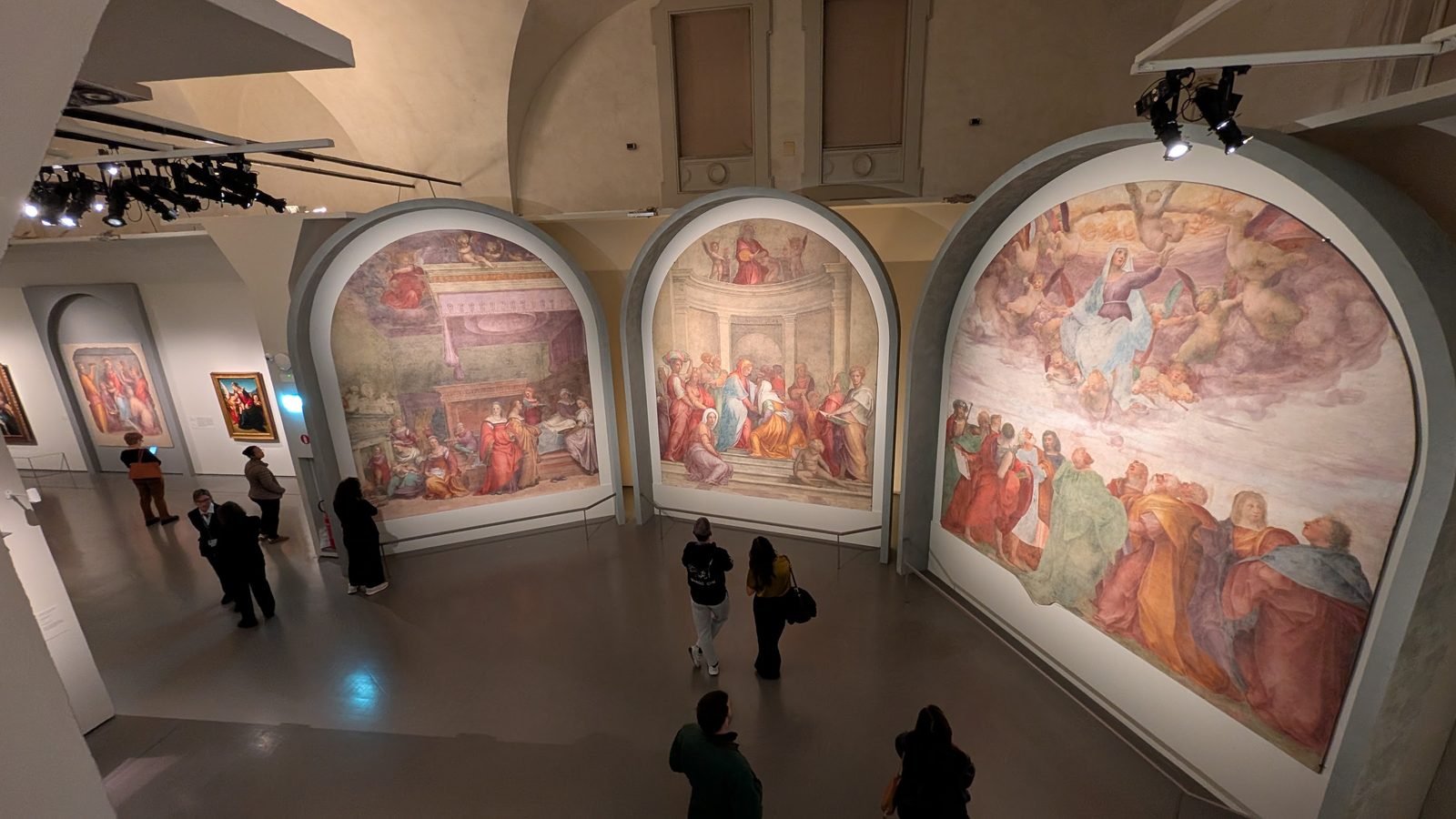
The Pontormo exhibition in Rome ends with four women meeting in a street that belongs to no city and no hour. Two embrace in the foreground while two more look on from behind. Their robes shift from rose to orange to sea green, as if lit from within. This is the Visitation from Carmignano, a small town near Prato, and the curators placed it in the last room as a farewell. The show opens at the Scuderie del Quirinale on October 9, 2026, and runs through February 7, 2027. Seventy years have passed since Florence last gave this painter a major show of his own.
Visited in person on 7 November 2026. All photographs in this article are my own.
A note on links: the GetYourGuide links in this article are affiliate links. If you book through them, I earn a small commission at no additional cost to you. Tickets for the Pontormo exhibition itself are sold only by the Scuderie del Quirinale, and I link to their official page with no commission attached.
The Pontormo Exhibition in Rome: What Is Happening at the Scuderie
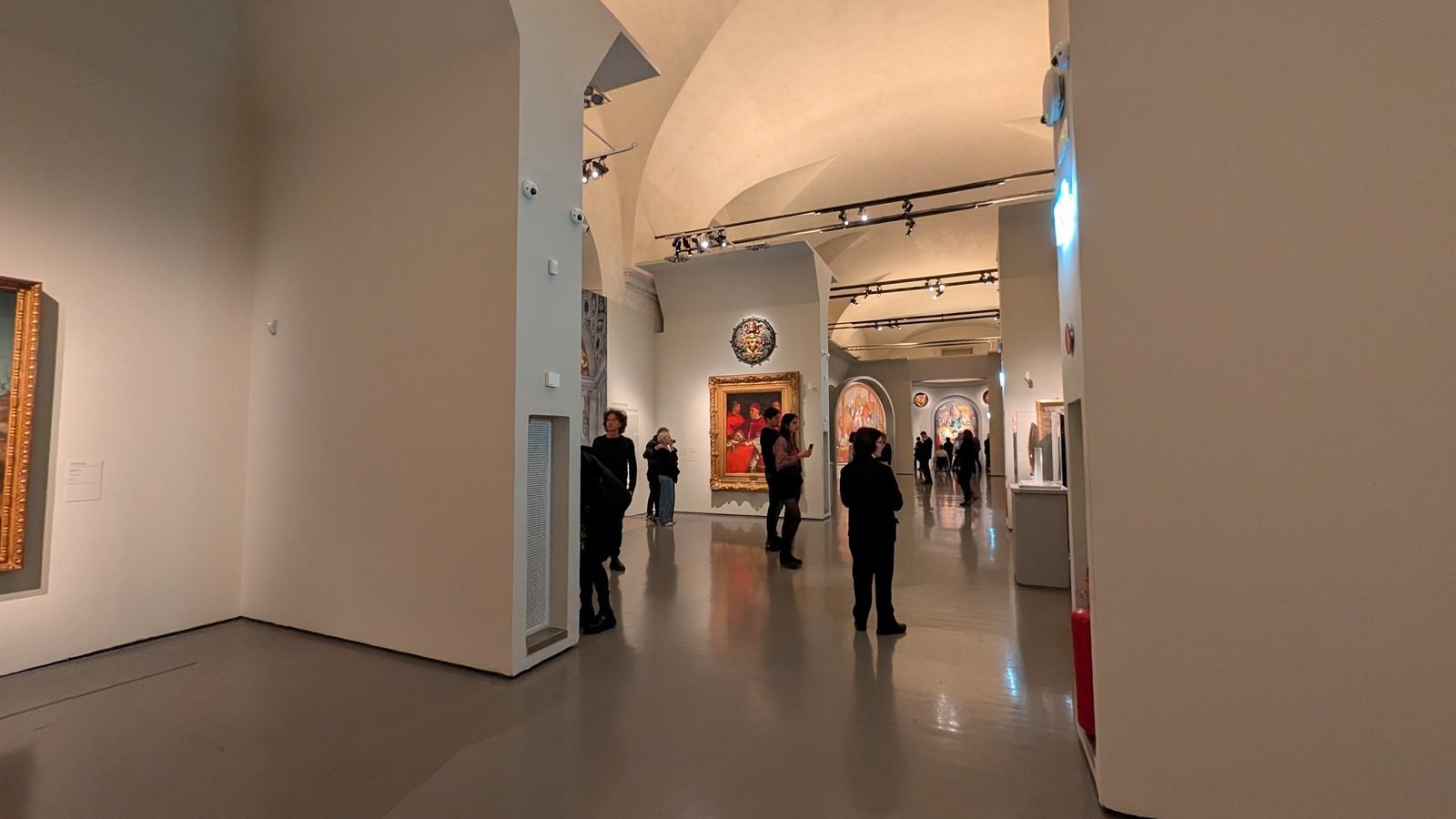
The Pontormo exhibition at the Scuderie del Quirinale runs from October 9, 2026, to February 7, 2027. It is a solo show on Jacopo Carucci, called Pontormo (1494–1557), the Florentine painter who bent the calm harmony of the High Renaissance into something stranger. The show gathers more than 130 works in ten sections, and 84 of them are by Pontormo himself. It is open daily from 10 a.m. to 8 p.m., with last entry at 7 p.m., at Via XXIV Maggio 16.
Dates, Duration and Who Built It
The last big show on Pontormo opened in 1956 at Palazzo Strozzi in Florence. It marked four centuries since his death and paired him with the first Florentine Mannerists. In 2014 the same palace shared the stage between Pontormo and his rival Rosso Fiorentino. Rome now offers the biggest Pontormo show on record, according to Artribune. It is also the first of this scale held outside Florence.
American readers should note what comes next. Artribune reports that the Uffizi director, Simone Verde, announced two further Pontormo projects. They will come from the National Gallery in London and the National Gallery of Art in Washington. Details were not yet public when I read the coverage.
One letter a month from inside central Italy.
The places, seasons and stories I don't put on the blog. No itineraries, no spam.
The exhibition is organized by Ales–Scuderie del Quirinale with the Uffizi Galleries and produced with the publisher Electa. Cristina Acidini curates it, with Elena Capretti, Philippe Costamagna, Bruce Edelstein and Carlo Falciani. The Uffizi alone lent 27 works. Electa publishes the catalogue.
The Backstory: Why Pontormo Matters
A Painter Between Two Worlds
Pontormo was born in 1494 at Pontorme, a village near Empoli. The village gave him his nickname. His real name was Jacopo Carucci. He lost his parents young and grew up in Florence, where he trained briefly with Leonardo da Vinci. Then he joined the workshop of Andrea del Sarto.
His Florence was a hard place to be an artist. The Medici family was expelled and then returned. Rome was sacked in 1527. A republic rose and fell. Acidini notes, in the words ANSA reports, that none of this stopped commissions or creativity. Pontormo kept working through all of it.
Michelangelo took notice. He handed Pontormo two of his own drawings, called cartoons, to be turned into paintings. The results are the Noli me tangere and Venus and Cupid, and both are in the show.
Giorgio Vasari, the first biographer of Renaissance artists, left us a portrait of a nervous eccentric. Artribune argues that this show corrects the myth. It presents a professional who knew his worth and was admired by Florentine patrons. The manuscript of his diary, the Libro mio, is on display. It comes from his last years.
The Italian Perspective
Italian students meet Pontormo in the chapter on Mannerism. The word comes from maniera, meaning style or manner. It describes artists who came after Raphael and chose elegance and tension over balance. Raphael, born in Urbino in my own Marche, set the standard of clarity. Pontormo spent his career stretching it. If you saw our guide to the Raphael, Michelangelo and Leonardo exhibition in Rome, this show is the next chapter.
Italians also know Pontormo through cinema. Pier Paolo Pasolini was fascinated by him. In his 1963 short film La ricotta, actors freeze into a living copy of Pontormo’s Deposition. The American video artist Bill Viola took a different route. He slowed the Visitation down to ten minutes of video.
Highlights: What to See
The Altarpiece That Left Its Chapel
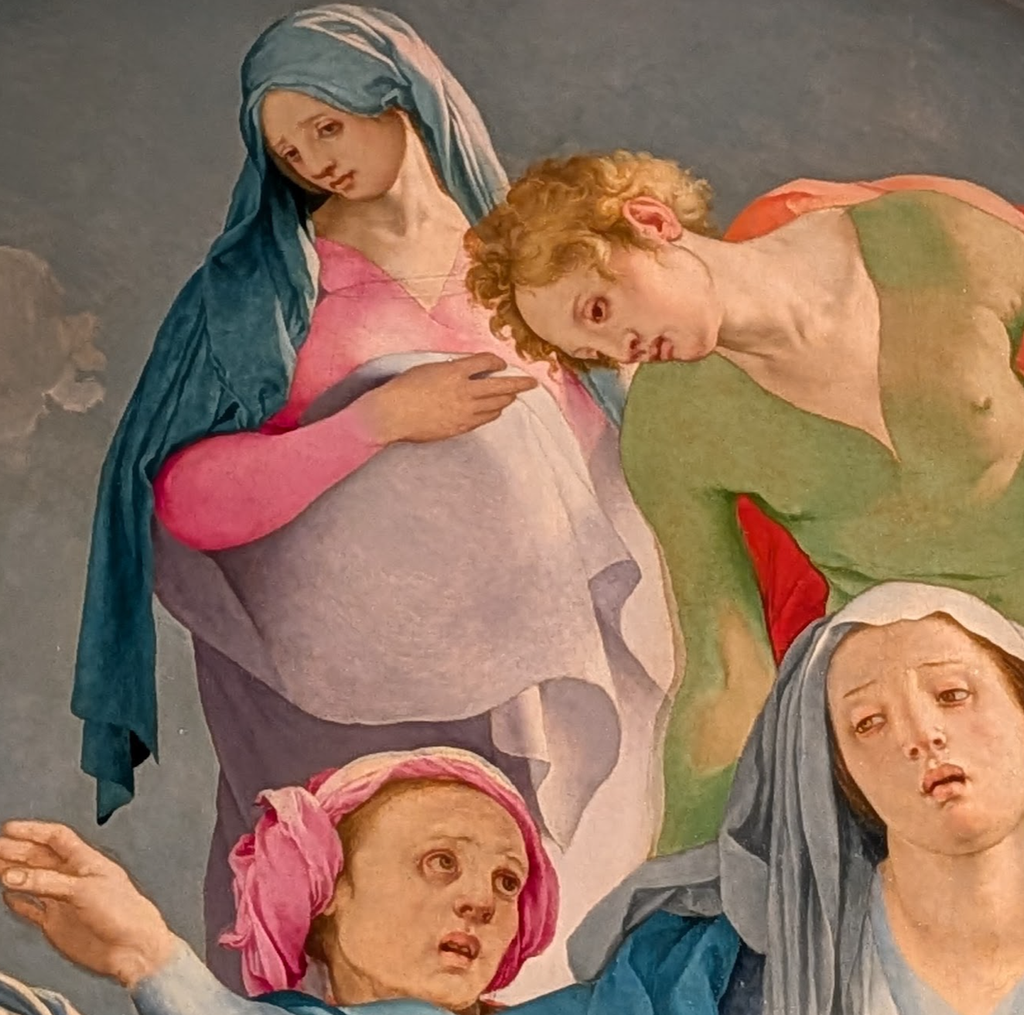
The Deposition is the painting that most visitors will cross town to see. Pontormo painted it between 1525 and 1528 for the Capponi Chapel in the church of Santa Felicita in Florence. Finestre sull’Arte lists its size as 313 by 192 centimeters, about ten feet by six. ANSA calls the work the Pietà or Transport of Christ.
In the church it hangs in a dim chapel. Any Italian who has visited a church knows the coin box that buys a minute or two of light. Artribune notes that the painting hits differently in a gallery. The figures seem to float, drawn by color more than by line, and almost weightless.
I look at an altarpiece the way I look at any old structure. It reacts to humidity, temperature and vibration. A painted wooden panel this size is not easy to move. That is why such loans are rare. According to Finestre sull’Arte, it left Santa Felicita in 2017 for a Palazzo Strozzi show on the sixteenth century. This is its second trip in nine years.
Faces That Look Back
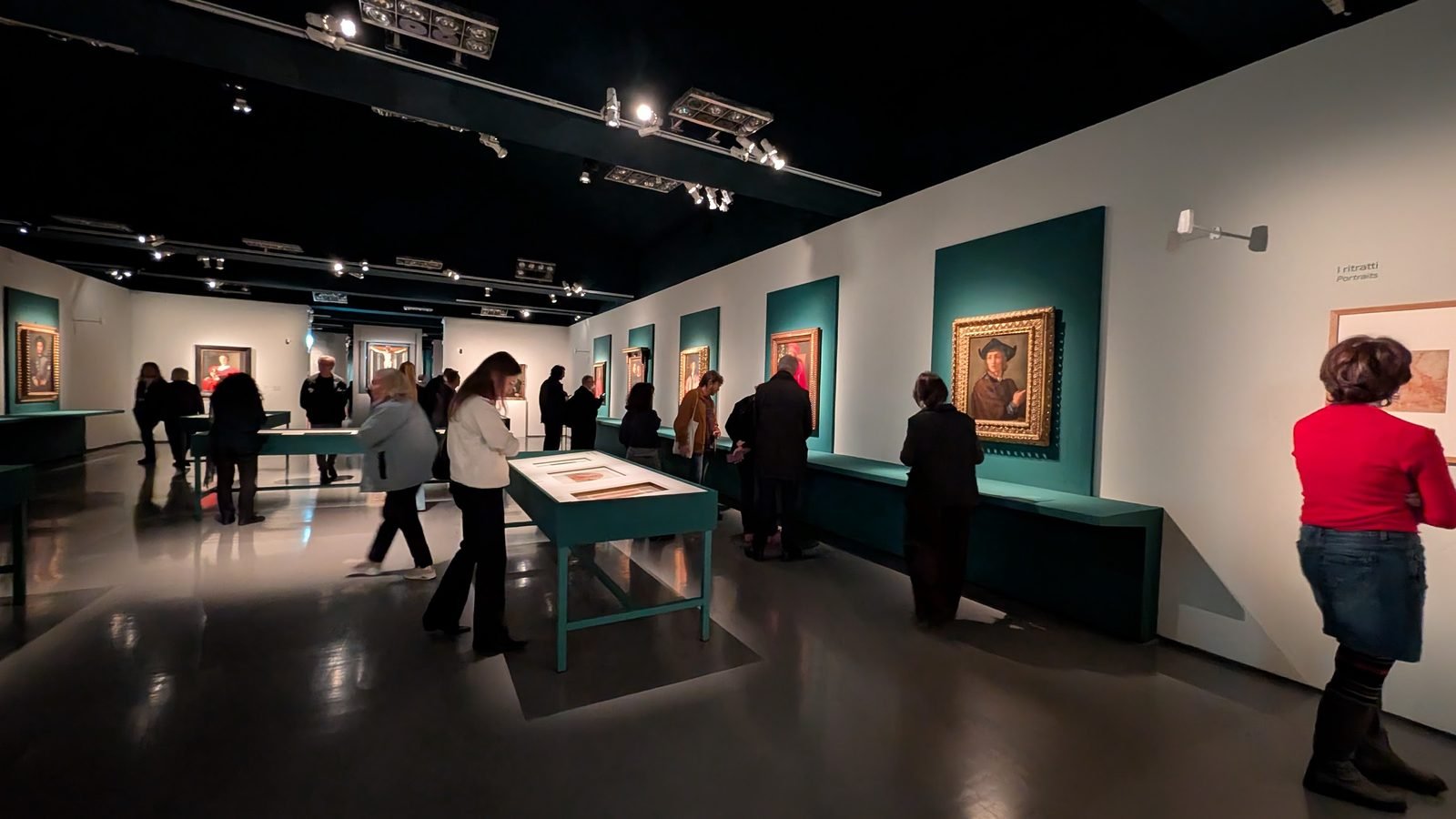
A room of portraits shows another side of Pontormo. Here are the Portrait of a Halberdier, the portrait of Maria Salviati, and a double portrait. ANSA also lists them among the stars. The sitters stand tall and still. Their eyes never settle. Artribune describes the portrait room as one of the show’s strong moments.
Rarities and Reconstructions
The exhibition is full of things you rarely get to see. The Noli me tangere (1531–32) comes from a private collection. Artribune calls its appearance extremely rare. Rome also shows a reconstruction of the Camera Bettini, a room Pontormo decorated for a Florentine family.
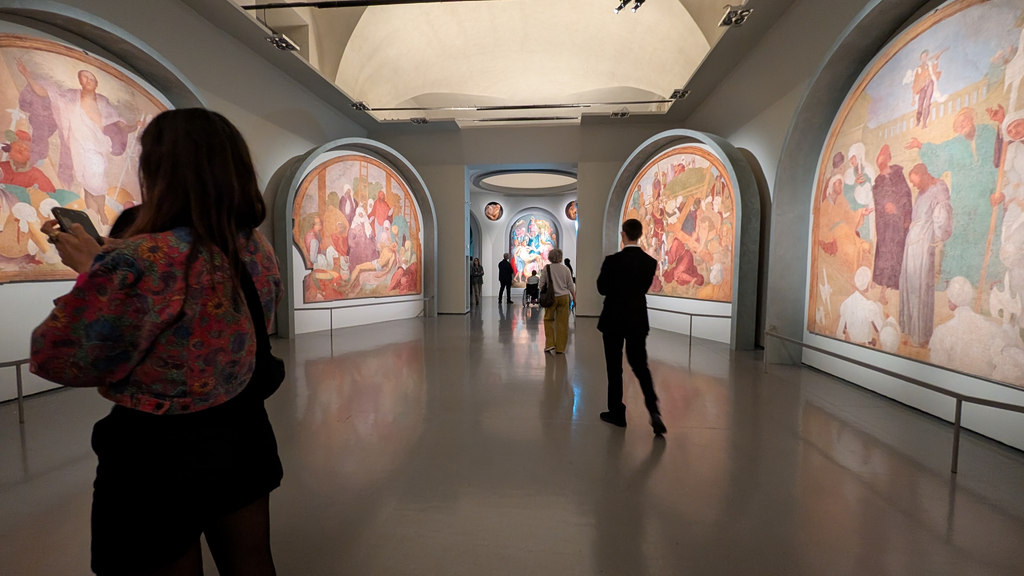
The Passion frescoes from the Certosa del Galluzzo are here too. They are detached, damaged and still powerful. They were restored with funds from Friends of Florence. Pontormo painted them after he fled the plague around 1523. Their composition shows the influence of Albrecht Dürer.
The last section turns to Pontormo as court painter for the restored Medici. It includes his student Bronzino. His 1545 Panciatichi Crucifix, on loan from Nice, shows the heir to Pontormo’s style.
Michelangelo’s Hand, Eight Inches Away
The rooms of works on paper are the ones most visitors cross too quickly. Go slowly instead. Two sheets there stopped me where I stood. They are catalogued as Studies of fortification for a gate in the walls of Florence, in red chalk, pen and diluted brown ink. They are by Michelangelo Buonarroti, on loan from the Casa Buonarroti. The case lets you get close enough to read the pressure of his pen.
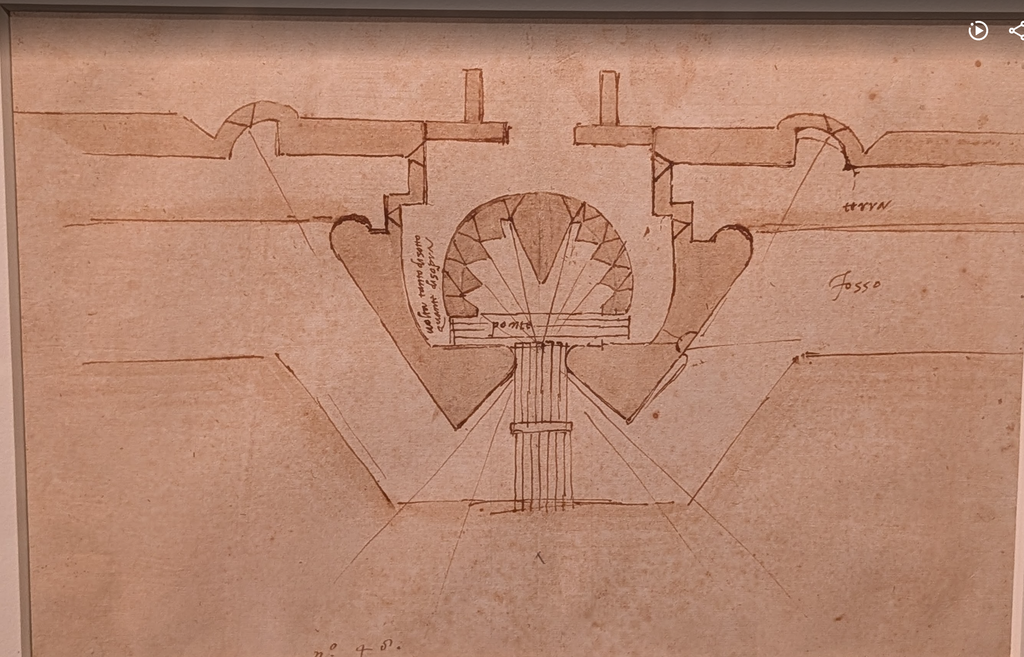
Here is why an engineer loses twenty minutes in front of them. In 1529 imperial troops were closing on the city. The Florentine Republic put Michelangelo in charge of its defences. What he drew is not a study of beauty. Look past the heavy ink and you find faint ruled lines fanning across the paper and crossing one another. Those are lines of fire. He plotted where the guns could reach, then drew the shape that would deliver it.
Gunpowder had made the tall medieval wall useless. Height only gave the cannon a better mark. So the new defences crouch low and swell outward in curved, almost muscular masses. Each one is angled to rake the face of the next. A gate is a hole in a wall, and so it is the weakest thing a city owns. This is the geometry of making a hole impossible to approach.
The second sheet carries his own handwriting. Fosso for the ditch. Ponte for the bridge. Terra for earth. That last word is the part nobody explains. These walls were not meant to be stone. Stone shatters and sends splinters through its own defenders. Packed earth swallows the shot and closes behind it. Beside the gate he drew the vault one voussoir at a time. These are not drawings made for a patron. They are instructions for a master mason who had to start digging.
Florence fell anyway, in August 1530. Two years later the same hand gave Pontormo two of its own cartoons to turn into paint. Both hang in this exhibition. Stand in front of the ditch and the ramparts, then walk to the paintings. You are following one mind as it moves from ballistics to desire, and the line never loses its authority.
If those two sheets hold you the way they held me, there is one more structure in Rome by the same hand, and you will see it from this building before you leave. Michelangelo took over the dome of St Peter’s in 1546, at seventy-one, and built it as two shells, one inside the other. The climb to the lantern runs up through the gap between them, which is the only way to understand why the thing stands. A guided visit to the basilica with the dome climb added costs about $33 with a licensed guide and is rated 4.7 by more than 6,400 travelers. Take it in the morning. The afternoon belongs to Pontormo.
The Last Room, and a Fair Reservation
The curators chose to close the show with the Visitation, pulled out of chronological order. Their wall text calls the choice daring but considered. It says the painting speaks of welcome, sisterhood and motherhood. Artribune disagrees in part. It finds this installation the weakest in the show. It also questions making the painting the exhibition’s poster image.
I agree it is the right painting for a farewell. You will have to judge the display yourself.
Bill Viola at Santa Maria Antiqua
Bill Viola’s video installation The Greeting is a modern echo of the Visitation. It is on view from October 11, 2026, to February 7, 2027, in the church of Santa Maria Antiqua in the Roman Forum. Viola made it for the American pavilion at the 1995 Venice Biennale. The video lasts ten minutes but shows an encounter of about forty-five seconds. The slowness is the point.
Planning Your Visit
Getting There
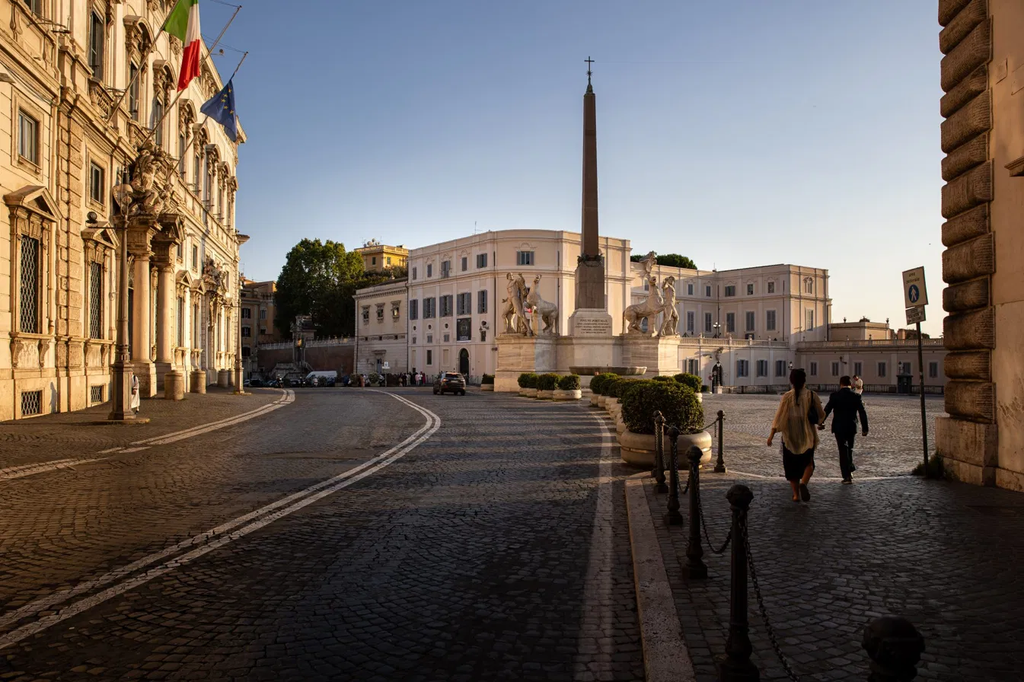
The Scuderie occupy an eighteenth-century papal stable complex on the Quirinal Hill. They are a short walk from the Trevi Fountain. The nearest metro station is Barberini, on Line A.
Tickets and Prices
Buy tickets on the official ticket page of the Scuderie del Quirinale, which sells through Vivaticket. Artribune reported a full-price admission of 18 euros on October 8, 2026. Another Roman museum guide, I Musei di Roma, said on October 6 that prices were not yet published. Check the official page before you pay. Groups and schools must reserve.

Best Times to Go
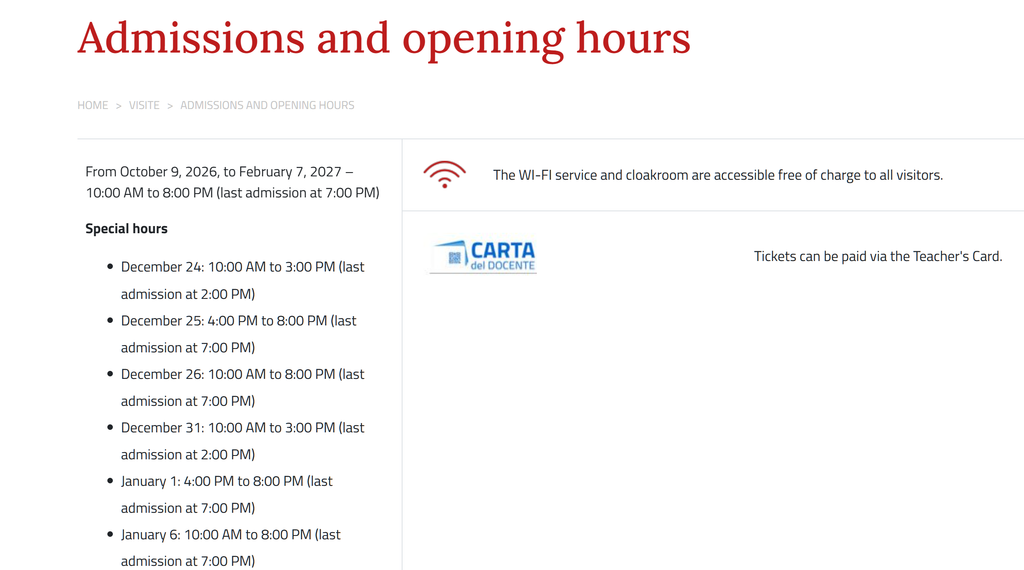
The exhibition is open every day from 10 a.m. to 8 p.m. Last entry is at 7 p.m. Holiday hours differ:
- December 24 and 31: 10 a.m. to 3 p.m.
- December 25 and January 1: 4 p.m. to 8 p.m.
- December 26 and January 6: regular hours
As a rule, the final weeks of a big Roman show draw the largest crowds. February is the riskier month. Early mornings are my advice for a calm visit.
The Window Nobody Tells You About
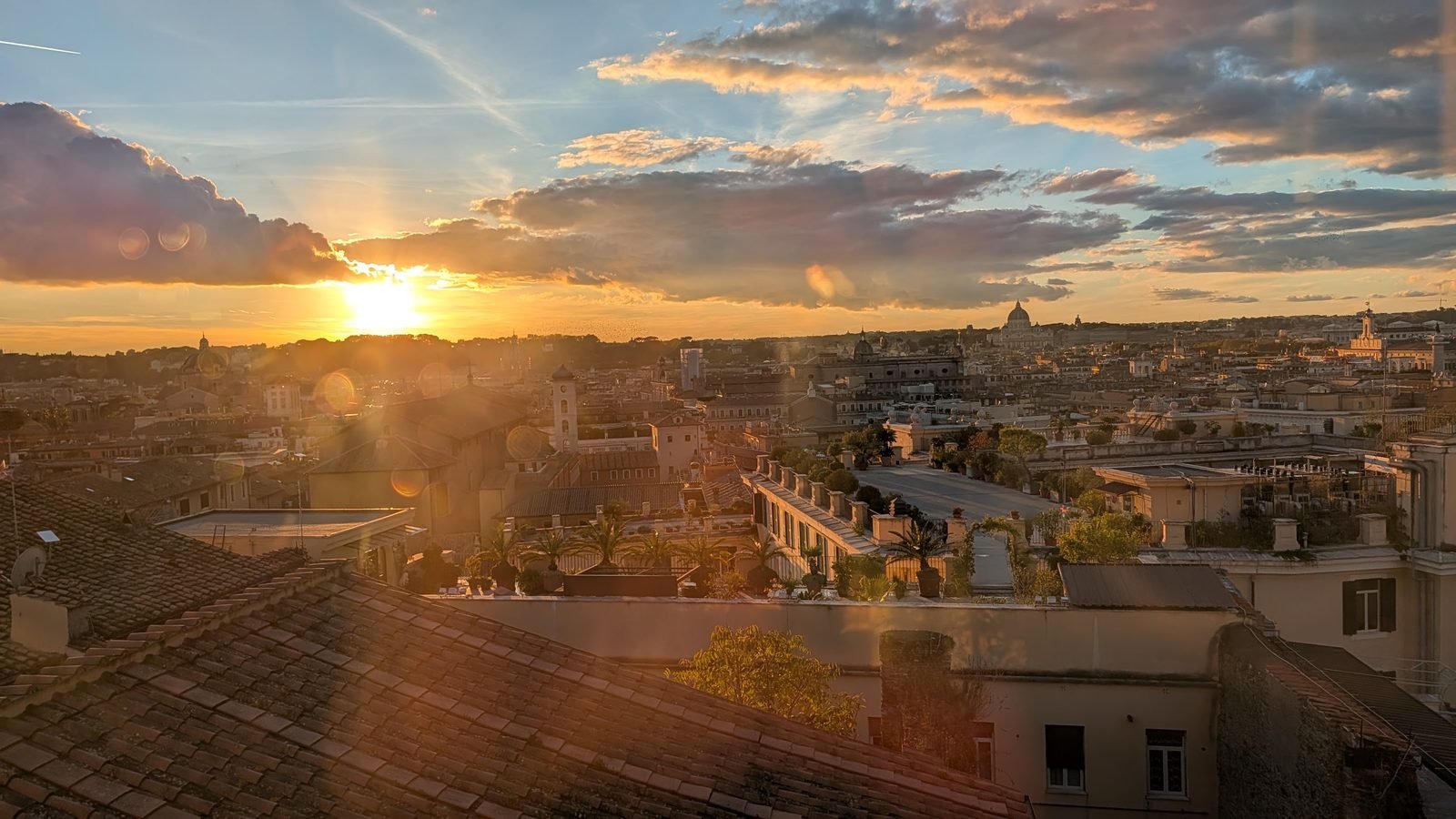
Your ticket includes something the exhibition pages barely mention. On the way out, the staircase passes a glass wall that runs the full height of the building. Behind it sits one of the finest views in Rome. It sweeps 180 degrees from the highest of the seven hills. You see the Altare della Patria, the roofs of the historic centre, the green rise of the Gianicolo and Monte Mario, and the dome of St Peter’s above it all.
The staircase came with Gae Aulenti’s restoration of the Scuderie, carried out between 1997 and 1999 for the Jubilee of 2000. It was built as a fire escape. Rome’s finest panorama is a safety requirement with a very good architect attached to it.
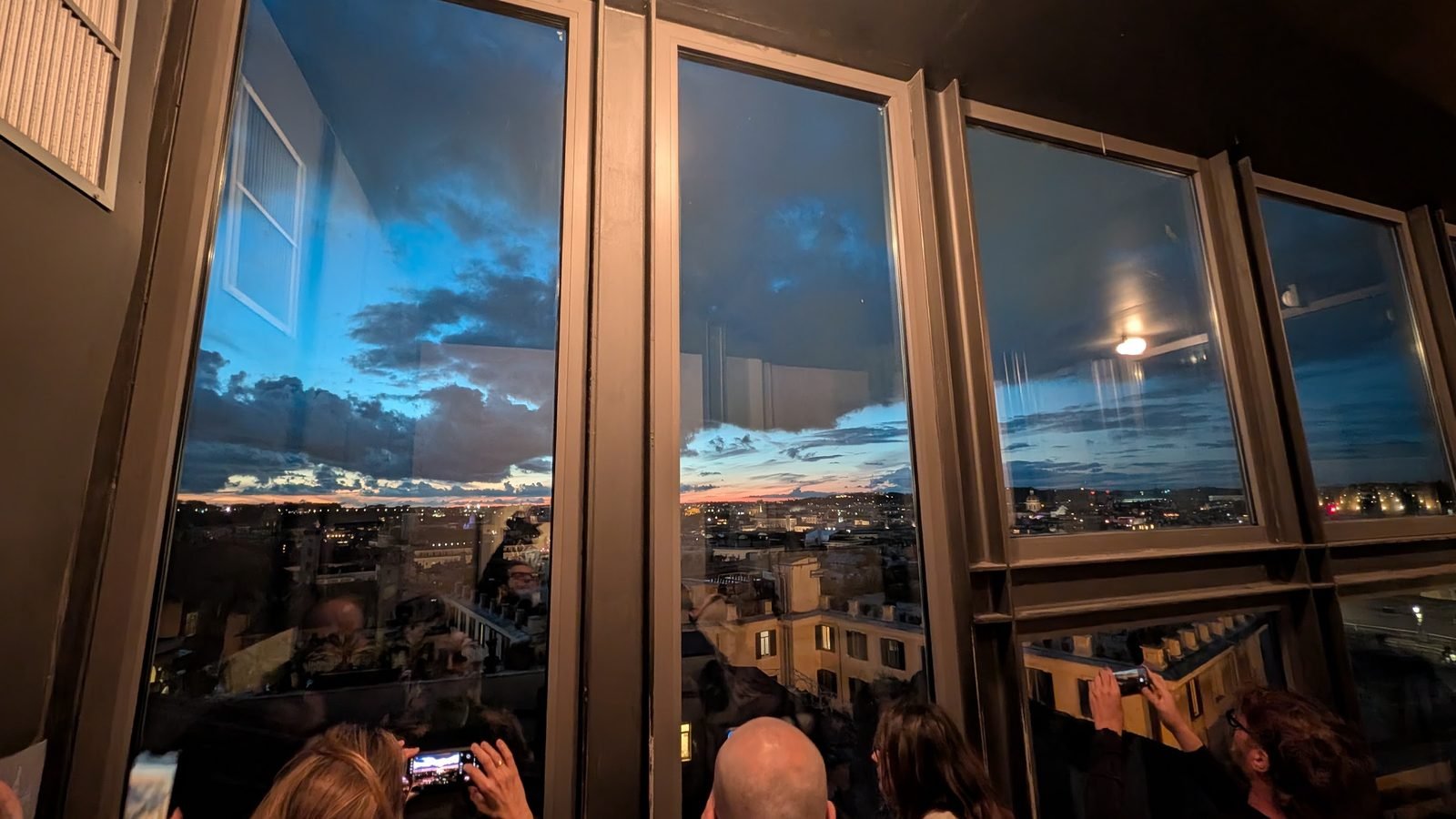
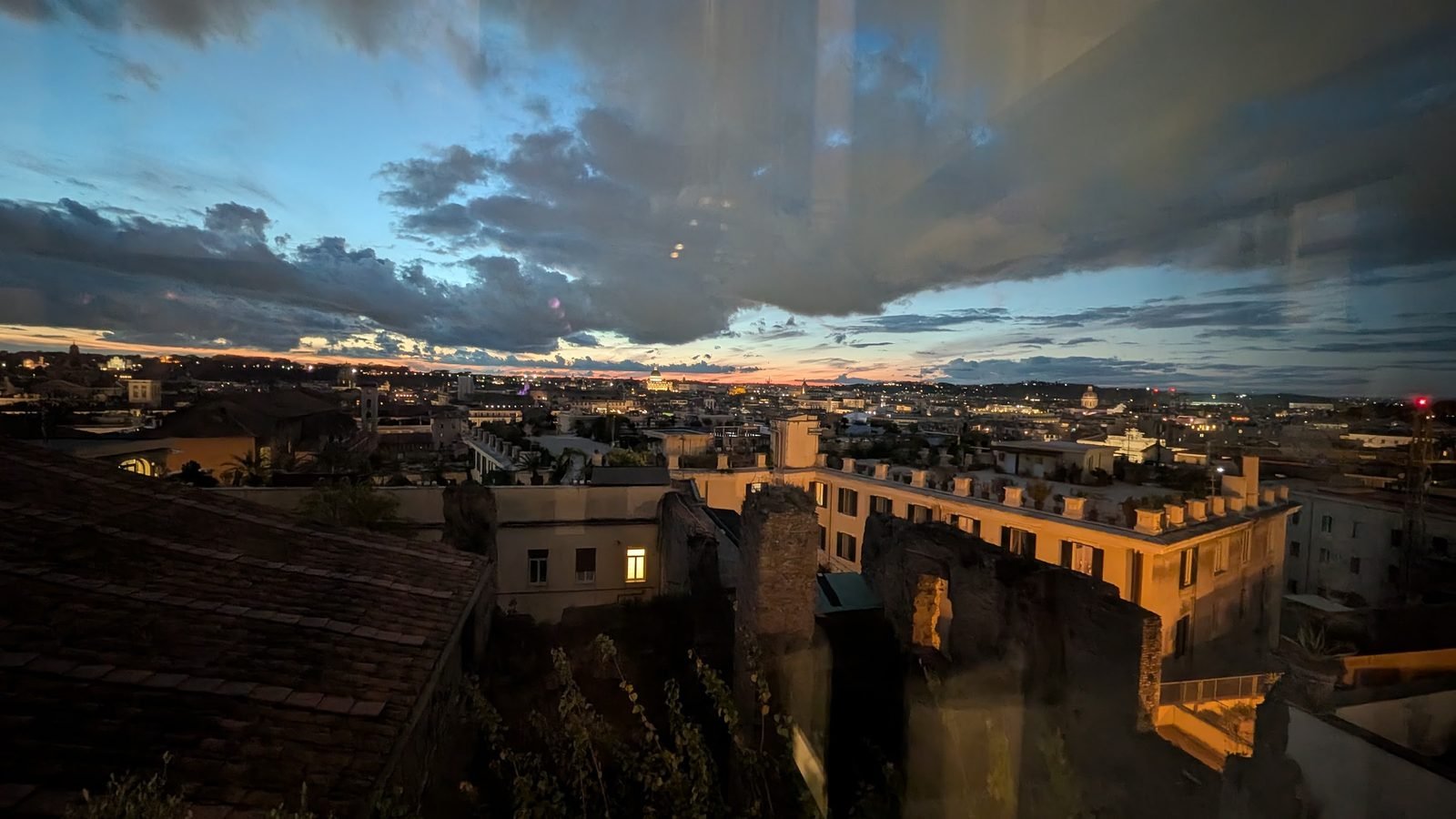
Time your visit and you get it twice over. The dome lies a little under two miles to the west-northwest. In the winter months the sun goes down well to its left, behind the Gianicolo. Arrive around three in the afternoon. Give the galleries the ninety minutes they deserve. You will reach the glass as the low light rakes the roof tiles and the dome turns to silhouette. Stay a few minutes longer and the city switches on beneath you.
One practical note. Last entry is one hour before closing. The Scuderie close at 8 p.m. on most days and at 10.30 p.m. on Friday and Saturday. Those two late nights are the ones to aim for if you want the city fully lit.
Where to Stay Nearby
Look at the districts of Monti and the Tridente. Both are walkable to the Scuderie. I do not name hotels here because their quality changes quickly.
What to Pair With Your Visit
Walk down to the Roman Forum for Viola’s The Greeting. The church matters here, and so does the ticket. Santa Maria Antiqua is one of the Forum’s so-called SUPER sites, the restricted monuments that open only on specific tickets because their early medieval frescoes are fragile. The standard Colosseum ticket does not cover them. The Roman Forum Super Pass with an audio guide app does, and it names Santa Maria Antiqua among the sites included. Check the Parco archeologico del Colosseo website for the installation’s opening days before you go.
There is a second pairing, and it is the one I would not miss. Pontormo spent his career stretching a standard Raphael had set, and Rome owns Raphael’s own Deposition, painted in 1507 for a chapel in Perugia and now in the Galleria Borghese. Seeing the two within a few days of each other is the clearest lesson in Mannerism available anywhere at the moment: the same subject, the same century, one holding its shape and the other letting go of it. The Borghese admits visitors in limited numbers at fixed times, so it is the one great Roman collection you cannot simply walk into on the day. A small-group guided tour with skip-the-line entry runs about $149 for two hours, is capped at fifteen people, and is rated 4.7 by more than 2,700 travelers.
If you are heading to Florence next, read our guide to Giotto’s Bell Tower. Plan around the loans too. The Deposition from Santa Felicita and the Visitation from Carmignano will be in Rome until February 7, 2027. Their usual walls will be without them.
Booking Notes: What I Would Actually Reserve Around This Show
What I would reserve. The Roman Forum Super Pass Entry with Audio Guide App, from about $25 per person and rated 4.3 by more than 1,200 travelers. It covers the Roman Forum, the Palatine, the Imperial Fora and the SUPER sites, Santa Maria Antiqua included. It stays valid for 30 days from purchase and needs no time slot, so you can keep it for the clearest morning of your stay and walk up to the Scuderie afterward.
Know what you are paying for. The same Forum Pass SUPER costs 18 euros on the official site of the Parco archeologico del Colosseo. The GetYourGuide version costs a few dollars more and adds an English audio guide app and a checkout in dollars. It is non-refundable, so book it only once your Rome dates are fixed. Neither version gets you into the Colosseum.
The one I would book first. The Borghese Gallery guided tour with skip-the-line entry, about $149 for two hours, rated 4.7 by more than 2,700 travelers and carrying GetYourGuide’s own certification. It is the most expensive thing I recommend on this page and the only one I would call necessary, for a plain reason: the Borghese releases a fixed number of places at fixed times, and in a city where you can improvise almost everything, this is the collection that punishes improvisation. The group is capped at fifteen. Raphael’s Deposition is the reason you are going.
The morning before the Scuderie. The St Peter’s Basilica, dome climb and underground tour, about $33, rated 4.7 across more than 6,400 reviews, with a licensed guide and a radio headset. The lift stops at the first terrace and the remaining 320 steps are yours. Book the earliest slot you can stand, and you will have climbed Michelangelo’s dome before you ever reach his drawings for the walls of Florence. If stairs or close spaces are a problem, book the same tour without the dome option rather than pushing through it.
What I would skip. The standard 24-hour Colosseum, Roman Forum and Palatine ticket, the default choice for a first visit to Rome. It is a fine ticket for the amphitheater, but it does not open the SUPER sites, and Santa Maria Antiqua is one of them. Bought for this pairing, it is simply the wrong key.
And what I would not bolt on. The packages that attach the Vatican Museums and the Sistine Chapel to the dome climb. They are not bad tours, and on another trip I would send you to them. They are wrong for this day. They turn a two-hour errand into the better part of one, and they spend your patience in the one place in Rome where the crowd is heaviest. The plan on this page asks you to be standing in front of the Visitation at three in the afternoon with your attention still intact. Keep the Vatican Museums for a morning of their own.
The exhibition itself. Buy Pontormo tickets on the Scuderie’s official page linked above. No reseller adds anything there, and I earn nothing on them.
FAQ: Pontormo Exhibition in Rome
What is the Pontormo exhibition in Rome? It is a solo show at the Scuderie del Quirinale, from October 9, 2026, to February 7, 2027. It presents the Florentine painter Jacopo Carucci, called Pontormo. It holds more than 130 works, 84 of them by him, in ten sections.
When is the best time to visit? Go on a weekday right after the 10 a.m. opening, or late in the afternoon before the 7 p.m. last entry. The final weeks before February 7 will likely be busiest.
Do I need to book tickets in advance? Booking online through the official Vivaticket site is the safest choice. Groups and schools must reserve.
How much does it cost? Artribune reported full admission at 18 euros on October 8, 2026. Check the official ticket page for reductions and any change.
How long does a visit take? Plan on about two hours for 130 works. This is my own estimate, not an official figure.
What can I pair with the exhibition? Bill Viola’s The Greeting at Santa Maria Antiqua in the Roman Forum runs on the same dates, from October 11. Santa Maria Antiqua is one of the Forum’s SUPER sites: the standard Colosseum ticket does not open it, while the Forum Pass SUPER does. The Trevi Fountain is a short walk from the Scuderie.
Should I still visit Pontormo’s churches in Florence? Yes, but time the trip. The Deposition and the Carmignano Visitation are away until February 7, 2027. Visit after the show closes, or expect their walls to be bare.
The Takeaway
Go to this show for the paintings, but also for the way it argues. It treats Pontormo as a professional with a clear mind, not a legend. Two works need your full attention: the Deposition at the center and the Visitation at the end.
When Rome is done, drive east to the Marche and finish the story in Urbino, where Raphael was born. Explore more stories from an Italian’s point of view at Tastes & Wonders of Italy.