Caracalla After Dark: Inside Rome’s Illuminated Baths and Underground Mithraeum
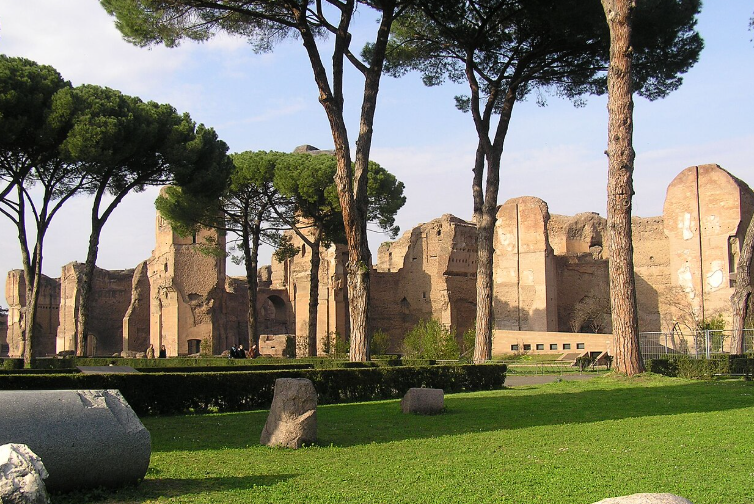
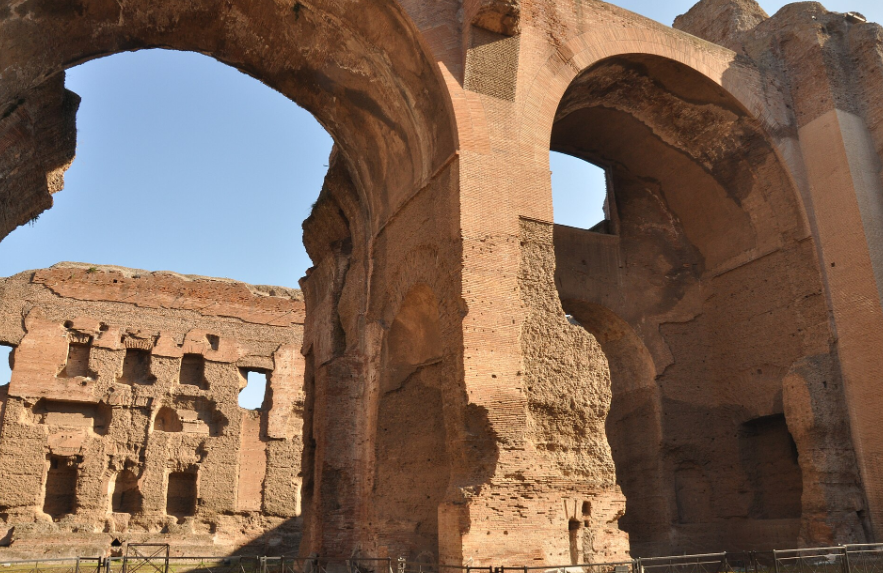
The Baths of Caracalla are impressive at midday, when tour groups fan out across the brick vaults and the caldarium’s remaining walls throw hard shadows onto the gravel. But the site was never meant to be understood in flat daylight. A visit to the Baths of Caracalla at night, when the arches are lit from below and the underground tunnels open to the public, comes closer to what this place actually was: a vast machine for pleasure, engineered on a scale the modern world took seventeen centuries to match. For six evenings each year, an initiative called Notturno Imperiale (Imperial Nocturne) lets you walk the complex after the regular gates have closed, descend into the service galleries, and stand inside the largest Mithraeum ever found in Rome. This is the version I send people to.
A note on links: some of the booking links in this article are affiliate links. If you book through them, I earn a small commission at no additional cost to you. The Notturno Imperiale ticket is not one of them — it is sold only by the state platform, at eight euros.
Why night changes everything here
A Roman bath complex was not a monument. It was infrastructure — closer in spirit to a power station than a temple, and like most infrastructure, it reads badly as a ruin under a blank sky. The evening opening solves this. The lighting design does not try to make the ruins pretty; it uses depth and shadow to restore a sense of the enclosed, vaulted, humid rooms these spaces once were. Water features return to the picture through the illuminated Specchio d’Acqua (Mirror of Water), a reflecting installation that stages the central role water played in the ancient complex.
The practical payoff is simpler. Rome in July and August is punishing at noon and merely warm after eight in the evening. Walking the site as the light goes gold and then blue, with a fraction of the daytime crowd, is not a marketing line — it is the difference between enduring a ruin and reading one.
What the Baths of Caracalla actually were
Construction likely began under the emperor Septimius Severus and the complex was inaugurated by his son, Marcus Aurelius Antoninus, the emperor history remembers by his nickname, Caracalla. When it opened in the early third century, it was among the largest and best-preserved imperial buildings in Rome, and it functioned as a full leisure city under one roof.
The core was a sequence of bathing rooms that patrons moved through in order. The tepidarium was the warm transitional room; the caldarium, a circular hall roughly 35 meters across, was the hot room, positioned to catch the sun through enormous windows; the frigidarium held the cold plunge and was, paradoxically, the grandest space of all. Beyond the baths themselves sat a natatio — an open-air swimming pool of near-Olympic dimensions — along with exercise yards, two libraries, and landscaped gardens. Romans did not come here to get clean quickly. They came for the afternoon.
The engineer’s floor: how the machine worked
This is the part that justifies the descent, and the part most daytime visitors miss entirely. Everything you admire at ground level was driven by what happened below it.
The heating ran on a system called the hypocaust. The floors of the hot rooms were raised on short brick pillars, the pilae, leaving an open cavity roughly two feet deep beneath the paving. Wood-fired furnaces called praefurnia, installed around the building’s perimeter, pushed hot air and smoke into that cavity so the floor radiated heat from below. Vertical clay flues built into the walls — caliducts — then drew the hot air upward, so the walls warmed alongside the floors and the heat accumulated in the thick masonry rather than escaping. The same furnaces heated water in large copper boilers feeding the caldarium pool. None of the copper survives; walk the tunnels today and you see the passages, not the plumbing.
What this amounts to, in modern terms, is centralized radiant heating at urban scale, running more or less on the same principle as the underfloor systems specified in efficient buildings today: circulate heat beneath the surface, let the mass of the structure hold it, warm the room evenly from below. I certify energy performance in buildings for a living, and the honest reaction to standing in these galleries is not nostalgia but a kind of professional vertigo. The Romans were doing this in the third century.
The cost was staggering and worth stating plainly, because it corrects the postcard. A complex this size is estimated to have burned on the order of ten tons of wood every twenty-four hours. That fire was fed and cleaned by enslaved workers who moved through these low, hot, soot-filled tunnels in shifts, out of sight of the marble halls above. The luxury upstairs was a direct function of forced labor downstairs. The night route through the galleries is where that reality becomes physical rather than abstract.
The Mithraeum: Rome’s largest underground temple
The tunnels hold one more thing that surprises people. Set into the service level is the largest mitreo (Mithraeum) yet discovered inside the urban fabric of Rome — a subterranean sanctuary dedicated to the god Mithras.
The cult of Mithras was one of the so-called mystery religions, imported from the eastern edges of the empire and especially popular among soldiers and among the ordinary men of imperial Rome. Its rites were secret, conducted underground by design, which is why a bath complex — with its ready-made warren of hidden galleries — could house a temple this size without anyone upstairs being the wiser. The chamber still holds its sacrificial altar and fragments of painted decoration. Standing in it, lit low, you get something the guidebooks struggle to convey: a sense of how many Romes coexisted in one building, the public and the clandestine separated by a single floor.
Planning your night visit
The evening openings are free-flow, not guided tours, which suits the site — you set your own pace through the halls and the galleries rather than following a raised umbrella.
The essentials, in brief
- Where: Baths of Caracalla, Viale delle Terme di Caracalla 52, Rome. Access to the underground level for visitors with reduced mobility is arranged from Via Antonina 5.
- When: Six evenings across summer and early autumn. Gates open at 7:30 p.m., last entry is 9:45 p.m., and the site clears by 10:45 p.m.
- Capacity: A maximum of 1,200 visitors per evening, set for the monument’s protection.
- Booking: Online only, in advance. With a hard cap per night, walking up is a gamble you will often lose.
2026 dates and tickets
For the 2026 edition, Notturno Imperiale runs on July 16, July 23, August 2, September 19, September 26, and October 15. Standard admission is 8 euros, with a reduced rate of 2 euros. The evening of September 26, held in conjunction with the European Heritage Days, carries a symbolic 1-euro ticket. Tickets are sold exclusively through the official Musei Italiani platform; because prices and dates are set annually by the Soprintendenza Speciale di Roma, confirm the current details on the official site before you plan around them.
https://portale.museiitaliani.it/b2c/buyTicketless/c763f66b-8295-4800-a92d-b96a26659396
What to wear and bring
Wear real shoes. The paving is ancient and uneven, and the underground galleries are exactly the kind of surface that punishes sandals. Bring a light layer, too: the tunnels stay cooler than the summer air above, and the temperature difference is noticeable once you descend.
What to pair it with
The baths sit at the southern edge of the historic center, within walking distance of the Aventine Hill and its quiet early churches, and a short distance from the start of the Appian Way. An evening at Caracalla pairs naturally with a late Roman dinner afterward — the whole point of the timing is that you are free precisely when the city sits down to eat.
Booking Notes: The Other Way to Be Here After Dark
Six evenings a year is a narrow window, and if your trip does not fall on one of them there is a second route into these walls at night, running across most of the summer.
The opera season. The Teatro dell’Opera di Roma has staged its summer season inside the Baths since 1937, and an evening at the opera at Caracalla puts you in the frigidarium after sunset with the brick mass of the calidarium behind the stage. It is a different experience from the Notturno Imperiale — you are seated, not wandering, and you see one part of the complex rather than all of it — but the acoustics of that volume are the argument. Book the categories toward the centre; the lateral blocks lose the sightline to the stage against the ruin, which is the whole point.
What I would skip. Any combined ticket that bundles Caracalla with three other Roman sites in one afternoon. The Baths reward two unhurried hours, and the underground level in particular is not a place to pass through on a schedule. This is a site where the correct number of monuments per day is one.
FAQ — Visiting the Baths of Caracalla at night
What is Notturno Imperiale at the Baths of Caracalla?
It is a program of special evening openings that lets visitors walk the illuminated Baths of Caracalla after regular hours, including the underground service galleries and the Mithraeum. It is organized by the Soprintendenza Speciale di Roma and runs for a limited number of evenings each year.
When can you visit the Baths of Caracalla at night?
The evening openings take place on six dates spread across summer and early autumn. In 2026 they fall on July 16, July 23, August 2, September 19, September 26, and October 15, with gates opening at 7:30 p.m. and last entry at 9:45 p.m.
Do you need to book tickets in advance?
Yes. Each evening is capped at 1,200 visitors to protect the monument, and tickets are sold only online through the official Musei Italiani platform. Buying ahead is strongly advised, since walk-up entry is not guaranteed.
How much does it cost?
Standard admission for the 2026 evening openings is 8 euros, with a reduced rate of 2 euros. The September 26 date, tied to the European Heritage Days, is priced at a symbolic 1 euro.
Are the underground tunnels and the Mithraeum included?
Yes. The evening route includes the subterranean galleries with the Antiquarium and the Mithraeum — the largest found within Rome’s urban area — which are not part of the standard daytime experience.
Is the night visit guided or self-guided?
It is self-guided. Visitors move freely through the halls and galleries at their own pace along a lit route, rather than following a fixed guided tour.
Is the site accessible for visitors with reduced mobility?
The main entrance is on Viale delle Terme di Caracalla, and a dedicated access to the underground level for visitors with reduced mobility is provided from Via Antonina 5.
The takeaway
Most people see the Baths of Caracalla as a daytime box to tick between the Colosseum and the Appian Way. The evening opening asks something different of you: to read a ruin as a working building, to go below the floor and see what powered the spectacle above it, and to stand in a hidden temple that the bathers overhead never knew was there. It is one of the few experiences in Rome where the crowds thin exactly as the site gets more interesting. Go in the dark, and go underground.
If you want more of Italy explained from the inside — by an Italian who reads these places as much through an engineer’s eye as a traveler’s — you’ll find more stories on Tastes & Wonders of Italy.