Italian Olive Oil Gifts: What an Italian Would Actually Send
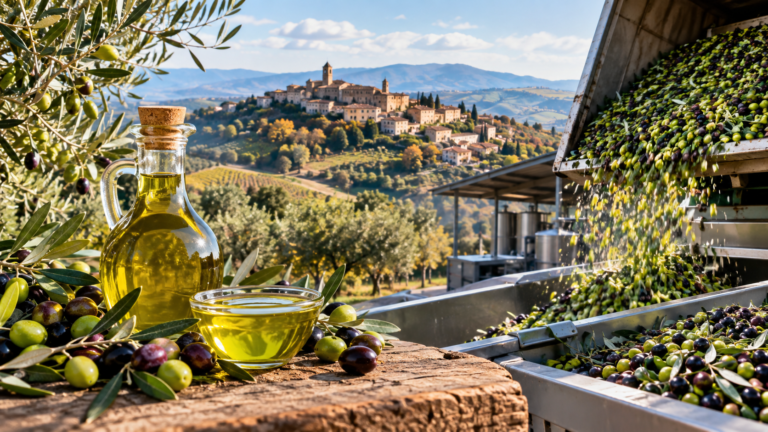
An Italian olive oil gift starts at the mill, not at the gift shop. That is the whole story, really. By early November, the small mills near my home in the Marche keep a side counter running just for this. Neighbors fill five-liter tins to carry home for the holidays.
Each tin gets labeled by hand with the pressing date before it leaves the counter. Nothing about that scene looks like the ribboned bottle in a boutique box. You know the one. It shows up every December in American stores.
What belongs in an American’s holiday package should follow the same logic as that tin. A named producer.
A stated harvest. A container that actually protects what is inside it. This guide explains why the standard gift-shop bottle fails that test. It also covers what still holds up after the trip across the Atlantic, and which US sellers sell it the honest way.
A good Italian olive oil gift is extra virgin oil from one named estate.
It carries a harvest date printed on the label. It comes in a tin, or in a dark, light-blocking bottle, rather than clear glass.
The producer and the olive variety should appear by name, the way a wine label names a vineyard and a grape. It should reach the recipient close enough to the November pressing that they taste the current season, not oil that already sat on a shelf for a year.
A generic blend with no date on it is the gift this guide argues against, whatever the box looks like.
A note on the links below: a few are affiliate links. I earn a small commission if you buy through them, at no extra cost to you. I press my own olives at a mill near Petritoli, for a fraction of what an imported bottle costs in the United States. So flattering a retailer gets me nothing. I only link to sellers who publish a harvest date and a named cultivar on the product page. That is the one check this whole article asks you to make.
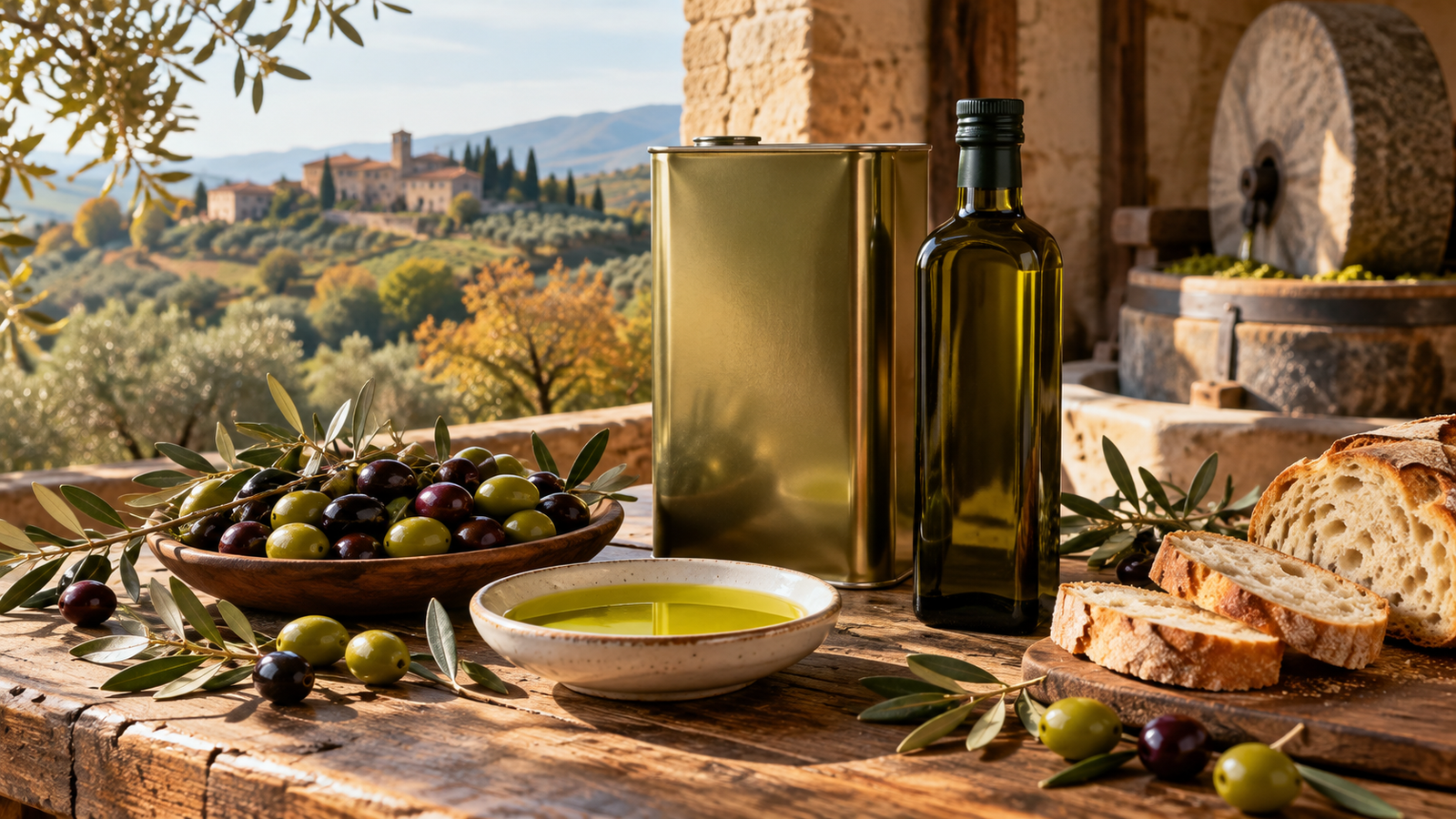
The Gift Box Is the Wrong Italian Olive Oil Gift
Walk through any airport duty-free counter in December. Or any specialty gift aisle. The pattern repeats.
A clear glass bottle, a wooden crate or a ribbon, and a price that assumes the packaging is the product.
Open the box, though, and the one piece of information that actually matters is usually missing. No harvest date.
No named variety. Just the word Italy on the front. That legally can mean the olives grew somewhere else entirely, and the oil was only bottled there.
That absence is not cosmetic. Light is the fastest way to ruin olive oil. Ultraviolet rays trigger the same oxidation that turns butter rancid, only faster.
A packaging trial reported by the Italian trade outlet Olivonews makes the point well. Researchers tracked extra virgin oil for 300 days, under daily light exposure meant to copy a shop shelf.
Oil in dark green glass, the format most gift sets use, lost 75 to 79 percent of its polyphenols. It also stopped meeting the legal definition of extra virgin olive oil, after about eight months. A light-blocking carton in the same trial lost only 32 percent.
A decorative bottle sitting under store lighting for a season, before anyone buys it, is not a neutral choice. It is a slow leak of the exact compounds that make the oil worth giving in the first place.
Why a Tin Beats a Bottle, Every Time
The physics does not change once the bottle leaves the shelf. It sits on someone’s counter at home instead, and the same rules apply. Clear glass blocks almost no ultraviolet light. Dark green or amber glass blocks most of it, but not all. A metal tin blocks all of it. It also survives a holiday shipping box far better than glass does. Add a nitrogen flush at bottling, a step several serious producers now use, and the oil loses even less. Every time someone opens the cap, fresh oxygen gets in. The flush slows that damage down.
Here is the part most Americans get backward. The tin is not the budget option. It is what people choose for their own kitchen, the ones who drink this oil every day rather than giving it as a present twice a year. A boutique glass bottle photographs better for a gift guide. A tin protects the thing you are actually paying for. If a seller offers both formats of the same oil, the tin is the better gift. It is not the consolation prize.
Novello Is the Only Italian Olive Oil Gift With a Calendar
Novello is this year’s oil. It comes from olives picked early, and it gets sold unfiltered within weeks of the crush. For the fuller picture, see our guide to novello olive oil and the 2026 harvest. It runs cloudy, because nothing has settled out yet.
It also carries a sharp, peppery bite at the back of the throat. First-time drinkers sometimes mistake that bite for a flaw. It is not one. That bite comes from the same compounds the rest of this guide has been protecting against light and time, and right after pressing, they sit at their highest level.
Here is the honest complication, and it is worth saying plainly. The term olio novello has no legal definition under Italian or EU law. Vino novello is different; a 2012 decree regulates it down to the release date.
Olive oil gets no such rule. Any oil pressed this season can carry the word novello, with no enforced cutoff. So the label by itself guarantees nothing. What guarantees something is the harvest date underneath it, the same check this whole article keeps returning to. A seller who prints an exact pressing date earns the word. One who prints only novello, and nothing else, has not.
Buy it anyway. At its best, it is the one Italian olive oil gift with an actual calendar attached. It exists for a few weeks each year.
It ships to the US within that window, when a seller is honest about dates, and this year’s new-harvest bottlings are already moving. Write the texture into the gift card, too. Tell the recipient that the cloudiness and the cough are the point, not a defect. Otherwise they may assume the bottle arrived spoiled.
What to Send, and to Whom
For the Everyday Cook
Someone who cooks with olive oil four or five nights a week needs real volume.
They will finish it before the oil fades, so a ceremonial bottle meant to sit on a shelf makes no sense here.
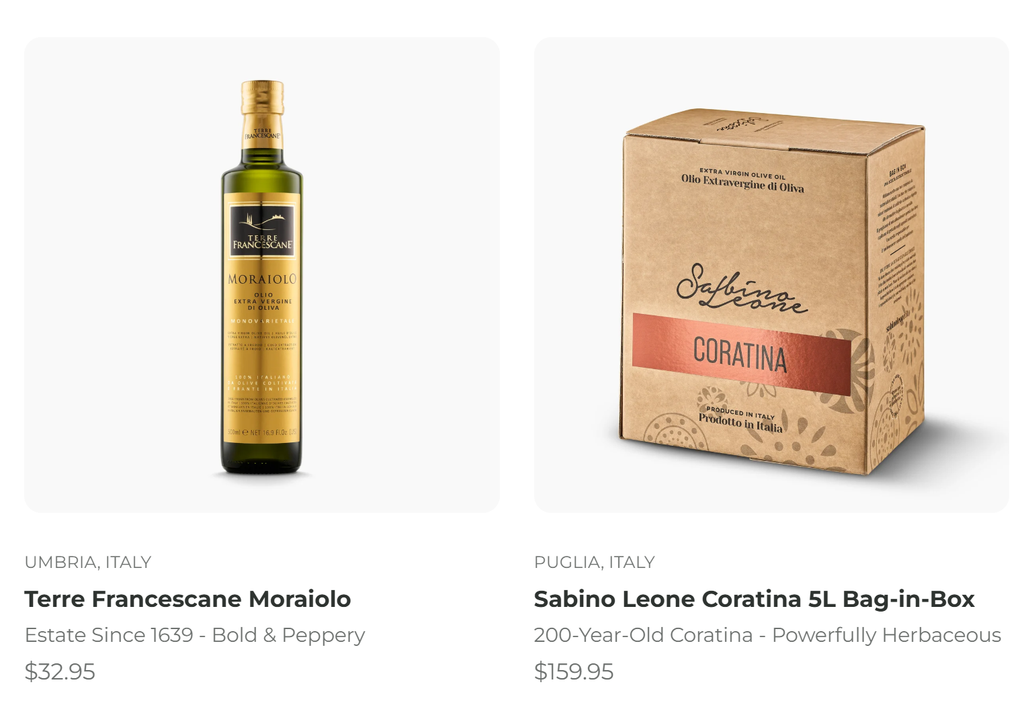
A full-size tin of one named cultivar beats a decorative small bottle every time. Flavor and polyphenols fade either way, whether or not anyone notices the pretty glass. For this recipient, volume beats decoration every time, and that is what makes it the right Italian olive oil gift for someone who actually cooks.
For Someone Who Already Has Good Oil
If the recipient already buys decent olive oil, sending more of the same single bottle is a wasted gesture. What actually lands is comparison. Try a six-bottle tasting set spanning different regions and cultivars. Pour them side by side on the same plain bread. That one evening teaches more about Italian olive oil than a year of drizzling from a single bottle ever could, and it costs less than one premium liter. If you want a medal behind the bottle, start from the award-winning Italian olive oils that actually ship to the US: most of this year’s winners never reach an American shelf.
For Someone Who Has Never Tasted a Single Cultivar
Most Americans have only ever had blended oil. That hides the olive the way a jug wine hides the grape. A single named cultivar from one estate makes the point better than any blend can. Marina Palusci’s Dritta-variety oil from Abruzzo is a good example. It shows what one olive variety actually tastes like on its own, instead of a generic Italian blend doing the talking. Cultivar, not the flag on the label, is the real variable behind flavor. The Marche alone grows a dozen names most Americans have never heard of, from Coroncina to Raggia.
For a Colleague or a Client
This is the one relationship where a pre-built gift set earns its price. You are not making a personal taste decision for someone you know well, so a ready-made Italian olive oil gift set covers that case cleanly.
For a client relationship that runs past a single holiday, though, consider going further. A wine club subscription is honestly a better present than any single bottle of oil. It keeps giving after December, without you having to remember to do it again next year.
The Shipping Deadlines That Decide Everything
None of the above matters if the package arrives the week after Christmas. That happens to more holiday orders than most shoppers expect. Italy’s own December calendar and the US shipping calendar do not line up, and the gap catches people every year. USPS lists Thursday, December 17 as the ship-by date for both Ground Advantage and First-Class Mail.
Priority Mail follows on December 18, and Priority Mail Express on December 19. FedEx’s numbers run earlier for its slowest option. Ground Economy closes Tuesday, December 15. Express Saver holds until December 21, 2Day until December 22, and overnight service until December 23. UPS had not published its 2026 ship-by dates as of mid-October.
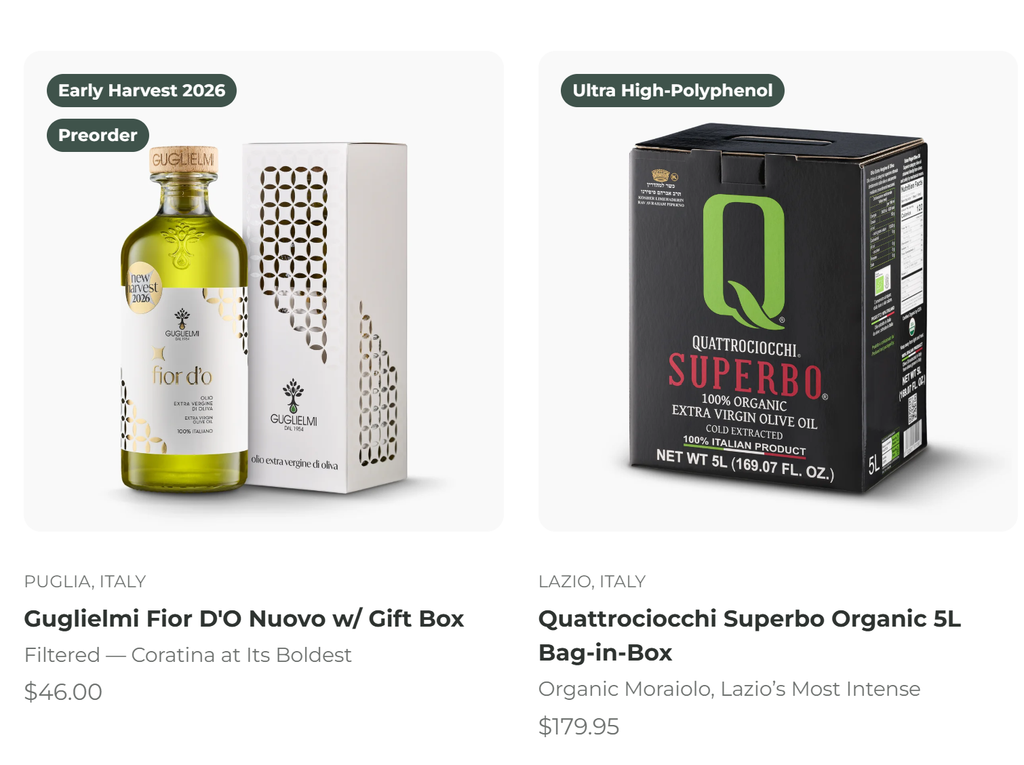
An olive oil package is heavier and more fragile than most gifts. For that reason, order by the earliest of those dates: December 15. Do not cut it close with an overnight upgrade that costs more than the oil itself. If you are assembling the gift yourself, rather than buying a pre-made set, check each product’s current harvest date and stock status first. The best sellers update both every few weeks during the season.
What Not to Send This Year
A few honest exceptions belong here, because not every bottle marketed for the holidays is actually a good Italian olive oil gift. Flavored or infused oils sold as a gourmet gift are usually built on a cheaper base oil. The flavoring does the work the olives should be doing instead. Skip them, unless the recipient has specifically asked for one. The same goes for generic oil-and-vinegar duo sets with no named producer on either bottle. They tell you nothing about who actually made what is inside, and our guide to buying real Italian olive oil in the US covers exactly what to check instead. Any bottle, decorative or not, that lists no harvest date should stay on the shelf, regardless of price. And then there is the gift bought on December 20, hoping it still arrives in time. That is the one mistake this whole guide is trying to prevent. By then, almost nothing short of overnight shipping gets there.
Frequently Asked Questions
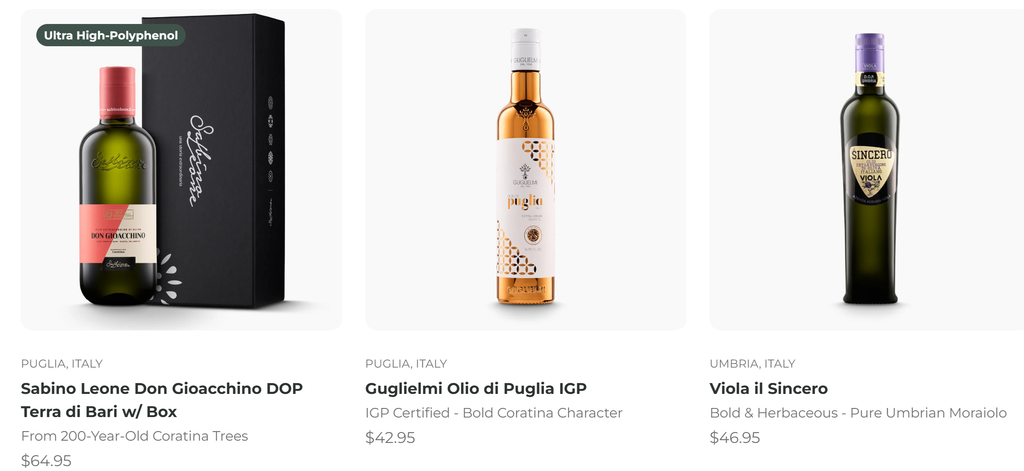
What is a good Italian olive oil gift? A good Italian olive oil gift is extra virgin oil from a single named estate, with a printed harvest date. It comes packaged in a tin or dark bottle, rather than clear glass. The producer and olive variety should appear on the label, and the oil should sit close to its pressing date rather than a year old.
When is the best time to send Italian olive oil as a holiday gift? Order by mid-November. Ship no later than the earliest carrier deadline in your lineup, which for the 2026 season is FedEx Ground Economy on December 15. Waiting until closer to the holiday forces an expensive overnight upgrade, or risks a late arrival.
How can I tell if a bottle of olive oil is actually fresh? Check the label for a harvest date, not just a best-by date. A best-by date can sit 18 to 24 months after pressing. Flavor and polyphenols, meanwhile, peak in the first year after harvest. No harvest date on the label is itself a warning sign.
Is olio novello always better than regular extra virgin olive oil? Not automatically. The term has no legal definition in Italy or the EU, so any oil pressed that season can use it. What matters is the actual harvest date printed on the bottle, not the word novello by itself.
How much should a good Italian olive oil gift cost? A 500-milliliter bottle of single-estate extra virgin typically runs 25 to 50 dollars in the US, once import and distribution costs get added. That is roughly four to six times what the same oil costs at an Italian mill. A tasting set of several smaller bottles usually costs less than one premium full-size bottle.
Can I still ship Italian olive oil within the US in time for Christmas 2026? Yes, if you order by the earliest shipping deadline in the group: December 15 for FedEx Ground Economy. You can also pay for a faster service closer to the holiday. UPS had not published its 2026 cutoff dates as of mid-October, so check directly with any seller using that carrier.
What is the one thing an Italian would check before giving olive oil as a gift? The harvest date, before anything else. A named cultivar matters. The right container matters. The right season matters, too. But none of it means much until that one date confirms the oil is actually fresh enough to be worth giving at all.
The Takeaway
None of this makes a twelve-dollar bottle from the supermarket the wrong choice for cooking dinner tonight. It makes it the wrong Italian olive oil gift for the holidays. A present is supposed to say something, and a bottle with no date and no name says nothing at all. Send the tin. Name the estate. Check the harvest date, and ship it before December 15. For the fuller picture of why that date matters more than the country printed on the label, our guide to Italian olive oil culture is the place to go next.
If you want more dispatches like this, the kind that look past the gift-shop packaging and into the mill itself, subscribe to the Tastes and Wonders of Italy newsletter. You will get stories from the Marche, Umbria, and Abruzzo that rarely make it into a holiday catalog.