Italian Olive Oil Culture: Why No Family Here Buys It the Way You Do
Italian olive oil culture starts with one small detail. A family name, written in marker on a metal latta (a squat tin for storing and carrying the oil). The tin sits stacked in a cellar in the Marche. It was never for sale.
In central Italy, oil like this moves in a different way. It passes between relatives, neighbors, and the local frantoio (the olive mill). It rarely reaches a store shelf at all. Families own trees, or a share of a grove, or a standing deal with someone who does. They carry their olives to the mill. They bring home their own oil, with their own name on the tin. This piece explains that ownership model. It explains why an unlabeled bottle handed to a guest is inheritance, not product. And it explains what both facts should teach you about the bottle on your own kitchen shelf.
What olive oil actually is in an Italian household
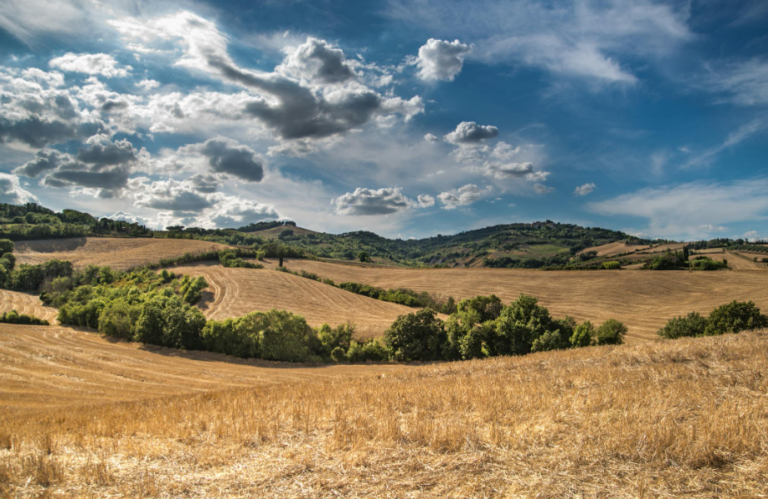
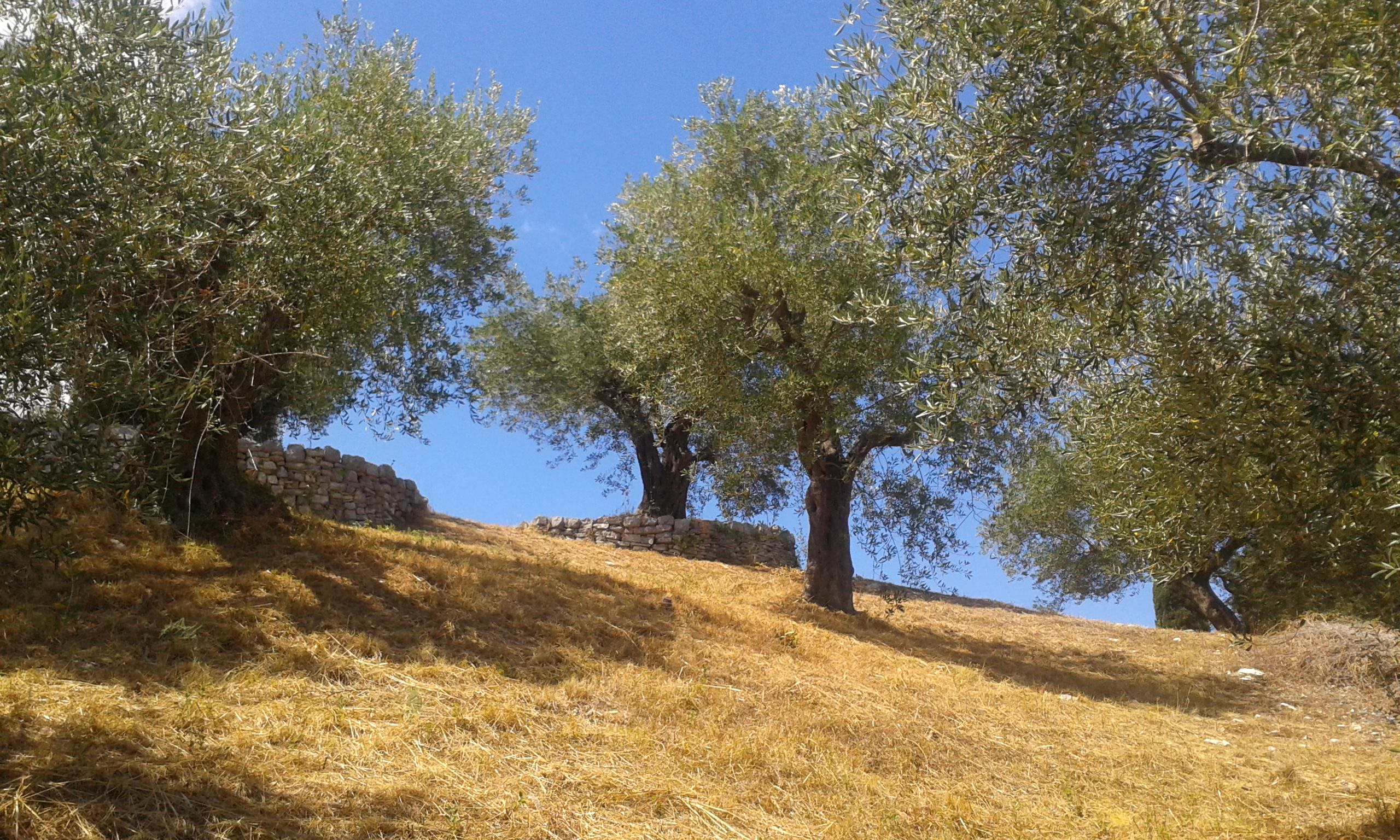
Ask an American where their olive oil comes from. The honest answer is usually a store. Ask a family in Umbria, the Marche, or Tuscany the same question. The answer is a place: a hillside, a row of trees behind the house, a relative’s field. The oil is not a grocery decision. It sits closer to firewood, or homegrown tomatoes. You produce it, or you get it from someone who does.
Oil’s role as a daily dietary staple, not a condiment, is its own subject. That belongs to nutrition writing, not this piece. Readers curious about that angle can find it in What Is the Mediterranean Diet in Italy.
ISMEA is the Italian institute that tracks agricultural markets. In August 2025, it published a sector report. National olive oil consumption sits at 441,000 tons a year. Domestic production rarely comes close to that number in a normal season. Imports fill part of the gap. So does a smaller category: official statistics call it “direct sale and self-consumption.” That is oil that never passes through a shop. On paper, it is a modest slice of the national total. On the ground, in towns across central Italy, it can describe most of what a household actually eats.
The same report counted more than 620,000 farms tied to Italy’s olive sector, spread across roughly 1.1 million hectares of groves. About a quarter of that land is certified organic. Those numbers describe a landscape of small, scattered holdings, not a handful of large industrial estates. That structure is exactly why the ownership model matters here more than it would in a country built around a few big producers.
Owned, not bought: the economics nobody explains
Family trees, shared groves, and the mill agreement
Ownership takes several shapes. Some families hold clear title to a grove, passed down across three or four generations. Others hold a smaller share: a few rows of trees inside a relative’s larger property, tended separately by informal agreement. Others own no trees at all. They keep a standing arrangement with a neighbor instead, trading harvest labor for a portion of the pressed oil.
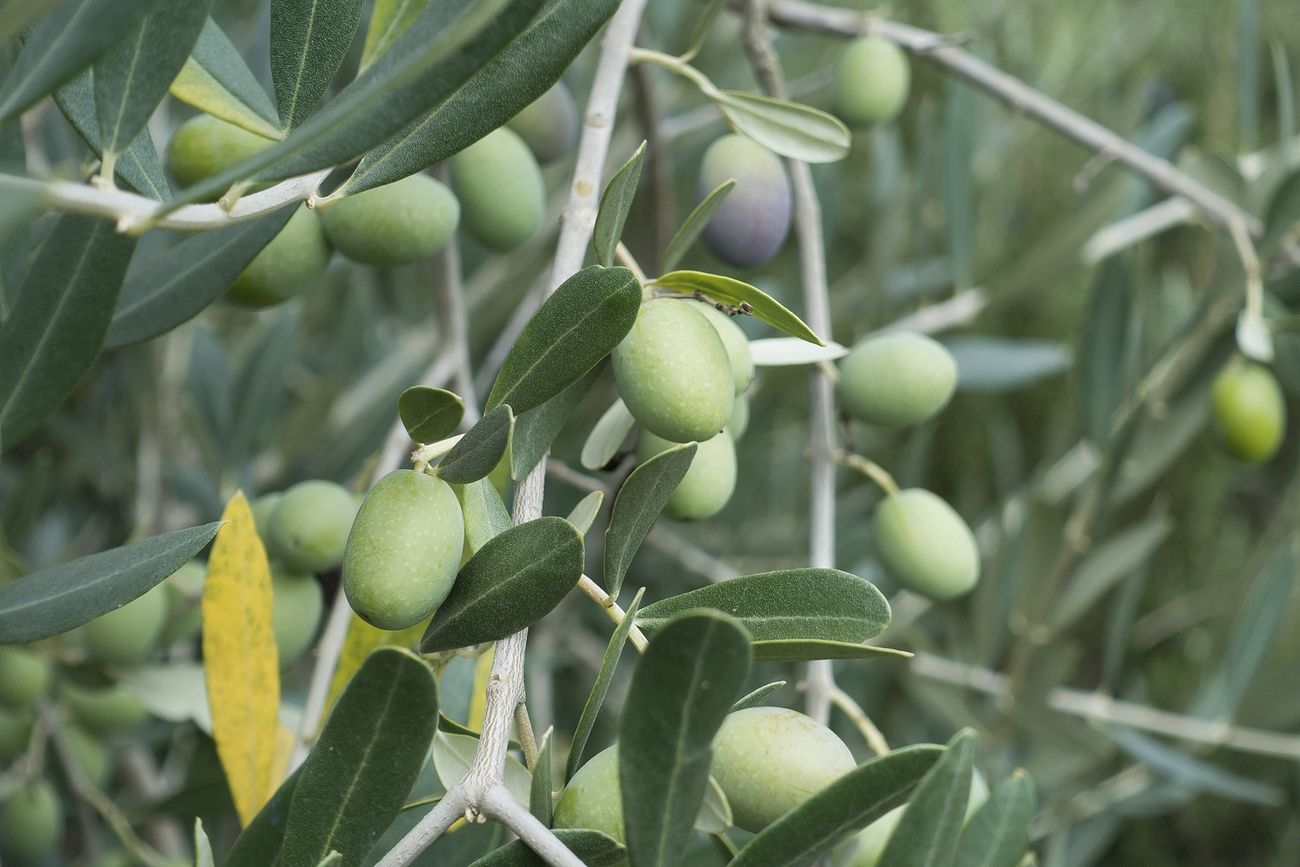
Whichever version applies, the destination is the same: the frantoio. A closer look at that visit, and what happens inside the mill itself, lives in Olive Harvest in Italy: Inside a Frantoio. The olives go in as fruit. A latta comes out with a name on it. I have walked into more than one cellar in the Marche where three or four such tins sat stacked by year. Families keep them as a hedge against a bad harvest, not as an investment.
Why the unlabeled bottle is a gift and not a product
Sometimes a household has more oil than it needs. Some of it reaches the table for an arriving guest: a plain bottle, no label, maybe just a strip of tape with a date. An American visitor tends to read this as a rustic homemade product. Something between a favor and a small commercial item. It is neither. It is a transfer of the same inheritance that produced it. Land, trees, labor, and the trip to the mill, compressed into a bottle passed across a table.
The same informal logic governs vino sfuso: bulk wine bought and sold directly between producer and household, with no label at all. It is worth naming that parallel once, without unpacking it further here. Both economies move almost entirely outside retail. That is exactly why most visitors never notice either one.
The tree as a multi-generational asset
An olive tree planted this year will not reach full production for a decade or more. Its useful life afterward runs into centuries. That timeline sits outside almost every other farming investment. Someone plants the tree. Someone else’s grandchildren inherit its best years.
I have spent years assessing the return horizons of physical assets in professional engineering practice. Against that background, this scale still stands out. Buildings and infrastructure usually depreciate across decades, not centuries. A tree planted today behaves more like a bridge or a dam than like any annual crop. Most technical assessments plan for a useful service life measured in fifty or a hundred years, then budget for replacement. An olive grove does not fit that model at all. It simply outlasts the planning horizon of whoever wrote the assessment.
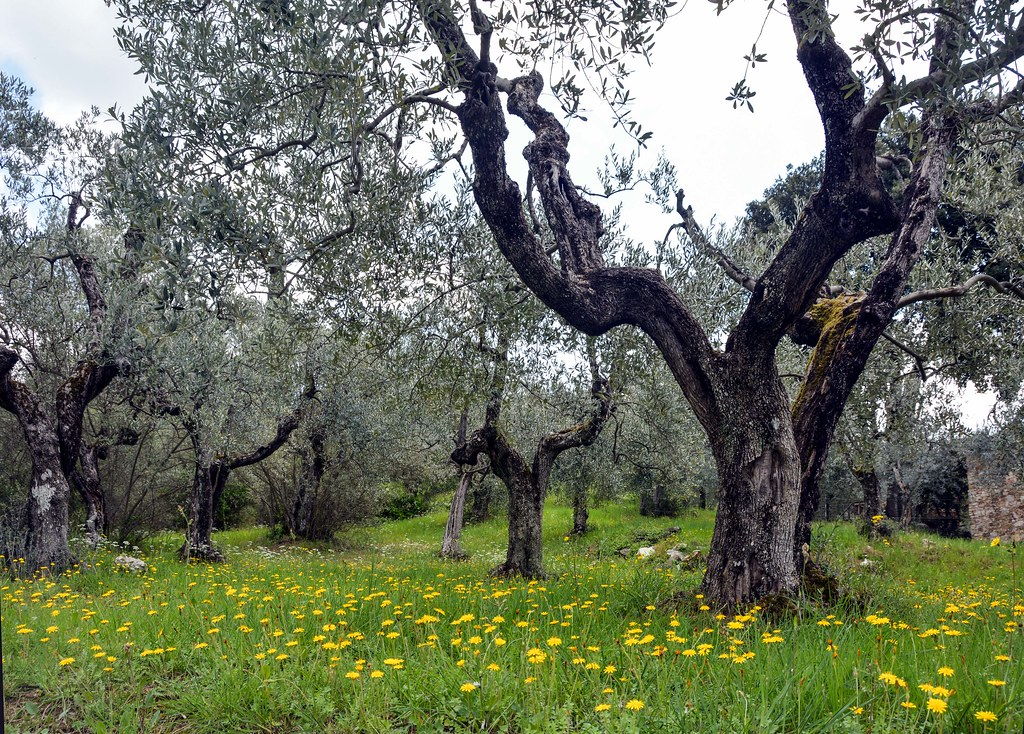
That is the real reason a family in the Marche or Umbria treats an olivo secolare (a century-old olive tree) with real care. This is structural care, not routine farm maintenance. Pruning cycles measured in years. Disease monitoring. Protection from frost and machinery damage. Losing one tree is not losing one harvest. It is losing an asset nobody alive today can rebuild on any human timeline.
Oil beyond the kitchen: hospitality, ritual, liturgy
Oil marks welcome before it marks flavor. Pouring oil for an arriving guest, over bread or into a shared dish, is one of the oldest gestures of hospitality on the peninsula. It predates the modern kitchen it now lives in. Food festivals across the country run on a related logic of shared abundance rather than commercial exchange.
The same substance carries real weight inside the Catholic Church. The Church uses pure olive oil for two of its three sacred oils. The Oil of Catechumens prepares candidates for baptism. The Oil of the Sick anoints those receiving the sacrament of the sick. Only the third, Holy Chrism, blends olive oil with balsam. A bishop blesses or consecrates all three at the annual Chrism Mass. The Catechism of the Catholic Church describes the anointing as a sign of strengthening, healing, and consecration. An ingredient this bound into ritual was never going to behave like an ordinary grocery item.
What you are actually buying: fraud, labels and price signals
What “extra virgin” legally means
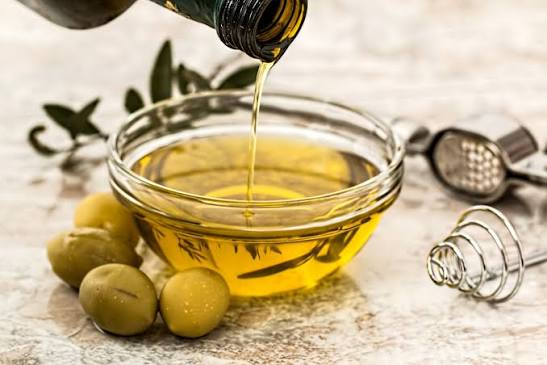
Extra virgin, extra vergine in Italian, is not a marketing phrase inside the European Union. Since November 24, 2022, two regulations set the binding standard: Commission Delegated Regulation (EU) 2022/2104 and Commission Implementing Regulation (EU) 2022/2105. Extra virgin olive oil must come directly from olives. It must be extracted solely by mechanical means. Free acidity cannot go higher than 0.8 grams per 100 grams. Nothing chemical, nothing re-esterified, and nothing blended with another oil can legally carry that name.
Why a low price is information, not a bargain
A bottle priced well under the real cost of harvesting, pressing, and bottling genuine extra virgin oil is not a deal. It is a data point. Olive oil fraud follows a predictable pattern. Cheaper oils, often sunflower, soybean, or low-grade “lampante” oil, get dyed and blended to imitate the real product. Lampante is the historically inedible grade once burned in oil lamps.
Europol’s Operation OPSON has documented this pattern for years. In late 2023, Spanish and Italian police seized more than 260,000 liters of adulterated oil in one joint raid. Eleven people were arrested. During OPSON XIII, running into early 2024, Italian NAS Carabinieri alone seized roughly 42 tons of oil falsely marketed as Italian extra virgin. Investigators also found more than 600 liters of chlorophyll, used to fake the oil’s color. By OPSON’s 2025 phase, the operation’s total haul across all food categories reached about 12,700 tons. Fats and oils, olive oil specifically included, were flagged again as a recurring target. None of this means every bottle on a shelf deserves suspicion. It means price deserves a second look, not a blind eye.
What the DOP and IGP marks do and do not guarantee
DOP stands for Protected Designation of Origin. IGP stands for Protected Geographical Indication. Both marks are recognized under EU Regulation 1151/2012, and both guarantee geography and process. DOP ties the entire chain, from grove to bottle, to one defined territory and one fixed method. IGP ties only origin or reputation to a region, under looser rules. Neither mark is a taste guarantee. Neither tells you whether one specific bottle is fresh. They tell you where the oil is legally allowed to come from, and by what steps it reached you. That is worth something. It is not everything.
When the inheritance dies: Xylella and the Puglia groves
The logic above treats the olive tree as an asset built over centuries, owned rather than bought. That logic has a darker counterpart. What happens when the asset dies faster than any human plan can replace it?
Xylella fastidiosa is a bacterium. It was first detected on olive trees in Puglia in October 2013. It causes what growers call olive quick decline syndrome. The European Commission placed the affected zone under formal containment in 2015. It has updated the demarcated area repeatedly, as the bacterium moved north through the province. By 2025, industry estimates put the infected area at roughly 8,000 square kilometers. That is about 40 percent of the region. More than 10 million trees are reported dead, many of them century-old groves. No replanting schedule can restore that within a human lifetime. [VERIFY: total tree figures vary across sources and update years; treat this as a 2025-dated estimate, not a fixed official count.]
I have not walked those groves as a professional. I want to be direct about that limit, rather than write around it. What follows is a reading of a documented agricultural collapse, not a field account.
Puglia’s regional government moved early to protect its oldest trees, years before Xylella spread this far. Legge Regionale 14/2007 created a formal registry of monumental olives. It made their damage, removal, or sale illegal. Fines run from 3,000 to 30,000 euros per tree, up to a regional cap of 250,000 euros. The law protected an asset the region already understood as irreplaceable. An epidemic later tested that judgment at a scale no regional law had anticipated.
National funding has followed the same recognition. ISMEA’s 2025 sector report lists 30 million euros in dedicated funding against Xylella, on top of separate national support for replanting programs. Growers in the demarcated zones are increasingly turning to resistant cultivars, bred to tolerate the bacterium rather than succumb to it. That response treats the grove the way an engineer treats a failing structure. It is not a loss to mourn once. It is a system to redesign for the next hundred years.
Central Italy and the south: two different olive cultures
Central Italy’s ownership-and-inheritance model survives for one clear reason. The region has not faced anything on Xylella’s scale. Umbria and the Marche still run on multi-generational groves and small mills. A dense web of family agreements still holds, largely untouched by the epidemic working its way through the south.
Puglia’s olive culture historically ran on a related logic, at a larger scale. It was built around some of the country’s oldest and largest trees. Visitors exploring the region today, including through curated countryside stays in Puglia, move through a landscape managing real loss. Central Italy has, so far, avoided that loss. Neither region is more authentic than the other. Both hold the same inherited relationship with the same tree. Different histories tested each one differently.
Certified quality still grows on both sides of that divide. Italy holds 42 DOP and 8 IGP designations for olive oil, more than any other country in Europe. Recent sector data credits southern names like Terra di Bari DOP with real gains, in both volume and value. That growth stands out against a wider backdrop of falling national production. Inheritance and certification are not competing systems. They simply answer different questions: one is about who owns the tree, the other about what the law can verify once the oil leaves it.
What I would skip
Skip the decorative tins of “Italian” olive oil sold in airport shops and souvenir stores near major attractions. They come with a family name and a story that traces back to no verifiable producer. Skip trusting the phrase “cold-pressed” as a meaningful difference on its own. Nearly all quality extra virgin oil gets extracted without added heat, so the phrase tells you almost nothing a proper label does not already cover. And skip assuming a beautifully designed bottle says anything about what is inside it. Packaging budgets and oil quality get decided by entirely different departments.
FAQ — Italian olive oil, decoded
What is Italian olive oil culture, exactly? It describes how many Italian households relate to olive oil as an inherited resource, tied to family land. It is not a product bought at a store. Ownership, sharing, and the trip to the local mill replace the retail transaction most outsiders assume happens by default.
When is the best time to look for genuinely fresh Italian olive oil? The harvest runs roughly October through December, depending on the region. Olio nuovo (new oil, pressed within days and left unfiltered) tastes most intense right after pressing. That window is the closest an outsider gets to the oil families actually keep for themselves.
Where can a visitor buy oil that comes close to this direct, small-producer model? Look for mills that sell their own pressed oil on-site, not a shop reselling bottled stock. Ask directly where the olives were grown and pressed. A frantoio open for tastings during harvest season is the most legitimate entry point into this economy. Umbria’s annual open-mill weekends, held every fall across towns like Spello and Trevi, are a well-known example. [LINK 1020 — verificare stato]
Why do two bottles labeled “extra virgin” sit at wildly different prices? Legitimate extra virgin oil is expensive to produce in small batches. Price differences usually reflect real costs, yield, and region. A price far below that floor is more often a sign of blending or mislabeling than a bargain, based on repeated EU fraud enforcement findings.
How long does a bottle of good extra virgin olive oil actually stay good? Extra virgin oil peaks in the months right after pressing. It loses aroma and its peppery bite over twelve to eighteen months, even unopened. Buying oil by vintage, the way you would buy wine, protects you from that decline.
How does this compare to Italy’s informal wine economy? Vino sfuso, bulk wine bought directly from a producer with no label at all, runs on the same logic. A product moves through direct relationships, not retail, largely invisible to outsiders. The two economies rarely overlap directly, but they share the same underlying structure.
What is the one question locals almost never ask about olive oil, but Americans usually do? “Which one is the best?” Families here rarely rank oils that way. The oil they use was not chosen from a shelf of competitors; it is whatever their own land produced that year. The more useful question is not which oil is best, but where a specific bottle actually came from.
The takeaway
Italian olive oil culture is not a curiosity to admire from outside. It should change how you choose the next bottle in your own kitchen. Choose it less by label design. Choose it more by the questions a family here would ask before that oil ever left the frantoio: where it grew, who pressed it, and how recently. That habit travels home with you far better than any tin ever could.
If you want more reporting like this, from an Italian insider’s perspective, explore more stories on Tastes & Wonders of Italy. Or subscribe to the YouTube channel for video dispatches from around the country.
🌍 https://tasteandwondersofitaly.com/ – 📺 https://www.youtube.com/@TasteWondersofItaly