Healthy Italian Food: What Italians Actually Eat, and What America Got Wrong
Healthy Italian food rarely comes up around a dinner table in Le Marche. Nobody here treats it as a category.
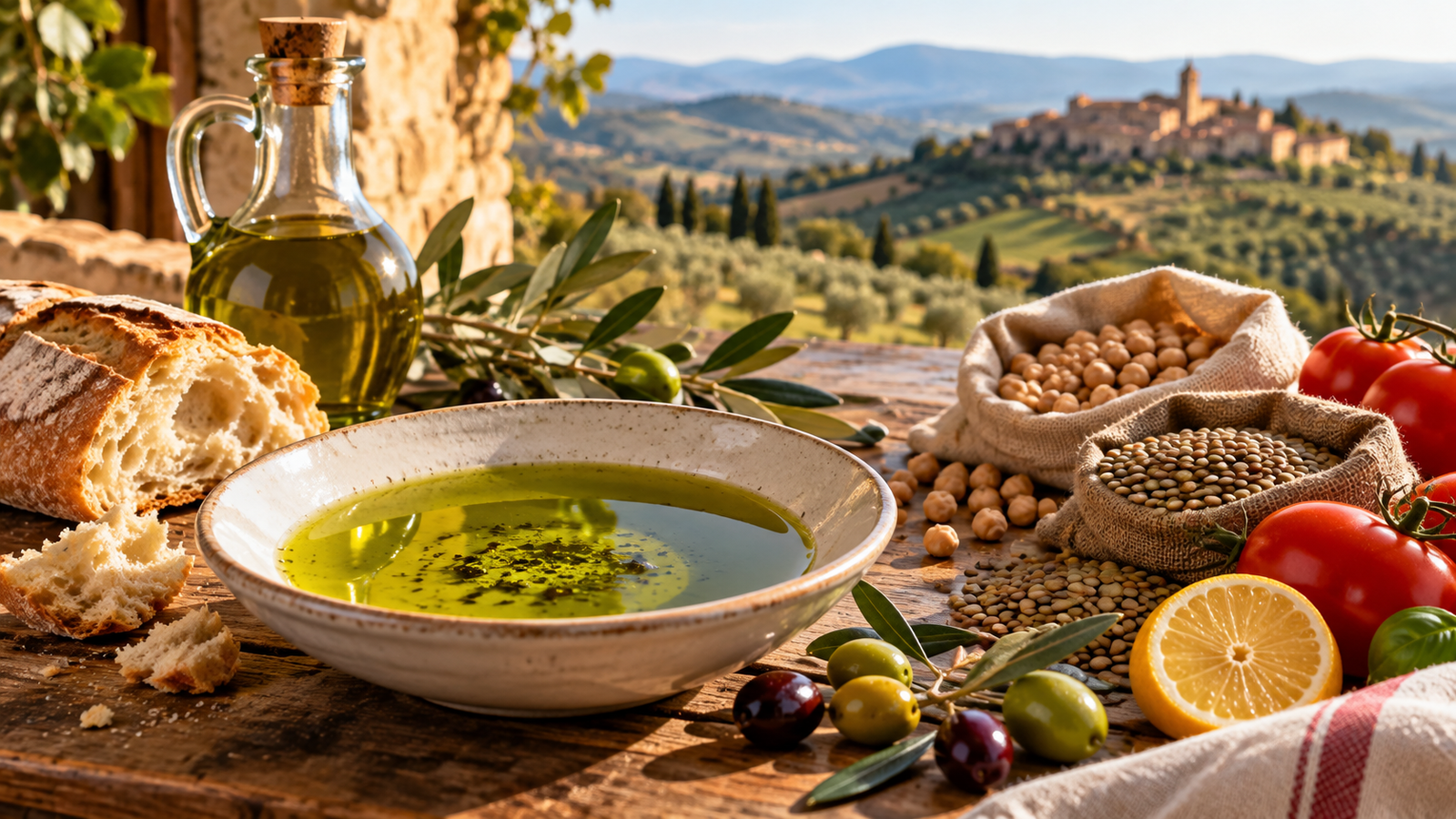
In November, once the olive harvest ends, the talk in our kitchen turns simple: the new oil has arrived.
Olio nuovo (freshly pressed, unfiltered olive oil) is bitter and sharp. It can catch in the back of the throat.
The color is a green so deep it looks almost black in the glass. It sits on the table next to bread, not butter. I have pressed that oil myself, from my own trees, every autumn for years. Nobody at that table thinks about antioxidants or polyphenols. They think about whether this year’s batch beat last year’s.
That gap is the real subject of this guide: how Italians eat, versus how Americans talk about Italian food. The U.S.
has spent two decades building a wellness industry around single Italian foods. Extra virgin olive oil. San Marzano tomatoes. “Mediterranean” supplements. Along the way, it missed the system that made those ingredients work in the first place.
Healthy Italian Food: The Short Answer
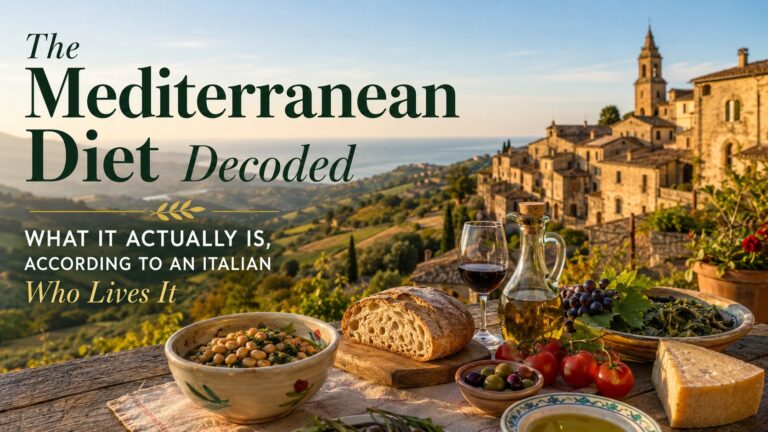
Healthy Italian food is not built around single superfoods. It comes from a system. Food is eaten in season. Meals center on vegetables, beans, and whole grains, with only small amounts of meat. Olive oil serves as a primary fat, not a garnish. The Seven Countries Study began in the Marche region in the 1950s. It linked this overall pattern, not any single food, to very low rates of heart disease.
This article contains affiliate links to Olive Oil Lovers. If you buy through them, Tastes & Wonders of Italy earns a small commission at no extra cost to you. See our affiliate disclosure for details.
The System Behind the Plate: Seasonality, Structure, and Portions
Americans often ask me which Italian foods to start eating for better health. The question itself is the problem. It assumes health comes from adding items to a list. Real health comes from how a meal is built.
Nutrition researchers now call this pattern the Mediterranean diet. Italians were already eating this way long before the term existed. The pattern rests on three habits, not one single food.
First, meals follow the calendar.
Tomatoes arrive in August, chestnuts in October, artichokes in spring. Produce grown out of season costs more and tastes worse, so households simply wait.
Second, a meal has a shape. A small first course of grain or legumes comes first. A modest second course of protein follows, with vegetables on the side. There is no single large plate dominated by meat.
Third, portions of any one rich food stay small. That matters more than whether one food is “good” or “bad” on its own.
This structure holds outside the home too. Italians often eat at a trattoria (a casual, family-run restaurant) rather than a formal ristorante. The courses still arrive in the same sequence. That keeps portions in check, even on a social occasion. I covered how that hierarchy works, and why it matters for what you order, in a separate guide to Italian restaurant types explained.
The food calendar also explains why small-town food festivals persist. A sagra (a local food fair built around one food in season, often raising money for a good cause) exists for a simple reason.
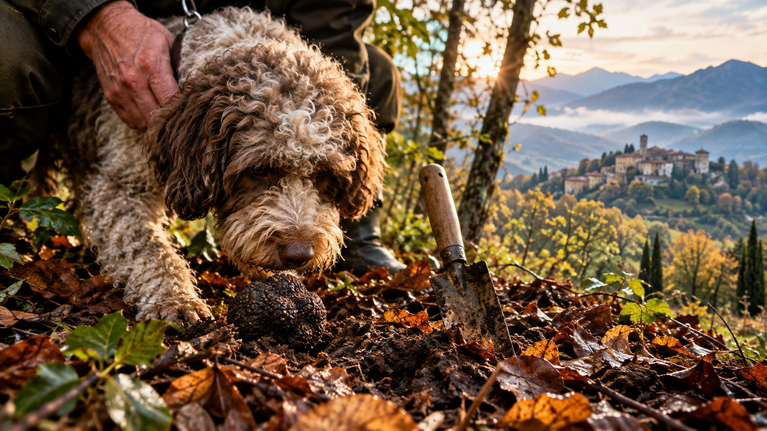
A village has a surplus of something, porcini, truffles, sausage, for a few weeks a year. Festivals follow that surplus; they are not a tourism gimmick. I explained how these events track the food calendar in a short piece on what a sagra actually is.
Olive Oil as a Food, Not a Condiment
The clearest difference between how Italians and Americans treat olive oil is quantity. In an Italian kitchen, olive oil is a primary source of fat. It gets used in real volume, nearly every day.
People drizzle it raw over soup, bread, and vegetables. It is not saved for the occasional salad dressing. A bottle in regular use in a Marche household empties in weeks, not months.
That volume is also why Italian families buy oil differently than most Americans do. They buy from a known producer, often the same frantoio (olive mill), year after year. They track the harvest the way other households might track a seasonal sale. I explained how Italian families actually buy oil in a separate piece. It has very little to do with supermarket shelves.
Quality matters here in a specific, legal sense, not a marketing one. “Extra virgin” is not a flavor description.
It is a legal category, based on acidity, taste tests, and how the oil is pressed. A lot of oil sold as extra virgin no longer meets that bar by the time it reaches a store shelf. I broke down what extra virgin actually guarantees, and why the label alone is not proof of quality, in a short guide.
There is also a detail most American readers have never seen. A European Union rule passed in 2012 lets producers say that olive oil polyphenols help protect blood lipids from oxidative stress. The claim only applies to oil above a set polyphenol level. It also calls for a daily intake of about 20 grams, roughly four tablespoons, eaten raw rather than cooked. This is a narrow claim about one measurable compound. It is not a blanket stamp of approval for “olive oil” as a category. That precision is a good reminder: the evidence behind this diet is sharper than most headlines suggest.
What the Evidence Actually Shows
The Mediterranean diet is not a marketing concept invented by a cookbook author. It traces back to a research project launched in the 1950s.
Scientist Ancel Keys and his team began tracking heart disease across seven countries, including rural towns in Italy. One of those Italian groups was examined in the Marche town where the Seven Countries Study measured it. That hillside community sits roughly 19 miles inland from the Adriatic coast.
Scientists found very low rates of heart disease among these rural Italian men. Men in the U.S. and northern Europe fared far worse. At the time, the Italian diet leaned heavily on vegetables, legumes, bread, and olive oil.
Meat appeared occasionally, not daily. That finding has been checked and argued over for seven decades since. It is the actual origin of the phrase “Mediterranean diet,” not a recent wellness trend.
It is not by chance that this same region keeps coming up in studies on long life.
Le Marche often posts some of Italy’s best numbers for how long people live. I laid out what the longevity data says in more detail in a separate piece. The region also anchors a broader case. I explore it in a piece on why Le Marche is the Italian region where the Mediterranean diet was born and still lives.
That is true decades after Keys packed up his equipment.
The Real Pantry: What an American Can Actually Buy
If you want to copy this pattern in an American kitchen, the shopping list is short and plain. Start with real extra virgin olive oil, used generously rather than sparingly.
Add canned San Marzano DOP tomatoes, a protected label tied to one patch of volcanic soil near Naples. Look for pasta extruded through bronze dies rather than steel; the rougher surface holds sauce better.
Round it out with dried beans, lentils, and chickpeas, plus oil-packed anchovies and capers.
None of this needs a fancy import shop. Most of it sits on the shelf at a well-stocked U.S. store, or a short click away online.
Olive oil is the item worth spending more carefully on.
The gap between acceptable and excellent is wide, and the label rarely tells you which side you are on. I wrote a separate guide to buying real Italian olive oil from the US for readers ordering outside Italy. Shipping, bottling dates, and harvest timing all affect what actually lands on your counter.
For a reliable starting point, Olive Oil Lovers’ Italian olive oil collection carries single-estate, DOP-labeled oils from named producers.
Prices run from the high twenties to around forty dollars a bottle, as of this writing in October 2026.
That is closer to what a home in Le Marche pays per liter than most store-brand bottles charge. Not everything in that catalog is worth the premium, though. The elaborate wooden gift boxes are the clearest example.
One producer’s large wooden-box set runs close to $125. The same maker’s plain three-bottle set costs about $50 for a similar amount of oil. If you are buying for yourself rather than for a gift, skip the packaging and buy the plain bottles instead.
You are paying for a box, not for better oil. Stock and pricing can shift, so confirm both on the retailer’s site before ordering.
Anchovies and capers deserve a mention too.
Americans tend to treat them as garnish rather than seasoning, which is backward. In Le Marche’s coastal kitchens, brodetto (a tomato-based fish stew built from the day’s unsold catch) is a staple. There, oily fish like anchovies serve as a protein source, not an afterthought.
Five Mistakes Americans Make With “Healthy Italian Food”
Treating olive oil as a flavoring rather than a food. A tablespoon drizzled on a finished dish is a garnish. The quantities used daily in Italian kitchens are closer to a staple ingredient, used for both cooking and finishing.
Chasing single “superfoods” instead of a pattern. No amount of extra virgin olive oil can fix a diet built around large portions of white bread, white pasta, and meat. The research behind the Mediterranean diet measured whole dietary patterns over years, not one ingredient added to an unchanged plate.
Assuming more pasta is healthier just because it is Italian. Portion size and what accompanies the pasta, vegetables, legumes, a modest amount of sauce, matter more than the fact that the box says “Italian” on it.
Buying oil based on the word “imported” alone. Shipping distance says nothing about freshness or harvest date. It also says nothing about whether the oil still qualifies as extra virgin by the time it reaches a shelf. Labels and bottling dates matter more than country of origin alone.
Pairing the idea of healthy Italian eating with alcohol, as though the two naturally belong together. Wine has its own cultural place at an Italian table. But it is a separate subject from what makes the food itself part of a long-studied pattern. Conflating the two muddies both topics.
FAQ: Healthy Italian Food, Answered
What is considered healthy Italian food?
Healthy Italian food is the traditional eating pattern studied in regions such as Le Marche. It means seasonal produce, legumes and whole grains, small portions of meat, and olive oil used in real amounts as a main fat. It describes a pattern, not a list of “superfood” ingredients.
Is Italian food actually healthy, or is that a myth?
The pattern studied since the 1950s, not any single Italian dish, has been linked to lower rates of heart disease. Single dishes vary widely. A large plate of fried food is not healthy just because it is Italian.
Do I need a lot of olive oil to get any benefit from it?
A European Union rule ties one specific olive oil health claim to a daily intake of about 20 grams, roughly four tablespoons, eaten raw. That is a narrow rule about one measurable compound. It is not personal medical advice. Anyone managing a health condition should check with a doctor or dietitian before changing their fat intake.
Can I buy real Italian olive oil in the United States?
Yes. Several importers and specialty retailers ship single-estate, DOP-certified Italian olive oil directly to American addresses. Prices run higher than supermarket private labels, and freshness depends on harvest date and shipping time.
What is the difference between extra virgin olive oil and regular olive oil?
“Extra virgin” is a legal classification based on acidity, extraction method, and sensory testing, not a marketing term. Oil that no longer meets those standards is sold as “virgin” or plain “olive oil.” It has a milder flavor and fewer of the compounds linked to fresher oil.
What foods should I buy to start eating this way at home?
A good starting pantry includes real extra virgin olive oil and canned San Marzano DOP tomatoes. Add bronze-die pasta, dried beans or lentils, oil-packed anchovies, and capers. None require a specialty shop. Most are available through a standard supermarket or a short online order.
Why does Le Marche specifically come up so often in this research?
Le Marche hosted one of the original Italian groups in the Seven Countries Study. It still posts some of Italy’s best figures for a long life. Le Marche also grew into a modern economy later than much of Italy. That kept its food calendar and meal structure close to the pattern scientists first measured.
The Takeaway
Healthy Italian food was never about one ingredient landing on a “superfood” list. It is a structure: what grows that month, how a plate is built, how much fat and meat end up on it. Scientists measured that structure, starting in a hillside town in Le Marche more than seventy years ago. Importing the pattern matters more than importing any single product. Still, a well-chosen bottle of real olive oil is a reasonable place to start.
If you want more reporting like this, explore more of Tastes & Wonders of Italy. It is an Italian insider’s view, not a travel-blog version of Italy. Or get in touch if you are planning a trip and want guidance from someone who actually lives here.