The Way of St Francis: Italy’s 1,546-km Answer to Santiago
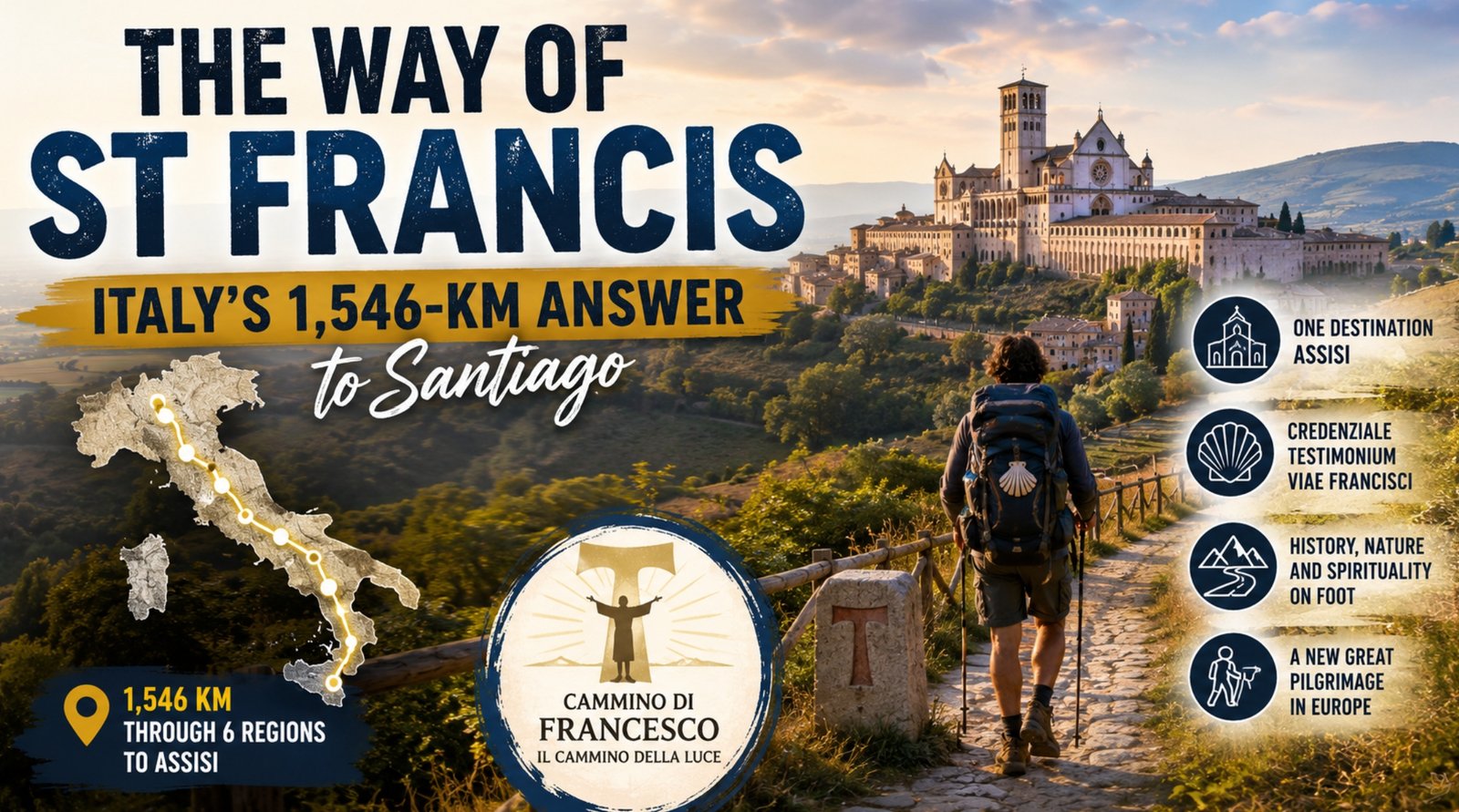
The Way of St Francis begins, for most walkers, inside a basilica. On the Marche branch it ends at a cathedral dedicated to the saint Italians have prayed to for three centuries when the ground moves. Between those two points lie ridges of beech and hornbeam, gravel farm tracks that turn to red mud in October, and villages where the church façade is still held upright by steel tie-rods installed after 2016. On July 30, 2026, Italy’s Ministry of Tourism gathered 1,546 kilometers of these trails under one name — Cammino di Francesco, the Way of St Francis — with a promotional film closed by Andrea Bocelli and a budget of 40 million euros. Here is what that announcement actually changes for anyone planning to walk it.
What the Way of St Francis Actually Is
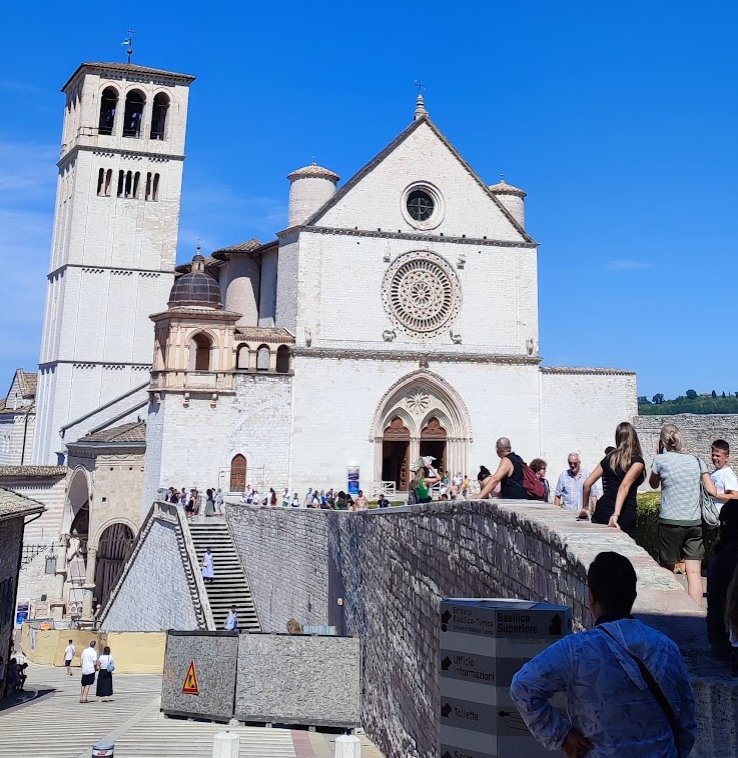
The Way of St Francis is not a single trail. It is a network of 1,546 kilometers of walking routes crossing six Italian regions — Abruzzo, Emilia-Romagna, Lazio, Marche, Tuscany and Umbria — and every one of its branches ends at the same place: the tomb of Francis in the Basilica of San Francesco in Assisi. The figure includes the main routes plus their connectors and variants. The individual paths were selected on the basis of a historical-critical review carried out by the national committee for the eighth centenary of the saint’s death, so the network follows roads and ridgelines where Francis is documented to have walked, rather than a pleasant line drawn between pretty towns.
That distinction matters more than it sounds. A walker choosing between Italy’s Franciscan routes is not choosing between scenic options. Each branch corresponds to a different chapter of a life: the retreat years above the Casentino, the preaching journeys east toward the Adriatic, the last road to Rome.
What Changed on July 30, 2026 — and What Didn’t
The announcement, in plain terms
The project was presented at Palazzo Chigi under the title Cammino di Francesco – Il Cammino della Luce (the Way of Light) by Tourism Minister Gianmarco Mazzi, alongside Davide Rondoni, president of the national committee for the eighth centenary, and Father Francesco Piloni of the Franciscan community in Assisi. Bocelli’s participation in the film is unpaid; Mazzi described it as a friendly contribution and said the tenor’s international recognition was the closest available match to the global reach of Francis himself. The ministry has put 40 million euros into the network’s development, and the route now has a dedicated presence on Italia.it, the country’s official tourism platform.
Governance sits with a new body, the Vie e Cammini di Francesco association, founded by the tourism and culture ministries together with the regions of Abruzzo, Lazio, Marche and Umbria. Tuscany and Emilia-Romagna were still completing their membership at the time of the announcement.
What did not change
No new trail was built on July 30. The paths, the waymarking, the pilgrim hostels and the volunteer associations that maintain them all existed already, in some cases for a decade or more. What is new is a single name, a single governing body, a marketing budget and a place on the national tourism platform. If you were planning to walk from Assisi to Ascoli Piceno next month, your route has not moved; what has changed is that in three years there will probably be four times as many people on it.
This is the part worth understanding before you book. Italy did not discover these routes in 2026. Italy finally decided to explain them in one voice.
The Santiago comparison the ministry is openly making
Mazzi named the benchmark without hedging: Santiago de Compostela, which recorded 530,987 pilgrims in 2025, its highest figure ever, and generates roughly 300 million euros in direct spending. His stated ambition is to reach walkers who have already completed the Camino, on the theory that the two routes are complements rather than rivals. For scale on the Italian side, the minister put slow tourism across all of Italy’s walking routes in 2025 at 300,000 people, 2.5 million overnight stays and 216 million euros of direct spending.
| Way of St Francis | Camino Francés (Santiago) | |
|---|---|---|
| Network length | 1,546 km across six regions | Roughly 780 km on the main French route |
| Destination | Assisi, for every branch | Santiago de Compostela |
| Annual walkers | Not yet counted as a single network | 530,987 across all Spanish routes in 2025 |
| Pilgrim passport | Credenziale, issued by route associations | Credencial |
| Certificate on arrival | Testimonium Viae Francisci in Assisi; the Emidiana in Ascoli Piceno | Compostela |
| Trail company | Sparse outside Assisi and Umbria | Continuous, often crowded |
| English spoken en route | Limited in Marche and inner Abruzzo | Widespread |
| Bed availability | Book ahead; convent beds are limited | Dense, though full in summer |
The honest reading of that table: the Way of St Francis offers what the Camino Francés offered around 1995. Solitude, unreliable English, spectacular emptiness, and the requirement that you organize your own nights. Some walkers will read that as a warning. Others will read it as the whole point.
The Four Ways to Reach Assisi
The Way of St Francis resolves into four practical choices, and understanding them is most of the planning work.
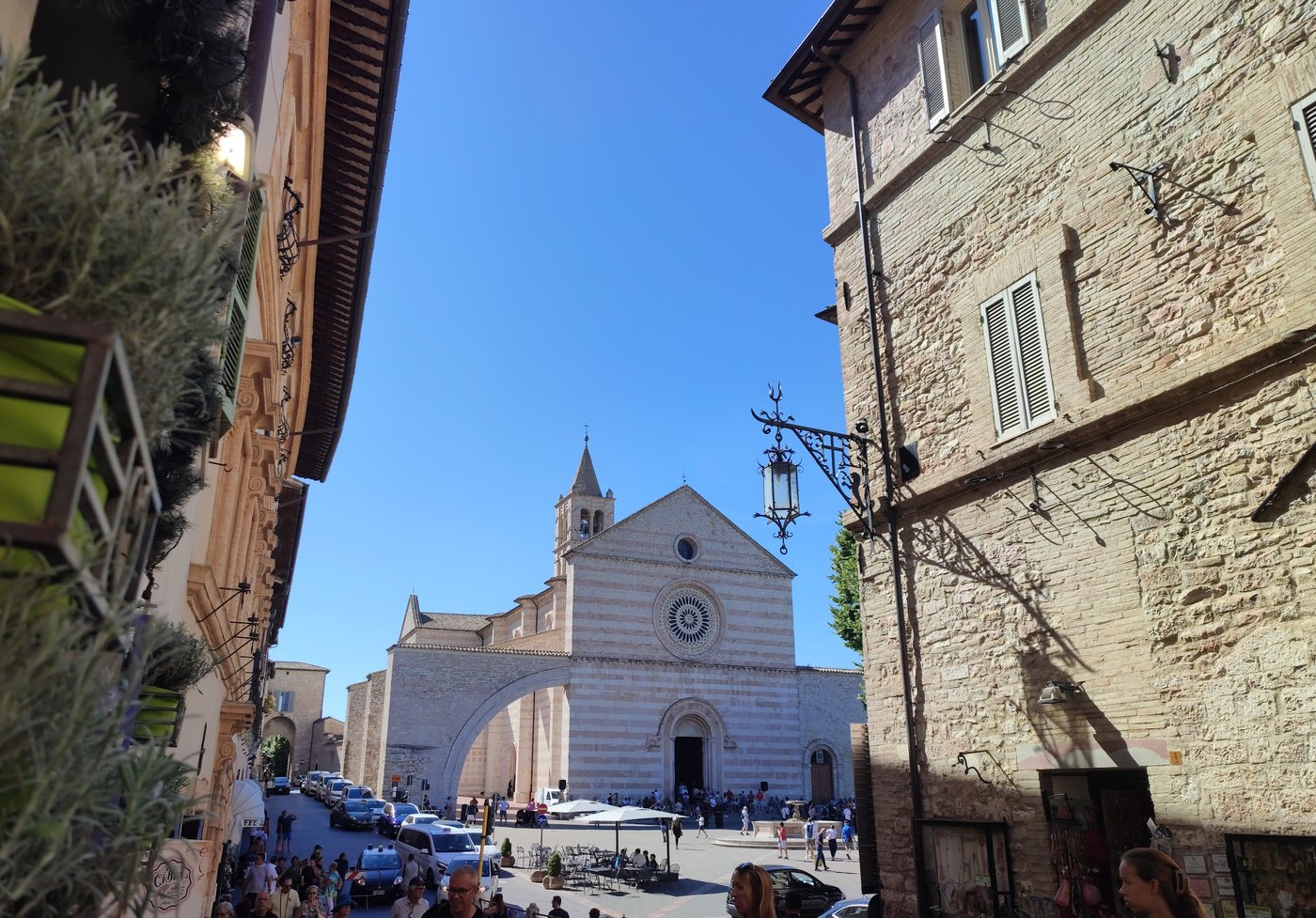
From the north, to Assisi. The classic route descends from Florence or Rimini by way of La Verna, the mountain sanctuary where Francis is said to have received the stigmata in 1224. The Umbrian regional authority breaks its portion into 12 stages and rates it the easiest of the main options.
From Assisi, south to Rome. Fifteen stages through the Valnerina and into Lazio, rated difficult. This is the direction of the saint’s own final journeys and the harder walking of the two southern options.
From Rome, north to Assisi. The same corridor walked in reverse across 13 stages, rated moderate, and the more popular direction because it ends rather than begins at the tomb.
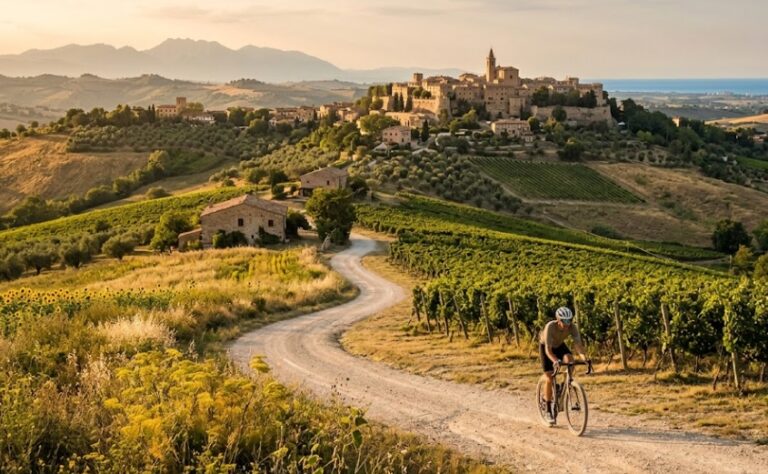
From Assisi, east to Ascoli Piceno. The Cammino Francescano della Marca: 167 kilometers, eight stages, two regions, four provinces and 17 municipalities, tracing the road Francis took in 1215 to preach in the southern Marche. For much of its opening stretch, as far as Pievefavera, this branch shares its ground with the Via Lauretana, the medieval route that carried pilgrims not to Assisi but east to a different shrine entirely: the Basilica della Santa Casa in Loreto, one of the most visited Marian sanctuaries in Italy. Walk this section and you are, without necessarily realizing it, retracing two pilgrimages at once. Established in its current form in 2016 by local associations and the Province of Ascoli Piceno, it is the branch almost nothing in English describes properly. It is also the one I know from the ground.
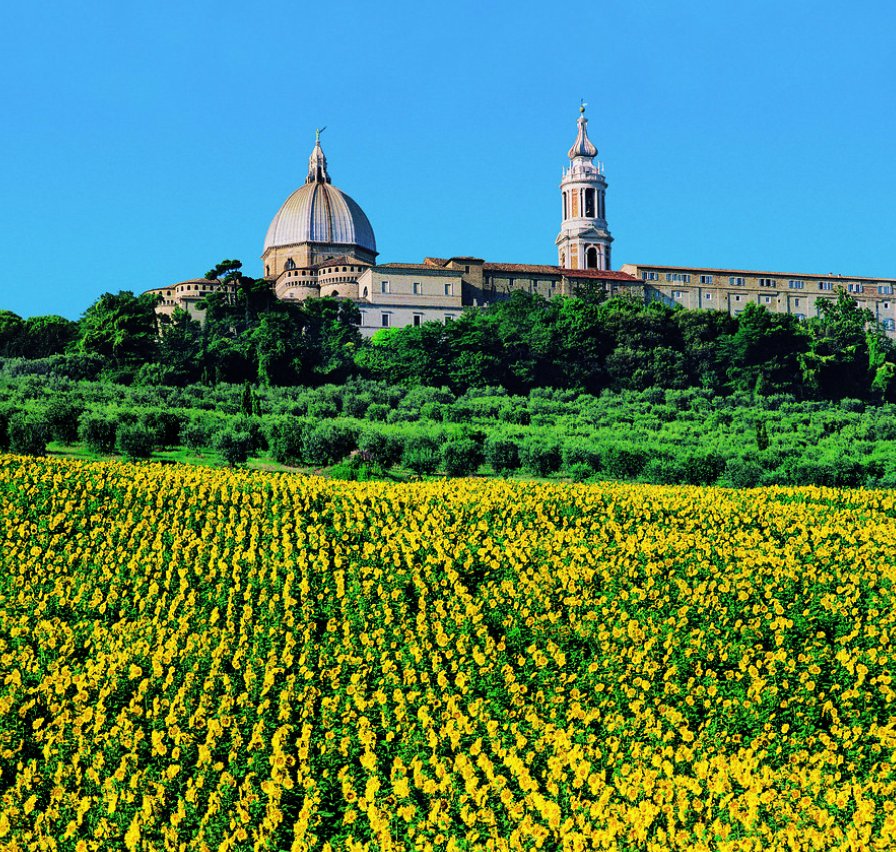
The Marche Stretch Nobody Writes About in English
Francis in the Marca, 1209 to 1215
Francis crossed the Apennines into the Marche early — his first documented journey into the region dates to 1209 or 1210, when he followed the old transverse roads that linked Umbria to the Adriatic. Around Fabriano the traces are unusually dense: the hermitage of Valdisasso, where he stayed more than once and where a higher, solitary spot is still called the Porziuncola of the Marche after the tiny chapel that anchored his order near Assisi; the valley of Valleremita; the fields of Camporege, attached to a story of a miraculously worked field; and Santa Maria di Civita, tied to the confessor Raniero. Local tradition also places a wolf here, on the road to Valdisasso, quieted by the sign of the cross and escorting the saint onward — a Marche cousin of the famous wolf of Gubbio that almost no English-language account mentions.
The diocese of Fabriano-Matelica has built its centenary program around exactly these sites, running from spring to the anniversary itself in early October 2026, under the patronage of the national committee. It is a reminder that the Franciscan Marche is not a marketing invention of this July. It is a local devotion that has simply never been translated.
Walking through the earthquake zone
Here is what no promotional film will tell you, and it is the reason this branch is the most interesting stretch of the Way of St Francis right now.
The Marche route passes through Camerino, Caldarola, Cessapalombo, San Ginesio and Sarnano. Anyone who followed the news in 2016 will recognize those names: this is the heart of the seismic sequence that struck central Italy that autumn. Ten years on, the walking is entirely feasible and the landscape is extraordinary, but the towns are still construction sites in a way that a visitor should expect rather than discover.
I have spent thirty years assessing buildings in this territory as a structural engineer, and the pattern I find most often in these hill towns is the same one a walker will see without needing any training: masonry churches whose façades are tied back to the roof structure with steel rods, timber shoring frames bracing a bell tower, whole streets in the historic center still fenced off in the zona rossa, the red zone, while reconstruction moves building by building. Many of the finest Romanesque and Gothic churches on this route are closed, or open only for a Sunday mass, or accessible only when someone with the key can be found.
This deserves stating plainly, because the alternative is arriving disappointed. You will not see the interiors of every church marked on the map. You will see cranes. You will also see, in San Ginesio and Sarnano and Camerino, communities that decided to stay, and a mountain landscape emptied of tourists in a way that Tuscany has not been in forty years. Whether that trade is worth it is a decision only you can make — but you should make it with the facts.
The Emidiana, and why the certificate is named for an earthquake
Walkers who complete the Marche branch do not receive the standard Franciscan certificate. Arriving in Assisi from any route earns the Testimonium Viae Francisci, issued by the Statio Peregrinorum beside the basilica. Arriving in Ascoli Piceno earns a different document, issued at the cathedral of Sant’Emidio on Piazza Arringo, and known as the Emidiana.
Emidio was, by tradition, Ascoli’s first bishop, beheaded in 303. His association with earthquakes is much later and entirely specific: in 1703 a violent sequence devastated central Italy, Norcia among the worst hit, while Ascoli was largely spared. The city credited its patron, built the small temple of Sant’Emidio alle Grotte in 1717 over the cave where his tomb was found, and the cult spread outward. Within a few decades, towns across the Marche, Umbria and Abruzzo had adopted him as protector against earthquakes; his usual image shows a young bishop holding up a collapsing wall with his bare hands.
So the Way of St Francis, on this branch, walks you for eight days through towns still visibly recovering from a 2016 earthquake and hands you, at the end, a certificate named after the saint that this territory has invoked against earthquakes since 1703. Nobody designed that. It is simply what happens when a walking route and a landscape share the same history.
Planning Your Walk on the Way of St Francis
When to go
May and June, or September and early October. July and August are hot on the Umbrian valley floor and unpleasant on the exposed gravel sections, and the convent accommodation empties of volunteers in August. Late October brings rain, mud and short daylight to the Apennine stages.
One caution specific to this year: October 3 and 4, 2026 mark the eighth centenary of the death of Francis. He died on the evening of October 3, 1226, and because the liturgical day was counted from sunset, the feast falls on October 4. Assisi will be extremely full in that window, and it has already hosted a papal visit and a large Franciscan youth gathering this summer. If you want the anniversary, book accommodation months out. If you want the walk, arrive in Assisi a week either side.
Credenziale and Testimonium
The credenziale is the pilgrim passport, stamped at churches, hostels and bars along the way, and it is what entitles you to pilgrim rates and to the final certificate. Each route association issues its own; the Marche branch has issued updated credentials since 2021. The Statio Peregrinorum at Piazza San Francesco 2 in Assisi issues the Testimonium daily, and the accreditation point at Ascoli’s cathedral on Piazza Arringo issues the Emidiana. Hours at both are split around a long midday closure, in the Italian pattern — roughly mid-morning to half past twelve, then mid-afternoon to six. Verify current hours before you arrive; these are small offices staffed by volunteers.
Where you sleep
Accommodation runs from accoglienza povera — simple, donation-based beds in convents and parish halls — through agriturismi to ordinary hotels. On the Marche branch, regional funding converted three buildings into pilgrim spedali, the old word for a hospice on a pilgrim road, at Comunanza, Venarotta and Ascoli Piceno. Convent and parish beds must be booked several days ahead, and in the smaller villages there is no fallback if you arrive without a reservation. This is the single largest practical difference from the Camino Francés, and the one that catches American walkers out.
Trail conditions to check before you leave
Apennine routes change with every winter, and the Marche branch has three standing issues that walkers should confirm rather than assume:
- A Roman bridge over the Vetemastro stream near Amandola collapsed, and since April 2026 the Sarnano–Comunanza stage has run on a temporary alternative track.
- A landslide between Monastero and San Liberato affects the Montalto di Cessapalombo–Sarnano stage; it is passable with care, pending permanent stabilization work.
- The Fiastrone gorges, one of the most dramatic passages in the Sibillini, have been closed to walkers.
Check the route association’s own news page within a week of departure. Regional tourism sites lag behind; the associations that maintain the waymarking do not.
Getting to the trailheads
Assisi has its own station on the Foligno–Perugia line, twenty minutes by bus from the historic center. For the Marche branch, Ascoli Piceno is reached by bus from the coastal railway at San Benedetto del Tronto, and Ancona’s Marche Airport is the closest arrival point to the eastern end. For the northern route, Florence and Rimini are both direct high-speed rail destinations.
How Hard Is It, Really?
The Marche branch offers a fair benchmark for the network as a whole. Its eight stages run between roughly 15 and 27 kilometers, with a high point around 970 meters and a low point near 150. Roughly 30 percent is footpath, 45 percent unpaved track and 25 percent asphalt, mostly on quiet secondary roads. There is no technical terrain and no exposure, but there are river fords in the foothill sections and long climbs out of the valleys, and the daily distances assume you are comfortable walking six to eight hours with a pack.
The southern route from Assisi to Rome is rated difficult by the Umbrian authority; the northern approach from Florence and La Verna is the gentlest of the main options. None of it is a technical mountain undertaking. All of it rewards two months of walking in your own shoes beforehand.
FAQ — The Way of St Francis, Answered
What is the Way of St Francis? It is a 1,546-kilometer network of waymarked walking routes across six Italian regions, all ending at the tomb of Francis in Assisi. Italy’s Ministry of Tourism unified the previously separate routes under the single name Cammino di Francesco on July 30, 2026.
When is the best time to walk the Way of St Francis? May to June and September to early October. Summer is hot on the valley sections and thins out convent hospitality; late autumn brings mud and short days to the Apennine stages.
Do I need a pilgrim passport, and how do I get a certificate? Yes. The credenziale is issued by the route associations and stamped along the way. Completing any route into Assisi earns the Testimonium Viae Francisci at the Statio Peregrinorum; completing the Marche branch into Ascoli Piceno earns the Emidiana at the cathedral on Piazza Arringo.
How much does it cost to walk the Way of St Francis? Costs depend almost entirely on where you sleep. Donation-based convent and parish accommodation is the least expensive option, agriturismi and small hotels considerably more. Budget for the fact that resupply points are sparse on the Apennine stages and that some villages have no cash machine.
How long does it take? The Marche branch from Assisi to Ascoli Piceno takes eight walking days. The northern approach to Assisi runs to 12 stages, Assisi to Rome to 15, and Rome to Assisi to 13. Few people walk the whole network; most choose one branch.
How does it compare to the Camino de Santiago? It is quieter, less commercially developed and less anglophone. There is no continuous trail infrastructure outside Umbria, beds must be booked in advance, and you will walk entire days without meeting another pilgrim. The landscape and the historical density are comparable; the logistics are not.
Is the Marche section affected by the 2016 earthquakes? Yes, visibly. The route passes through Camerino, Caldarola, San Ginesio and Sarnano, where reconstruction continues, many churches remain closed or shored, and parts of some historic centers are still fenced. The walking itself is unaffected, but expect scaffolding rather than open church interiors, and confirm current trail diversions before departure.
The Final Word
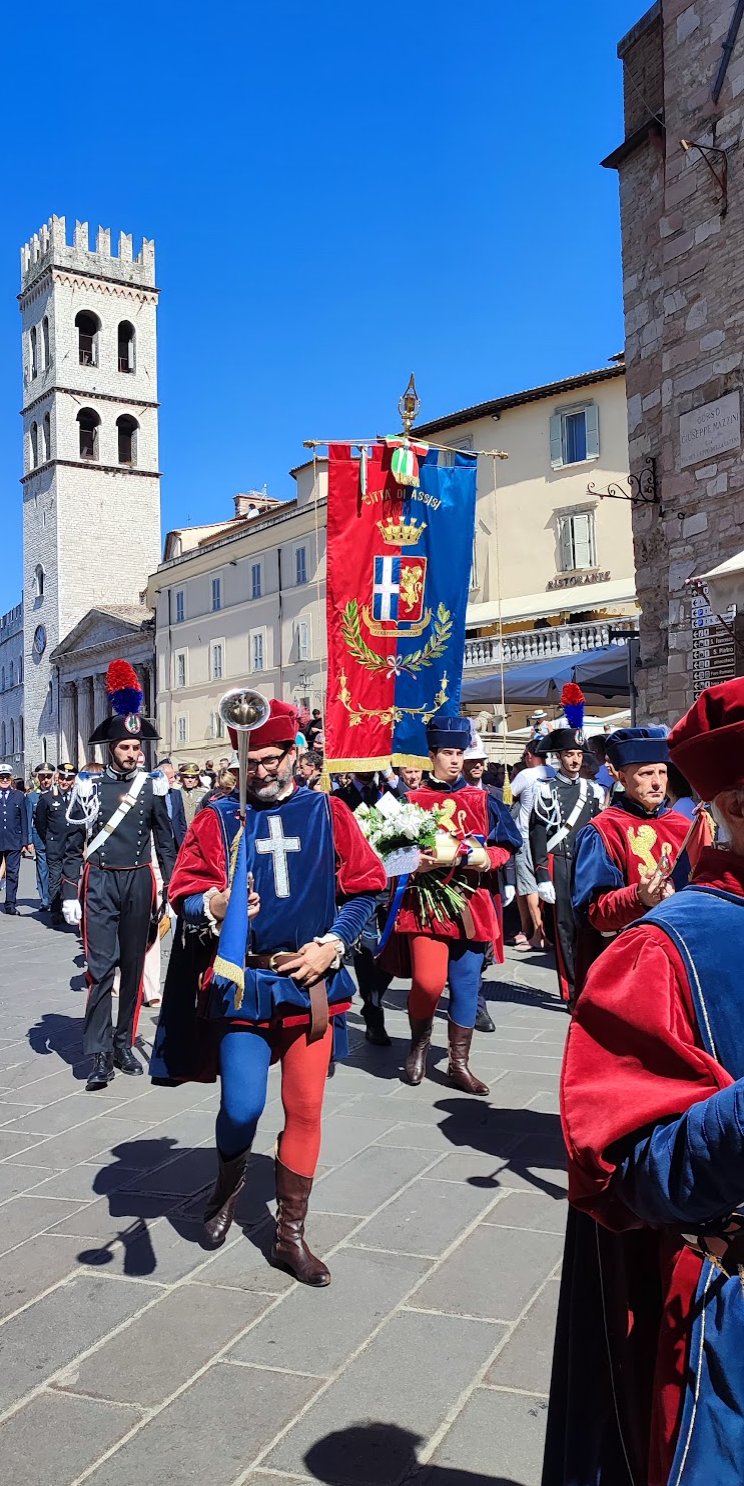
The Way of St Francis will not stay this quiet. Forty million euros, a national tourism platform and the most recognizable Italian voice in the world are a considerable amount of momentum, and the ministry has been explicit that Santiago’s half-million walkers are the target. Somebody who walks the Marche branch in September 2026 and somebody who walks it in September 2031 will be describing two different experiences.
That is not an argument for rushing. It is an argument for honesty about what you are choosing. Right now, on the stretch between Sarnano and Comunanza, you can walk for four hours and meet a farmer and nobody else, past a shored-up church that has stood through two earthquakes and is waiting for the funding to reopen. The eighth centenary will bring cameras to Assisi. The road east will still belong to the people who live on it.
If you want more from central Italy written by someone who lives and works here, the rest of this site is built around the Marche, Umbria and Abruzzo — the part of the country the Way of St Francis crosses, and the part most guidebooks give three pages.
Mirco Vitellozzi is a licensed civil and structural engineer based in Macerata, in Le Marche, with thirty years of experience assessing historic buildings in seismic zones. He writes Tastes & Wonders of Italy from inside the region it covers.
Written by Mirco Vitellozzi, a structural engineer from Le Marche who writes about Italy from the inside. More essays at Tastes & Wonders of Italy, and short films on YouTube.