Italy in October 2026: The Month the Country Switches Over
On the morning of October 15, in Milan, Turin, Bologna and Venice, several million radiators are permitted to come on for the first time since spring. In Rome, Florence and Siena they are not, and will not be for another two weeks. That gap is not a matter of weather or of what any individual hotel decides. It is written into a national decree that divides the country into six climate zones, each with its own start date. Italy in October is best understood not as a season but as a switchover, and almost none of it is improvised. Knowing which switches flip, and when, is the difference between a trip that lands well and one that spends its evenings cold and in the dark by five-thirty.
A note on links: one booking link in this article is an affiliate link. If you book through it, I earn a small commission at no extra cost to you. I chose it for one reason the article explains below: in a month this wet, an outdoor booking you cannot cancel is a bad bet.
Italy in October: The Short Answer
October is the strongest month of the Italian year for a traveler who cares more about food, light and space than about swimming. Daytime temperatures across the center sit comfortably in the high teens to low twenties Celsius, roughly the mid-sixties to low seventies Fahrenheit. The summer crowds have gone. Prices in the cities have come off their August ceiling. Three separate harvests — grape, olive and truffle — overlap somewhere in the country for the entire month.
What October takes away is daylight, warm sea, and the assumption that everything is open. Clocks go back on Sunday, October 25, 2026, and from that morning the sun sets before six across most of the peninsula. Coastal infrastructure winds down. Archaeological sites move to winter hours. And the further north you go, the higher the chance of a genuinely wet week.
The practical rule I would give anyone planning Italy in October: the month rewards the interior and punishes the beach. Everything below follows from that.
October 25: The Day the Light Disappears
Central European Summer Time ends on the last Sunday of October, which in 2026 falls on the 25th. At three in the morning the clocks go back an hour, and for a visitor the effect is abrupt rather than gradual. On Saturday the light in a hill town still holds past seven. On Sunday it is gone before six.
This matters more in Italy than it does at home, because so much of what you have come to see is either outdoors or unlit. A Romanesque church interior on a gray afternoon in late October is genuinely dark; many small ones have no artificial lighting worth the name, and the frescoes you traveled to see resolve into shadow. Hill towns lose their best hour, which is the single most underestimated cost of Italy in October. Anything that depends on a view — the Sibillini ridgeline, a vineyard slope, the sea from a headland — needs to be scheduled before three in the afternoon rather than after.
Site opening hours move on the same schedule. Most state museums and archaeological parks run a summer timetable and a winter timetable, and the switch is generally tied to the last weekend of October rather than to a fixed calendar date. Last admission typically lands an hour or more before closing. Book what matters in the first half of the month if you can; if you cannot, front-load each day and accept that evenings belong to the table rather than the street.
Heating in Italy in October: The Law Nobody Explains
Here is the piece of Italian October that no guidebook in English explains, and that I spend a fair share of my professional life dealing with.
Italian buildings do not turn the heating on when it gets cold. They turn it on when the law allows. The framework is Presidential Decree 74 of April 16, 2013, which builds on Presidential Decree 412 of 1993 and divides every Italian comune into one of six climate zones, from A to F, according to accumulated degree days. Each zone has a fixed window and a maximum number of hours per day:
- Zone E — Milan, Turin, Bologna, Venice, Verona, Trieste, Perugia, L’Aquila: October 15 to April 15, up to 14 hours a day
- Zone D — Rome, Florence, Genoa, Pisa, Lucca, Siena, Ancona, Macerata, Ascoli Piceno, Pescara: November 1 to April 15, up to 12 hours
- Zone C — Naples, Bari, Cagliari, Salerno, Catanzaro: November 15 to March 31, up to 10 hours
- Zone B — Palermo, Catania, Messina, Reggio Calabria: December 1 to March 31, up to 8 hours
- Zone A — Lampedusa, Linosa, Porto Empedocle: December 1 to March 15, up to 6 hours
- Zone F — the coldest municipalities, including much of the provinces of Cuneo, Belluno and Trento above a certain altitude: no calendar restriction at all
Those hours have to fall between five in the morning and eleven at night, and the indoor temperature is capped at 20°C with a two-degree tolerance. The zones follow accumulated degree days rather than latitude, which is why two towns forty minutes apart, one on the coast and one at six hundred meters, can sit in different zones and switch their boilers on two weeks apart. Mayors can move the dates by ordinance, in either direction, when the weather justifies it, and they regularly do.
For a visitor this is not trivia. It explains why an apartment in Florence on October 20 can be colder inside than the street outside at noon, while a hotel in Bologna the same week is warm. It explains why the answer to “can you turn the heating up” is sometimes an apologetic no rather than indifference. Small hotels and B&Bs with independent boilers have more freedom than a large building on a shared central system, where the schedule is set by a condominium resolution and the administrator, not by the person at reception.
What to do about it: for a late-October trip through central Italy, ask before booking whether the property has independent heating (riscaldamento autonomo) or central heating (centralizzato), and pack as though the answer is the second. A merino layer for indoors is more useful in an Italian October than a heavier coat for outdoors.
Three Harvests, One Month
October is the only month in which grape, olive and truffle all have something happening at once, and they do not happen in the same places or at the same pace.
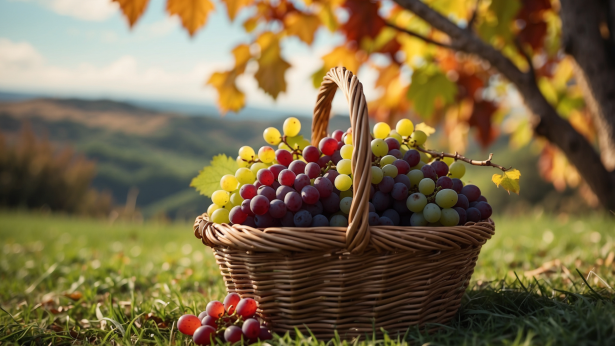
The grape harvest is mostly finishing rather than starting. By October the vendemmia has moved uphill and north; in Umbria, the late-ripening Sagrantino comes in around the end of September into early October, which is one reason Montefalco is a better October stop than a September one.
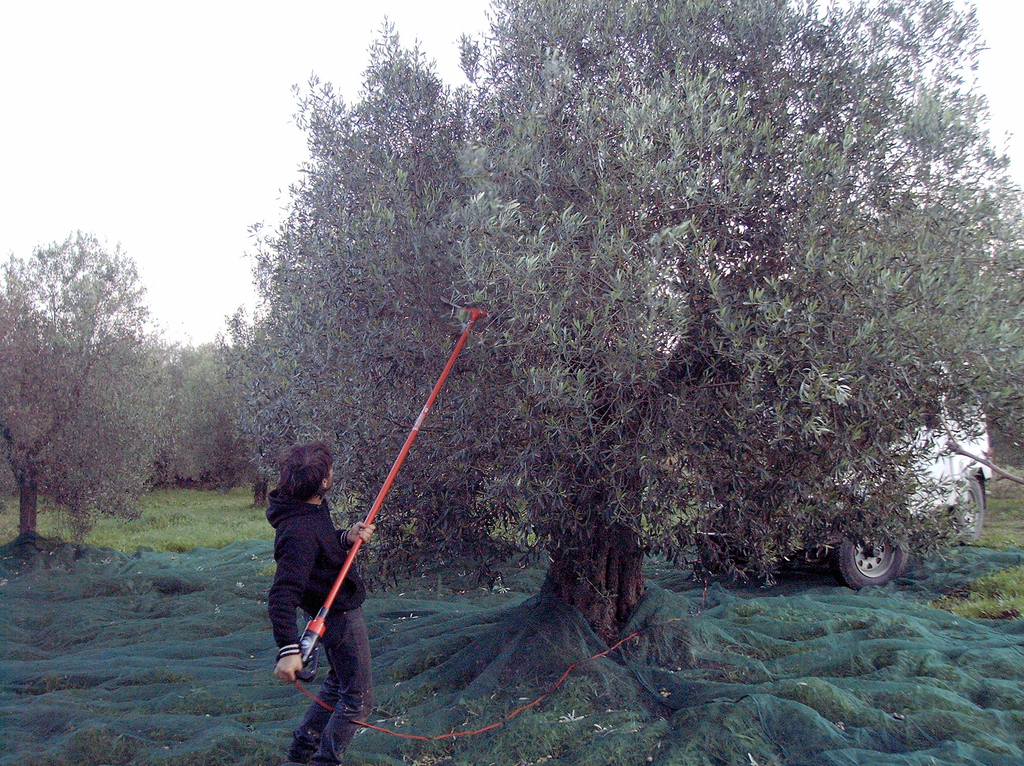
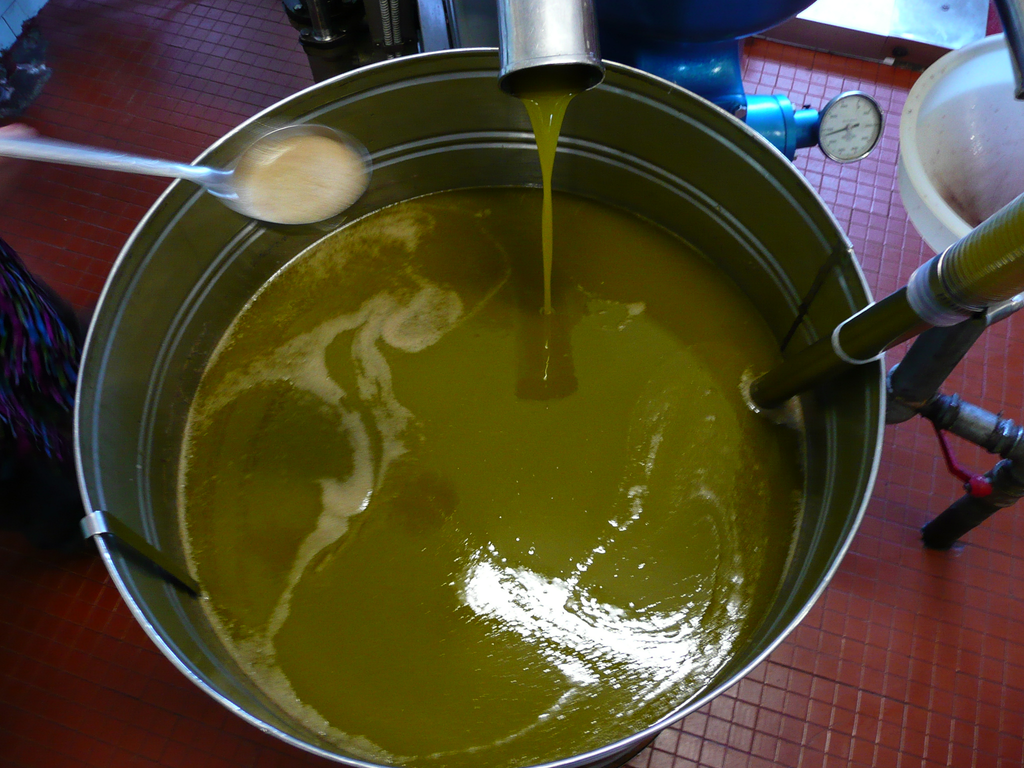
The olive harvest is the opposite: it is only beginning. Across central Italy picking runs from roughly the second half of October into late November, and the rules for Cartoceto DOP, the only protected-designation olive oil in Le Marche, put it in writing — early-ripening cultivars from the second ten days of October, the later ones from the first days of November, everything finished by November 25. If you want to stand in a mill while the first oil of the year comes out of the press, the frantoio is where October actually happens.
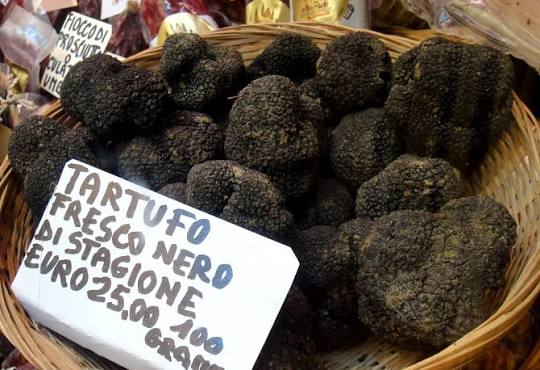
The white truffle season opens on October 1 in most of the center and north, but opening is not peak. Quality and volume build through November, and the fair calendar sits closer to the beginning of the legal window than to its best weeks. I have written the full legal calendar, species by species and region by region, because the dates are set by regional law rather than by tradition and they moved again in the last three years.
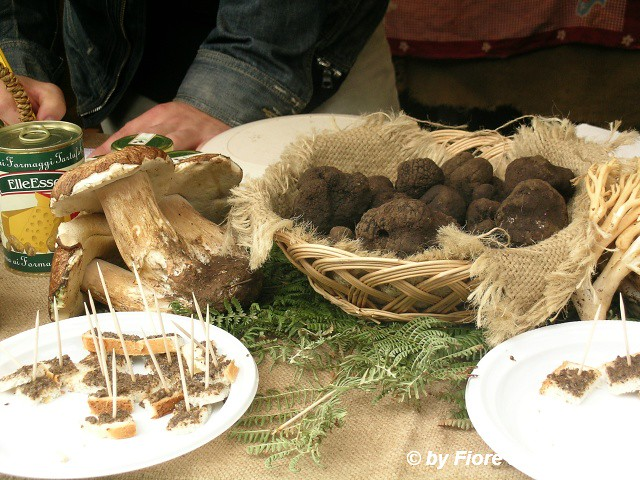
The overlap of the three is why I would put late October ahead of any other week of the Italian year for someone whose trip is organized around what is on the plate. It is also the strongest argument for Italy in October over Italy in May, which has better light and worse food.
The Coast Closes, the Interior Opens
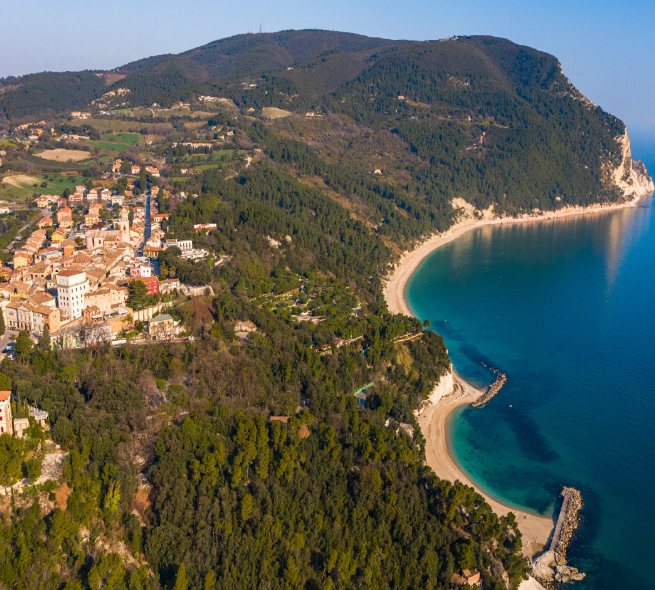
Italian coastal towns do not stay open for a thin autumn trade. The stabilimenti balneari, the private beach establishments with their rows of umbrellas, have largely folded by the end of September. Seasonal ferry timetables contract or stop. Restaurants in resort towns close for their own annual break, often for several weeks, and hotels follow. By late October a place like Positano or Sirolo has a fraction of its August operation running.
This is not a warning to avoid the coast. It is a warning to arrive with the right expectation. A November-quiet seafront in good light is one of the better things Italy offers, provided you are not counting on a specific restaurant or a boat that no longer runs. If the sea is central to the trip, September is the month that still delivers it; October is not. This is the one clear weakness of Italy in October, and no amount of good light compensates for a closed harbor.
The interior moves in the opposite direction. Hill towns that spend the summer overrun get their streets back. Sagre — the volunteer-run village food festivals that are not the same thing as a commercial fair — continue through the month in the inland Marche and across central Italy, and October versions tend to be built around chestnuts, new oil, mushrooms and truffle rather than the pasta-and-grill formula of high summer. If you have never worked out how one of these evenings actually operates, October is a forgiving month to learn.
Rain Is the Real Variable in Italy in October
The single most common misjudgment I see in October itineraries is treating rain as a minor risk. In much of northern and central Italy, October is one of the two wettest months of the year, and the rain arrives as concentrated Mediterranean systems rather than as drizzle. Liguria and the northern Apennines can take a month of average rainfall in two days. Venice enters its acqua alta season, when high tides combine with wind to push water into the lower parts of the city; the MOSE barriers have changed how often that reaches the worst levels, but not the underlying seasonality.
The south holds warmth and dryness longer. Sicily, Puglia and the Calabrian coast in the third week of October still feel like a mild late summer, which is why an October itinerary that starts in Milan and ends in Palermo works better than the reverse.
Practical consequence: build one flexible day per week into an itinerary for Italy in October, and put the outdoor commitments — the hunt, the mill, the ridgeline walk — in the first half of the trip where you have room to move them. A wet Tuesday in a hill town with a covered market and a decent trattoria is a good day; a wet Tuesday with a booked, non-refundable truffle hunt is not.
The Two Windows to Plan Around in October 2026
Two dates reshape availability across whole regions.
Lucca Comics & Games, October 28 to November 1, 2026. Europe’s largest comics and gaming festival, in its sixtieth-anniversary edition, takes over the walled center of Lucca for five days and absorbs hotel capacity for a wide radius — well into Pisa, Viareggio and the Garfagnana. If Lucca or northern Tuscany is on your route and the festival is not the reason, move those nights. If it is the reason, book accommodation now rather than in September.
All Saints, November 1. In 2026 it falls on a Sunday, which is unusually good news for a visitor. When Ognissanti lands midweek, Italians build a ponte — a bridge of days off — and the domestic travel surge runs four or five days. On a Sunday it collapses into an ordinary long weekend. Expect the last weekend of October to be busy at the mountain and hill destinations Italians favor for it, and expect the pressure to ease immediately afterward.
Worth adding to the same page: the white truffle fair at Acqualagna, in the Marche, runs on seven specific days in 2026 — October 25 and 31, then November 1, 7, 8, 14 and 15. The rule behind those dates is stable year to year: the second-to-last Sunday of October, the All Saints weekend, then the first two full weekends of November.
Where Italy in October Works Best
If I had to send a first-time visitor somewhere in October, it would be the band of central Italy running from southern Tuscany through Umbria into the Marche. The reasoning is not sentimental. It is that this band has the harvest calendar, the shortest transfers between hill towns, enough altitude to be beautiful in autumn light and not enough to be cold, and a food economy that is genuinely better in October than in July.
Le Marche is where I live and work, so treat the recommendation with the skepticism it deserves, but the case is checkable: the same weeks open truffle season in the Metauro valley, bring the first oil out of the mills in the Cartoceto hills, and leave the Sibillini ridges walkable in clear air.
For a second or third trip, Piedmont is the more obvious choice for Italy in October and the more crowded one — Alba’s fair season runs from early October well into December, and the Langhe price accordingly. Our guide to the Alba truffle fair covers the dates. If a hunt is part of the plan, book one you can cancel. This truffle hunt in the Langhe with a trifolao and his dog can be cancelled free up to 24 hours before, which is exactly the margin an October forecast needs.
What I would not build an October trip around: the Amalfi Coast, the Cinque Terre, or any itinerary whose best day depends on a boat. The comparison I would make instead points to a coastline that is quieter in every month and considerably quieter in this one.
Booking Notes: What Can Wait for the Forecast
October punishes rigid plans, so the rule for anything outdoors is simple: book it early in the trip, and book it with a way out.
The truffle hunt. In the Langhe, I would book this Langhe truffle hunting experience, from about $90 a person. It rates 4.8 across roughly 250 reviews, and groups are capped at ten. You can cancel free up to 24 hours ahead, and you can reserve without paying today. That matters more than the price when the forecast can turn in two days. The longer option adds a Barolo or Barbaresco tasting. Two practical points: you will need your own car to follow the hunter, and the meeting point can move with his schedule, so confirm it the day before.
The fairs. The truffle fairs need no booking at all. If your base is central Italy rather than Piedmont, the Acqualagna fair runs on fixed days and costs nothing to enter.
What I would skip. I would skip any Langhe hunt whose own listing says the experience is simulated, and at least one of the cheaper ones does. A simulated find teaches you nothing about how a dog actually works a slope. It also defeats the reason to hunt in October, when the real season has just opened. If you are paying to walk the woods, pay for the version where nobody knows the result in advance.
FAQ — Italy in October, Answered
Is October a good time to visit Italy? Yes, for most travelers it is the best month of the second half of the year. Mild days, thin crowds, lower prices than summer, and three overlapping harvests. The trade-offs are early sunsets after October 25, higher rainfall in the north and center, and seasonal closures on the coast.
How warm is Italy in October? Daytime highs generally run in the high teens to low twenties Celsius (mid-sixties to low seventies Fahrenheit) across the center, warmer in Sicily and the south, cooler in the Alps and the northern plain. Evenings drop sharply, especially inland and in hill towns, where the daily swing surprises first-time visitors.
When do the clocks change in Italy in 2026? On Sunday, October 25, 2026, when Central European Summer Time ends and clocks go back one hour. From that morning, sunset falls before six across most of the country, and many museums and archaeological sites move to their winter timetable.
Will my hotel have the heating on in October? It depends on the comune, not the weather. Under Presidential Decree 74/2013, heating may be switched on from October 15 in zone E (Milan, Turin, Bologna, Venice), from November 1 in zone D (Rome, Florence, Ancona), and later further south. Properties with independent boilers have more flexibility than buildings on a central system.
Is the sea still swimmable in Italy in October? In the south and Sicily, often yes in the first half of the month. Along the Adriatic and the Tyrrhenian center, water temperatures fall through October and beach services have mostly closed. If swimming is a priority, September is the month for it.
What should I pack for Italy in October? Layers rather than bulk: a merino or fleece mid-layer that works indoors as well as out, a genuinely waterproof shell, and shoes that handle wet stone. Interiors are frequently cooler than visitors expect, particularly in central Italy before November 1.
Which weekends should I avoid in October 2026? The last one. Lucca Comics & Games runs October 28 to November 1 and absorbs accommodation across northern Tuscany, and the All Saints weekend draws domestic travel to hill and mountain destinations. Elsewhere, the truffle fair weekends at Acqualagna and Alba tighten availability in their own valleys without affecting the rest of the country.
The Takeaway
October in Italy is not a softer version of September and not an early version of winter. It is a month with its own machinery: a decree that decides when buildings get warm, a clock change that removes an hour of usable light overnight, a coast that shuts down while an interior opens up, and three harvests running at different speeds in different provinces.
None of that appears on a weather chart, which is why so much English-language advice about Italian autumn stops at “mild and less crowded.” Plan around the switches instead — book the outdoor days early in the month, put the indoor and edible days late, ask about the heating before you book, and keep the last weekend of October free unless you have a specific reason to want it. Done that way, October is the month I would choose myself.
If you want an Italian to check your October route against the clock change, the heating zones and the harvest calendar, you can book a 30-minute consultation with me. Staying later? Read Italy in November next.
Explore more at Tastes & Wonders of Italy, or watch the video dispatches on YouTube.